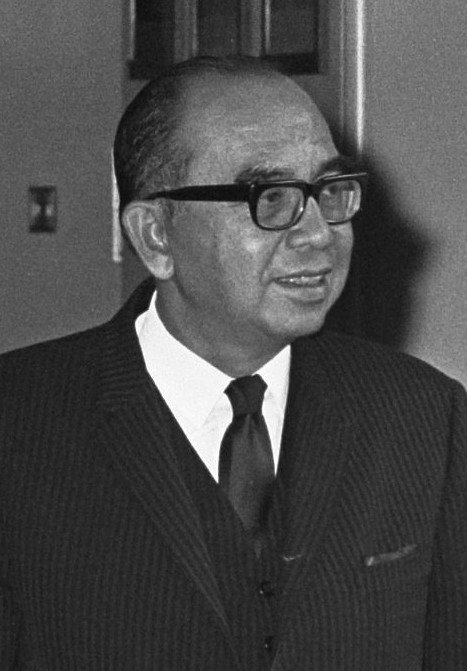
In this biography
Quick facts
- Born
- 23 July 1953
- Birthplace
- Kuala Lipis, Pahang
- Country
- Malaysia
- Nationality
- Malaysian
- Known for
- 1Malaysia, economic transformation and the 1MDB era
- Office
- Prime Minister, 2009–2018
- Earlier office
- Deputy Prime Minister, 2004–2009
- Political party
- United Malays National Organisation (UMNO)
- Family
- Eldest son of Abdul Razak Hussein
Why this life matters
Najib’s premiership combined ambitious economic programmes and infrastructure with the 1MDB scandal, which transformed Malaysian politics and his personal legacy.
Timeline
Key moments
Born in Pahang
Born in Kuala Lipis on 23 July.
Entered Parliament
Won the Pekan by-election following his father’s death.
Led Pahang
Served as Menteri Besar before returning to the federal cabinet.
Became deputy prime minister
Was appointed deputy to Abdullah Ahmad Badawi.
Became prime minister
Took office on 3 April and also served as finance minister.
Lost federal power
Barisan Nasional was defeated in Malaysia’s first change of federal government.
Convicted in the SRC case
The High Court found him guilty on seven charges; the conviction was later upheld.
Sentence reduced
The Pardons Board reduced the prison term and fine imposed in the SRC case.
Convicted in the main 1MDB case
The High Court convicted him on 25 charges involving RM2.3 billion; he filed an appeal.
Conditional pardon changes SRC custody
A conditional pardon allowed the remainder of the SRC term to be served under house arrest; the separate 1MDB appeal remained pending.
A rapid political inheritance
Najib was born in 1953, the eldest son of Abdul Razak Hussein. He studied industrial economics in Britain and entered Parliament at 23, winning the Pekan seat after his father’s death. His early elevation made him one of the youngest figures in Malaysian parliamentary history.
He served as Pahang’s Menteri Besar from 1982 to 1986 and then held a succession of federal portfolios, including education and defence. Abdullah Ahmad Badawi appointed him deputy prime minister in 2004, positioning him as the next UMNO and government leader.
Najib’s ascent was unusually early, but it was not a direct inheritance of his father’s office. More than three decades of state and federal posts separated the 1976 by-election from his 2009 appointment as prime minister.
Sources for this section: [2]
1Malaysia and economic programmes
Najib became prime minister in April 2009 and retained the finance portfolio. His 1Malaysia slogan presented national unity and government performance as central themes. The Government Transformation Programme and Economic Transformation Programme used targets and large projects to frame a push towards higher-income status.
His administration introduced the Goods and Services Tax, expanded cash-transfer programmes and backed major transport and infrastructure investments. Supporters emphasised connectivity and administrative focus; opponents criticised living costs, centralised decision-making and laws used against political dissent.
These programmes are part of the record even though later criminal cases dominate public memory. Evaluating a premiership requires separating what the government attempted economically from what courts found about particular financial transactions.
Sources for this section: [2]
The 1MDB crisis and election defeat
1Malaysia Development Berhad became the defining controversy of Najib’s second term. Investigations across several jurisdictions traced the movement of billions of dollars, while Najib denied wrongdoing. The scandal intensified pressure inside UMNO, drove Mahathir into opposition and became a central issue in the 2018 election.
On 9 May 2018, Barisan Nasional lost federal power for the first time. The transfer ended more than six decades of uninterrupted Alliance and BN government. Najib resigned as coalition and party leader soon afterwards and faced multiple criminal proceedings.
The election defeat and the court cases are related in political history, but they are distinct events: voters changed the government in 2018, while prosecutors and courts subsequently tested particular allegations under criminal law.
Conviction and contested legacy
In 2020, the High Court convicted Najib on seven charges connected to RM42 million from SRC International. The Court of Appeal and Federal Court upheld that conviction, and he began serving the sentence in August 2022. A 2024 reduction lowered the term and fine; in September 2026, a conditional pardon allowed the remainder of the SRC term to be served under house arrest until August 2028, subject to conditions.
The separate main 1MDB trial ended at the High Court in December 2025 with convictions on four abuse-of-power and 21 money-laundering charges involving RM2.3 billion. The court imposed an effective fifteen-year term and RM11.4 billion fine. Najib appealed, and the conviction remained under appeal on 3 October 2026; authorities said the SRC pardon did not change that case.
His legacy is consequently divided between the economic and infrastructure agenda of his government and the institutional damage associated with 1MDB and SRC. The cases became a test of Malaysia’s courts, anti-corruption commitments and capacity to hold former leaders accountable.
The SRC conviction and main 1MDB prosecution are separate cases with different procedural histories. Any account of his legal position should keep the final SRC appellate judgment apart from the later 1MDB trial and appeal.
Quick answers
Frequently asked questions about Najib Razak
- Who is Najib Razak?
- Najib Razak is a sixth Prime Minister of Malaysia. Najib’s premiership combined ambitious economic programmes and infrastructure with the 1MDB scandal, which transformed Malaysian politics and his personal legacy.
- What is Najib Razak best known for?
- Najib Razak is best known for 1Malaysia, economic transformation and the 1MDB era.
- When and where was Najib Razak born?
- Najib Razak was born on 23 July 1953 in Kuala Lipis, Pahang.
Keep exploring
Lives connected to this story
- Hishammuddin Hussein
Read the minister who held defence and acting transport responsibilities during Najib’s administration.
Sources and further reading
Explore the evidence
These references support the biography and offer further reading. Official records, first-person accounts and independent reporting provide different perspectives; image records document attribution and licensing.
- 1. Prime Minister’s Office of MalaysiaFormer Prime Ministers of Malaysia
- 2. Perdana Leadership FoundationDato’ Sri Najib Razak
- 3. Federal Court of MalaysiaGrounds of Judgment: Najib v Public Prosecutor
- 4. BERNAMAPardons Board sentence reduction
- 5. BERNAMA1MDB case: Najib jailed 15 years and fined RM11.4 billion
- 6. BERNAMA1MDB case status unchanged following Najib’s conditional pardon
- 7. Wikimedia CommonsPortrait and GODL-India licence record