
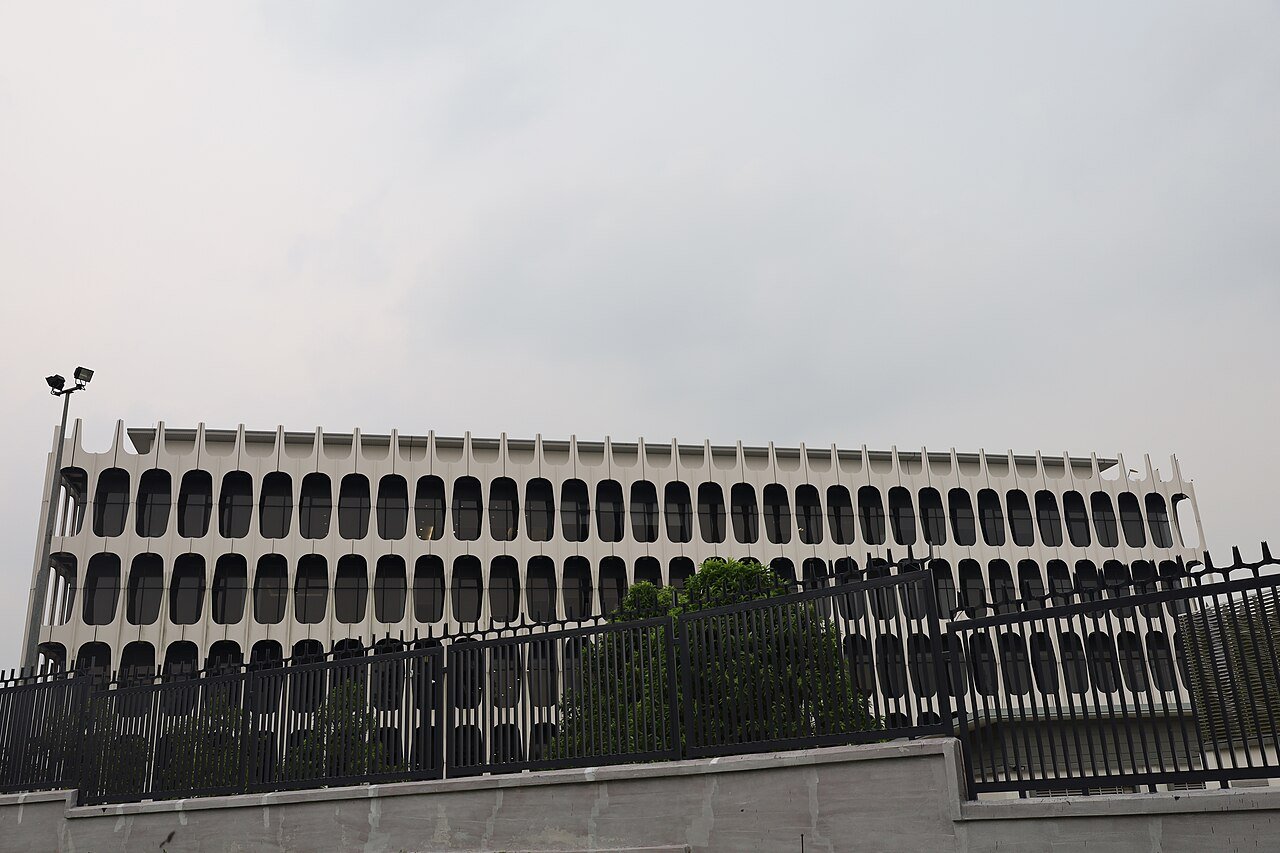
The short answer
Malaysia’s Parliament joins an elected Dewan Rakyat, an appointed-and-state-elected Dewan Negara and the Yang di-Pertuan Agong. It makes federal law, authorises taxes and spending, tests whether a government has majority support and provides the public record through which ministers can be questioned.
The legislative architecture
Five parts of Parliament and what each one does
The legislature works through institutions with different sources of authority, terms and accountability roles.
| Institution | Composition | Primary role | Key limit or safeguard |
|---|---|---|---|
| Dewan Rakyat | 222 directly elected constituency MPs | Confidence, supply, legislation and scrutiny | Maximum five-year term; accountable through elections |
| Dewan Negara | Up to 70 state-elected and appointed senators | Review, debate and revision of legislation | Cannot permanently veto most bills passed by the elected House |
| Yang di-Pertuan Agong | The elected federal monarch | Summons Parliament and completes the constitutional form of enactment | Normally acts on advice; Article 66 prevents a permanent bill veto |
| Committees | Smaller cross-party groups of members | Examine accounts, evidence, policy, bills and House procedure | Influence depends on information, time and follow-through |
| Parliamentary Service | Dedicated administration under Act 869 | Staffing, research, finance and institutional support | Operational autonomy still requires transparent implementation |
Chronology
A timeline of the turning points
The Constitution creates a bicameral federal legislature
The independence Constitution vests federal legislative authority in a Parliament consisting of the Yang di-Pertuan Agong, Dewan Negara and Dewan Rakyat.
The first elected Parliament opens
The two Houses sit together for the first time after Malaya’s first post-independence general election. The original chambers include 104 representatives and 38 senators.
Malaysia forms and Parliament moves into its permanent complex
Sabah, Sarawak and Singapore enter the federation, changing representation. The new Parliament complex in Kuala Lumpur becomes the legislature’s home.
A separate Parliamentary Service is established
The Parliamentary Service Act gives the legislature its own administrative structure rather than treating every parliamentary employee as part of the executive public service.
Emergency government suspends parliamentary rule
Parliament is suspended after the May 1969 violence and the National Operations Council governs during the emergency. The Houses reconvene on 20 February 1971.
The original Parliamentary Service is abolished
Constitutional and statutory changes repeal the 1963 service, placing Parliament’s staffing and administration inside the ordinary federal public-service framework for more than three decades.
An opposition MP chairs the PAC for the first time
After Malaysia’s first federal change of government, Ronald Kiandee becomes the first opposition parliamentarian appointed to lead the Public Accounts Committee.
Committee scrutiny expands
The Dewan Rakyat develops a wider set of special select committees, adding subject-focused scrutiny to questions, debates and the long-established Public Accounts Committee.
Federal anti-party-hopping rules take effect
New Article 49A requires an elected member to vacate the seat in specified cases after leaving the political party on whose ticket the member was elected, subject to stated exceptions.
Both Houses pass a restored Parliamentary Services law
The Dewan Rakyat and Dewan Negara approve the Parliamentary Services Bill 2025 and related constitutional changes to recreate administrative autonomy.
The Parliamentary Services Act 2025 takes effect
Act 869 begins operating after royal assent and gazettal, establishing a dedicated Parliamentary Service and Parliamentary Service Council thirty-four years after the earlier service was repealed.
What is the Parliament of Malaysia?
Parliament is the federal legislature. Article 44 of the Federal Constitution places federal legislative authority in three components: the Yang di-Pertuan Agong, the Dewan Negara and the Dewan Rakyat. The two chambers debate and pass bills; the King performs the constitutional acts that complete the parliamentary form of lawmaking.
Parliament is not the same institution as the government. The prime minister and Cabinet direct the executive, but ministers are politically accountable to the elected Dewan Rakyat. Because nearly all ministers are parliamentarians and the government usually controls a House majority, the executive and legislature are closely connected even though their constitutional functions are different.
Its work extends beyond voting on bills. Parliament authorises taxation and public expenditure, examines policy, questions ministers, debates matters of public importance, receives the Auditor-General’s reports and uses committees to investigate how public institutions spend money or exercise authority.
How does the Dewan Rakyat work?
The Dewan Rakyat, or House of Representatives, is the elected chamber. Article 46 provides for 222 members, each returned from a single-member constituency at a general election. A government must retain the confidence of a majority in this House, which is why its numbers determine who can serve as prime minister and whether a Cabinet can remain in office.
Members elect a Speaker and two Deputy Speakers. The Speaker applies the Standing Orders, decides who may speak, puts questions to a vote and is responsible for order in the chamber. The government normally controls much of the timetable through the Leader of the House, while opposition and backbench members use questions, debates, motions, committees and proposed private members’ business to test government decisions.
A parliamentary term can last no more than five years from its first meeting unless dissolved earlier. A general election must then be held within sixty days of dissolution, and the new Parliament must be summoned within 120 days. A seat can also become vacant between elections, leading to a by-election unless the constitutional timing rules provide otherwise.
Who sits in the Dewan Negara?
The Dewan Negara, or Senate, is the upper House. Its constitutional maximum is seventy members. Each of the thirteen state legislative assemblies elects two senators, producing twenty-six state representatives. The Yang di-Pertuan Agong appoints four senators for the federal territories and up to forty more on the prime minister’s advice under the constitutional criteria.
Senators serve three-year terms and may serve no more than two terms, whether consecutive or not. The Senate is therefore not dissolved when the Dewan Rakyat is dissolved. Its continuing membership supplies institutional continuity, although vacancies, appointment timing and staggered terms mean the chamber does not necessarily contain all seventy members at every moment.
The Senate reviews bills and can propose amendments, but it cannot permanently overrule the elected House. Article 68 gives the Dewan Rakyat a route to present most bills after prescribed delays even without Senate approval. Money bills receive an even shorter one-month delay because control of supply belongs primarily to the elected chamber.
How does a bill become law in Malaysia?
Most legislation begins as a government bill prepared through a ministry and approved for introduction. It receives a first reading, a second-reading debate on principle, detailed consideration—often in a committee of the whole House—and a third reading. Passage requires the votes specified by the Constitution: usually a simple majority of members voting, but certain constitutional amendments need a two-thirds majority of the total membership.
After one House passes a bill, the other House considers it. Amendments may return to the first chamber for agreement. Private members may introduce bills under the Standing Orders, but government control of parliamentary time and the priority given to government business make that route more difficult in practice.
A bill passed through the required parliamentary process is presented to the Yang di-Pertuan Agong. Article 66 gives thirty days for royal assent; if assent is not signified within that period, the bill becomes law in the same manner as if assent had been given. Publication in the Gazette supplies the enacted text, while commencement may be immediate or set for another date.
Why are budgets and money bills different?
Taxes and expenditure depend on parliamentary authority. The annual budget is a policy statement, not by itself permission to spend. Supply legislation and the estimates allocate money for federal services, while finance legislation changes taxes and related fiscal rules. The government must persuade the Dewan Rakyat to approve those measures.
A money bill can be introduced only in the Dewan Rakyat. The Speaker certifies whether a bill falls within the constitutional definition. If the Senate does not pass a certified money bill without amendment within one month, it may be presented for assent unless the Dewan Rakyat directs otherwise.
Financial scrutiny continues after approval. The Auditor-General audits public accounts and reports to the King for tabling. The Public Accounts Committee can examine those reports, federal accounts and bodies administering public funds, call witnesses and report findings to the House. The committee exposes and explains failures, but enforcement or recovery may require executive agencies, investigators or courts.
How does Parliament hold the government accountable?
Question time lets members demand oral or written answers from ministers. Debates on bills, the budget, royal addresses and motions force the government to place positions on the public record. Hansard preserves the words spoken in each House, while order papers, written answers, committee reports and voting records help the public follow what happened beyond headline speeches.
Committees allow smaller groups of members to examine evidence in more detail than a full chamber can. The PAC concentrates on public money. Standing committees deal with internal House business such as privileges and procedure. Special select committees examine defined policy areas, agencies or bills and may invite public officers, specialists and civil-society witnesses.
These tools do not guarantee independent scrutiny. Party discipline, control of parliamentary time, limited research capacity and a reliable government majority can reduce their force. Their value depends on access to information, balanced membership, capable secretariats, public reporting and whether ministries respond to recommendations.
What is parliamentary privilege?
Article 63 and federal law protect parliamentary proceedings so members can speak, question and vote without ordinary civil or criminal liability for words spoken in the House. Each chamber controls its proceedings and may punish contempt or breaches of privilege. The protection belongs to the institution and its work; it is not a general immunity for everything an MP says elsewhere.
Privilege is also subject to constitutional limits. Article 63 removes protection for proceedings involving specified offences, including parts of the Sedition Act connected to constitutionally protected subjects. The Standing Orders additionally regulate relevance, unparliamentary language, allegations and conduct.
The purpose is functional: representatives must be able to expose problems and challenge ministers without routine litigation silencing debate. The corresponding responsibility is to use that protected forum accurately and fairly, because people criticised in the chamber may have fewer immediate remedies than they would outside it.
How are the prime minister and Parliament connected?
The King appoints as prime minister a member of the Dewan Rakyat who is likely to command the confidence of a majority. Ministers are appointed from either House, but the Cabinet is collectively responsible to the Dewan Rakyat. A government that clearly loses majority confidence must resign unless Parliament is dissolved.
Confidence can become visible through an explicit motion, a supply vote or another vote treated as central to the government’s survival. Malaysia’s Constitution does not reduce the question to a single mandatory form. When support is disputed, parliamentary voting is the clearest public test, while written declarations and royal consultations have also been used during recent government formations.
This relationship explains the distinction between a member of Parliament and a minister. MPs represent constituencies and legislate; ministers also run executive departments. Government backbenchers remain legislators even when they normally support the Cabinet, and opposition MPs remain part of Parliament even though they do not direct ministries.
What did the Parliamentary Services Act 2025 change?
Act 869 took effect on 1 October 2026. It restores a separate Parliamentary Service thirty-four years after the earlier framework was repealed. A Parliamentary Service Council becomes the highest administrative body for the legislature, with responsibilities covering staffing, employment conditions, administration, financial planning and professional development.
The reform addresses institutional capacity rather than changing which coalition holds a majority or how a bill is passed. Parliament can scrutinise the executive more effectively when its staff, research, budgeting and administration are organised around legislative needs instead of operating as an ordinary branch of the executive public service.
Autonomy is not the same as automatic effectiveness. The transition requires staffing arrangements, internal rules, budget systems and professional support to be implemented. Its practical test will be whether members and committees gain timely expertise, independent administration and transparent resources while remaining accountable for public money.
What should readers check when following Parliament?
Start with the actual document. A minister’s announcement is not a passed bill, a passed bill is not necessarily an Act in force, and a committee recommendation is not a court judgment. Check the bill text, the votes in both Houses, royal assent and gazettal, then confirm the commencement provision.
For accountability questions, compare Hansard with the written answer or committee report rather than relying only on a clipped video. The order paper shows what was scheduled; the Votes and Proceedings record formal decisions; Hansard records debate; statutes and the Gazette show the resulting law.
Finally, distinguish federal Parliament from a state legislative assembly. Malaysia is a federation, and the Constitution divides subjects between federal and state legislatures. A policy may therefore require federal legislation, state enactments, executive action or several of those routes together.
Continue the chronology
Related history guides
How Malaysia’s Elections Work
Follow the constituency votes that create the Dewan Rakyat and determine who can command confidence.
Read the timeline1957–presentMalaysia’s Election Commission
See how SPR administers voting and how Parliament enters the boundary and lawmaking process.
Read the timeline1957–presentHow Malaysia’s Courts Work
Follow legislation from Parliament into constitutional review and judicial interpretation.
Read the timeline1957–presentAttorney General vs Public Prosecutor
See the constitutional amendment process behind the proposed separation of the two roles.
Read the timeline1957–presentMalaysia’s Constitutional Monarchy
Understand royal assent, government formation and the King’s limited discretion.
Read the timeline1957–presentPrime Ministers of Malaysia
Follow the leaders whose governments depended on Dewan Rakyat confidence.
Read the timeline9 May 2018Malaysia’s 2018 General Election
See how constituency results produced the first federal transfer of power.
Read the timeline2005–presentMalaysia’s Bersih Movement
Connect electoral reform demands with representation and legislative accountability.
Read the timelineBiography context
Explore Malaysia through connected lives
Explore Malaysia
Browse the people and events that shaped Malaysia’s political institutions.
Explore the biographiesLeadership collectionMalaysian Prime Ministers
Compare the heads of government responsible to the elected House.
Explore the biographiesAccountability case studyThe 1MDB Scandal
Trace the audit, PAC and legislative questions surrounding a major public-finance scandal.
Explore the biographiesConnected biographies
Four lives connecting Parliament, government and political change
 Malaysia · Politics
1903—1990
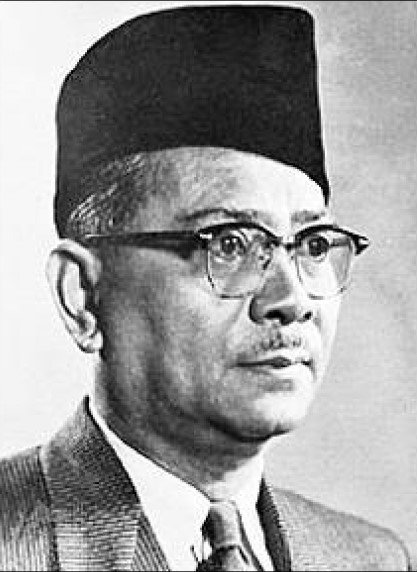
Tunku Abdul Rahman
First Prime Minister of MalaysiaThe independence leader who became Malaya’s first prime minister and helped define the federation that would become modern Malaysia.Read biography Malaysia · Politics
1925—
Mahathir Mohamad
Fourth and seventh Prime Minister of MalaysiaA physician-politician whose two premierships—separated by fifteen years—made him the longest-serving and one of the most consequential leaders in Malaysian history.Read biography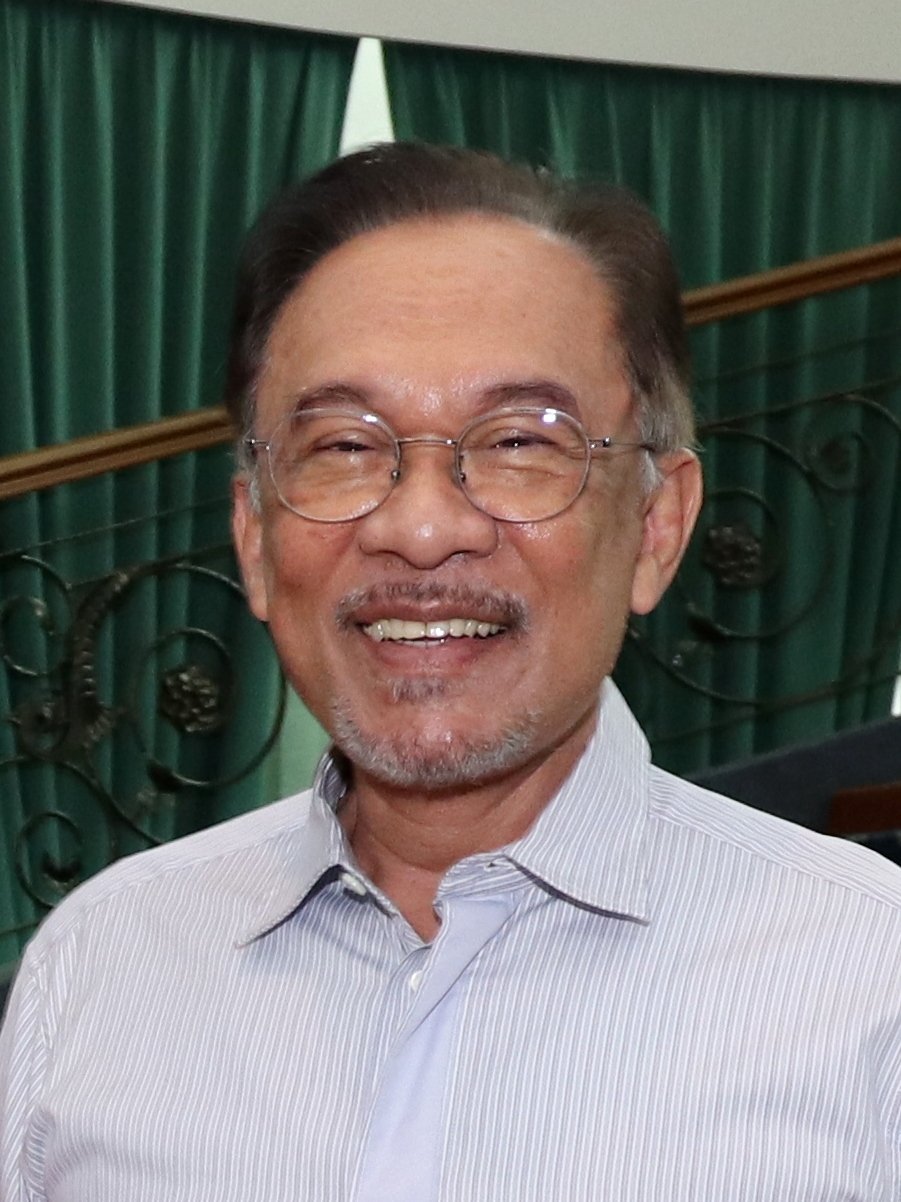 Malaysia · Politics
1947—
Anwar Ibrahim
Tenth Prime Minister of MalaysiaA student activist turned government minister, opposition leader and Malaysia’s tenth prime minister after one of the longest routes to national office.Read biography Malaysia · Politics
1952—
Wan Azizah Wan Ismail
Member of Parliament and former deputy prime ministerThe ophthalmologist who became a central Reformasi leader, Malaysia’s first woman opposition leader and its first woman deputy prime minister.Read biographyQuick answers
Common questions
- How many members are in Malaysia’s Dewan Rakyat?
- The Federal Constitution provides for 222 elected members, each representing a single parliamentary constituency.
- How many senators are in Malaysia’s Dewan Negara?
- The constitutional maximum is 70: 26 elected by the thirteen state legislative assemblies and 44 appointed by the Yang di-Pertuan Agong, including four for the federal territories.
- Can the Dewan Negara block a bill permanently?
- Generally no. Article 68 allows the Dewan Rakyat to overcome Senate delay after the constitutional procedure is satisfied; certified money bills may be delayed for only one month.
- How long can a Malaysian Parliament last?
- No longer than five years from its first meeting unless it is dissolved earlier. A general election must be held within sixty days after dissolution.
- Does the King have a permanent veto over legislation?
- No. Under Article 66, a bill becomes law after thirty days even if royal assent has not been signified, provided the parliamentary requirements have been met.
- What does Malaysia’s Public Accounts Committee do?
- The PAC examines federal accounts, public bodies administering public funds, Auditor-General reports and other financial matters referred to it or selected under Standing Order 77.
- What is the Parliamentary Services Act 2025?
- Act 869 creates a dedicated Parliamentary Service and Parliamentary Service Council so Parliament can administer its staffing, finances and institutional support with greater autonomy. It took effect on 1 October 2026.
- Where can the public read Malaysian parliamentary debates?
- Parliament publishes Dewan Rakyat and Dewan Negara Hansard, order papers, written answers, bills and committee material through its official portals and digital repository.
Primary and institutional sources
How this history was checked
The Federal Constitution and Standing Orders control the formal rules. Parliament’s own history, Hansard, committee guidance and repository show how those rules operate, while the Act 869 record verifies the autonomy reform that took effect on 1 October 2026. This article was reviewed on 4 October 2026.
- Attorney General’s Chambers of MalaysiaFederal Constitution — Current Official Legislation Portal
- Parliament of MalaysiaFunctions of Parliament
- Parliament of MalaysiaHistory of the Parliament of Malaysia
- Parliament of MalaysiaStanding Orders of the Dewan Rakyat
- Parliament of MalaysiaPublic Accounts Committee — Duties under Standing Order 77
- Parliament of MalaysiaGuidelines for Public Officers Appearing Before Dewan Rakyat Committees
- Parliament of Malaysia RepositoryParliamentary Services Bill 2025 — Bill and Debate Record
- Journal of the Malaysian ParliamentThe Parliamentary Services Act 2025: Institutional Reform
- Parliament of MalaysiaRoad to Nationhood — Suspension and Restoration of Parliament
- BernamaParliamentary Services Act and Constitutional Amendments Take Effect