The short answer
The Philippine Revolution entered open rebellion in August 1896 after the discovery of the Katipunan. It broke Spanish colonial rule but also exposed deep conflicts over leadership, strategy and the sovereignty of the republic proclaimed in 1898.
Chronology
A timeline of the turning points
The Katipunan is founded
Andrés Bonifacio and other activists organised the secret Kataastaasan, Kagalanggalangang Katipunan ng mga Anak ng Bayan, seeking separation from Spanish colonial rule.
The Cry signals open revolt
The National Historical Commission marker places the mass meeting and tearing of community tax certificates at Pugad Lawin on 23 August. Other witnesses and historians have proposed different dates and nearby sites.
Fighting spreads around Manila
Katipunan forces attacked at San Juan del Monte as armed uprisings spread across several provinces. Spanish authorities answered with arrests, executions and military operations.
José Rizal is executed
Rizal had rejected a premature armed rising and was not a Katipunan commander, but his execution at Bagumbayan intensified his place as a symbol of the struggle against colonial rule.
The Tejeros Convention reorganises power
Delegates in Cavite elected Emilio Aguinaldo president of a revolutionary government intended to replace the Katipunan structure. The disputed proceedings deepened the split with Bonifacio.
Bonifacio is executed
After arrest, trial and conviction by the revolutionary government, Bonifacio and his brother Procopio were executed in Maragondon, Cavite.
Biak-na-Bato creates a truce
An agreement with Spanish authorities sent Aguinaldo and other leaders into exile in Hong Kong. The settlement paused organised fighting but did not resolve the demand for independence.
Independence is proclaimed at Kawit
After returning to the Philippines, Aguinaldo proclaimed independence in Cavite. The act was followed by the Malolos Congress and the First Philippine Republic, while sovereignty remained contested internationally and by war.
The First Philippine Republic is inaugurated
The Malolos constitutional government formally began with Aguinaldo as president, converting revolutionary authority into a republican state project.
What was the Philippine Revolution?
The Philippine Revolution was an anti-colonial struggle that began as an organised uprising against more than three centuries of Spanish rule. Its central revolutionary organisation was the Katipunan, a secret society that aimed at national independence and built networks across Manila and neighbouring provinces.
The revolution was not a single, unified campaign. Local forces, elite reformers, workers, farmers and provincial leaders entered it with different experiences and aims. Military setbacks, regional rivalries and arguments about legitimate leadership shaped the movement alongside its fight against colonial authority.
The Katipunan and the disputed Cry
The discovery of the Katipunan in August 1896 forced a secret movement into open rebellion. Gatherings north of Manila culminated in a collective decision to resist Spanish rule; the tearing of cedulas, or community tax certificates, became the event’s enduring public symbol.
The familiar name “Cry of Pugad Lawin” compresses a genuine historical dispute. Participants later recalled different dates and locations, including Balintawak and nearby sitios. This timeline uses 23 August and Pugad Lawin because that is the date and site on the current NHCP historical marker, while treating the choice as an official commemoration rather than an uncontested fact.
Rizal, Bonifacio and Aguinaldo
José Rizal supplied the reformist writings and critique of colonial society that influenced a generation, but he did not lead the armed revolt and opposed launching it before the movement was adequately prepared. His execution made him a martyr whose meaning quickly exceeded his own political strategy.
Bonifacio transformed the independence idea into a mass revolutionary organisation. Aguinaldo emerged through the successful Cavite campaign and the Tejeros Convention. Their conflict—and Bonifacio’s execution under the new revolutionary government—shows that the revolution was also a contest over representation, command and the form of a future state.
From revolution to independence and war
The Pact of Biak-na-Bato produced a truce and exile, not a final settlement. War between Spain and the United States altered the strategic situation in 1898, allowing Aguinaldo to return and rebuild revolutionary authority before proclaiming independence on 12 June.
The declaration did not secure international recognition or uncontested sovereignty. Spain ceded the Philippines to the United States in the Treaty of Paris, and fighting between Filipino and American forces began in 1899. The revolution therefore belongs both to the end of Spanish rule and to the opening of a new struggle over Philippine independence.
Why 1896 still matters
The revolution created a durable language of nationhood, citizenship and sacrifice. It also established symbols and institutions—from the Katipunan to the Malolos Republic—that later generations used to argue about democracy, social equality and the unfinished work of independence.
Reading Rizal, Bonifacio and Aguinaldo together avoids a simple hero story. Reform, mass organisation and revolutionary government were distinct political paths, and their cooperation and conflict are central to understanding how the Philippine nation was imagined and fought for.
Continue the chronology
Related history guides
Philippines History Timeline
Place the revolution inside the longer history of colonisation, independence and democratic change.
Read the timelineNine sourced livesPhilippine Revolution Leaders
Meet reform writers, Katipunan organisers, women supporters and First Republic leaders.
Read the timeline1899—1901The First Philippine Republic
Continue from revolution to the Malolos Constitution and a government fighting for sovereignty.
Read the timeline1899—1902The Philippine–American War
Follow the republic’s struggle from conventional defence into regional guerrilla resistance.
Read the timelineConnected biographies
Nine biographies connecting reform, revolution and state-building
 Philippines · Politics
1812—1919
Melchora Aquino
Community supporter of the KatipunanA Filipino community elder known as Tandang Sora and the Mother of the Revolution for aiding Katipunan members in 1896.Read biography Philippines · Politics
1850—1896
Marcelo H. del Pilar
Writer, editor and Propaganda Movement leaderA Filipino lawyer, journalist and leading propagandist whose publications challenged clerical power and demanded political rights before the 1896 Revolution.Read biography Philippines · Politics
1861—1896
José Rizal
Writer, physician and reform advocateA physician, novelist and reformer whose writings challenged Spanish colonial rule and helped give Philippine nationalism a common language.Read biography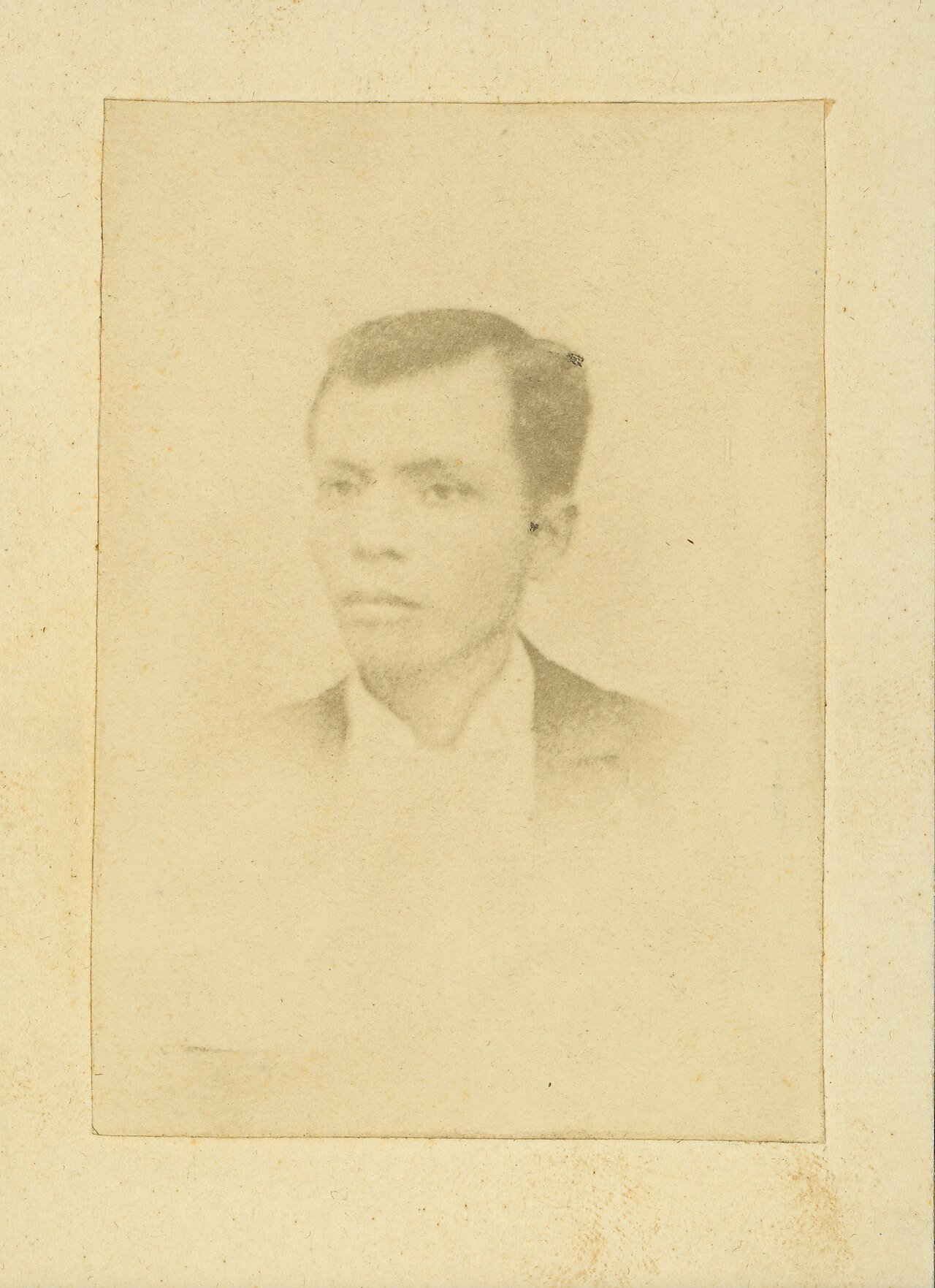 Philippines · Politics
1863—1897
Andrés Bonifacio
Founder and Supremo of the KatipunanThe organiser who founded the Katipunan, built a mass independence movement and led the Philippine Revolution into open revolt in 1896.Read biography1875—1943
Gregoria de Jesús
Lakambini and custodian of the KatipunanA Filipino revolutionary known as Oriang and the Lakambini of the Katipunan, who preserved its records and later wrote a firsthand account of her life.Read biography Philippines · Politics
1875—1899
Emilio Jacinto
Katipunan writer, secretary and revolutionary leaderA young Filipino writer and revolutionary remembered as the “Brains of the Katipunan,” its secretary and a close collaborator of Andrés Bonifacio.Read biography Philippines · Politics
1869—1964
Emilio Aguinaldo
Revolutionary leader and first president of the PhilippinesA revolutionary commander who declared independence from Spain and became president of the First Philippine Republic.Read biography Philippines · Politics
1864—1903
Apolinario Mabini
Political thinker and first prime minister of the PhilippinesThe lawyer and political thinker who became Emilio Aguinaldo’s chief adviser and the first prime minister and foreign secretary of the Philippine Republic.Read biography Philippines · Politics
1866—1899
Antonio Luna
Scientist, journalist and commanding generalA Filipino pharmacist, scientist, reform writer and general who tried to build a disciplined republican army before his assassination in 1899.Read biographyQuick answers
Common questions
- When did the Philippine Revolution begin?
- The Katipunan was founded in 1892, but the revolution entered open armed struggle in August 1896 after the secret organisation was discovered.
- Was the Cry on 23 or 26 August 1896?
- Sources differ. The current NHCP marker identifies Pugad Lawin on 23 August, while participants and historians have proposed other dates and nearby locations. The dispute is part of the event’s history.
- Did José Rizal lead the Philippine Revolution?
- No. Rizal’s writing influenced the nationalist movement, but he rejected the timing of the planned uprising and was not a Katipunan commander. His execution made him a powerful revolutionary symbol.
- What happened at the Tejeros Convention?
- Delegates elected a revolutionary government with Emilio Aguinaldo as president. Andrés Bonifacio rejected the proceedings after a public challenge to his elected office, intensifying a fatal leadership split.
- Did the revolution end in 1898?
- Spanish colonial rule ended, and independence was proclaimed in 1898, but the new republic was not internationally recognised. Conflict with the United States began in 1899.
Primary and institutional sources
How this history was checked
Dates, legal milestones and historical claims are checked against the official and institutional records below. This article was reviewed on 8 September 2026.
- National Historical Commission of the PhilippinesKatipunan historical marker
- National Historical Commission of the PhilippinesThe Cry of Pugad Lawin, 1896
- National Historical Commission of the PhilippinesAndrés Bonifacio historical marker
- National Historical Commission of the PhilippinesOrganization of the Revolutionary Government
- National Historical Commission of the PhilippinesJosé Rizal historical marker
- National Historical Commission of the PhilippinesSite of the Proclamation of Philippine Independence
- National Historical Commission of the Philippines1899 manifesto asserting independence
- U.S. Department of State, Office of the HistorianThe Philippine-American War, 1899–1902