
The short answer
Malaysia’s judiciary is more than a ladder of appeals. Trial jurisdiction, constitutional review, federalism, judicial appointments and the boundary with Syariah Courts each answer a different question. This guide maps the institutions and shows how to read a Malaysian court decision accurately.
The ordinary hierarchy
Six institutions and where each one fits
Jurisdiction depends on the claim, offence, origin of the case and legislation—not only on a court’s position in the diagram.
| Court | Main role | Typical route in | Important limit |
|---|---|---|---|
| Federal Court | Apex appeals and specified constitutional jurisdiction | Appeal with the required right or leave; constitutional reference or original filing | Not every case can reach it |
| Court of Appeal | Appeals from High Court decisions | Civil or criminal appeal under the governing rules | Some appeals require leave; some paths end here |
| High Court in Malaya | Superior trial, appeal, revision and judicial review in Peninsular Malaysia | Original filing or appeal from a subordinate court | Territorial jurisdiction differs from the Borneo High Court |
| High Court in Sabah and Sarawak | Coordinate superior jurisdiction in Sabah and Sarawak | Original filing or appeal from a subordinate court | Equal in status to the High Court in Malaya, not below it |
| Sessions Court | Higher-value subordinate civil trials and most criminal trials | Proceeding filed or charge brought within statutory jurisdiction | Cannot try offences punishable with death |
| Magistrates’ Court | Lower-value civil claims and less serious criminal trials | Proceeding filed or charge brought within statutory jurisdiction | Claim, offence and sentencing limits apply |
Chronology
A timeline of the turning points
A federal Supreme Court structure takes shape
The Federation of Malaya Agreement establishes a Supreme Court with a High Court and Court of Appeal, forming an institutional predecessor of the modern superior courts.
The independence Constitution establishes judicial offices
The Federal Constitution supplies the legal foundation for the superior courts, judicial appointments, tenure and constitutional adjudication in independent Malaya.
Malaysia creates a Federal Court and three High Courts
Formation produces the Federal Court and coordinate High Courts in Malaya, Singapore and the Borneo States. After Singapore leaves in 1965, two High Courts remain.
Appeals to the Privy Council end
Malaysia progressively ends external appeals, with the remaining route abolished by 1985. The national apex court becomes final within the domestic system.
A constitutional and judicial crisis damages confidence
Article 121 is amended and Lord President Salleh Abas is removed after tribunal proceedings. The crisis becomes a lasting reference point in debates over judicial power and executive influence.
The Special Court for the Rulers is established
Constitutional amendments create a court with jurisdiction over civil and criminal proceedings involving the Yang di-Pertuan Agong or a state Ruler in a personal capacity.
The Court of Appeal restores a two-stage appeal structure
The Supreme Court is renamed the Federal Court and a separate Court of Appeal is established between the High Courts and the apex court.
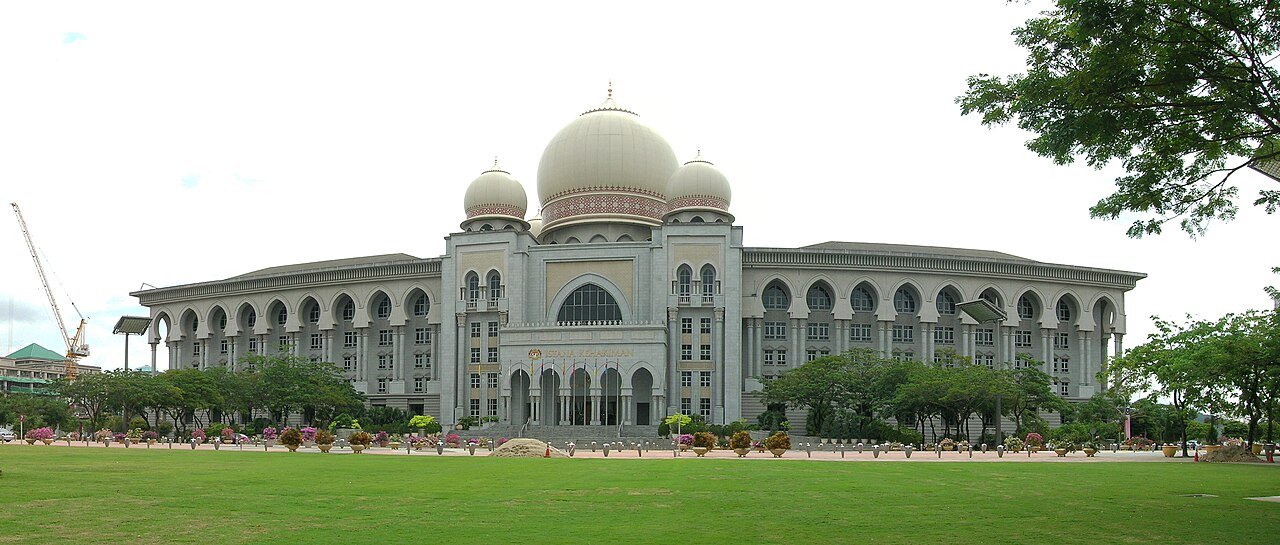
The apex courts move to the Palace of Justice
The Federal Court and Court of Appeal relocate to Putrajaya, while High Courts and subordinate courts continue operating through court complexes across the country.
The Judicial Appointments Commission begins work
Act 695 introduces a formal selection process for superior-court candidates before the constitutional appointment procedure under Article 122B.
Indira Gandhi affirms constitutional judicial power
The Federal Court confirms that civil courts retain authority to interpret the Constitution and review legality even when a dispute has an Islamic-law dimension.
Nik Elin clarifies the federal–state legislative boundary
The Federal Court invalidates challenged Kelantan provisions that entered Parliament’s federal criminal-law field, without deciding the theological validity of the conduct concerned.
Wan Ahmad Farid becomes Chief Justice
Tun Wan Ahmad Farid Wan Salleh takes office as Malaysia’s seventeenth Chief Justice and head of the Federal Court.
What is Malaysia’s court system?
Malaysia has a hierarchy of civil courts created by the Federal Constitution and federal legislation. At the top are the Federal Court, Court of Appeal and two High Courts of coordinate status. Below them are the Sessions Courts and Magistrates’ Courts established under the Subordinate Courts Act 1948.
The word “civil” can cause confusion. Here it describes the ordinary national court system, which hears both civil disputes and criminal cases. It does not mean that those courts hear only lawsuits between private parties. Criminal prosecutions, constitutional cases, judicial review and commercial litigation all move through this system.
Other forums sit beside rather than neatly below that hierarchy. State Syariah Courts administer the Islamic family and Syariah-offence jurisdiction granted by state law. Native Courts operate in Sabah and Sarawak. The Special Court deals with proceedings involving the King or a Ruler personally, while tribunals and specialist bodies decide defined statutory disputes.
How is the ordinary court hierarchy organised?
Magistrates’ Courts and Sessions Courts are the main trial courts for matters within their statutory limits. The official judiciary guide states that Magistrates’ Courts generally hear civil claims below RM100,000 and criminal offences whose maximum imprisonment does not exceed ten years, although their sentencing power is separately limited. Sessions Courts generally hear civil claims above RM100,000 up to RM1 million and criminal cases other than offences punishable with death.
The High Courts have original jurisdiction over serious criminal cases, higher-value civil claims and subjects assigned exclusively to them, including bankruptcy, companies, admiralty and probate matters. They also hear appeals and exercise revisionary or supervisory powers over subordinate courts. A case may therefore reach a High Court either as a trial or as an appeal.
The Court of Appeal reviews appealable High Court decisions. The Federal Court is the apex court, but a further appeal is not automatic in every case. The originating court, subject matter, governing statute and any requirement for leave determine the available route. A case that begins in a subordinate court does not ordinarily receive an unlimited path through every superior level.
Why does Malaysia have two High Courts?
Article 121 provides for the High Court in Malaya and the High Court in Sabah and Sarawak. They have coordinate jurisdiction and status: one is not an appellate court above the other. The distinction follows Malaysia’s federal formation and preserves separate territorial judicial administrations for Peninsular Malaysia and the Borneo states.
The High Court in Malaya generally handles matters arising in Peninsular Malaysia. The High Court in Sabah and Sarawak handles matters within those states. Each has a Chief Judge, registries and judicial stations, while the Chief Justice leads the national judiciary and the Federal Court remains the final apex court for both territories.
Territory can affect venue, procedure and professional rights, especially because Sabah and Sarawak maintain distinct legal traditions and rules governing admission to practise. Coordinate status nevertheless means that both High Courts exercise the superior-court authority assigned by the Constitution and federal law.
What does the Federal Court decide?
The Federal Court hears appeals permitted by the Courts of Judicature Act and the Constitution. In civil matters, an appellant commonly needs leave on a qualifying legal question. Criminal appeal routes depend on where the proceeding began and on the relevant law. The apex court’s judgment binds lower courts on the legal issues it decides.
It also has original constitutional jurisdiction under Article 128 over challenges that a law was made outside Parliament’s or a state legislature’s lawmaking power, and over disputes between states or between the Federation and a state. Constitutional questions may also reach it through reference procedures.
Article 130 allows the Yang di-Pertuan Agong to refer a question about the effect of a constitutional provision for the Federal Court’s opinion. These original, appellate, reference and advisory functions are distinct; not every constitutional argument begins directly in the Federal Court.
What is judicial review?
Judicial review asks whether a public authority acted within the law. A High Court may examine jurisdiction, relevant considerations, procedural fairness, constitutional rights and other recognised public-law grounds. The court does not simply replace a lawful policy choice with the judge’s preferred outcome.
Constitutional review is broader where the validity of legislation or the protection of fundamental liberties is at issue. The Federal Constitution is the supreme law under Article 4. Courts interpret its text, decide whether federal and state lawmakers stayed within their respective fields and can grant remedies when executive action is unlawful.
A judicial-review result is not automatically a criminal acquittal, a new policy or an award of damages. The remedy may quash a decision, prohibit action, compel performance of a public duty, declare the legal position or return the matter to the lawful decision-maker.
How are judges appointed?
Superior-court judges are formally appointed by the Yang di-Pertuan Agong acting on the advice of the prime minister after consultation with the Conference of Rulers under Article 122B. The Constitution also specifies consultations with senior judicial officeholders for appointments below the office of Chief Justice.
Since 2009, the Judicial Appointments Commission has identified and evaluated candidates before that constitutional stage. Act 695 directs it to consider integrity, competency, experience, impartiality, decision-making, judgment writing, case management, health and diversity of legal expertise. It submits selected names for the prime minister’s consideration.
The Commission adds a structured merit process but does not replace Article 122B. That distinction matters when assessing independence: selection, executive advice, royal appointment, consultation and later security of tenure are separate safeguards, each with its own institutional limits.
How is judicial independence protected?
Judicial independence means judges decide according to law and evidence rather than instructions from government, parties or public pressure. Constitutional tenure, remuneration arrangements, judicial oaths, open reasons, appeals and the law of contempt all support that function.
A superior-court judge does not hold office at ordinary executive pleasure. Article 125 supplies a tribunal process for removal on specified grounds and protects remuneration after appointment. Judges generally retire at sixty-six, with a possible extension of up to six months under the Constitution.
Independence is institutional as well as personal. Appointment design, transparent case allocation, adequate budgets, professional court administration, reasoned judgments and freedom from intimidation all affect whether a court can act independently. Accountability is not its opposite: appeal, published reasons and enforceable ethics are mechanisms that make independent power lawful and reviewable.
Why does the 1988 judicial crisis still matter?
In 1988, a conflict involving the executive and senior judiciary led to the suspension and removal of Lord President Salleh Abas and disciplinary action against other Supreme Court judges. Article 121 had also been amended, replacing an express reference to judicial power with jurisdiction conferred by federal law.
The episode became a defining warning about executive pressure and the fragility of institutional safeguards. Later judicial decisions developed the basic-structure doctrine and reaffirmed that judicial power, separation of powers and constitutional review cannot be reduced to ordinary administrative functions.
The legal position has evolved through judgments and reforms, but the constitutional wording has not simply returned to its pre-1988 form. That is why proposals to amend Article 121, strengthen appointments and protect administrative autonomy continue to be debated rather than treated as settled by symbolism alone.
How do civil and Syariah courts relate?
The Constitution divides legislative subjects and recognises state Syariah Courts for persons professing Islam in matters within the State List. Article 121(1A) says the civil courts have no jurisdiction over matters within the jurisdiction of the Syariah Courts. The boundary depends on the Constitution and valid legislation, not only on whether a dispute mentions Islam.
Federal Court decisions including Indira Gandhi explain that civil courts retain authority to interpret the Constitution, review public bodies and determine whether a legislature or Syariah court stayed within its legal jurisdiction. The Syariah Courts, meanwhile, decide validly assigned Islamic family, personal and offence matters within statutory limits.
Nik Elin in 2024 concerned legislative competence, not whether the challenged conduct was acceptable in Islam. The Court held that several Kelantan provisions entered the federal criminal-law field. Distinguishing theology, legislative power and court jurisdiction is essential to describing such cases accurately.
What should readers check when following a court case?
First identify the court, the procedural stage and the order actually made. A charge is not a conviction; leave to appeal is not success on the appeal; a stay pauses enforcement but does not erase the judgment; and a dissent is not the binding result of a majority decision.
Read the judgment or an official press summary when available. Headlines often merge the evidence, the parties’ submissions and the court’s findings. A written judgment separates those categories and identifies the legal rule, remedy and any limits on the decision.
Finally, check whether an appeal remains available and whether the decision has been stayed, reversed or distinguished. Malaysia’s eJudgment system, official court portal and cause lists are stronger starting points than screenshots detached from a case number and date.
Continue the chronology
Related history guides
Attorney General vs Public Prosecutor
Separate legal advice, prosecution decisions, investigation and judicial judgment.
Read the timeline1957–presentMalaysia’s Constitutional Monarchy
Understand royal appointments, advice, discretion and the Special Court.
Read the timeline1957–presentHow Malaysia’s Parliament Works
See how legislation is made before courts interpret and apply it.
Read the timeline1967–presentMACC: History, Powers and Oversight
Follow the distinct roles of investigators, prosecutors and courts.
Read the timelineBiography context
Explore Malaysia through connected lives
Explore Malaysia
Browse biographies and sourced guides to Malaysia’s national institutions.
Explore the biographiesCourt case contextThe 1MDB Scandal
Trace investigation, trial, appeal and asset-recovery processes without collapsing their legal stages.
Explore the biographiesReform contextMalaysia’s Reformasi Movement
Connect judicial independence and institutional reform to a longer political movement.
Explore the biographiesConnected biographies
Four political lives intersecting constitutional design and judicial reform
 Malaysia · Politics
1903—1990
Tunku Abdul Rahman
First Prime Minister of MalaysiaThe independence leader who became Malaya’s first prime minister and helped define the federation that would become modern Malaysia.Read biography Malaysia · Politics
1925—
Mahathir Mohamad
Fourth and seventh Prime Minister of MalaysiaA physician-politician whose two premierships—separated by fifteen years—made him the longest-serving and one of the most consequential leaders in Malaysian history.Read biography Malaysia · Politics
1939—2025
Abdullah Ahmad Badawi
Fifth Prime Minister of MalaysiaA career civil servant and politician whose premiership opened with a reform mandate and Malaysia’s largest parliamentary victory.Read biography Malaysia · Politics
1947—
Anwar Ibrahim
Tenth Prime Minister of MalaysiaA student activist turned government minister, opposition leader and Malaysia’s tenth prime minister after one of the longest routes to national office.Read biographyQuick answers
Common questions
- What is the highest court in Malaysia?
- The Federal Court is Malaysia’s apex court. It hears permitted appeals and also has original, reference and advisory jurisdiction in specified constitutional matters.
- What are Malaysia’s superior courts?
- They are the Federal Court, Court of Appeal, High Court in Malaya and High Court in Sabah and Sarawak.
- Are the two High Courts ranked differently?
- No. The High Court in Malaya and High Court in Sabah and Sarawak have coordinate jurisdiction and status, with different territorial administrations.
- Can every case be appealed to the Federal Court?
- No. Appeal rights depend on where the case began, whether it is civil or criminal, the governing legislation and any requirement to obtain leave.
- Who appoints Malaysian superior-court judges?
- The Yang di-Pertuan Agong appoints them under Article 122B on the prime minister’s advice after the constitutionally required consultations. The Judicial Appointments Commission conducts the preceding selection process.
- Do civil courts have authority over Syariah Courts?
- They are separate systems with different jurisdictions. Civil superior courts retain constitutional interpretation and judicial-review authority, while Syariah Courts decide matters validly assigned to them under state law.
- What is judicial review in Malaysia?
- It is the process by which a superior court examines whether a public authority acted lawfully, constitutionally and with required procedural fairness.
- Who is Malaysia’s Chief Justice in 2026?
- Tun Wan Ahmad Farid Wan Salleh has served as Chief Justice since 28 July 2025.
Primary and institutional sources
How this history was checked
The Constitution and federal statutes control jurisdiction and appointments. The judiciary’s official portal verifies the current hierarchy and officeholders; court judgments and judicial speeches explain constitutional review, the 1988 crisis and the civil–Syariah boundary. This article was reviewed on 4 October 2026.
- Attorney General’s Chambers of MalaysiaFederal Constitution — Current Official Legislation Portal
- Office of the Chief Registrar, Federal Court of MalaysiaOfficial Court Hierarchy and Public Access Portal
- Office of the Chief Registrar, Federal Court of MalaysiaJurisdiction of the Federal Court
- Office of the Chief Registrar, Federal Court of MalaysiaJurisdiction of the High Courts
- Office of the Chief Registrar, Federal Court of MalaysiaJurisdiction of the Sessions and Magistrates’ Courts
- Office of the Chief Registrar, Federal Court of MalaysiaFederal Court — Institutional History
- Judicial Appointments Commission MalaysiaThe Commission and the Article 122B Appointment Process
- Judicial Appointments Commission MalaysiaSelection Criteria for Superior-Court Judges
- Judiciary of MalaysiaChallenges to Judicial Independence — Official Judicial Speech
- Judiciary of MalaysiaJudicial Power, Article 121(1A) and Indira Gandhi
- Federal Court of MalaysiaJudgment Summary — Nik Elin v Kelantan
- Office of the Chief Registrar, Federal Court of MalaysiaChief Justice Tun Wan Ahmad Farid Wan Salleh