
The short answer
Malaysia’s election system turns local constituency votes into federal and state legislatures. It does not directly elect a prime minister, award seats by national vote share or place every election on one calendar. This guide follows the process from voter registration and dissolution to counting, government formation and petitions.
One election, several stages
From the electoral roll to a government
Each stage has a different legal actor and produces a different kind of result.
| Stage | Who acts | What happens | What it does not decide |
|---|---|---|---|
| Registration | Election Commission and eligible citizen | Automatic entry and approved address or category updates | A place in a party or a guarantee of turnout |
| Dissolution or vacancy | Constitutional officeholders and legislature | Creates the legal need for a general election or by-election | The polling date itself |
| Election timetable | Election Commission | Writ, nomination, advance-voting and polling dates | Which candidate will win |
| Nomination | Returning officer and prospective candidates | Valid candidates and any uncontested return are confirmed | Government formation |
| Voting | Registered electors and polling staff | One secret choice in each relevant constituency contest | A direct national choice of prime minister |
| Counting and declaration | Counting staff, agents and returning officer | Valid votes are totalled and one constituency winner declared | Whether a multiparty bloc commands the House |
| Government formation | Elected MPs, political parties and the King | A prime minister likely to command majority confidence is appointed | A change to certified constituency totals |
| Election petition | Election Court and authorised petitioner | The validity of a return is tested on statutory grounds | A general political appeal against the result |
Chronology
A timeline of the turning points
The Federation holds its first nationwide federal election
Voters elect 52 members to the Federal Legislative Council. The Alliance wins 51 seats, creating the elected mandate that Tunku Abdul Rahman carries into independence negotiations.
The Election Commission is established
The new constitutional commission begins administering elections, electoral rolls and constituency reviews for independent Malaya.
The first post-independence general election is held
Electors choose all 104 members of the first Dewan Rakyat under the constitutional system created at independence.
The system expands with the formation of Malaysia
Sabah, Sarawak and Singapore enter the federation. Singapore leaves in 1965, while federal representation and separate Borneo electoral units remain central to the national design.
Local-government elections cease nationwide
The Local Government Act consolidates an appointed-council model in Peninsular Malaysia. Contemporary Malaysian voters directly elect federal and state representatives, not local councillors in ordinary local elections.
Ballots are counted at individual polling streams
The Election Commission moves ordinary-vote counting to the same polling streams where ballots are cast, while postal and advance ballots follow separate controlled procedures.
GE14 produces the first federal change of government
Pakatan Harapan and its allies defeat Barisan Nasional, demonstrating that the single-member system can produce alternation after six decades of Alliance and BN rule.
The Dewan Rakyat approves Undi18 unanimously
The constitutional amendment lowers the voting and candidacy ages from 21 to 18 and provides for automatic voter registration.
Undi18 and automatic registration take effect
Eligible citizens aged 18 and above begin entering the electoral roll automatically, subject to constitutional residence and disqualification rules.
GE15 returns a hung Dewan Rakyat
No coalition wins 112 of the 222 seats. The post-election appointment process shows why Malaysians elect MPs rather than directly electing a prime minister.
What do Malaysians vote for?
Malaysians directly elect one member for each Dewan Rakyat constituency and one member for each state legislative constituency. A general election may therefore involve two separate ballot papers: one for Parliament and one for the relevant state assembly. Elections can be held together or on different dates because Parliament and each state assembly have separate constitutional terms and dissolution decisions.
Voters do not cast a direct national ballot for prime minister, governing coalition or federal Cabinet. They elect 222 members of the Dewan Rakyat. After the election, the Yang di-Pertuan Agong appoints as prime minister the member of that House who in his judgment is likely to command the confidence of the majority.
The Senate is not chosen in the same general election. State assemblies elect two senators each, while the King appoints the remaining senators on constitutional advice. Ordinary local councils are also appointed rather than elected under the current system, so “Malaysia election” normally means a parliamentary, state or by-election.
How does first past the post work?
Every parliamentary or state constituency elects one representative. The candidate with the most valid votes wins, even if that candidate receives less than half of all votes cast. There is no second round and no national party-list tier. This is the first-past-the-post, or simple-plurality, system.
Seats rather than nationwide vote share decide control of a legislature. A party can win many votes by large margins in a smaller number of constituencies yet secure fewer seats than a competitor whose support is distributed efficiently across more close contests. Coalition strategy, candidate placement and regional concentration therefore matter alongside total votes.
A federal government needs continuing majority confidence in the Dewan Rakyat, not necessarily a majority of the nationwide popular vote. A single coalition may reach 112 seats, several parties may negotiate a post-election agreement, or a minority administration may survive through confidence-and-supply support.
When must a general election be held?
Under Article 55, the Dewan Rakyat continues for five years from its first meeting unless dissolved earlier. An election must be held within sixty days after dissolution. State constitutions establish comparable rules for their assemblies, but a state poll does not have to follow the federal calendar.
The prime minister may advise the King to dissolve Parliament before the five-year term expires. The King has constitutional discretion to withhold consent to a request for dissolution. If no early dissolution occurs, the House expires automatically at the end of its term and an election still follows within the constitutional period.
A vacancy between general elections may trigger a by-election, subject to constitutional exceptions near the end of a term and rules about whether a vacancy affects majority support. The Election Commission fixes the nomination, advance-voting and polling dates after receiving formal notice of dissolution or vacancy.
Who can register and vote?
Article 119 and the registration regulations govern eligibility. A Malaysian citizen aged at least 18, resident in a constituency for registration purposes and not constitutionally disqualified is entered on the electoral roll automatically. Automatic registration began on 15 December 2021.
Automatic registration does not make the voting address self-correcting. Constituency placement follows the address information linked to the voter’s National Registration Department record and any approved transfer. A voter should check MySPR Semak before an election because voting takes place only in the assigned constituency, polling centre and stream.
Ordinary voters attend on polling day. Defined groups vote in advance, including eligible police and armed-forces personnel and specified spouses. Approved absent voters, election workers, Malaysians abroad and other gazetted categories may use postal voting. Eligibility and application requirements differ, so “unable to attend” does not by itself create a general postal vote.
What happens from dissolution to nomination?
Once the relevant House is dissolved or a vacancy is notified, the Election Commission meets and issues a writ to the returning officer. The official notice identifies nomination day, advance polling and ordinary polling. Conduct regulations require minimum intervals, while the Commission chooses the actual timetable within the Constitution and law.
On nomination day, prospective candidates file the required papers and election deposit within the designated period. A candidate may represent a registered party or stand as an independent. If only one qualified candidate remains, that person is returned unopposed; otherwise the returning officer declares a contest.
The formal campaign begins after nomination and ends at midnight before polling day. Candidates and parties must comply with the Election Offences Act, spending limits, campaign-material rules and restrictions on treating, bribery, undue influence and official misconduct. Enforcement can involve the Commission, police, anti-corruption authorities, local authorities and the courts, depending on the conduct alleged.
How does polling day work?
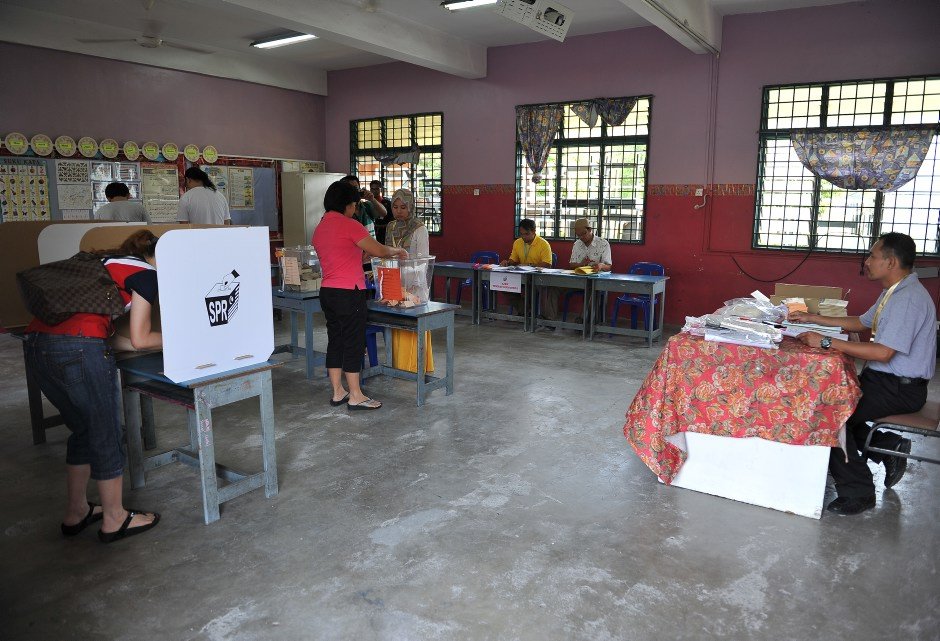
A voter presents identification at the assigned polling stream, is checked against the electoral roll and shows the relevant finger before indelible ink is applied. The voter receives the ballot, marks one candidate in secret and deposits the folded paper into the sealed box. Election officials must explain procedure without directing the choice.
Candidate-appointed polling agents may observe key safeguards, including the empty box before polling, voter processing and closure. Assistance for a voter who cannot mark the ballot personally is regulated so that accessibility does not remove secrecy or permit uncontrolled proxy voting.
Advance and postal ballots are handled before polling day but are not simply added privately to a total. They are secured and counted under defined procedures in the presence of appointed agents. Different voting methods answer logistical needs; every accepted ballot still counts toward the same constituency contest.
How are votes counted and a winner declared?
After a polling stream closes, ordinary ballots are counted there in front of counting agents. Officials reconcile papers issued, unused and spoiled, separate rejected ballots and record each candidate’s total. Since 2008, this stream-level count has reduced the need to move ordinary ballot boxes to one central count before inspection.
The returning officer receives the certified stream results together with postal and advance totals, conducts the official addition of votes and declares the candidate with the highest valid total elected. A close result may involve a recount request under the regulations, but the returning officer’s declaration is not an informal projection.
Party leaders then compare seat totals and evidence of support. The Election Commission declares constituency winners; it does not appoint the prime minister or decide which multiparty agreement commands confidence. Those are constitutional questions involving the King and the elected House.
How can an election result be challenged?
An election result is challenged through an election petition, not by asking the Election Commission to reverse the declared outcome. The official election guide states that a petition ordinarily must be filed within twenty-one days from gazettement of the result, subject to the governing statutory rules.
Recognised grounds include corrupt or illegal practices, material non-compliance with election law, disqualification and misconduct capable of affecting the election. Not every administrative error voids a result. The Election Court examines the pleaded ground, evidence, legal consequence and whether the statutory test has been met.
Criminal investigation and an election petition are different proceedings. A person can report bribery or intimidation to the relevant enforcement agency while a candidate or elector pursues the civil statutory route concerning the validity of the return. Deadlines and standing make early legal advice important.
Why can votes have unequal electoral impact?
First past the post converts votes into seats constituency by constituency. Differences in constituency size, turnout, margins and geographic concentration mean that equal individual ballots do not always contribute equally to a party’s national seat total.
The Thirteenth Schedule says elector numbers within each constituency in a state ought to be approximately equal, while permitting a measure of area weightage for rural access and requiring attention to administrative facilities and local ties. The absence of a fixed numerical deviation cap makes the boundary process politically consequential.
Malapportionment means constituencies contain substantially different numbers of electors; gerrymandering refers to boundary choices that advantage a political side. They are related but not identical. A large urban seat can be malapportioned without an oddly shaped boundary, while a boundary can be strategically drawn even where electorate totals look similar.
What should voters verify before relying on an election claim?
Separate votes, seats and government formation. A coalition may lead the popular vote but not the seat count; an election-night projection is not an official return; and the largest bloc is not automatically the government if another grouping proves majority confidence.
Use the Election Commission’s result dashboard, gazettes and open-data portal for constituency totals. Check whether a number refers to registered electors, ballots issued, turnout, valid votes or votes for a party. These denominators answer different questions and should not be merged.
For procedural disputes, identify the specific constituency, regulation, form and stage. A social-media photograph may reveal a concern but cannot by itself show how officials recorded it, whether agents objected, whether a recount occurred or whether a court later found the result affected.
Continue the chronology
Related history guides
Malaysia Elections: GE12–GE15 Compared
See first-past-the-post, turnout and government formation operate across four real elections.
Read the timeline5 May 2013Malaysia’s 2013 General Election
Study the clearest example of a national popular-vote leader winning fewer seats.
Read the timeline19 November 2022Malaysia’s 2022 General Election
See how a hung Parliament moved from constituency results to government formation.
Read the timeline1957–presentMalaysia’s Election Commission
Understand SPR powers, commissioner safeguards, boundary reviews and reform proposals.
Read the timeline1957–presentHow Malaysia’s Parliament Works
See what elected MPs do after constituency results become a legislature.
Read the timeline2018Malaysia’s 2018 General Election
Follow GE14 results, institutional pressure and the first federal transfer of power.
Read the timeline2005–presentMalaysia’s Bersih Movement
Trace civil-society campaigns for cleaner rolls, fairer boundaries and stronger oversight.
Read the timelineBiography context
Explore Malaysia through connected lives
Explore Malaysia
Browse biographies and sourced guides to Malaysian government, politics and public life.
Explore the biographiesConstitutional contextMalaysia’s Constitutional Monarchy
Understand dissolution, royal discretion and appointment of a prime minister.
Explore the biographiesPolitical changeMalaysia’s Reformasi Movement
Connect electoral competition to the longer campaign for democratic reform.
Explore the biographiesConnected biographies
Five political lives connecting elections, coalitions and transfers of power
 Malaysia · Politics
1903—1990
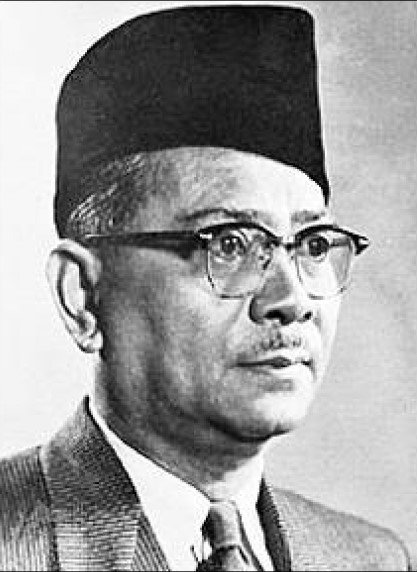
Tunku Abdul Rahman
First Prime Minister of MalaysiaThe independence leader who became Malaya’s first prime minister and helped define the federation that would become modern Malaysia.Read biography Malaysia · Politics
1925—
Mahathir Mohamad
Fourth and seventh Prime Minister of MalaysiaA physician-politician whose two premierships—separated by fifteen years—made him the longest-serving and one of the most consequential leaders in Malaysian history.Read biography Malaysia · Politics
1953—
Najib Razak
Sixth Prime Minister of MalaysiaA political heir who led Malaysia for nine years before an historic election defeat and convictions in the SRC International and main 1MDB cases.Read biography Malaysia · Politics
1952—
Wan Azizah Wan Ismail
Member of Parliament and former deputy prime ministerThe ophthalmologist who became a central Reformasi leader, Malaysia’s first woman opposition leader and its first woman deputy prime minister.Read biography Malaysia · Politics
1947—
Anwar Ibrahim
Tenth Prime Minister of MalaysiaA student activist turned government minister, opposition leader and Malaysia’s tenth prime minister after one of the longest routes to national office.Read biographyQuick answers
Common questions
- Do Malaysians directly elect the prime minister?
- No. Malaysians elect members of the Dewan Rakyat. The Yang di-Pertuan Agong appoints as prime minister the MP likely to command majority confidence in that House.
- How many parliamentary constituencies does Malaysia have?
- Malaysia has 222 Dewan Rakyat constituencies, each returning one member under first past the post.
- Does a candidate need more than 50 percent to win?
- No. The candidate with the most valid votes wins, even without an absolute majority in a multi-candidate contest.
- At what age can a Malaysian vote?
- Eligible Malaysian citizens are automatically registered from age 18 under the Undi18 changes that took effect on 15 December 2021.
- Are federal and state elections always held together?
- No. Parliament and each state assembly have separate terms and dissolution decisions, so their elections can occur together or on different dates.
- Can every Malaysian vote by post?
- No. Postal voting is available to categories authorised by law and the Election Commission, with applications required for some categories.
- Who counts votes in Malaysia?
- Election officials count ordinary ballots at polling streams with counting agents present. The returning officer performs the official addition and declares the constituency winner.
- How is a Malaysian election result challenged?
- Through an election petition in the Election Court on statutory grounds and within the applicable deadline, ordinarily twenty-one days after gazettement of the result.
Primary and institutional sources
How this history was checked
The Federal Constitution establishes terms, voting eligibility and government formation. Election Commission legislation, regulations, voter guidance and open data establish the operational process; parliamentary records verify the Undi18 changes. This article was reviewed on 4 October 2026.
- Attorney General’s Chambers of MalaysiaFederal Constitution — Official Legislation Portal
- Election Commission of MalaysiaHow a General Election Is Conducted
- Election Commission of MalaysiaElection Legislation, Regulations and Constitutional Provisions
- Election Commission of MalaysiaVoter Registration and Automatic Registration
- Election Commission Voter Education PortalPolling, Advance Voting and Vote Counting
- Election Commission of MalaysiaElections (Conduct of Elections) Regulations 1981
- Election Commission of MalaysiaOfficial Explanation of Undi18
- Election Commission of MalaysiaOfficial Open Data and GE15 Statistics
- Election Commission of MalaysiaGE15 Final Parliamentary Seat Results
- Parliament of MalaysiaParliament Journal — Undi18 and Automatic Registration