The short answer
Malaysia’s modern history connects elected self-government, independence, federation and economic transformation with social conflict, Reformasi and increasingly competitive coalition politics. This chronology keeps the constitutional distinctions visible while linking major events to the people, institutions and policy choices that shaped them.
Chronology
A timeline of the turning points
The Alliance wins the first federal election
The Alliance captured 51 of 52 elected seats. Tunku Abdul Rahman became chief minister and led the final negotiations for independence.
The Federation of Malaya becomes independent
Tunku proclaimed independence at Stadium Merdeka, beginning sovereign parliamentary government under a constitutional monarchy.
Malaysia is formed
The Federation of Malaya joined with Sabah, Sarawak and Singapore after consultation, treaty-making and constitutional amendment.
Singapore separates from Malaysia
Parliament passed the legislation for separation, leaving Malaysia with the thirteen states that constitute the federation today.
Communal violence leads to emergency rule
Deadly violence followed the general election. Parliament was suspended and the National Operations Council governed under Abdul Razak.
Rukun Negara and the New Economic Policy
The national principles were proclaimed during the emergency, while the Second Malaysia Plan introduced a long-term policy of poverty reduction and social restructuring.
Parliamentary government resumes
Parliament reconvened after twenty-one months of emergency administration, restoring the ordinary constitutional forum for federal lawmaking.
Mahathir begins a new development era
Mahathir Mohamad became prime minister and pursued heavy industry, privatisation, infrastructure building and a more assertive foreign policy.
The first Proton Saga is launched
The national car became the most visible symbol of the heavy-industry strategy, alongside a wider shift toward export-oriented manufacturing.
Vision 2020 sets a national development horizon
Mahathir presented an ambition for Malaysia to become a fully developed society, linking economic growth with social and institutional goals.
The Asian financial crisis transforms economic policy
Currency and market turmoil produced recession and financial restructuring. Malaysia imposed selective exchange controls and fixed the ringgit at RM3.80 to the U.S. dollar.
Anwar’s dismissal catalyses Reformasi
Mahathir removed Deputy Prime Minister Anwar Ibrahim. Anwar’s arrest, prosecution and supporters’ mobilisation reshaped opposition politics and demands for institutional reform.
Barisan Nasional loses its two-thirds majority
The governing coalition retained federal power but suffered a major electoral setback as opposition parties expanded their parliamentary and state-level strength.
1MDB becomes a national accountability crisis
Investigations and parliamentary scrutiny of the state-owned company’s governance, borrowing and transactions intensified domestic debate over public institutions and corruption.
Malaysia experiences its first federal change of government
Pakatan Harapan defeated Barisan Nasional in the fourteenth general election, and Mahathir returned as the seventh prime minister.
Coalition realignment changes the government mid-term
Mahathir resigned after Pakatan Harapan lost its majority. Following royal consultations, Muhyiddin Yassin was appointed prime minister.
The first nationwide Movement Control Order begins
Malaysia restricted movement and closed its international borders as the health system responded to the COVID-19 pandemic.
A second mid-term transition brings Ismail Sabri to office
Muhyiddin resigned after losing majority support, and Ismail Sabri Yaakob became the ninth prime minister five days later.
The first hung parliament leads to a unity government
No coalition won a majority in the fifteenth general election. Anwar Ibrahim was appointed tenth prime minister after consultations among parties and the monarchy.
How should a Malaysia history timeline be read?
A national timeline compresses overlapping experiences into a single sequence. The dates below prioritise constitutional change, elections, public policy, economic transformation and social mobilisation, then connect those events to fuller biographies and specialist guides.
The terminology matters. The Federation of Malaya became independent in 1957; Malaysia was created as a wider federation in 1963. Treating those dates as interchangeable erases the distinct decisions and safeguards associated with Sabah and Sarawak, as well as Singapore’s participation and later separation.
From elected self-government to the Malaysian federation
The 1955 election gave the Alliance an overwhelming mandate and placed Tunku Abdul Rahman at the head of an elected government. Negotiations with Britain and the Malay Rulers produced independence on 31 August 1957, with federalism, constitutional monarchy and parliamentary cabinet government as the new state’s institutional core.
Malaysia’s formation in 1963 required a different negotiation. Malaya, Sabah, Sarawak and Singapore entered the federation after commissions, intergovernmental bargaining, a signed international agreement and constitutional change. Brunei did not join, and Singapore separated less than two years later.
Why were 1969, Rukun Negara and the NEP turning points?
Deadly communal violence after the May 1969 election led to a national emergency, suspension of Parliament and rule through the National Operations Council. Any responsible account has to recognise both the victims and the way later official narratives shaped public discussion of the event.
The Rukun Negara articulated national principles in 1970. The New Economic Policy then pursued two stated goals: eradicating poverty irrespective of race and restructuring society so that ethnicity would no longer be identified with economic function. Its development effects, affirmative-action mechanisms and uneven outcomes remain central to Malaysian political debate.
How did Malaysia move from commodities to industry?
Early development policy expanded rural infrastructure, education and land development while the economy still depended heavily on rubber, tin and other commodities. From the 1970s and especially the 1980s, manufacturing, urbanisation and external trade became more important.
Mahathir’s first premiership combined state-led heavy industry and large infrastructure projects with policies that attracted export-oriented foreign investment. Proton symbolised the first approach; the electrical and electronics supply chain reflected the second. Growth and modernisation were substantial, but protection, concentration of power, patronage and uneven opportunity generated lasting criticism.
What connected the Asian financial crisis and Reformasi?
The regional crisis beginning in 1997 weakened the ringgit, markets, firms and household security. Malaysia initially tightened policy, then adopted a distinctive recovery strategy in September 1998: selective capital controls, removal of offshore ringgit trading and a fixed exchange rate.
At the same moment, a political rupture opened inside the government. Mahathir dismissed Anwar Ibrahim, who was later arrested and prosecuted. The Reformasi movement linked his treatment to wider demands for judicial independence, cleaner government and democratic competition. The economic and political crises were related in time but should not be reduced to a single cause.
How did electoral competition produce the 2018 transfer?
The 2008 election broke Barisan Nasional’s two-thirds parliamentary majority and expanded opposition control at state level. Opposition cooperation remained unstable, yet elections became more competitive while civil-society campaigns pressed questions of electoral fairness, corruption and institutional accountability.
Parliament’s Public Accounts Committee scrutinised 1MDB from 2015 and reported serious weaknesses in its capital structure, governance and debt management. By 2018, the scandal joined cost-of-living and reform concerns in the campaign. Pakatan Harapan’s victory created the first federal party turnover since independence, completed peacefully through existing constitutional institutions.
Why did Malaysia change prime minister three times from 2020 to 2022?
Pakatan Harapan lost its parliamentary majority in February 2020 after coalition defections and Mahathir’s resignation. The King consulted members of Parliament and appointed Muhyiddin Yassin. Muhyiddin later resigned when his support eroded, and Ismail Sabri succeeded him in August 2021.
These political transitions overlapped the COVID-19 emergency, movement restrictions, vaccination and economic disruption. They also made the constitutional requirement of majority confidence visible outside a general election. The fifteenth election in 2022 then produced the country’s first hung federal parliament.
What defines Malaysia’s current political phase?
Anwar Ibrahim became the tenth prime minister on 24 November 2022 and subsequently won a confidence motion in the Dewan Rakyat. His government depends on cooperation among coalitions that had recently competed against one another, making negotiated parliamentary support a defining feature of the period.
As reviewed on 3 October 2026, Anwar remains prime minister. The durability of multi-coalition government, the delivery of institutional and economic reform, federal relations with Sabah and Sarawak and the balance between social protection and fiscal change remain important questions rather than completed historical outcomes.
Whose stories can a national timeline overlook?
A Kuala Lumpur-centred chronology can understate Indigenous politics, the Malaysia Agreement, rural transformation, migration and the distinct experiences of Sabah and Sarawak. It can also make prime ministers appear to be the only agents of history.
Biography Compass therefore connects this timeline to federal negotiators, economic policymakers, opposition organisers, business builders and cultural figures. Future expansion should deepen women’s lives, labour history, Indigenous perspectives, environmental change and the everyday experience of economic policy.
Continue the chronology
Related history guides
Malaysia Elections: GE12–GE15 Compared
Zoom into the four elections that transformed Malaysia’s federal coalition system.
Read the timeline1955–presentHow Malaysia’s Elections Work
Follow the system behind elections, coalition outcomes and parliamentary government across the timeline.
Read the timeline1957–presentMalaysia’s Election Commission
Trace election administration, electoral rolls, redelineation and the unfinished reform debate.
Read the timeline1957–presentHow Malaysia’s Courts Work
Follow the judiciary from independence and the 1988 crisis to present-day constitutional review.
Read the timeline1957–presentAttorney General vs Public Prosecutor
Trace the dual constitutional office and the pending 2026 separation reform.
Read the timeline31 August 1957Malayan Independence
Follow the election, London negotiations and Merdeka proclamation in detail.
Read the timeline16 September 1963The Formation of Malaysia
Examine the consultations, agreement and safeguards behind the new federation.
Read the timeline1957–presentMalaysia’s Constitutional Monarchy
Understand the elected federal crown, Conference of Rulers and limited royal discretion in government formation.
Read the timeline1957–presentHow Malaysia’s Parliament Works
Follow the two Houses, legislative process, scrutiny tools and restored parliamentary service.
Read the timeline1969–1971May 13 and the Rukun Negara
Read the evidence-led account of the violence, emergency government, national principles and restored Parliament.
Read the timeline1971–1990Malaysia’s New Economic Policy
Examine the twin objectives, implementation, outcomes and contested legacy of the post-1969 development framework.
Read the timeline1967–presentMACC: History, Powers and Oversight
Trace Malaysia’s anti-corruption institution, legal powers and unfinished independence debate.
Read the timeline1957–presentPrime Ministers of Malaysia
Compare all ten numbered premierships, exact dates and routes to office.
Read the timeline1997–1999The Asian Financial Crisis in Malaysia
Follow ringgit pressure, the policy reversal, financial restructuring, capital controls and recovery.
Read the timeline1998–presentMalaysia’s Reformasi Movement
Continue from Anwar’s dismissal to opposition coalition-building, federal transfer and the unity government.
Read the timeline2005–presentMalaysia’s Bersih Movement
Follow five mass rallies, electoral reform, election monitoring and the coalition’s institutional legacy.
Read the timeline9–10 May 2018Malaysia’s 2018 General Election
Examine the official result, causes, constitutional transfer and limits of the first PH government.
Read the timeline2009–presentThe 1MDB Scandal: A Verified Timeline
Connect the fund’s money trail and governance failures to GE14, court judgments and continuing recovery.
Read the timeline1997–1999The Asian Financial Crisis in Indonesia
Compare Malaysia’s response with the deeper economic and political rupture in Indonesia.
Read the timeline1819–presentSingapore History Timeline
Continue the shared chronology through merger, separation and regional development.
Read the timeline1825–presentIndonesia History Timeline
Place Malaysia’s development beside revolution, the New Order and Reformasi in its largest neighbour.
Read the timelineBiography context
Explore Malaysia through connected lives
Explore Malaysia
Browse biographies across politics, business, sport and culture.
Explore the biographiesDevelopment collectionBuilders of Modern Malaysia
Meet the policymakers, entrepreneurs and institution-builders behind economic change.
Explore the biographiesCross-border historyMalaysia–Singapore Shared Histories
Follow merger, separation, migration, commerce, culture and sport across the causeway.
Explore the biographiesConnected biographies
Eight lives across independence, federation, industrialisation and reform
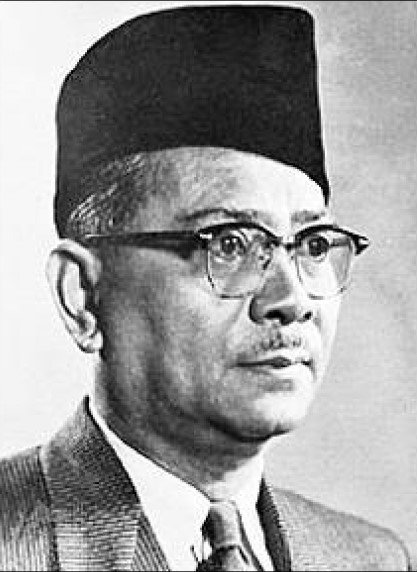 Malaysia · Politics
1903—1990
Tunku Abdul Rahman
First Prime Minister of MalaysiaThe independence leader who became Malaya’s first prime minister and helped define the federation that would become modern Malaysia.Read biography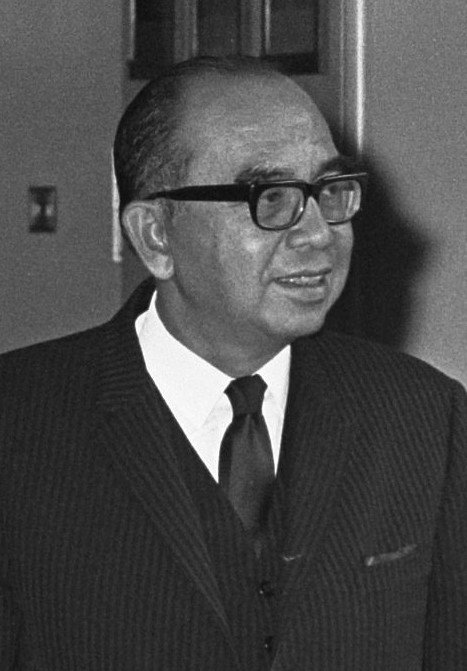 Malaysia · Politics
1922—1976
Abdul Razak Hussein
Second Prime Minister of MalaysiaMalaysia’s second prime minister, remembered for rural development, post-1969 reconstruction and a far-reaching programme of social and economic restructuring.Read biography Malaysia · Politics
1925—
Mahathir Mohamad
Fourth and seventh Prime Minister of MalaysiaA physician-politician whose two premierships—separated by fifteen years—made him the longest-serving and one of the most consequential leaders in Malaysian history.Read biography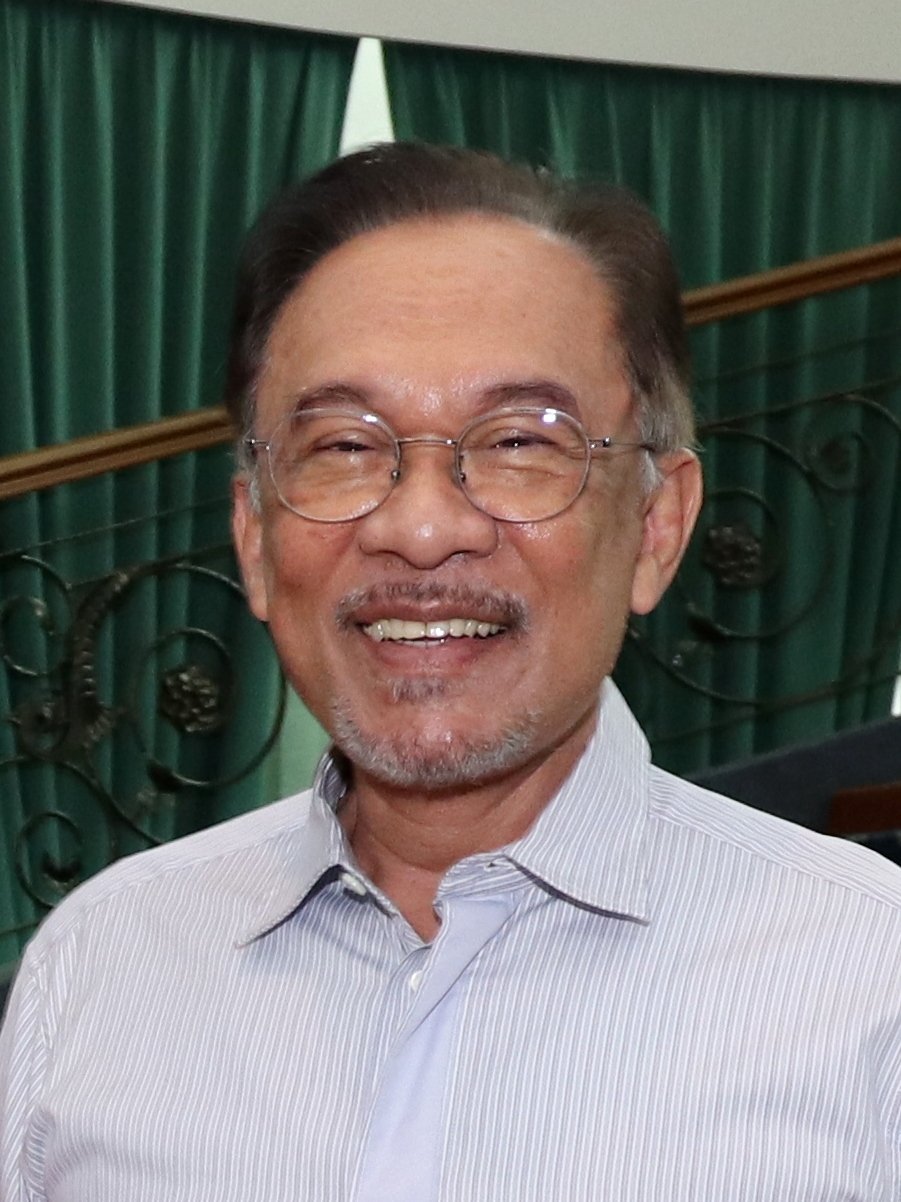 Malaysia · Politics
1947—
Anwar Ibrahim
Tenth Prime Minister of MalaysiaA student activist turned government minister, opposition leader and Malaysia’s tenth prime minister after one of the longest routes to national office.Read biography Malaysia · Politics
1952—
Wan Azizah Wan Ismail
Member of Parliament and former deputy prime ministerThe ophthalmologist who became a central Reformasi leader, Malaysia’s first woman opposition leader and its first woman deputy prime minister.Read biography Malaysia · Business
1947—
Zeti Akhtar Aziz
Economist and former Governor of Bank Negara MalaysiaThe economist who led Bank Negara Malaysia for sixteen years, strengthening financial resilience, regional cooperation and Islamic finance.Read biography Malaysia · Politics
1943—
Rafidah Aziz
Economist and former Minister of International Trade and IndustryThe economist, parliamentarian and trade minister who spent more than two decades representing Malaysia in investment missions and regional trade negotiations.Read biography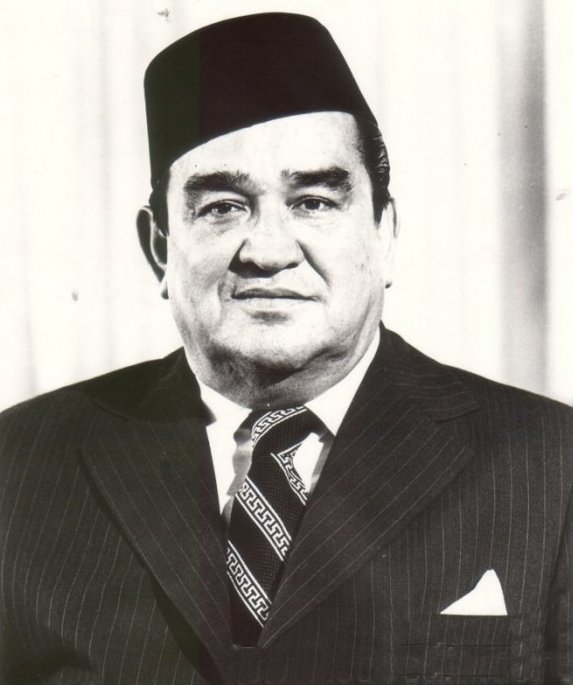 Malaysia · Politics
1920—1976
Fuad Stephens
First Chief Minister of SabahThe journalist and political leader who helped negotiate Sabah’s place in Malaysia, became the state’s first chief minister and later returned to the office in 1976.Read biographyQuick answers
Common questions
- When did Malaysia become independent?
- The Federation of Malaya became independent on 31 August 1957. Malaysia was formed as a wider federation on 16 September 1963.
- What is the difference between Merdeka Day and Malaysia Day?
- Merdeka Day commemorates Malayan independence on 31 August 1957. Malaysia Day marks the formation of Malaysia by Malaya, Sabah, Sarawak and Singapore on 16 September 1963.
- What happened in Malaysia on 13 May 1969?
- Deadly communal violence followed the general election. A national emergency was declared, Parliament was suspended and the National Operations Council administered the country until parliamentary rule resumed in 1971.
- What was Malaysia’s New Economic Policy?
- The NEP was a long-term development policy introduced through the Second Malaysia Plan. Its stated goals were to reduce poverty regardless of race and restructure society to reduce the identification of ethnicity with economic function.
- How did Malaysia respond to the 1997 Asian financial crisis?
- After recession and financial instability, Malaysia introduced selective exchange controls on 1 September 1998 and fixed the ringgit at RM3.80 to the U.S. dollar the following day, alongside financial restructuring and recovery measures.
- What was Reformasi in Malaysia?
- Reformasi was the political and civil-society movement that grew after Anwar Ibrahim’s 1998 dismissal and arrest, demanding institutional reform, accountability and greater democratic competition.
- Why was Malaysia’s 2018 election historic?
- Pakatan Harapan defeated Barisan Nasional, producing the first federal change of governing coalition since independence and returning Mahathir Mohamad as prime minister.
- Who is the current prime minister of Malaysia?
- Anwar Ibrahim is the current and tenth prime minister. He was appointed on 24 November 2022 after Malaysia’s first hung federal parliament. This answer was reviewed on 3 October 2026.
Primary and institutional sources
How this history was checked
Government and archival records establish independence, federation and national principles; development plans and central-bank records document economic policy; parliamentary, election, health and royal records verify the recent political and pandemic chronology. This article was reviewed on 3 October 2026.
- Government of MalaysiaMalaysian history — independence and formation
- National Archives of MalaysiaProclamation of the Independence of Malaya
- National Archives of MalaysiaThe Establishment of Malaysia, 16 September 1963
- National Archives of MalaysiaRukun Negara — historical background and proclamation
- Ministry of Economy MalaysiaSecond Malaysia Plan, 1971–1975
- Parliament of MalaysiaOpening of the reconvened Parliament, 23 February 1971
- Bank Negara MalaysiaMalaysia’s long-term economic transformation
- PROTONCorporate milestones — the first Proton Saga and national car project
- Prime Minister’s Office of MalaysiaThe Way Forward — original Vision 2020 working paper
- Bank Negara MalaysiaMeasures to regain monetary independence, 1 September 1998
- Parliament of Malaysia Public Accounts CommitteeReport on governance management control of 1MDB
- Election Commission of MalaysiaOfficial general-election results portal
- Parliament of MalaysiaThe first peaceful federal transfer of power
- Parliament of MalaysiaRoyal Address of 18 May 2020 — the change of government
- Ministry of Health MalaysiaManaging COVID-19 in Malaysia — chronology and response
- Parliament of MalaysiaRoyal Address of 13 February 2023 — hung parliament and appointments
- Prime Minister’s Office of MalaysiaCurrent prime minister profile