
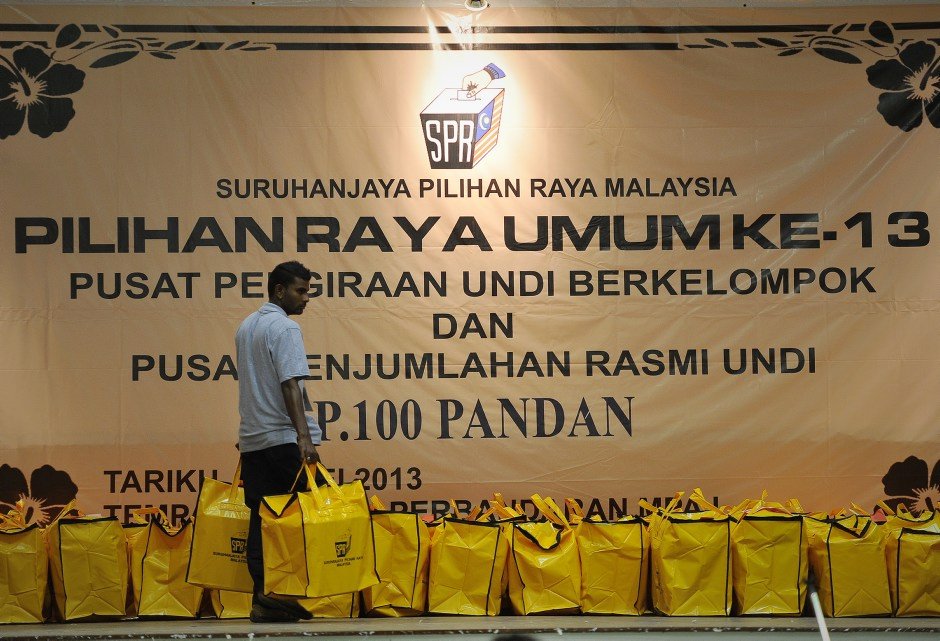
The short answer
GE13 returned Barisan Nasional to government with 133 of 222 seats even though Pakatan Rakyat won roughly 51 per cent of votes nationwide. The gap between votes and seats made the election a landmark in debates over first-past-the-post representation, constituency size and electoral fairness—and a direct bridge to the 2018 transfer of power.
The parliamentary result
How GE13 divided the 222 Dewan Rakyat seats
The official seat count determines government. The popular-vote lead was politically important, but it did not award seats outside the 222 constituency contests.
| Coalition or party | Seats | Coalition | Outcome |
|---|---|---|---|
| Barisan Nasional | 133 | Governing coalition | Retained a simple majority |
| DAP | 38 | Pakatan Rakyat | Largest opposition component |
| PKR | 30 | Pakatan Rakyat | Led by Anwar Ibrahim |
| PAS | 21 | Pakatan Rakyat | Retained Kelantan government |
| Pakatan Rakyat total | 89 | DAP + PKR + PAS | Won the national popular vote |
Chronology
A timeline of the turning points
GE12 ends BN’s two-thirds majority
Barisan Nasional retained federal power with 140 of 222 seats, but PKR, DAP and PAS won 82 seats and five state governments.
Pakatan Rakyat becomes a national challenger
The three opposition parties coordinated in Parliament and in the states they governed, while Anwar Ibrahim returned to the Dewan Rakyat through a by-election.
Bersih 2.0 puts electoral reform at the centre
A major Kuala Lumpur rally demanded cleaner electoral rolls, postal-voting reform, fair media access and a longer campaign period.
The twelfth Parliament is dissolved
Prime Minister Najib Razak announced dissolution near the end of Parliament’s term, opening the formal election period.
A fifteen-day campaign begins
Nomination day produced 579 candidates for 222 parliamentary seats, the largest field Malaysia had yet seen in a general election.
Early voting is conducted
Security personnel and other eligible early voters cast ballots under procedures introduced before the election.
Turnout reaches a record 84.84 per cent
The Inter-Parliamentary Union recorded 11,257,147 voters from 13,268,002 registered electors.
BN retains its parliamentary majority
Barisan Nasional won 133 seats. Pakatan Rakyat won 89—DAP 38, PKR 30 and PAS 21—but secured roughly 51 per cent of the national popular vote.
Najib Razak is sworn in again
The Yang di-Pertuan Agong appointed Najib for a second term after BN retained a clear majority in the Dewan Rakyat.
Black 505 rallies contest the result
Pakatan leaders and supporters held rallies alleging fraud and demanding electoral reform; the government and Election Commission rejected claims that the result was invalid.
Pakatan Rakyat breaks apart
Conflict between DAP and PAS ended the coalition. PKR, DAP and the new Amanah party later formed Pakatan Harapan.
The opposition wins federal power at GE14
A reconfigured Pakatan Harapan defeated BN, turning the competitiveness exposed in 2013 into Malaysia’s first federal transfer between rival coalitions.
What happened in Malaysia’s 2013 general election?
GE13 produced two different winners under two different measures. Barisan Nasional won the parliamentary contest: 133 of 222 constituencies, comfortably above the 112 seats needed for a simple majority. Pakatan Rakyat won 89 seats and remained in opposition.
The national vote told a different story. Pakatan Rakyat received roughly 51 per cent of valid votes, while BN received about 47 per cent. Because Malaysia elects one member in each constituency and does not award seats from a national party vote, BN could lose the aggregate vote yet retain a majority of seats.
That distinction made GE13 a defining election. It confirmed that the opposition had become nationally competitive, intensified scrutiny of constituency boundaries and election administration, and set the political terms for the historic turnover five years later.
What were the official GE13 seat results?
The Inter-Parliamentary Union records BN on 133 seats. Within Pakatan Rakyat, DAP won 38, PKR 30 and PAS 21, for a combined 89. BN lost seven seats compared with 2008, while the opposition gained seven.
The result was regionally uneven. Pakatan was strongest in urban and mixed constituencies and retained Penang, Selangor and Kelantan. BN remained dominant in many rural seats and benefited from strong representation in Sabah and Sarawak, where constituency outcomes were decisive to its federal majority.
Seat totals should not be confused with votes cast for a coalition nationwide. The first-past-the-post system converts 222 separate plurality contests into Parliament; it does not translate national percentages proportionally.
Why did Pakatan Rakyat win more votes but fewer seats?
Three mechanisms mattered. First, votes were distributed inefficiently: large Pakatan majorities in some urban constituencies added to its popular-vote total without creating extra seats. BN won more constituencies, sometimes by smaller margins.
Second, constituency electorates differed greatly in size. Rural and East Malaysian seats often contained fewer voters than fast-growing urban constituencies. The Constitution permits some weight for area and access, but critics argued that the gaps had become too large and systematically affected representation.
Third, constituency boundaries and coalition geography interacted. A national vote total is useful for measuring support, but it cannot by itself show how many local contests a coalition won. GE13 is therefore the clearest Malaysian example of why popular vote and parliamentary majority are separate questions.
Who led the two main coalitions?
Najib Razak led BN into his first general election as prime minister. His campaign emphasised economic transformation, cash assistance, infrastructure and the “1Malaysia” brand. BN presented continuity under a newer leader after Abdullah Ahmad Badawi’s 2009 resignation.
Anwar Ibrahim was Pakatan Rakyat’s prime-ministerial candidate. PKR supplied his multiracial reform platform, DAP brought a strong urban organisation, and PAS mobilised an established Islamist base. Their cooperation was electorally potent even though important ideological differences remained unresolved.
Leadership mattered, but the contest was not simply Najib versus Anwar. State governments, local candidates, civil-society networks and the three opposition parties’ ability to avoid multi-cornered contests all shaped the result.
Why was turnout so high?
The IPU recorded 11,257,147 voters and turnout of 84.84 per cent—the highest percentage in Malaysia’s federal election history to that point. The closeness of the contest, intense campaign mobilisation and the belief that a change of federal government had become plausible encouraged participation.
Digital campaigning also widened the information environment. Online news, Facebook, YouTube and volunteer networks allowed opposition messages to travel beyond the reach of traditional media. BN still possessed stronger access to major broadcast and print outlets, but it no longer controlled how all voters encountered the campaign.
Overseas and postal voting drew particular attention. Procedures had been expanded, yet deadlines, access and transparency remained contested. High turnout demonstrated mobilisation; it did not resolve arguments about equal access or election administration.
Was GE13 free and fair?
The answer depends on separating polling-day mechanics from the wider playing field. Domestic observers documented an orderly nationwide vote alongside alleged offences, uneven media access, misuse-of-resources concerns and continuing distrust of the electoral roll. Pakatan alleged fraud; the government and Election Commission denied that wrongdoing overturned the result.
The Bersih-backed PEMANTAU observation report recorded complaints and recommended reforms. An IDEAS observation team likewise distinguished generally peaceful polling from structural problems such as media imbalance, campaign finance and the design of constituencies.
A responsible assessment should not convert every allegation into a proven fact, nor treat the official count as proof that every condition was equal. The verifiable result is that BN won 133 constituencies; the broader democratic quality of the contest remained disputed and became a major post-election issue.
What did GE13 change inside BN and the opposition?
For BN, victory brought no return to its earlier dominance. It lost further ground from 2008 and depended heavily on rural constituencies and Sabah and Sarawak. Najib stayed as prime minister, but pressure grew as economic, party and governance controversies accumulated.
Pakatan had proved it could win the national popular vote, yet defeat exposed the limits of coordination without a durable coalition structure. Conflict between DAP and PAS over policy and leadership eventually broke Pakatan Rakyat apart in 2015. Amanah emerged from a PAS split, and Pakatan Harapan was formed without PAS.
The opposition’s later alliance with Mahathir Mohamad and Bersatu would have seemed improbable in 2013. It became possible because the election showed both the scale of anti-BN support and the additional constituencies still needed to form government.
How did GE13 lead to the 2018 transfer of power?
GE13 supplied the electoral map and political lesson for GE14. The opposition already had a national vote base, major state governments and strong urban representation. To win federal power, it needed to reach more Malay-majority, semi-urban and southern constituencies while maintaining existing support.
Between the elections, the Goods and Services Tax, cost-of-living concerns and the 1MDB scandal changed the governing environment. Mahathir left UMNO and helped form Bersatu, then joined PKR, DAP and Amanah in Pakatan Harapan. Most PH candidates in Peninsular Malaysia used a common PKR symbol in 2018.
GE14 was not an automatic continuation of GE13; coalitions, leaders and issues changed. But the 2013 result destroyed the assumption that federal competition was merely symbolic. Five years later, the opposition converted that competition into 113 seats and government.
What is GE13’s lasting significance?
GE13 made electoral-system literacy essential to understanding Malaysian politics. A party can lead the popular vote without forming government; a constituency majority, not a nationwide vote plurality, controls the Dewan Rakyat.
It also showed that high participation does not automatically settle questions about representation. Turnout reached a record, yet debate intensified over boundaries, media access, campaign finance and the Election Commission’s independence.
Most importantly, GE13 connected the opposition breakthrough of 2008 to the alternation of 2018. It was the election in which the federal opposition won more votes, the incumbent still won more seats, and both sides entered the next cycle knowing that national power was genuinely contestable.
Continue the chronology
Related history guides
Malaysia Elections: GE12–GE15 Compared
Compare turnout, electorate size, seats and government formation across four transformative elections.
Read the timeline9 May 2018Malaysia’s 2018 General Election
See how the opposition converted national competitiveness into the first federal transfer of power.
Read the timeline1955–presentHow Malaysia’s Elections Work
Understand why winning the popular vote and winning a Dewan Rakyat majority are different results.
Read the timeline1957–presentMalaysia’s Election Commission
Examine the institution responsible for voter registration, boundaries and election administration.
Read the timeline2005–presentMalaysia’s Bersih Movement
Follow the campaign for electoral reforms before and after the disputed 2013 result.
Read the timeline1998–presentMalaysia’s Reformasi Movement
Trace the movement and party infrastructure behind Pakatan Rakyat’s challenge.
Read the timelineBiography context
Explore Malaysia through connected lives
Connected biographies
Four lives connecting BN’s 2008 setback, the GE13 contest and the road to 2018
 Malaysia · Politics
1953—
Najib Razak
Sixth Prime Minister of MalaysiaA political heir who led Malaysia for nine years before an historic election defeat and convictions in the SRC International and main 1MDB cases.Read biography Malaysia · Politics
1947—
Anwar Ibrahim
Tenth Prime Minister of MalaysiaA student activist turned government minister, opposition leader and Malaysia’s tenth prime minister after one of the longest routes to national office.Read biography Malaysia · Politics
1939—2025
Abdullah Ahmad Badawi
Fifth Prime Minister of MalaysiaA career civil servant and politician whose premiership opened with a reform mandate and Malaysia’s largest parliamentary victory.Read biography Malaysia · Politics
1925—
Mahathir Mohamad
Fourth and seventh Prime Minister of MalaysiaA physician-politician whose two premierships—separated by fifteen years—made him the longest-serving and one of the most consequential leaders in Malaysian history.Read biographyQuick answers
Common questions
- When was Malaysia’s GE13 election?
- Polling for Malaysia’s thirteenth general election took place on Sunday, 5 May 2013, after Parliament was dissolved on 3 April.
- Who won Malaysia’s 2013 general election?
- Barisan Nasional won government by taking 133 of 222 parliamentary seats. Pakatan Rakyat won 89 seats.
- Who won the popular vote in GE13?
- Pakatan Rakyat won roughly 51 per cent of the national popular vote, ahead of BN at about 47 per cent, but Malaysia does not allocate parliamentary seats proportionally from a national vote.
- What was voter turnout in GE13?
- The IPU recorded 11,257,147 voters from 13,268,002 registered electors, a turnout rate of 84.84 per cent.
- How many seats did DAP, PKR and PAS win in 2013?
- DAP won 38 seats, PKR 30 and PAS 21. Together, the three Pakatan Rakyat parties held 89 seats.
- Why did BN win with fewer votes?
- Malaysia uses first-past-the-post elections in 222 constituencies. BN won more individual seats, while many Pakatan votes were concentrated in constituencies it won by large margins; electorate sizes also varied substantially.
- What were the Black 505 rallies?
- They were post-election rallies organised by Pakatan leaders and supporters to contest the GE13 result and demand electoral reform. The government and Election Commission rejected claims that the election outcome was invalid.
- How is GE13 connected to GE14?
- GE13 demonstrated that the opposition had a nationwide vote base but lacked the constituency distribution needed for power. A reconfigured coalition broadened that map and won 113 seats in 2018.
Primary and institutional sources
How this history was checked
Official and parliamentary records establish the date, electorate, turnout and seats. Observation reports document allegations and structural concerns without treating disputed claims as proven causes of the result. This article was reviewed on 4 October 2026.
- Election Commission of MalaysiaOfficial General Election Results Portal — GE13
- Inter-Parliamentary UnionMalaysia Dewan Rakyat Elections in 2013
- Bersih / PEMANTAUAn Election Observation Report for GE13
- Institute for Democracy and Economic AffairsWas GE13 Free and Fair? Interim Observation Report
- Institute of Developing EconomiesMalaysia’s 13th General Election: A Short Note
- Parliament of MalaysiaSelect Committee Report on Electoral Reform