
The short answer
GE14 ended more than six decades of uninterrupted Alliance–Barisan Nasional federal rule. Pakatan Harapan won 113 of 222 seats, Mahathir Mohamad returned as prime minister and Malaysia completed its first transfer between rival coalitions. The result grew from 1MDB, living-cost concerns, opposition coordination and regional shifts—not one cause alone.
The parliamentary result
How the 222 Dewan Rakyat seats were divided
The coalition count establishes who could form government. National vote shares require more caution because PH components used PKR’s symbol in much of the peninsula and constituency sizes varied widely.
| Coalition or party | Seats | Principal leader | Result |
|---|---|---|---|
| Pakatan Harapan | 113 | Mahathir Mohamad | Won a simple majority |
| Barisan Nasional | 79 | Najib Razak | Lost federal government |
| PAS | 18 | Abdul Hadi Awang | Won Kelantan and Terengganu |
| Warisan | 8 | Shafie Apdal | Won Sabah seats and aligned with PH |
| Others | 4 | Independents and smaller parties | Three independents and one STAR seat |
Chronology
A timeline of the turning points
BN loses its two-thirds parliamentary majority
Opposition parties made major gains and won five state governments, opening a decade in which elections became substantially more competitive.
BN retains power despite losing the popular vote
Barisan Nasional won 133 of 222 seats while Pakatan Rakyat secured more votes nationwide, intensifying debate about constituency boundaries and electoral fairness.
The 1MDB controversy reshapes the opposition
Parliamentary and international investigations drew attention to debt, governance and alleged misappropriation, while Mahathir Mohamad left UMNO and joined efforts to remove Najib Razak.
Pakatan Harapan names a leadership structure
PKR, DAP, Amanah and Bersatu formed a common coalition framework, bringing long-time opposition leaders together with former senior figures from the governing establishment.
The thirteenth Parliament is dissolved
Prime Minister Najib Razak announced the dissolution, beginning the formal route to an election that many observers still expected Barisan Nasional to win.
An eleven-day campaign begins
Candidates were nominated for all 222 parliamentary seats. Most Pakatan Harapan candidates in Peninsular Malaysia used the PKR symbol because the coalition itself was not registered in time.
More than twelve million voters cast ballots
Turnout reached approximately 82.3 per cent of 14.94 million registered electors, despite polling taking place on a Wednesday and disputes over campaign administration.
Pakatan Harapan crosses the majority threshold
Results gave PH 113 seats, BN 79 and PAS 18, with the remainder going to Warisan, independents and smaller parties. The outcome ended uninterrupted Alliance–BN federal rule.
Mahathir is sworn in as seventh prime minister
The Yang di-Pertuan Agong appointed Mahathir Mohamad, completing Malaysia’s first federal transfer between rival coalitions since independence.
Najib resigns as UMNO and BN leader
The defeated prime minister accepted responsibility for the result, beginning an internal reckoning across the former governing coalition.
Anwar Ibrahim receives a full pardon
The royal pardon released Anwar and restored his eligibility for political office, advancing the coalition’s proposed—but unspecified—leadership transition.
The first PH cabinet takes office
Wan Azizah Wan Ismail became Malaysia’s first woman deputy prime minister as the new administration began reviews of institutions, finances and major projects.
The fourteenth Parliament convenes
A government formed by the former opposition faced a parliamentary opposition led by the former government, normalising alternation within Malaysia’s constitutional system.
The PH government falls after coalition realignment
Mahathir resigned, Bersatu left PH and a group of PKR lawmakers defected. The King later appointed Muhyiddin Yassin after concluding that he was likely to command a majority.
What made GE14 historically different?
Malaysia had held regular federal elections since before independence, but every previous contest returned the same governing lineage: first the Alliance and then Barisan Nasional. The opposition could win states and substantial parliamentary representation, yet control of the federal executive had never changed hands.
The 9 May 2018 election broke that pattern. Pakatan Harapan won a majority in the 222-seat Dewan Rakyat, and Mahathir Mohamad was sworn in the following evening. The defeated government transferred authority through the monarchy, civil service and constitutional oath rather than refusing the result or cancelling the transition.
That peaceful turnover is GE14’s central historical achievement. It demonstrated that an electoral system built during dominant-coalition rule could still produce alternation, and that federal institutions could recognise a government assembled by the former opposition.
What were the official GE14 results?
Pakatan Harapan won 113 of 222 parliamentary seats, passing the 112 required for a simple majority. Barisan Nasional fell to 79 seats and the Malaysian Islamic Party, PAS, won 18. Warisan won eight in Sabah, while smaller parties and independents accounted for the remainder.
The Election Commission registered 14,940,624 electors for GE14. ISEAS calculated that 12,299,514 voted, producing turnout of about 82.32 per cent. The precise measure can vary slightly depending on whether a source uses ballots issued, votes cast or valid votes, so this guide uses the rounded official-era figure of 82.3 per cent.
The outcome was geographically diverse. PH retained strength in urban and mixed constituencies, penetrated semi-urban areas and won former BN strongholds including Johor. PAS dominated Kelantan and won Terengganu. In Sabah, post-election alignments helped a Warisan-led state government take office, while Sarawak followed its own coalition trajectory.
How did the opposition become a government-in-waiting?
The result rested on political infrastructure built over several elections. Reformasi created PKR and a durable language of institutional change. DAP supplied deep organisation and urban representation, while Amanah emerged from a split in PAS. Civil-society campaigns, especially Bersih, made electoral administration a national issue.
Mahathir’s break with UMNO changed the coalition’s reach. His new party, Bersatu, sought Malay voters and former establishment supporters who might not previously have backed a coalition led by PKR or DAP. The alliance was improbable: Mahathir had governed for twenty-two years and Anwar Ibrahim had been dismissed and imprisoned during his first premiership.
Pragmatic coordination mattered. PH agreed that Mahathir would be its prime-ministerial candidate, with Wan Azizah as deputy and an intended later transition to Anwar after a royal pardon. In Peninsular Malaysia, component parties largely used the PKR logo, presenting voters with a single visual alternative to BN.
How important was the 1MDB scandal?
1Malaysia Development Berhad became a powerful symbol of accountability and elite governance. Parliament’s Public Accounts Committee found that the company’s capital structure and financial performance were unsatisfactory, that debt and interest burdens were high relative to cash flow, and that aspects of governance and internal control fell short of best practice.
Investigations in multiple jurisdictions alleged that funds had been misappropriated and laundered through international financial systems. Najib denied wrongdoing at the time. The scandal split UMNO, helped drive Mahathir into opposition and gave PH a concrete case through which to connect institutional reform with the management of public resources.
It was not the only cause of the result. Survey and constituency research also identifies cost-of-living pressure, the Goods and Services Tax, candidate effects, local grievances, opposition coordination and shifts among different voter groups. 1MDB unified those concerns into a broader question: whether the government could investigate itself credibly.
Why did cost of living and economic voting matter?
Malaysia entered the election with continued economic growth, but national aggregates did not settle household experience. The introduction of the six per cent GST in 2015 became an easily recognised symbol of higher daily expenses, even though many other price movements had separate causes. PH promised to remove it and restore a sales and service tax.
ISEAS research found evidence that both economic and non-economic forces shaped the transition. Living-cost concerns interacted with trust, leadership, regional patterns and party fragmentation. Voters were not responding to one uniform national economy; rural, urban, lower-income and business constituencies experienced policy differently.
The lesson is not that GDP became irrelevant. It is that incumbents are judged through distribution and credibility as well as growth. A government may report strong headline indicators while households remain focused on wages, prices, debt and whether public money is managed fairly.
Was GE14 fought on a level electoral field?
The election was competitive, but researchers and reform groups identified structural advantages for the incumbent. Constituency size varied greatly, a redelineation exercise was approved shortly before dissolution, and government access to institutions and media remained substantially stronger than the opposition’s.
The Election Commission scheduled polling for a Wednesday and an eleven-day campaign. Overseas voting, postal-ballot timing, registration procedures and restrictions affecting campaign material became points of dispute. PH’s registration was unresolved, which is why its peninsular candidates largely contested under PKR’s symbol.
These conditions make the turnover more—not less—significant, but victory does not retrospectively prove that every procedure was fair. One of the new government’s tests was whether it would improve the same electoral institutions whose weaknesses it had criticised in opposition.
How did the first federal transfer of power happen?
As results accumulated overnight, no previous federal transition script existed. Najib acknowledged that no coalition appeared to have won an outright popular majority and said constitutional procedures should determine government formation. PH leaders presented signed support for Mahathir as their candidate.
On 10 May, the Yang di-Pertuan Agong appointed Mahathir as prime minister under the constitutional rule that the office goes to a member of the Dewan Rakyat likely to command the confidence of the majority. Mahathir took the oath at Istana Negara that night. The civil service then began working under a cabinet drawn from parties that had spent decades in opposition.
The short delay and uncertainty attracted intense public attention, but the transfer was completed without large-scale disorder. Malaysia’s foreign ministry later described it as evidence of institutional strength. The statement is aspirational as well as factual: institutions worked, but much still depended on elite restraint and acceptance of the result.
What changed under the Pakatan Harapan government?
The government abolished GST and introduced a narrower sales and service tax, reviewed large infrastructure commitments, reopened or expanded investigations linked to 1MDB and created committees on institutional and electoral reform. Parliament gained an opposition-led Public Accounts Committee chair, and the voting age was later reduced from twenty-one to eighteen through a constitutional amendment supported across parties.
The transition also produced important firsts. Wan Azizah became the first woman deputy prime minister, and former senior officeholders faced legal scrutiny after a change of government. These developments weakened the assumption that political office permanently insulated an incumbent coalition from investigation or replacement.
Delivery was uneven. Manifesto commitments met fiscal, legal and coalition constraints; reforms moved at different speeds; and disagreements over race, religion, leadership succession and economic policy persisted. The government had won as a broad anti-BN alliance but had not eliminated the ideological differences among its component parties.
Why did the PH government collapse in 2020?
The coalition never fixed a binding date or process for the promised transfer from Mahathir to Anwar. Rival camps competed over timing, while Bersatu and defecting PKR leaders explored a government that would no longer depend on the original PH alignment. In February 2020, the resulting manoeuvres became known as the Sheraton Move.
Mahathir resigned, apparently expecting space to form a broader non-partisan administration, but his resignation ended the existing cabinet. Bersatu left PH and eleven PKR lawmakers broke with their party. After consultations with members of Parliament, the Yang di-Pertuan Agong appointed Muhyiddin Yassin prime minister on 1 March.
The collapse does not erase the 2018 turnover. It exposes the difference between electoral alternation and democratic consolidation. GE14 proved that voters could remove a federal government; the next phase showed why transparent confidence procedures, cohesive parties, parliamentary accountability and clear coalition agreements still matter.
What is GE14’s lasting significance?
After 2018, no Malaysian coalition could confidently treat federal power as permanent. The 2020 realignment, subsequent changes of prime minister and the hung Parliament of 2022 were destabilising, but they also unfolded in a system where several groupings could plausibly govern.
The election changed political accountability. Investigations, leadership careers and party alliances could all move after a transfer of office. Former government parties learned how to operate in opposition, while former opposition parties encountered the compromises and limits of governing.
GE14 should therefore be understood as a threshold, not a completed reform programme. Its enduring result was alternation itself: the electorate demonstrated that federal government could change through ballots and constitutional appointment. Whether that produces stronger institutions depends on what every later government does with the precedent.
Continue the chronology
Related history guides
Pakatan Harapan: History and Parties
Follow the coalition from its formation to the GE14 transfer, 2020 collapse and return after GE15.
Read the timeline1952–presentBarisan Nasional: History and Parties
Place the 2018 defeat within BN’s long rise, dominance and later unity-government role.
Read the timeline5 May 2013Malaysia’s 2013 General Election
Begin with the election in which Pakatan Rakyat led the national vote but BN retained a seat majority.
Read the timeline19 November 2022Malaysia’s 2022 General Election
Continue to the first federal election after the PH government’s collapse and Malaysia’s first hung Parliament.
Read the timeline2008–2022Malaysia Elections: GE12–GE15 Compared
Compare the electorate, turnout, seats and government outcome across four transformative contests.
Read the timeline1955–presentHow Malaysia’s Elections Work
Separate constituency results, national vote share and the constitutional formation of a government.
Read the timeline1957–presentMalaysia’s Election Commission
Examine the body that ran GE14 and the 2018 redelineation approved shortly before polling.
Read the timeline2005–presentMalaysia’s Bersih Movement
Follow the electoral-reform coalition that monitored GE14 and helped make election integrity a national issue.
Read the timeline1957–presentMalaysia’s Constitutional Monarchy
Understand the constitutional appointment that completed the first federal transfer of power.
Read the timeline2009–presentThe 1MDB Scandal: A Verified Timeline
Trace the public-finance and accountability crisis that became a defining GE14 issue.
Read the timeline1998–presentMalaysia’s Reformasi Movement
Trace the movement, party-building and civil-society pressure that made the 2018 coalition possible.
Read the timeline1955–presentMalaysia History Timeline
Place the first transfer within independence, development, crisis and later coalition change.
Read the timeline1957–presentPrime Ministers of Malaysia
Compare Najib’s defeat, Mahathir’s return and the three premierships that followed GE14.
Read the timeline1997–1999The Asian Financial Crisis in Malaysia
Begin with the economic and leadership rupture that ignited Reformasi two decades earlier.
Read the timelineBiography context
Explore Malaysia through connected lives
Explore Malaysia
Browse the political leaders, institutions and movements behind the 2018 transfer.
Explore the biographiesLeadership collectionMalaysian Prime Ministers
Follow every prime minister from the Alliance era through coalition alternation.
Explore the biographiesPolitical collectionMalaysian Deputy Prime Ministers
Compare Wan Azizah’s historic appointment with the office’s wider succession role.
Explore the biographiesConnected biographies
Four lives connecting the campaign, transfer, promised succession and 2020 coalition collapse
 Malaysia · Politics
1925—
Mahathir Mohamad
Fourth and seventh Prime Minister of MalaysiaA physician-politician whose two premierships—separated by fifteen years—made him the longest-serving and one of the most consequential leaders in Malaysian history.Read biography Malaysia · Politics
1953—
Najib Razak
Sixth Prime Minister of MalaysiaA political heir who led Malaysia for nine years before an historic election defeat and convictions in the SRC International and main 1MDB cases.Read biography Malaysia · Politics
1952—
Wan Azizah Wan Ismail
Member of Parliament and former deputy prime ministerThe ophthalmologist who became a central Reformasi leader, Malaysia’s first woman opposition leader and its first woman deputy prime minister.Read biography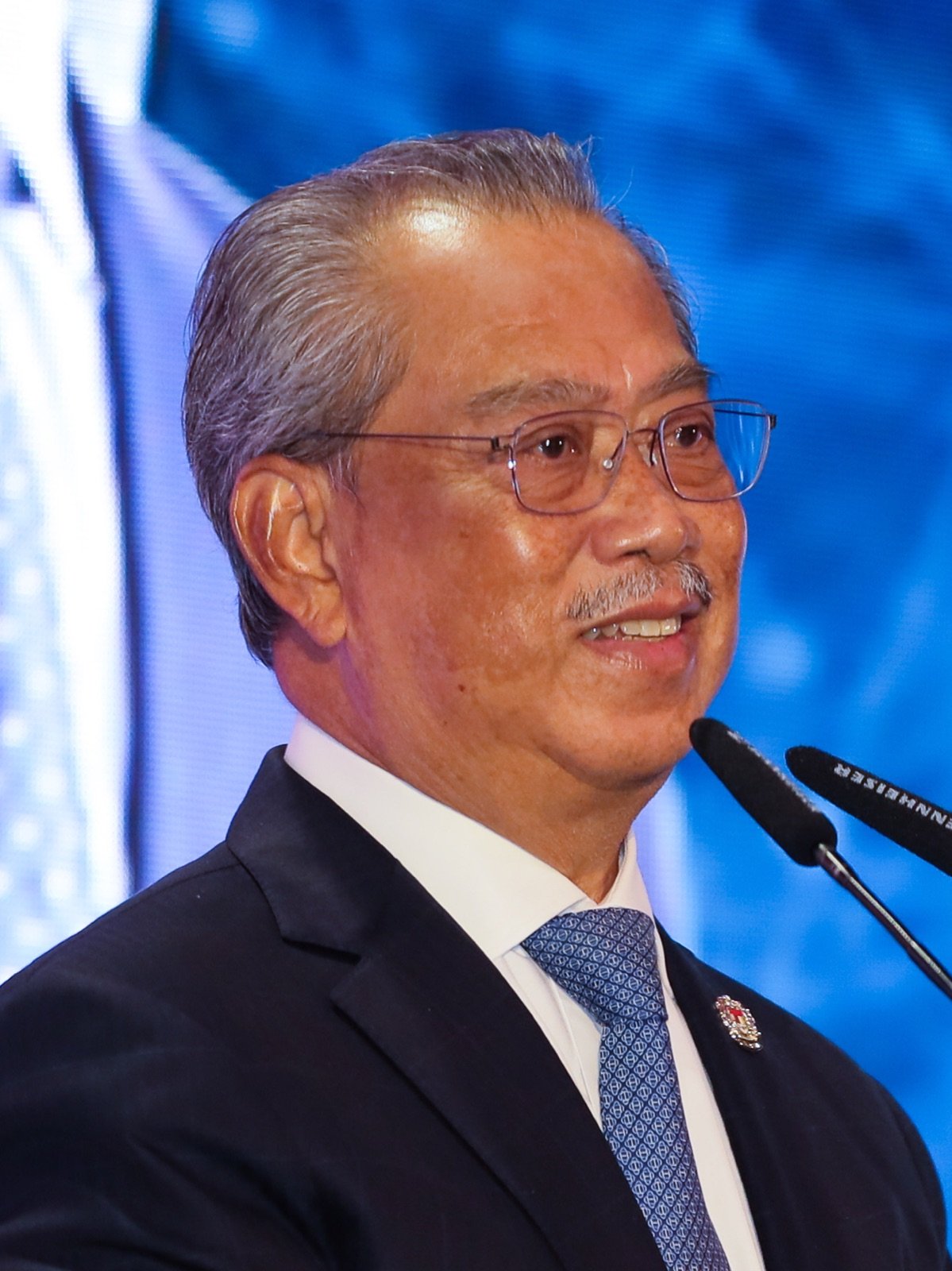 Malaysia · Politics
1947—
Muhyiddin Yassin
Eighth Prime Minister of MalaysiaA veteran Johor politician who became prime minister after the 2020 coalition crisis and governed through the most disruptive phase of the pandemic.Read biographyQuick answers
Common questions
- When was Malaysia’s 14th general election?
- Polling for GE14 took place on Wednesday, 9 May 2018. Mahathir Mohamad was sworn in as prime minister on the evening of 10 May.
- Who won Malaysia’s GE14 election?
- Pakatan Harapan won 113 of 222 parliamentary seats, enough for a simple majority. Barisan Nasional won 79 and PAS won 18, with the remaining seats going to Warisan, smaller parties and independents.
- What was voter turnout in Malaysia’s 2018 election?
- Approximately 12.3 million of 14.94 million registered electors voted, a turnout rate of about 82.3 per cent.
- Why was GE14 historic?
- It produced Malaysia’s first federal transfer between rival coalitions since independence, ending uninterrupted Alliance–Barisan Nasional rule through an electoral and constitutional transition.
- Why did Pakatan Harapan use the PKR logo in GE14?
- Pakatan Harapan had not completed coalition registration before the election. Its component parties therefore agreed to use PKR’s symbol for most parliamentary contests in Peninsular Malaysia.
- Was 1MDB the only reason Barisan Nasional lost?
- No. 1MDB was a major accountability issue, but research also identifies cost-of-living concerns, GST, Mahathir’s return, opposition coordination, local candidate effects, regional shifts and longer-term electoral competition.
- Who became deputy prime minister after GE14?
- Wan Azizah Wan Ismail became deputy prime minister on 21 May 2018, the first woman to hold the office in Malaysia.
- How long did the Pakatan Harapan government last?
- The first PH federal government lasted from May 2018 until February 2020. It collapsed after Mahathir resigned and coalition defections changed the parliamentary alignment.
Primary and institutional sources
How this history was checked
Official Election Commission material establishes the timetable and result; Parliament records the 1MDB findings and the new legislature; ISEAS research analyses voting, institutions and regional change. The guide distinguishes verified outcomes from interpretation of why voters moved. This article was reviewed on 3 October 2026.
- Election Commission of MalaysiaOfficial General Election Results Portal — GE14
- Election Commission of MalaysiaGE14 Election Arrangements and Registered Electors
- Election Commission of MalaysiaGE14 Parliamentary Results Infographics
- Ministry of Foreign Affairs MalaysiaThe Outcome of the Malaysian General Election 2018
- Parliament of MalaysiaPublic Accounts Committee Report on 1MDB Governance
- ISEAS – Yusof Ishak InstituteEconomic Voting and the End of Dominant Party Rule in Malaysia
- ISEAS – Yusof Ishak InstituteGE14 and the Continuing Challenge of Electoral Reform
- ISEAS – Yusof Ishak InstituteThe Defeat of Barisan Nasional: Missed Signs or Late Surge?
- Attorney General’s Chambers MalaysiaStatement on the 16 May 2018 Pardon of Anwar Ibrahim
- Parliament of MalaysiaRoyal Address to the Fourteenth Parliament, 17 July 2018