
The short answer
Đổi Mới began as a response to economic crisis and became a long transition toward market coordination, household production, private enterprise and global trade. It transformed how Vietnam’s economy worked without ending Communist Party rule.
Chronology
A timeline of the turning points
Experiments precede the national reform line
Local contracting, production incentives and limited decentralisation tested alternatives to rigid planning, but shortages, fiscal pressure and inflation continued.
The Sixth National Congress endorses Đổi Mới
The Communist Party of Vietnam formally adopted a program of “renovation,” acknowledging economic failures and directing a gradual shift toward market mechanisms.
The first Law on Foreign Investment is adopted
The law created a framework for foreign-invested ventures and signalled Vietnam’s intention to reopen economic relationships beyond the socialist trading system.
Resolution 10 expands household farming
Agricultural production shifted further from collective organisation toward household contracts, longer-term land use and stronger incentives to sell surplus output.
Price and macroeconomic reforms accelerate
Most administered prices and subsidies were removed, exchange rates were unified and tighter fiscal and monetary policies helped reduce extreme inflation.
Private companies gain a clearer legal basis
Company and private-enterprise laws recognised more forms of non-state business, although licensing, capital and institutional constraints remained substantial.
A new Land Law strengthens use rights
The law formalised transferable land-use rights while land remained under collective ownership, giving households greater security and economic flexibility.
Vietnam joins ASEAN
Regional membership marked a major step in postwar diplomatic and economic integration. President Clinton announced U.S. normalization in July, and the two countries formally restored relations in August.
The Enterprise Law takes effect
Simplified registration and the removal of many licensing barriers supported a new wave of domestic private-enterprise formation.
Vietnam joins the World Trade Organization
WTO membership bound Vietnam more closely to international trade rules after a long accession process and further opened markets to global exchange.
A second-generation reform agenda continues
Policy debate increasingly centres on state-owned enterprises, banking, productivity, digital capability, social protection, climate resilience and the quality of institutions.
What does Đổi Mới mean?
Đổi Mới means “renovation.” It names the broad reform direction formally endorsed by the Communist Party of Vietnam at its Sixth National Congress in December 1986. The policy moved economic coordination away from comprehensive central planning and toward a “socialist-oriented market economy.”
It was not one law or a sudden conversion to an unrestricted free market. Đổi Mới unfolded through experiments, reversals and new legislation across agriculture, prices, trade, finance, state enterprises and private business. The party-state retained political control and a major role in economic planning.
Why Vietnam changed course in 1986
A decade after reunification, Vietnam faced low productivity, chronic shortages, weak incentives and severe macroeconomic instability. The centrally allocated system struggled to coordinate production, while war damage, international isolation and dependence on the Soviet-led trading bloc constrained recovery.
Reform ideas had already appeared through local “fence-breaking” experiments and official contracting measures. The Sixth Congress made renovation a national political program. Implementation became more decisive from 1988 and 1989 as leaders accepted household farming, broader price liberalisation and stronger monetary discipline.
Agriculture, prices and household incentives
Agriculture was an early engine of change because most Vietnamese people depended on rural production. Resolution 10 treated farm households as the central production unit, strengthened contractual control over output and allowed greater benefit from surplus sales. Later land legislation expanded usable and transferable rights without privatising land ownership.
Market prices and a more realistic exchange rate helped goods move through formal channels rather than subsidised or informal systems. Tight fiscal and credit policies brought inflation down. These changes improved incentives, but they also exposed households and firms to market risk and uneven access to land, capital and public services.
Private enterprise, foreign investment and trade
The 1987 foreign-investment law and domestic enterprise legislation widened the number of actors allowed to produce, trade and employ workers. New businesses emerged alongside state-owned enterprises, while foreign-invested factories connected Vietnam to regional manufacturing and export networks.
Integration proceeded through diplomatic as well as economic steps: ASEAN membership and normalised relations with the United States in 1995, a bilateral trade agreement in 2000 and WTO membership in 2007. These milestones did not create growth alone, but they reinforced domestic reforms and made access to external markets more predictable.
What changed—and what stayed politically continuous
Đổi Mới changed the tools of economic management more than the structure of political authority. Private businesses, household production and foreign capital gained space, but the Communist Party remained the sole ruling party and the state retained strategic ownership and regulatory power.
This combination explains why descriptions such as “market socialist” or “socialist-oriented market economy” are more accurate than a simple transition from communism to capitalism. Reform expanded economic choice and competition while preserving institutions designed to guide development and maintain party leadership.
Growth, poverty reduction and uneven costs
Over subsequent decades, Vietnam moved from widespread scarcity toward sustained growth, export manufacturing and sharply lower poverty. Education, electrification, infrastructure and participation in global trade reinforced the effect of market incentives. Entrepreneurs such as Trương Gia Bình and Phạm Nhật Vượng built firms that would have been difficult to imagine under the earlier allocation system.
The transformation also produced uneven gains. Regional and household inequality, insecure work, urban pressure, environmental damage, land disputes and vulnerabilities in banking and state-owned enterprises became persistent policy problems. It is therefore better to treat Đổi Mới as an ongoing reform process than as a completed success story.
Why the 1986 turning point still matters
The reform era links Vietnam’s wartime generation to its contemporary business and cultural figures. It created the institutional setting in which technology services, private consumer brands, international film careers and digital music markets could expand.
At the same time, today’s economy reflects more than one congress or policy. Demography, global supply chains, education, diaspora networks, later trade agreements and continued state investment all shaped the result. The historical value of Đổi Mới lies in how it changed the direction and permissible methods of development.
Continue the chronology
Related history guides
Vietnamese Reform Era Leaders
Meet eight political and business figures who shaped, administered or navigated the Đổi Mới era.
Read the timelineTen biographiesVietnamese Business Builders
Compare the founders and executives who turned reform, consumer demand and trade integration into operating companies.
Read the timeline30 Apr 1975—2 Jul 1976The Fall of Saigon and Reunification
Follow the 1975 collapse and the state-building decisions that preceded the postwar economic crisis.
Read the timeline1994—1995U.S.–Vietnam Normalization
Follow the diplomatic and commercial opening that accompanied regional integration.
Read the timeline1999—2000Vietnam’s 1999 Enterprise Law
See how the reform era changed company entry, registration and the formal private sector.
Read the timeline1995—2007Vietnam’s WTO Accession
Continue through negotiation, domestic legal reform and entry into the global trade body.
Read the timelineConnected biographies
Eleven biographies connecting the reform decision, state leadership, private enterprise and global integration
1907—1988
Trường Chinh
Communist Party leader, political theorist and head of stateThe senior communist theorist whose career stretched from the 1945 revolution and land reform to a late political shift that helped open the Đổi Mới reform era.Read biography Vietnam · Politics
1915—1998
Nguyễn Văn Linh
Communist Party general secretary and Đổi Mới reform leaderThe southern party organiser who became general secretary in 1986 and gave political force to Đổi Mới while preserving Communist Party rule.Read biography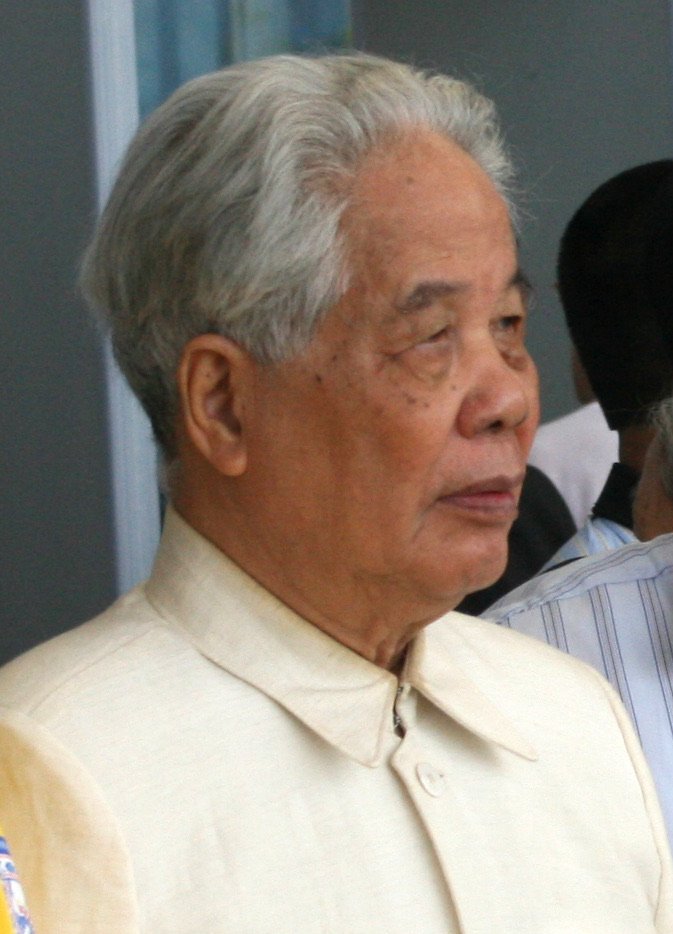 Vietnam · Politics
1917—2018
Đỗ Mười
Prime minister and Communist Party general secretaryThe former construction administrator who served as prime minister and then party general secretary as Vietnam stabilised reforms and re-entered regional and global diplomacy.Read biography Vietnam · Politics
1922—2008
Võ Văn Kiệt
Prime minister and economic reformerThe southern revolutionary and prime minister who accelerated market reform, backed the North–South power line and led Vietnam through a decisive period of international integration.Read biography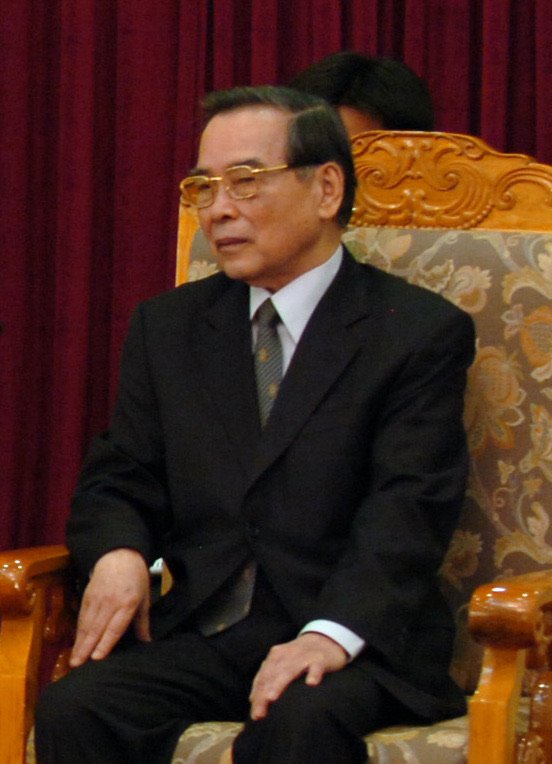 Vietnam · Politics
1933—2018
Phan Văn Khải
Prime minister and economic reformerThe technocratic prime minister who advanced business reform, negotiated deeper global integration and made a landmark visit to the United States in 2005.Read biography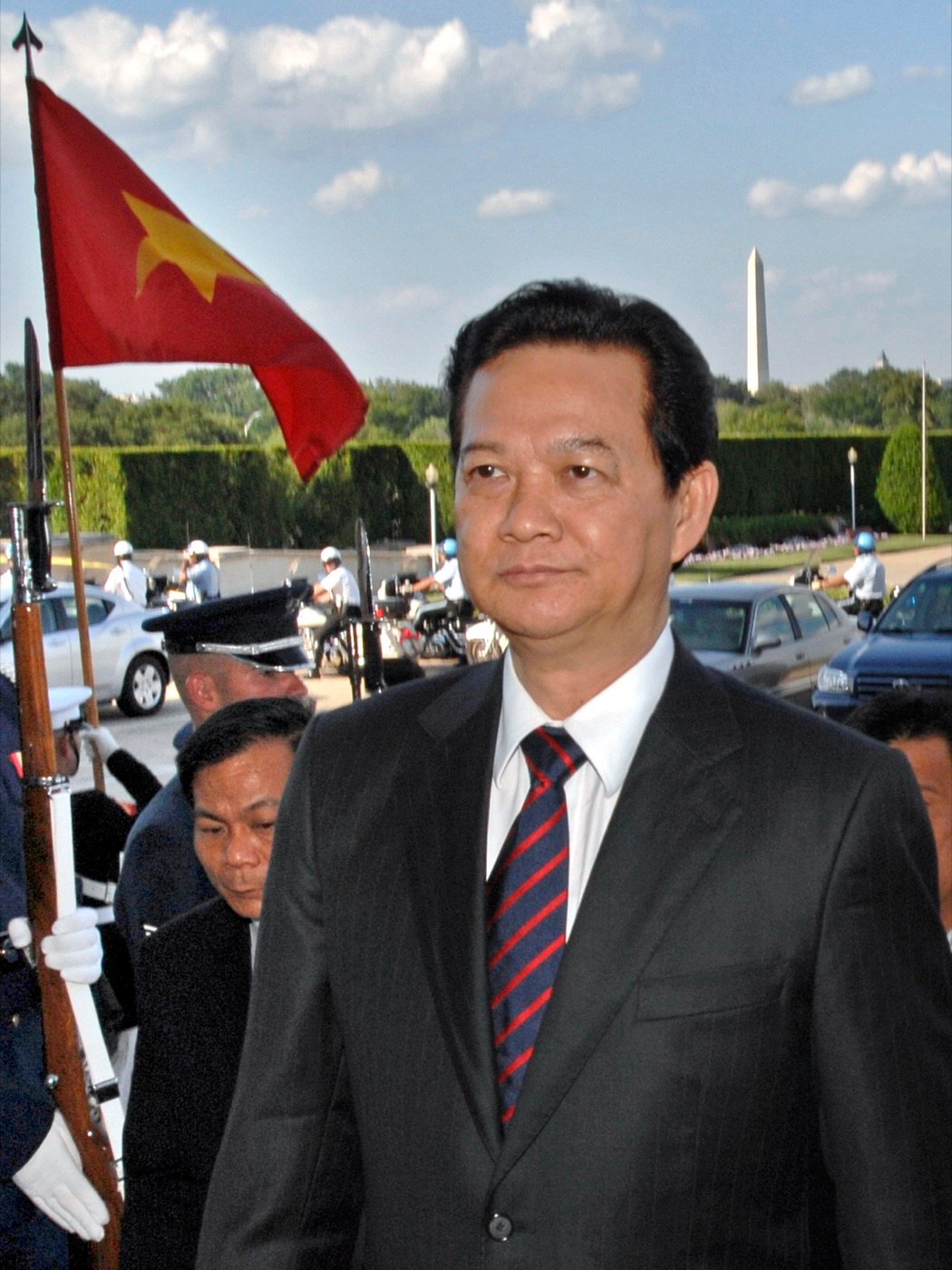 Vietnam · Politics
1949—
Nguyễn Tấn Dũng
Former prime minister of VietnamVietnam’s prime minister from 2006 to 2016, associated with WTO-era growth, a more assertive executive style and costly failures in state-owned conglomerates.Read biography Vietnam · Politics
1944—2024
Nguyễn Phú Trọng
General secretary of the Communist Party of VietnamVietnam’s dominant party leader from 2011 to 2024, known for ideological discipline, a far-reaching anti-corruption drive and pragmatic foreign balancing.Read biography Vietnam · Politics
1954—
Nguyễn Thị Kim Ngân
Former chairwoman of the National Assembly of VietnamThe economist and legislator who held labour and parliamentary leadership posts before becoming Vietnam’s first female National Assembly chair in 2016.Read biography Vietnam · Business
1956—
Trương Gia Bình
Co-founder and chairman of FPT CorporationThe mathematician and entrepreneur who co-founded FPT in 1988 and helped turn it into a multinational technology, education and digital-services group.Read biography Vietnam · Business
1955—
Nguyễn Thị Nga
Founder and chairwoman of BRG GroupThe entrepreneur who founded BRG as an import-export business in 1993 and expanded it into a private group with interests across finance, property, hospitality, golf and retail.Read biography Vietnam · Business
1969—
Nguyễn Đức Tài
Co-founder and chairman of Mobile World Investment CorporationThe retail entrepreneur who co-founded Mobile World in 2004 and helped expand it from a Ho Chi Minh City phone shop into a nationwide group spanning electronics, groceries and other consumer formats.Read biographyQuick answers
Common questions
- What is Đổi Mới?
- Đổi Mới is Vietnam’s “renovation” reform program, formally endorsed in 1986. It introduced market mechanisms, household farming, private enterprise, foreign investment and greater trade while retaining one-party political rule.
- When did Đổi Mới begin?
- Its formal political starting point was the Communist Party of Vietnam’s Sixth National Congress in December 1986, although experiments preceded it and major implementation accelerated in 1988–1989.
- Why did Vietnam adopt the reforms?
- Vietnam faced shortages, stagnation and very high inflation under the postwar planning system. Reform aimed to improve incentives, stabilise the economy, increase production and reconnect the country with regional and global markets.
- Did Đổi Mới make Vietnam capitalist?
- Vietnam describes its system as a socialist-oriented market economy. Markets and private firms expanded, but the Communist Party retained political control and the state kept an important role in ownership, planning and regulation.
- What were the main results of Đổi Mới?
- The reform era supported higher agricultural output, private enterprise, foreign investment, export growth and major poverty reduction. It also brought inequality, environmental pressure, land conflict and continuing state-enterprise and banking challenges.
Primary and institutional sources
How this history was checked
Dates, legal milestones and historical claims are checked against the official and institutional records below. This article was reviewed on 8 September 2026.
- World BankThirty Years of Renovation and Vietnam’s Aspirations for 2035
- World BankVietnam: Economic Growth, Poverty, and Household Welfare
- International Monetary FundVietnam’s Development Success Story and the Unfinished SDG Agenda
- International Monetary FundWorking Together: Vietnam and the IMF
- Association of Southeast Asian NationsVietnam in ASEAN: Toward Cooperation for Mutual Benefits
- World Trade OrganizationViet Nam and the WTO