
The short answer
GE12 weakened BN’s dominance, GE13 separated the popular vote from the seat majority, GE14 delivered the first federal transfer and GE15 produced the first hung Parliament. Comparing the same four measures—seats, electorate, turnout and government outcome—reveals how Malaysia became a multi-coalition democracy.
Four elections at a glance
GE12, GE13, GE14 and GE15 on the same measures
Coalition labels changed across the period. Results below identify the dominant seat outcome, then state separately how government was formed.
| Election | Main seat result | Electorate / turnout | Government outcome |
|---|---|---|---|
| GE12 · 2008 | BN 140 · Opposition 82 | 10.92m · 74.72% | BN retained power; lost two-thirds majority |
| GE13 · 2013 | BN 133 · Pakatan Rakyat 89 | 13.27m · 84.84% | BN retained power despite losing popular vote |
| GE14 · 2018 | PH 113 · BN 79 · PAS 18 | 14.94m · ≈82.3% | PH formed first non-BN federal government |
| GE15 · 2022 | PH 82 · PN 74 · BN 30 | 21m+ · ≈73.9% | Hung Parliament; PH-led unity government |
Chronology
A timeline of the turning points
The first Bersih rally demands electoral reform
Civil-society and opposition groups made election administration, media access and constituency fairness national political questions.
BN loses its two-thirds majority
BN retained government with 140 of 222 seats, while PKR, DAP and PAS won 82 and took control of five state governments.
Najib Razak becomes prime minister
Abdullah Ahmad Badawi resigned after the 2008 setback, and Najib led BN into the next election.
BN wins seats while Pakatan wins more votes
BN retained 133 seats; Pakatan Rakyat won 89 and roughly 51 per cent of votes nationwide. Turnout reached a record 84.84 per cent.
Coalitions split and regroup
Pakatan Rakyat dissolved, Amanah and Bersatu emerged, and PKR, DAP, Amanah and Bersatu formed Pakatan Harapan under an unlikely Mahathir–Anwar partnership.
Malaysia completes its first federal transfer
PH won 113 seats, BN fell to 79 and Mahathir returned as prime minister, ending uninterrupted Alliance–BN federal rule.
The elected coalition government collapses
Mahathir resigned, Bersatu left PH and defections produced a new majority around Muhyiddin Yassin without a general election.
Undi18 and automatic registration begin
The voting age fell to eighteen and eligible citizens were registered automatically, greatly expanding the next electorate.
Anti-party-hopping provisions take effect
Parliament added Article 49A after defections and shifting alignments had contributed to repeated changes of government.
The first hung Parliament is elected
PH led with 82 aligned seats, PN won 74 and BN 30. No pre-election bloc reached 112.
Anwar Ibrahim forms a coalition of coalitions
After royal consultations and party negotiations, Anwar was appointed prime minister with support from PH, BN, GPS and other groupings.
What changed across GE12, GE13, GE14 and GE15?
In fourteen years, Malaysia moved through four distinct electoral stages: a weakened dominant coalition in 2008, a government that retained seats after losing the national popular vote in 2013, the first federal transfer in 2018 and the first hung Parliament in 2022.
The numbers show a system becoming more competitive, but not a simple march from one permanent coalition to another. BN declined from 140 seats in GE12 to 30 in GE15. PH rose from predecessor opposition alliances, won government in 2018, then faced a new rival in PN after its government collapsed.
Each election must be read in its own coalition context. Pakatan Rakyat in 2013 was not identical to Pakatan Harapan in 2018, and PH in 2022 no longer included Bersatu. Comparing labels without tracking those changes creates a false picture of voter movement.
How did the parliamentary result change?
GE12 left BN in power but without the two-thirds majority it had long used to amend the Constitution. The opposition’s 82 seats and five state governments created an institutional base for sustained federal competition.
GE13 narrowed BN to 133 seats while Pakatan Rakyat reached 89. In GE14, Pakatan Harapan and allies finally crossed the threshold: PH won 113, BN 79, PAS 18, Warisan eight and others four.
GE15 fragmented the map. On aligned totals, PH had 82, PN 74 and BN 30, with GPS, GRS and other regional or smaller groupings holding the balance. For the first time, election night did not identify a bloc capable of governing by itself.
How did the electorate and turnout change?
The registered electorate nearly doubled across the period: from about 10.92 million in 2008 to more than 21 million in 2022. Population growth explains part of the increase, while Undi18 and automatic registration produced the sharpest single expansion before GE15.
Turnout moved differently. The IPU records 74.72 per cent for GE12 and a record 84.84 per cent for GE13. GE14 remained very high at about 82.3 per cent. GE15 fell to about 73.9 per cent as a share of its much larger roll.
A lower percentage does not mean fewer people voted. More than fifteen million participated in GE15, compared with about 12.3 million in GE14. For meaningful comparison, turnout rate, electorate size and absolute ballots should be read together.
How did the coalition system evolve?
In 2008 and 2013, the main contest was BN against the cooperating opposition parties PKR, DAP and PAS, later formalised as Pakatan Rakyat. That coalition broke apart in 2015 over unresolved ideological and strategic conflict.
Pakatan Harapan brought PKR and DAP together with Amanah and later Bersatu. The addition of Mahathir and Bersatu helped PH contest constituencies beyond the earlier opposition map. After victory, however, leadership succession and internal rivalry contributed to the 2020 collapse.
Bersatu then anchored PN with PAS, producing a three-bloc peninsula in GE15: PH, PN and BN. GPS and GRS strengthened the separate bargaining role of East Malaysian coalitions. Government formation increasingly required negotiation across multiple blocs rather than a single dominant alliance.
What role did Sabah and Sarawak play?
Sabah and Sarawak were important throughout the period, but their leverage grew as peninsula results tightened. Their parliamentary seats helped sustain BN after the 2008 and 2013 setbacks and became central to post-election arithmetic in later contests.
In 2018, Warisan’s Sabah representation aligned with the new PH government. By 2022, GPS held 23 seats and GRS six, enough to make regional coalition choices critical in a hung Parliament.
Calling these seats mere “kingmakers” can obscure their own agendas. State rights, revenue, infrastructure, development and the Malaysia Agreement 1963 shaped bargaining. The fragmentation of national coalitions increased the price and visibility of that regional support.
How did elections change the office of prime minister?
GE12 weakened Abdullah Ahmad Badawi and accelerated his 2009 resignation, after which Najib Razak became prime minister. GE13 returned Najib with a majority, but not with the popular-vote lead or dominant margin BN once enjoyed.
GE14 removed Najib and returned Mahathir, completing the first federal alternation. The government’s 2020 collapse then produced Muhyiddin Yassin and, after his resignation, Ismail Sabri Yaakob without another general election.
GE15 returned the question to voters but produced no majority. Anwar Ibrahim’s appointment depended on post-election support across PH, BN, GPS and others. Across the four cycles, the premiership shifted from intra-BN succession to electoral turnover, parliamentary realignment and negotiated coalition formation.
Did electoral reform keep pace with competition?
Bersih campaigns, parliamentary committees and observer reports kept electoral administration under scrutiny throughout the period. Voter-roll integrity, postal voting, campaign length, media access, constituency boundaries and institutional independence repeatedly appeared on the reform agenda.
The largest participation reform arrived through the unanimous 2019 constitutional amendment that enabled Undi18 and automatic registration, effective in 2021. The 2022 anti-hopping amendment addressed a different problem: certain individual defections after election.
Important debates remain, including malapportionment, redelineation, political finance, equal media access and the Election Commission’s institutional position. Greater competition can create pressure for reform, but competitive results are not themselves proof that every rule is fair.
What is the best way to compare these elections?
Start with the official constituency result: which candidates won the 222 seats? Then identify the pre-election coalitions and any component parties listed separately on the ballot. Only after that should national vote share be compared.
Next, separate election outcome from government formation. GE12, GE13 and GE14 each produced a bloc with a direct majority. GE15 did not, so the identity of the government depended on agreements reached after polling and the constitutional confidence test.
Finally, avoid treating coalition names as fixed. Parties entered, left or split between elections. A careful comparison follows institutions, parties, leaders and voters together rather than using one headline number as a complete explanation.
What is the period’s lasting significance?
The central change was not that one coalition permanently replaced another. It was that federal power became contestable. Voters could deny a supermajority, give the opposition more national votes, remove a government and elect a Parliament with no automatic government.
That competition made constitutional rules more visible. Constituency boundaries, majority confidence, royal appointment powers, party switching and coalition agreements moved from specialist questions into everyday political debate.
The 2008–2022 arc therefore marks Malaysia’s passage from dominant-coalition certainty to uncertain multi-coalition democracy. The gains are real, but uncertainty makes strong institutions, transparent bargaining and reliable election administration more—not less—important.
Continue the chronology
Related history guides
Malaysia’s Political Parties Explained
Decode the parties and coalition labels that changed across GE12, GE13, GE14 and GE15.
Read the timeline5 May 2013Malaysia’s 2013 General Election
Examine the 133–89 seat result and why Pakatan’s national vote lead did not form government.
Read the timeline9 May 2018Malaysia’s 2018 General Election
Follow the first federal transfer and the coalition that ended BN’s uninterrupted rule.
Read the timeline19 November 2022Malaysia’s 2022 General Election
Understand Undi18, the hung Parliament and Anwar Ibrahim’s appointment.
Read the timeline1955–presentHow Malaysia’s Elections Work
Separate constituency voting, seat majorities and constitutional government formation.
Read the timeline1957–presentMalaysia’s Election Commission
Trace the institution behind electoral rolls, polling and constituency reviews.
Read the timeline2005–presentMalaysia’s Bersih Movement
Follow the reform movement across all four elections.
Read the timelineBiography context
Explore Malaysia through connected lives
Connected biographies
Four prime ministers connecting dominant rule, electoral turnover and coalition government
 Malaysia · Politics
1939—2025
Abdullah Ahmad Badawi
Fifth Prime Minister of MalaysiaA career civil servant and politician whose premiership opened with a reform mandate and Malaysia’s largest parliamentary victory.Read biography Malaysia · Politics
1953—
Najib Razak
Sixth Prime Minister of MalaysiaA political heir who led Malaysia for nine years before an historic election defeat and convictions in the SRC International and main 1MDB cases.Read biography Malaysia · Politics
1925—
Mahathir Mohamad
Fourth and seventh Prime Minister of MalaysiaA physician-politician whose two premierships—separated by fifteen years—made him the longest-serving and one of the most consequential leaders in Malaysian history.Read biography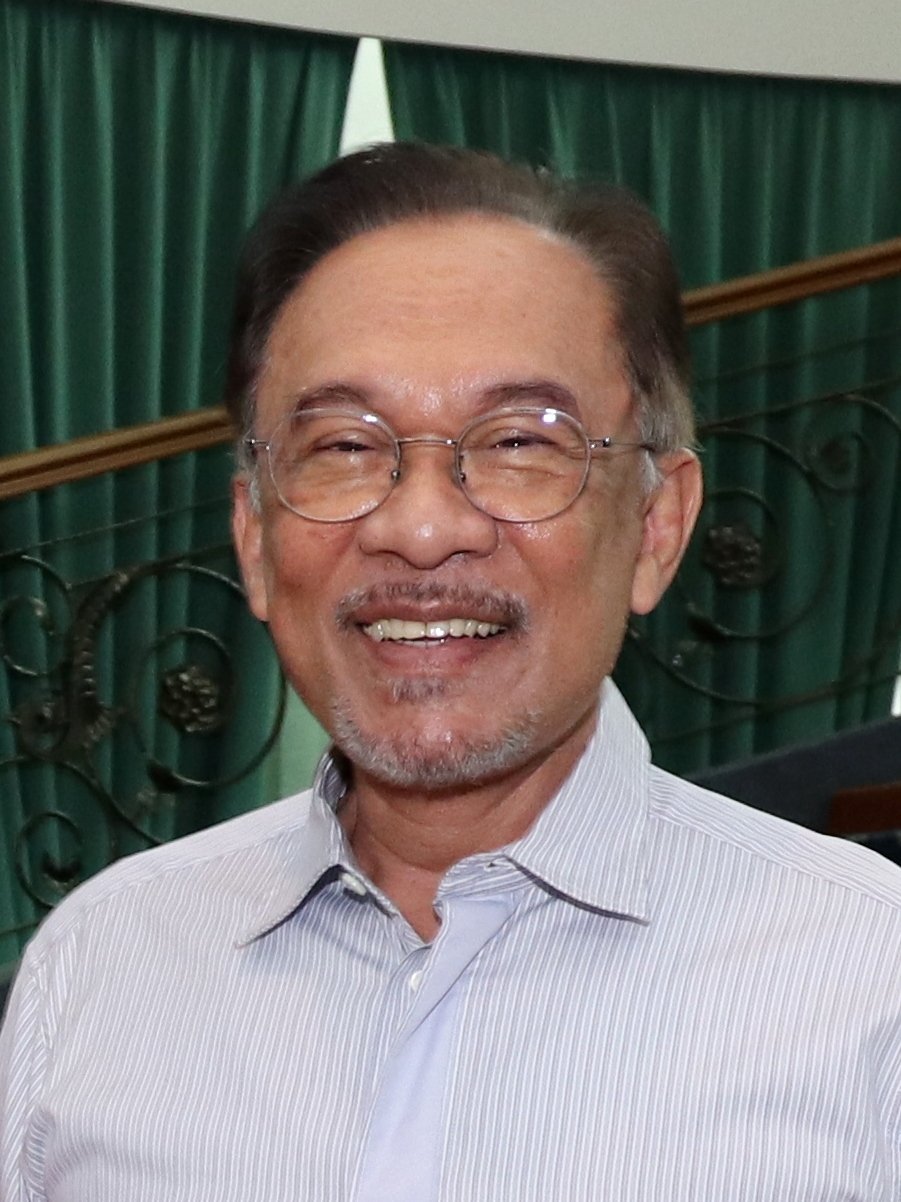 Malaysia · Politics
1947—
Anwar Ibrahim
Tenth Prime Minister of MalaysiaA student activist turned government minister, opposition leader and Malaysia’s tenth prime minister after one of the longest routes to national office.Read biographyQuick answers
Common questions
- What were the biggest changes from GE12 to GE15?
- BN fell from 140 seats and government in 2008 to 30 seats in 2022; Malaysia experienced its first federal transfer in 2018 and its first hung Parliament in 2022.
- Which election had the highest voter turnout?
- GE13 in 2013 had the highest rate of the four at 84.84 per cent, according to the IPU.
- Which election had the most registered voters?
- GE15 in 2022 had more than 21 million eligible voters after Undi18 and automatic voter registration took effect.
- When did Barisan Nasional first lose federal power?
- BN first lost federal government at GE14 on 9 May 2018, when Pakatan Harapan won 113 of 222 seats.
- Did Pakatan Rakyat win GE13?
- It won more votes nationwide, roughly 51 per cent, but not the parliamentary election. BN won 133 constituencies and therefore retained government.
- Why was GE15 a hung Parliament?
- No pre-election bloc won 112 seats. PH had 82 aligned seats, PN 74 and BN 30, so government required a post-election agreement among multiple coalitions.
- Are Pakatan Rakyat and Pakatan Harapan the same coalition?
- No. Pakatan Rakyat joined PKR, DAP and PAS and broke apart in 2015. Pakatan Harapan began with PKR, DAP and Amanah, later adding Bersatu before the 2018 election; Bersatu left in 2020.
- Why should vote share and seat share be compared separately?
- Malaysia elects MPs in individual first-past-the-post constituencies. National vote share measures aggregate support, while seat share determines who can command the Dewan Rakyat.
Primary and institutional sources
How this history was checked
Election Commission and IPU records provide the common numerical base. The comparison keeps seat results, national vote share and government formation separate, and flags coalition-label changes rather than forcing unlike groupings into one series. This article was reviewed on 4 October 2026.
- Election Commission of MalaysiaOfficial General Election Results Portal — GE12 to GE15
- Election Commission of MalaysiaOpen Data Portal: Election and Electorate Statistics
- Inter-Parliamentary UnionMalaysia Dewan Rakyat Elections in 2008
- Inter-Parliamentary UnionMalaysia Dewan Rakyat Elections in 2013
- Inter-Parliamentary UnionMalaysia House of Representatives Election, November 2022
- ISEAS – Yusof Ishak InstituteEconomic Voting and the End of Dominant Party Rule in Malaysia
- Parliament of MalaysiaJournal: Undi18 and Anti-Hopping Constitutional Amendments