
The short answer
Bersih began as a joint electoral-reform campaign and became Malaysia’s most visible civil-society movement. Five major rallies moved from polling procedures to clean government and institutional accountability. Some demands later entered law or practice, while boundaries, political finance, media access and institutional independence remain unfinished.
The five-rally sequence
How Bersih’s demands expanded from elections to institutions
Each mobilisation retained clean elections while responding to a different political moment.
| Rally | Date | Leadership form | Main emphasis |
|---|---|---|---|
| Bersih | 10 November 2007 | Party and NGO coalition | Electoral roll, indelible ink, postal voting and media access |
| Bersih 2.0 | 9 July 2011 | Civil-society steering committee | Eight demands linking election mechanics and public institutions |
| Bersih 3 | 28 April 2012 | Civil-society coalition | Clean the process before GE13 and reform the Election Commission |
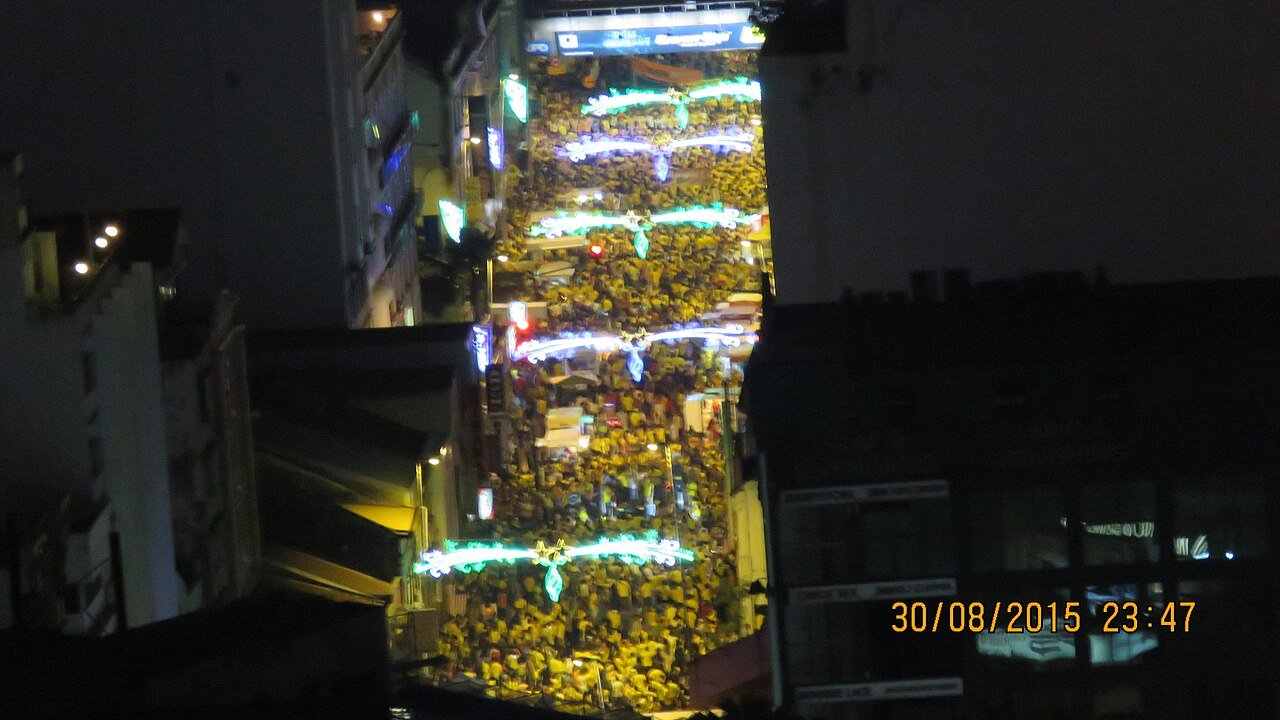
| Bersih 4 | 29–30 August 2015 | Civil-society coalition | Clean government, parliamentary democracy, dissent and economy |
| Bersih 5 | 19 November 2016 | National convoy plus rallies | Institutional reform, 1MDB accountability and East Malaysian voice |
Chronology
A timeline of the turning points
An electoral-reform committee becomes Bersih
Opposition parties and civil-society organisations develop a joint campaign and issue a communiqué calling for structural and administrative electoral reform.
The first yellow rally reaches the palace
Marchers in Kuala Lumpur press four immediate demands: a clean electoral roll, indelible ink, postal-vote reform and fairer media access.
Bersih 2.0 relaunches as a civil-society coalition
A steering committee led by Ambiga Sreenevasan reorganises the movement independently of direct party control and expands the programme to eight demands.
Bersih 2.0 holds its second major rally
Police roadblocks, arrests, tear gas and water cannon meet marchers in central Kuala Lumpur. SUHAKAM later investigates allegations of excessive force.
Parliament creates an electoral-reform committee
A Parliamentary Select Committee receives evidence and issues twenty-two recommendations, but Bersih argues that central demands remain unresolved before the next election.
Bersih 3.0 stages a “Duduk Bantah” sit-in
The nationwide and overseas action focuses on cleaning the system before the thirteenth general election. Confrontations follow near Dataran Merdeka.
Citizen monitors observe the thirteenth general election
Bersih and partner organisations organise PEMANTAU while voters use indelible ink at a federal election for the first time; disputes over integrity continue.
Bersih 4 broadens the movement’s agenda
A 34-hour rally in Kuala Lumpur, with actions in Sabah, Sarawak and overseas, joins clean elections to clean government, parliamentary democracy and dissent.
Bersih 5 combines a nationwide convoy with mass protest
Organisers carry institutional-reform demands through towns and villages before rallies in Kuala Lumpur, Kota Kinabalu and Kuching amid the 1MDB crisis.
Malaysia experiences its first federal transfer of power
An opposition coalition wins the general election. Bersih welcomes the competitive transfer but continues monitoring offences and pressing the new government for reform.
Voting reforms and an anti-party-hopping law take effect
Parliament lowers the voting age to eighteen and provides automatic registration; later constitutional amendments address party switching. Bersih advocates both while warning of unfinished reform.
Bersih returns to Parliament with “100% Reformasi”
The coalition leads a public march and memorandum demanding a reform roadmap, institutional independence and fair treatment of political opposition.
What is Bersih?
Bersih is Malaysia’s Coalition for Clean and Fair Elections. Its Malay name—Gabungan Pilihan Raya Bersih dan Adil—produces the acronym BERSIH, a word meaning “clean.” It began in 2005–2006 as a joint electoral-reform initiative involving opposition parties and non-governmental organisations, then became the country’s most recognisable civil-society movement for electoral integrity and institutional accountability.
The movement is best known for five large yellow-themed rallies between 2007 and 2016. Those gatherings were not five editions of an unchanged programme. The original demands concerned the electoral roll, indelible ink, postal voting and media access. Later campaigns included public institutions, corruption, parliamentary democracy, the right to dissent and the federal position of Sabah and Sarawak.
Bersih is neither a political party nor an election authority. It cannot enact law, administer a ballot or form a government. Its influence comes through research, public education, election observation, legal advocacy, coalition-building and protest. That distinction helps assess its record without crediting it alone for every reform or treating its demands as official findings.
Why did the first Bersih coalition form?
Malaysia had held regular elections for decades, but the same governing coalition retained federal power from independence. Critics pointed to unequal constituency sizes, disputed electoral-roll entries, postal-vote procedures, short campaign periods, media imbalance and the use of public resources. Bersih’s founders argued that formal voting was insufficient without a level and trusted contest.
A joint communiqué on 23 November 2006 turned earlier committee work into a named coalition. Parties supplied organisation and parliamentary access; civil-society groups supplied legal, rights and monitoring expertise. This mixed origin gave the first campaign reach but also exposed it to the government’s claim that electoral reform was simply opposition politics by another name.
The 10 November 2007 rally made the colour yellow and a petition to the Yang di-Pertuan Agong enduring symbols. Organisers set out four immediate reforms. Police blocked central locations and used tear gas and water cannon, while marchers reached the palace area to deliver the memorandum. The event placed election administration in mainstream public debate before the 2008 general election.
How Bersih 2.0 changed the coalition
In 2010, activists relaunched the organisation as Bersih 2.0 under a civil-society steering committee chaired by former Malaysian Bar president Ambiga Sreenevasan. Political parties could support the campaign and their members could attend as citizens, but they no longer sat at the centre of its formal leadership. The restructuring was meant to protect a non-partisan mandate.
The programme expanded to eight demands: clean the electoral roll; reform postal voting; use indelible ink; provide a campaign of at least twenty-one days; ensure free and fair media access; strengthen public institutions; stop corruption; and stop dirty politics. The additional items connected election-day mechanics to the wider environment in which voters received information and institutions enforced rules.
Non-partisan did not mean politically neutral about government conduct. Bersih challenged an electoral system administered under the long-ruling Barisan Nasional government, and opposition leaders appeared prominently at its rallies. The relevant distinction is organisational: the coalition’s stated accountability standard applied to whoever governed, even though its demands often aligned with opposition criticism.
What happened at the 2011 Bersih 2.0 rally?
The coalition called supporters to Kuala Lumpur on 9 July 2011. Authorities declared Bersih unlawful, restricted access to the city and arrested activists before the event. On the day, police dispersed marchers with tear gas, water cannon and arrests. Government officials defended enforcement on public-order grounds, while participants and rights organisations documented injuries and alleged disproportionate force.
Malaysia’s Human Rights Commission, SUHAKAM, opened a public inquiry. Its findings gave the episode significance beyond competing crowd estimates or partisan accounts: the handling of a reform rally became a formal question of freedom of assembly and police accountability. Human Rights Watch likewise documented a mostly peaceful march and nearly 1,700 arrests.
The political response included the creation of a Parliamentary Select Committee on Electoral Reform. That did not amount to acceptance of Bersih’s full case, but it shifted reform into an official parliamentary process. The committee later issued twenty-two recommendations; Bersih welcomed some measures while arguing that major problems remained unresolved.
Why did Bersih 3.0 happen in 2012?
Bersih judged the parliamentary recommendations and implementation timetable inadequate before the thirteenth general election. It announced a sit-in—Duduk Bantah—for 28 April 2012, retaining the eight demands and adding calls for the Election Commission’s resignation, a clean process before polling and international observation.
The intended focal point was Dataran Merdeka. Authorities restricted access to the square, and the assembly spread through surrounding streets. Much of the event was peaceful, but barriers were breached in one area and confrontations followed. Police used tear gas, water cannon and force; some participants attacked police vehicles or officers. A sound account must preserve both the scale of peaceful participation and the later disorder rather than using one to erase the other.
SUHAKAM’s subsequent inquiry criticised aspects of police conduct and found the operational approach inconsistent with the spirit of the new Peaceful Assembly Act. The rally therefore became part of two histories at once: the pressure for election reform and the continuing argument over how Malaysian law protects, regulates and polices public assembly.
How Bersih 4 and Bersih 5 widened the agenda
By 2015, the 1MDB controversy and questions about political finance had moved clean government to the centre of Bersih’s message. Bersih 4 ran for thirty-four hours on 29–30 August in Kuala Lumpur, Kuching and Kota Kinabalu, with solidarity events overseas. Its five themes were clean elections, clean government, the right to dissent, stronger parliamentary democracy and saving the economy.
The 2016 campaign linked those concerns more explicitly to institutional failure. A six-week convoy travelled through 236 towns and villages according to the organisers before Bersih 5 on 19 November. Its five demands added empowerment of Sabah and Sarawak to clean elections, clean government, parliamentary democracy and dissent.
Maria Chin Abdullah, then chair of Bersih, was arrested on the eve of the rally and detained under security-offence procedures before her later release. The episode reinforced the movement’s claim that election integrity could not be separated from enforcement institutions and civil liberties. Critics, meanwhile, argued that demanding Prime Minister Najib Razak’s resignation showed partisan alignment. Bersih answered that accountability for 1MDB was an institutional issue.
What electoral reforms did Bersih help put on the agenda?
Indelible ink entered federal election practice in 2013, although complaints about its performance immediately showed that adopting a mechanism is different from implementing it credibly. Election observation grew through PEMANTAU and later monitoring programmes. Public understanding of constituency malapportionment, postal voting and the electoral roll also became more technically informed.
In 2019, Parliament unanimously approved constitutional changes lowering the voting age to eighteen and enabling automatic voter registration. Implementation expanded the electorate for the 2022 general election. Bersih had advocated automatic registration and a lower voting age for years, but the amendment was a parliamentary achievement involving government, opposition parties, youth campaigners, the Election Commission and civil society—not the product of one organisation alone.
The 2022 anti-party-hopping amendment answered instability exposed after the 2020 coalition collapse and was another measure Bersih supported. Yet major demands remain contested: constituency equality, political-finance law, stronger parliamentary autonomy, fair media access, absentee voting, local elections and the institutional independence of the Election Commission. Its record is therefore mixed progress rather than a completed reform programme.
Is Bersih the same as Reformasi or the opposition?
No. Reformasi began after Anwar Ibrahim’s dismissal in 1998 and produced a wider political movement, party organisation and coalition path to government. Bersih emerged later around electoral rules. The movements overlap in supporters, language and concern for accountable institutions, but they have different origins, leadership and mandates.
Opposition parties were founders of the first Bersih coalition and helped mobilise supporters. After the 2010 relaunch, civil-society leaders formally directed Bersih 2.0. Party politicians remained visible participants, which made absolute separation impossible, but the organisation could and did criticise opposition-led state governments and, after 2018, the Pakatan Harapan federal administration.
That post-2018 role is an important test of independence. A movement built against an entrenched government can lose purpose when former allies take office. Bersih instead shifted toward monitoring the new administration’s promises, advocating institutional design and criticising delays. Its standard became whether reforms advanced, not whether a familiar coalition governed.
Did Bersih cause the 2018 change of government?
Bersih helped change Malaysia’s political environment, but no single movement caused the 2018 result. Its rallies normalised large multi-ethnic civic mobilisation, taught electoral concepts and reduced fear around peaceful dissent. Citizen monitoring and repeated demands also kept procedural fairness in public view across three general elections.
The actual transfer depended on many forces: voter decisions, opposition coordination, the 1MDB scandal, cost-of-living concerns, Mahathir Mohamad’s break with UMNO, regional contests in Sabah and Sarawak and the first-past-the-post distribution of seats. Crediting Bersih with the whole outcome would obscure those actors and turn influence into unsupported causation.
ISEAS research offers a useful middle position. The movement did not secure its original reform programme before the 2008, 2013 or 2018 elections, yet it reshaped the language, practice and imagined community of democratic opposition. Its deepest effect may have been cultural and organisational rather than one legislative victory.
What does Bersih do after the five mass rallies?
After 2016, the coalition relied less on numbered mega-rallies and more on election observation, policy reports, court challenges, voter education and campaigns on Parliament, political finance and government stability. It monitored the 2018 and 2022 elections and responded to the mid-term coalition changes of 2020 and 2021.
The “100% Reformasi” mobilisation in February 2024 showed that street action remained available. Bersih and partner groups marched toward Parliament and presented demands for a clear reform timetable, stronger institutions and fair political competition. It was not branded as “Bersih 6,” a label that should not be invented simply because it followed five numbered rallies.
The coalition’s continuing challenge is credibility across political camps. To remain an electoral watchdog, it must apply consistent evidence and standards to governments it helped make possible as well as those it opposed. That work is less visually dramatic than a sea of yellow shirts, but it is closer to the institutional change the original campaign sought.
What is Bersih’s lasting significance?
Bersih turned election administration from a specialist concern into a public vocabulary. Terms such as electoral roll, postal vote, indelible ink, campaign period, malapportionment and caretaker government entered ordinary political discussion. The movement also created practical networks of volunteer monitors, lawyers, medics and organisers across regions and overseas communities.
Its history contains unresolved tensions. A coalition demanding neutrality operated in a sharply partisan environment; peaceful assemblies sometimes ended in confrontation; highly visible rallies did not deliver every reform; and later democratic progress remained vulnerable to party switching and elite negotiation. Those limits are part of the record, not reasons to omit it.
The central legacy is the expectation that elections must be more than correctly counted ballots on polling day. Access to media, constituency design, registration, campaign rules, enforcement independence and the right to organise all influence whether competition is meaningful. Bersih made that broader standard difficult for any Malaysian government to ignore.
Continue the chronology
Related history guides
Malaysia’s 2013 General Election
Read the result and observation evidence behind the post-GE13 reform debate.
Read the timeline19 November 2022Malaysia’s 2022 General Election
Follow Bersih’s observer role in the first election under Undi18 and automatic registration.
Read the timeline1955–presentHow Malaysia’s Elections Work
Understand the rolls, nomination, polling, counting and government-formation rules Bersih sought to improve.
Read the timeline1957–presentMalaysia’s Election Commission
Place demands for cleaner rolls, fairer boundaries and institutional independence against SPR’s actual powers.
Read the timeline1957–presentHow Malaysia’s Courts Work
Place legal challenges, judicial review and institutional-independence demands in their court context.
Read the timeline1957–presentAttorney General vs Public Prosecutor
Understand the prosecution-independence reform linked to the wider clean-government agenda.
Read the timeline1957–presentHow Malaysia’s Parliament Works
See how elections connect to representation, lawmaking, committees and government confidence.
Read the timeline1967–presentMACC: History, Powers and Oversight
Follow the anti-corruption institution behind a central strand of Bersih’s reform agenda.
Read the timeline1998–presentMalaysia’s Reformasi Movement
Separate Bersih’s electoral mandate from the earlier movement and party path to power.
Read the timeline9 May 2018Malaysia’s 2018 General Election
Follow the vote that produced the first federal change of governing coalition.
Read the timeline2009–presentThe 1MDB Scandal
Understand the accountability crisis that shaped Bersih 4 and Bersih 5.
Read the timeline1957–presentMalaysia’s Constitutional Monarchy
See how elections, Parliament, Cabinet and the federal crown fit together.
Read the timelineBiography context
Explore Malaysia through connected lives
Explore Malaysia
Browse biographies and source-led guides across politics, business, sport and culture.
Explore the biographiesNational chronologyMalaysia History Timeline
Place the movement between Reformasi, 1MDB and coalition change.
Explore the biographiesLeadership collectionMalaysian Prime Ministers
Compare the administrations challenged or influenced by electoral reform campaigns.
Explore the biographiesConnected biographies
Four political lives connecting Reformasi, electoral competition and the Bersih decade
 Malaysia · Politics
1947—
Anwar Ibrahim
Tenth Prime Minister of MalaysiaA student activist turned government minister, opposition leader and Malaysia’s tenth prime minister after one of the longest routes to national office.Read biography Malaysia · Politics
1952—
Wan Azizah Wan Ismail
Member of Parliament and former deputy prime ministerThe ophthalmologist who became a central Reformasi leader, Malaysia’s first woman opposition leader and its first woman deputy prime minister.Read biography Malaysia · Politics
1939—2025
Abdullah Ahmad Badawi
Fifth Prime Minister of MalaysiaA career civil servant and politician whose premiership opened with a reform mandate and Malaysia’s largest parliamentary victory.Read biography Malaysia · Politics
1953—
Najib Razak
Sixth Prime Minister of MalaysiaA political heir who led Malaysia for nine years before an historic election defeat and convictions in the SRC International and main 1MDB cases.Read biographyQuick answers
Common questions
- What does Bersih mean?
- Bersih means “clean” in Malay and abbreviates Gabungan Pilihan Raya Bersih dan Adil, the Coalition for Clean and Fair Elections.
- When was Bersih founded?
- The movement developed from a committee formed in 2005 and publicly launched its coalition communiqué on 23 November 2006.
- How many major Bersih rallies were there?
- Five numbered mass mobilisations took place: Bersih in 2007, Bersih 2.0 in 2011, Bersih 3 in 2012, Bersih 4 in 2015 and Bersih 5 in 2016.
- What were Bersih’s original four demands?
- They were a clean electoral roll, use of indelible ink, reform of postal voting and fair access to mass media for competing parties.
- Is Bersih a political party?
- No. It is a civil-society coalition. Opposition parties helped found and mobilise the first campaign, but Bersih 2.0 relaunched under non-party civil-society leadership in 2010.
- Who led Bersih 2.0?
- Ambiga Sreenevasan chaired the coalition during the 2011 and 2012 rallies. Maria Chin Abdullah later chaired it during Bersih 4 and Bersih 5.
- Did Bersih achieve electoral reform?
- It helped place reforms on the public agenda, and measures such as indelible ink, voting at eighteen and automatic registration later entered practice or law. Major demands on boundaries, political finance, media and institutional independence remain incomplete.
- Was the 2024 Bersih march called Bersih 6?
- No. The February 2024 mobilisation used the “100% Reformasi” campaign name. Bersih has not officially numbered it as Bersih 6.
Primary and institutional sources
How this history was checked
Bersih’s own statements establish its demands and chronology; SUHAKAM and the Election Commission provide institutional records; ISEAS offers an independent assessment that distinguishes incomplete formal reform from the movement’s wider political impact. This article was reviewed on 4 October 2026.
- BersihBersih People’s Gathering — Original Four Demands, 10 November 2007
- BersihThe Eight Demands and the 9 July 2011 Rally
- Human Rights Commission of Malaysia2011 Annual Report — Public Inquiry into the Bersih 2.0 Assembly
- BersihBersih 3.0 Sit-In and Its Additional Demands
- Human Rights Commission of Malaysia2013 Annual Report — Findings on the 28 April 2012 Assembly
- BersihBersih 4 Demands and the 29–30 August 2015 Rally
- BersihBersih 5 — Five Demands for Institutional Reform
- Election Commission of MalaysiaElection Regulations — Indelible Ink and Polling Procedure
- Bersih2022 Annual Report — Undi18, Automatic Registration and Anti-Hopping Reform
- ISEAS – Yusof Ishak InstituteThe Profound Impact of the Bersih Movement since 2007
- BersihThe 2024 “100% Reformasi” Campaign and Memorandum