
The short answer
Malaysia’s Reformasi began with a dismissal and arrest, but it endured by becoming an organisation, a coalition strategy and a standard for judging institutions. Its path from street protest to federal office changed the country’s competitive politics without resolving every demand made in 1998.
Chronology
A timeline of the turning points
Anwar Ibrahim is dismissed from government
Prime Minister Mahathir Mohamad removed his deputy and finance minister during the Asian financial crisis, turning a succession and policy conflict into an open political rupture.
The Permatang Pauh Declaration sets out a reform programme
Anwar called for justice, democratic accountability, an independent judiciary, social fairness and an end to corruption and abuse of power.
A mass rally is followed by Anwar’s arrest
Demonstrators gathered around Masjid Negara and central Kuala Lumpur. Police arrested Anwar at his home that evening and detained him under the Internal Security Act.
Wan Azizah launches ADIL
The Social Justice Movement gave family members, activists and civil-society allies an organisation through which to sustain Reformasi after Anwar’s detention.
Parti Keadilan Nasional is launched
Led by Wan Azizah, the new party converted street mobilisation into electoral organisation and joined opposition parties in the Barisan Alternatif coalition.
Reformasi faces its first general election
Keadilan won five parliamentary seats. The result showed the movement’s Malay opposition appeal but also the limits of converting protest into a broad national majority.
The Federal Court overturns the first sodomy conviction
A majority judgment found the evidence unsafe for conviction. Anwar was released, while his earlier corruption conviction continued to delay his return to elected office.
The first Bersih mass rally widens the reform coalition
A separate civil-society and party coalition mobilised for clean elections. Bersih shared Reformasi’s accountability agenda but developed its own leadership, demands and identity.
The opposition breaks the two-thirds barrier and Anwar returns
Barisan Nasional lost its customary two-thirds parliamentary majority and five state governments. Anwar later won the Permatang Pauh by-election and became opposition leader.
A stronger opposition still falls short of federal power
Pakatan Rakyat won more votes nationwide but fewer parliamentary seats than Barisan Nasional, intensifying debate about constituency boundaries, electoral administration and coalition reach.
A second conviction returns Anwar to prison
The Federal Court upheld his conviction in a second sodomy case. Pakatan Rakyat later fractured, and PKR joined DAP and Amanah in the new Pakatan Harapan coalition.
Pakatan Harapan wins and Anwar receives a full pardon
A Mahathir-led opposition alliance ended the governing coalition’s six-decade federal tenure. The Pardons Board met on 16 May, after which the King granted Anwar a full pardon and immediate release.
The Pakatan Harapan government collapses
Mahathir resigned amid a coalition realignment. Muhyiddin Yassin became prime minister, showing that the 2018 transfer had not settled how Malaysia’s fragmented parliamentary blocs would form governments.
A hung parliament ends with Anwar as prime minister
No coalition won 112 seats in the general election. After consultations and a rulers’ meeting, the King appointed Anwar Malaysia’s tenth prime minister on 24 November.
Reformasi moves from opposition demand to governing test
Anwar’s unity government includes former rivals. Institutional reform is now judged against coalition compromise, economic pressures and the movement’s long-standing promises.
What does Reformasi mean in Malaysia?
Reformasi means “reform.” In Malaysia it names the protest movement that emerged after Anwar Ibrahim’s dismissal in September 1998, the party and coalition networks built from that rupture, and a broader agenda concerned with justice, accountable government, independent institutions and democratic competition.
The movement has no agreed final date. Some participants date its birth to the dismissal on 2 September, others to the 20 September rally and arrest, and others to the organisation that later became PKR. Its electoral path runs through 1999, the opposition breakthroughs of 2008 and 2013, the first federal transfer of power in 2018 and Anwar’s appointment as prime minister in 2022.
Reformasi is not identical to PKR, Pakatan Harapan, Bersih or Anwar’s present government. Those organisations and leaders overlap, but each has a different membership, institutional role and history. Keeping those distinctions clear prevents a twenty-eight-year democratic argument from becoming one politician’s biography.
How a succession conflict became a public movement
Anwar had risen rapidly through UMNO and government, becoming finance minister in 1991 and deputy prime minister in 1993. The Asian financial crisis sharpened disagreements within the administration over economic strategy, leadership and the pace of political reform. Mahathir dismissed him from government on 2 September 1998 and UMNO removed him the next day.
Anwar did not leave quietly. The Permatang Pauh Declaration framed the conflict around corruption, concentrated power, judicial independence, social justice and democratic accountability. Rallies connected disaffected UMNO members with Islamic activists, students, established opposition parties, rights advocates and citizens who had not shared a single political organisation before.
Police arrested Anwar after the large 20 September demonstration. Images of the injuries he sustained in custody, later traced to an assault by the inspector-general of police, gave the movement a powerful symbol of official abuse. A dispute inside the governing party had become a public test of police, courts, media and executive power.
Wan Azizah, ADIL and the creation of Keadilan
With Anwar detained, Wan Azizah Wan Ismail became the movement’s institutional anchor. She led the Social Justice Movement, or ADIL, launched in December 1998, and then Parti Keadilan Nasional in April 1999. The party drew former UMNO members, Islamic organisers, social democrats, non-governmental activists and professionals into an unusually diverse coalition.
Keadilan joined PAS, DAP and Parti Rakyat Malaysia in the Barisan Alternatif for the 1999 election. Ideological disagreement limited the alliance, but the election established a durable parliamentary vehicle for Reformasi. Wan Azizah won Permatang Pauh and became the party’s only continuous source of elected legitimacy through its difficult early years.
Parti Keadilan Nasional later merged with Parti Rakyat Malaysia to form Parti Keadilan Rakyat, or PKR. The new name expressed a multi-ethnic social-justice identity, while the party’s dependence on Anwar’s leadership and competing internal factions remained enduring tensions.
Why Anwar’s trials became part of the movement’s meaning
Anwar was convicted of corruption in 1999 and sodomy in 2000. In 2004 a Federal Court majority overturned the first sodomy conviction, holding that the evidence supporting the specified charge was unsafe. He was released after serving the corruption sentence and later returned to electoral politics.
A second sodomy case produced another conviction, upheld by the Federal Court in February 2015. Anwar and his supporters consistently described the prosecutions as politically motivated; the courts’ formal judgments and the movement’s political interpretation must be reported as distinct claims rather than collapsed into one conclusion.
After the 2018 election, the Federal Territories Pardons Board met and the Yang di-Pertuan Agong granted Anwar a full pardon with immediate release. The Attorney General’s Chambers later confirmed that the board had met on 16 May. The pardon restored his eligibility for political office but did not erase the wider argument over institutions that had animated Reformasi since 1998.
From five seats to a national opposition
Keadilan won five parliamentary seats in 1999 and only one in 2004. The low point did not end the movement. Abdullah Ahmad Badawi’s early popularity, organisational weakness and disputes among opposition parties exposed how much more difficult national coalition-building was than protest mobilisation.
The 2008 election changed the scale of opposition politics. PKR won thirty-one parliamentary seats, Barisan Nasional lost its two-thirds majority and opposition coalitions governed five states. Anwar returned to Parliament through the Permatang Pauh by-election and led the parliamentary opposition.
Pakatan Rakyat won more votes nationwide in 2013 but fewer seats than Barisan Nasional. The result reinforced demands for electoral reform while also showing the first-past-the-post importance of geography, constituency boundaries and coalition performance outside urban and semi-urban strongholds.
How Bersih relates to—but is not the same as—Reformasi
Bersih began as a joint electoral-reform committee in 2005 and issued its first coalition communiqué in 2006. Its 2007 rally demanded a cleaner electoral roll, indelible ink, reform of postal voting and fairer media access. Opposition parties participated, but Bersih later reorganised as a civil-society coalition independent of any party.
The two movements share personnel, public spaces and demands for accountable institutions. Bersih rallies helped normalise large, multi-ethnic civic mobilisation and made electoral procedure a mainstream political issue. Those achievements strengthened the environment in which PKR and later Pakatan coalitions competed.
The distinction remains essential. Reformasi grew from the 1998 rupture and developed a party-political route to power. Bersih’s mandate centred on electoral integrity and democratic institutions, allowing it to criticise governments regardless of which coalition held office.
The 2018 transfer and the Mahathir–Anwar paradox
The 1MDB scandal, cost-of-living concerns, civil-society mobilisation and opposition coordination created the conditions for the 2018 breakthrough. Pakatan Harapan allied with Mahathir, the prime minister whose dismissal of Anwar had triggered Reformasi. The alliance was strategically powerful and historically paradoxical.
On 9 May, the coalition defeated Barisan Nasional at federal level, producing Malaysia’s first change of governing coalition since independence. The transfer occurred through elections and constitutional appointment rather than violence. Mahathir became prime minister again, Wan Azizah became deputy prime minister and Anwar was pardoned and released.
The coalition promised a later leadership transition to Anwar, but disputes over timing and succession intensified. The arrangement united former adversaries around removing Najib Razak’s government; it did not resolve their different parties, histories or ambitions.
Why the 2020 collapse did not end the story
In February 2020, defections and coalition manoeuvring deprived Pakatan Harapan of its governing alignment. Mahathir resigned, and the King appointed Muhyiddin Yassin after consultations over who was likely to command a parliamentary majority. The change was constitutional in form but bitterly disputed in political legitimacy.
The episode exposed a system with competitive elections but weak party discipline and unstable coalition agreements. Parliament, royal discretion under the Constitution, statutory declarations and elite negotiation all became central to government formation. Muhyiddin was followed by Ismail Sabri Yaakob in 2021 before a general election was called in 2022.
Reformasi survived because it had become more than the 2018 government. PKR remained an electoral organisation, Pakatan Harapan remained a coalition and the movement’s language continued to shape expectations about anti-corruption, parliamentary accountability and institutional independence.
What changed when Anwar became prime minister?
The 2022 election produced Malaysia’s first hung parliament. Pakatan Harapan won the largest bloc but not a majority. After consultations and a special meeting of the Malay Rulers, the Yang di-Pertuan Agong appointed Anwar prime minister under the constitutional provisions governing confidence in the Dewan Rakyat.
His government rests on a broad arrangement that includes Pakatan Harapan, Barisan Nasional and regional parties. That coalition made government possible and also created unavoidable compromises with former opponents. Reformasi’s central figure had reached the office from which he was dismissed twenty-four years earlier, but under circumstances that made gradual negotiation more likely than a clean partisan programme.
The movement’s legacy must therefore be evaluated institution by institution: elections, Parliament, judicial independence, police accountability, anti-corruption enforcement, media freedom, party finance and protections for dissent. Holding the premiership is a historical endpoint for Anwar’s personal journey; it is not proof that the reform agenda is complete.
Is Reformasi still a movement?
Reformasi remains a political vocabulary, a network of veterans, a party origin story and a public standard used to judge the government. Some supporters see the unity administration as the first realistic chance to implement reforms from federal office. Others argue that coalition compromise and continuity in restrictive institutions have narrowed the original programme.
Both views illustrate the movement’s transition from opposition to accountability. Earlier governments could be measured against demands made from the street; an Anwar-led government is measured against promises associated with his own history. That shift makes independent civil society, parliamentary scrutiny and source-based evaluation more important, not less.
The durable achievement of Reformasi is competitive possibility. Malaysia experienced a federal transfer in 2018, another coalition change in 2020 and a hung parliament in 2022 without returning to the assumption that one coalition must govern indefinitely. The unfinished work lies in making institutions, rather than personalities or temporary alliances, carry that pluralism safely.
Continue the chronology
Related history guides
How Malaysia’s Elections Work
Understand the electoral rules through which Reformasi moved from opposition organising to federal power.
Read the timeline1957–presentMalaysia’s Election Commission
Examine the institutional independence, roll and boundary reforms that remain part of the movement’s agenda.
Read the timeline1957–presentAttorney General vs Public Prosecutor
Examine a central Reformasi proposal through the current law and pending 2026 separation bill.
Read the timeline1957–presentHow Malaysia’s Courts Work
Connect the movement’s judicial-independence demands to court structure and constitutional review.
Read the timeline1957–presentHow Malaysia’s Parliament Works
Connect reform demands to confidence, committees, legislative procedure and autonomy.
Read the timeline1967–presentMACC: History, Powers and Oversight
Examine the appointment and prosecution structures behind demands for anti-corruption independence.
Read the timeline1997–1999The Asian Financial Crisis in Malaysia
Start with the recession, policy shift and leadership conflict that formed Reformasi’s immediate setting.
Read the timeline1955–presentMalaysia History Timeline
Place Reformasi within independence, development, the 2018 transfer and later coalition change.
Read the timeline2005–presentMalaysia’s Bersih Movement
Trace the separate civil-society coalition that turned electoral procedure into a mass reform campaign.
Read the timeline9–10 May 2018Malaysia’s 2018 General Election
Examine the result, voting forces and constitutional transfer that turned opposition-building into federal power.
Read the timeline2009–presentThe 1MDB Scandal: A Verified Timeline
Follow the scandal, legal cases and asset recovery that transformed Reformasi’s accountability campaign.
Read the timeline1998–2004Indonesia’s Reformasi and Democratic Transition
Compare a neighbouring movement that removed an incumbent and rewrote constitutional institutions after the same regional crisis.
Read the timelineBiography context
Explore Malaysia through connected lives
Explore Malaysia
Browse the people and institutions behind political, business and cultural change.
Explore the biographiesLeadership collectionMalaysian Prime Ministers
Follow the leaders whose alliances shaped Reformasi’s path from 1998 to government.
Explore the biographiesPolitical collectionMalaysian Deputy Prime Ministers
Compare Anwar, Wan Azizah and the office at the centre of succession politics.
Explore the biographiesConnected biographies
Six lives connecting the 1998 rupture, opposition coalition-building, federal transfer and unity government
 Malaysia · Politics
1947—
Anwar Ibrahim
Tenth Prime Minister of MalaysiaA student activist turned government minister, opposition leader and Malaysia’s tenth prime minister after one of the longest routes to national office.Read biography Malaysia · Politics
1952—
Wan Azizah Wan Ismail
Member of Parliament and former deputy prime ministerThe ophthalmologist who became a central Reformasi leader, Malaysia’s first woman opposition leader and its first woman deputy prime minister.Read biography Malaysia · Politics
1925—
Mahathir Mohamad
Fourth and seventh Prime Minister of MalaysiaA physician-politician whose two premierships—separated by fifteen years—made him the longest-serving and one of the most consequential leaders in Malaysian history.Read biography Malaysia · Politics
1939—2025
Abdullah Ahmad Badawi
Fifth Prime Minister of MalaysiaA career civil servant and politician whose premiership opened with a reform mandate and Malaysia’s largest parliamentary victory.Read biography Malaysia · Politics
1953—
Najib Razak
Sixth Prime Minister of MalaysiaA political heir who led Malaysia for nine years before an historic election defeat and convictions in the SRC International and main 1MDB cases.Read biography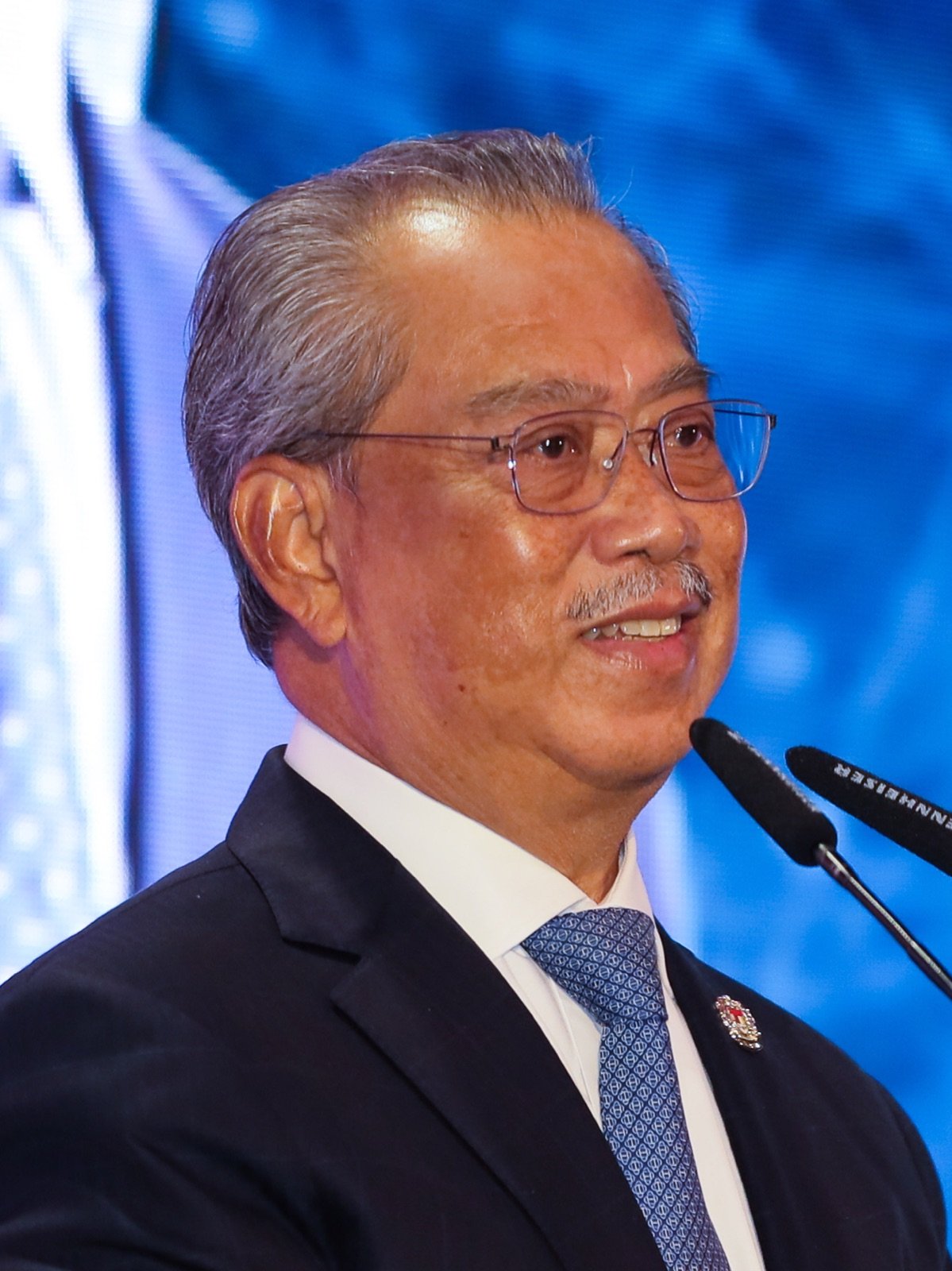 Malaysia · Politics
1947—
Muhyiddin Yassin
Eighth Prime Minister of MalaysiaA veteran Johor politician who became prime minister after the 2020 coalition crisis and governed through the most disruptive phase of the pandemic.Read biographyQuick answers
Common questions
- What was the Reformasi movement in Malaysia?
- Reformasi was the reform movement that emerged after Anwar Ibrahim’s September 1998 dismissal and arrest. It demanded justice, accountable government, institutional independence and more democratic political competition.
- When did Malaysia’s Reformasi movement begin?
- There is no single agreed date. Important starting points are Anwar’s dismissal on 2 September 1998, the Permatang Pauh Declaration on 12 September and the mass rally and arrest on 20 September.
- Who led Reformasi while Anwar was in prison?
- Wan Azizah Wan Ismail became its main organisational leader. She led ADIL, founded Parti Keadilan Nasional and won the Permatang Pauh parliamentary seat in 1999.
- Is Reformasi the same as PKR?
- No. PKR is the political party that grew from the movement’s organisational wing. Reformasi is a wider political and civic agenda that also involved activists, other opposition parties and people outside PKR.
- Is Bersih part of Reformasi?
- Bersih is a separate electoral-reform coalition founded later. It overlaps with Reformasi in its concern for accountable institutions and included opposition parties early on, but it developed an independent civil-society identity.
- How did Reformasi influence the 2018 election?
- It helped build the parties, activists and language of institutional change behind the opposition. The 2018 victory also required a wider coalition, including Mahathir Mohamad and former government figures, plus public anger over 1MDB and economic concerns.
- When did Anwar Ibrahim become prime minister?
- He was sworn in as Malaysia’s tenth prime minister on 24 November 2022 after a hung parliament and consultations conducted by the Yang di-Pertuan Agong.
- Did Anwar becoming prime minister complete Reformasi?
- It completed his personal route from dismissed deputy to prime minister, but not the movement’s institutional agenda. Reformasi continues to be judged through concrete changes to elections, Parliament, courts, enforcement bodies, media and civil liberties.
Primary and institutional sources
How this history was checked
This guide distinguishes court outcomes, institutional records and political interpretation. Official judgments, election data and appointment records establish events; ISEAS research and Bersih’s own archive explain organisational development and civic demands. This article was reviewed on 3 October 2026.
- ISEAS – Yusof Ishak InstituteA Deep Dive into Malaysia’s People’s Justice Party (PKR)
- Federal Court of Malaysia Library2004 Judgment Collection — Anwar Ibrahim v Public Prosecutor
- Federal Court of MalaysiaMalaysian Judiciary Yearbook 2015
- Attorney General’s Chambers MalaysiaStatement on the 16 May 2018 Pardon of Anwar Ibrahim
- Coalition for Clean and Fair ElectionsAbout Bersih — Origins and Electoral Reform Campaign
- Election Commission of MalaysiaOfficial General Election Results Portal
- Prime Minister’s Office of MalaysiaPrime Minister Anwar Ibrahim — Official Profile
- Prime Minister’s Office of MalaysiaAnwar Ibrahim Sworn In as Tenth Prime Minister
- Parliament of MalaysiaRoyal Address to the Fifteenth Parliament, 2023