The short answer
Malaysia’s ten numbered premierships have been held by nine people. Tunku Abdul Rahman led the country at independence, Mahathir Mohamad served twice as the fourth and seventh prime minister, and Anwar Ibrahim became the tenth after the 2022 hung parliament. This guide puts exact dates, routes to office and the constitutional logic of each transition in one verified sequence.
Complete prime-ministerial sequence
Every Malaysian prime minister in order
The official sequence counts Mahathir Mohamad twice because his two premierships were non-consecutive. Interim and caretaker periods are shown inside the relevant row rather than counted as separate officeholders.
| Prime minister | Term | Route to office | Transition context |
|---|---|---|---|
| 1 · Tunku Abdul Rahman | 31 Aug 1957–22 Sep 1970 | Alliance leader at independence | First prime minister of independent Malaya; continued after Malaysia formed in 1963 |
| 2 · Abdul Razak Hussein | 22 Sep 1970–14 Jan 1976 | Succeeded Tunku after serving as deputy prime minister | Led the post-1969 reconstruction and died in office |
| 3 · Hussein Onn | 15 Jan 1976–16 Jul 1981 | Succeeded Razak as deputy prime minister | Retired for health reasons and transferred office to his deputy |
| 4 · Mahathir Mohamad | 16 Jul 1981–31 Oct 2003 | Succeeded Hussein as deputy prime minister and UMNO leader | Malaysia’s longest premiership; ended with a planned retirement |
| 5 · Abdullah Ahmad Badawi | 31 Oct 2003–3 Apr 2009 | Succeeded Mahathir as deputy prime minister | Won the 2004 election and resigned after the 2008 setback |
| 6 · Najib Razak | 3 Apr 2009–10 May 2018 | Succeeded Abdullah as deputy prime minister | Left office after Barisan Nasional lost the 2018 election |
| 7 · Mahathir Mohamad | 10 May 2018–24 Feb 2020; interim to 1 Mar | Pakatan Harapan won the 2018 election | First federal change of governing coalition; resigned during the 2020 crisis |
| 8 · Muhyiddin Yassin | 1 Mar 2020–16 Aug 2021; caretaker to 21 Aug | Appointed after consultations on majority support | Perikatan Nasional government; resigned after losing majority support |
| 9 · Ismail Sabri Yaakob | 21 Aug 2021–24 Nov 2022 | Appointed after Muhyiddin’s resignation | Led the government to the November 2022 general election |
| 10 · Anwar Ibrahim | 24 Nov 2022–present | Appointed after the 2022 hung parliament | Leads a multi-coalition government and won a confidence motion in December 2022 |
Chronology
A timeline of the turning points
Alliance victory creates elected self-government
The Alliance won 51 of 52 elected federal seats, and Tunku Abdul Rahman became chief minister before leading the final independence negotiations.
Tunku becomes the first prime minister
At independence, the Federation of Malaya moved from elected self-government to sovereignty with Tunku at the head of its cabinet.
The office continues into the Federation of Malaysia
Malaya, Sabah, Sarawak and Singapore formed Malaysia. Tunku remained prime minister of the enlarged federation without a new numbered term.
Razak succeeds Tunku
Tunku resigned following the political crisis after the 1969 election, and Deputy Prime Minister Abdul Razak became the second prime minister.
Hussein succeeds after Razak’s death
Razak died in office in London. Deputy Prime Minister Hussein Onn took office the following day as the third prime minister.
Mahathir begins the longest premiership
Hussein retired for health reasons, and Mahathir began a first term that would last more than twenty-two years.
Abdullah completes a planned succession
Mahathir retired and Deputy Prime Minister Abdullah Ahmad Badawi became the fifth prime minister in an orderly transfer within Barisan Nasional.
Najib succeeds Abdullah
Abdullah resigned after Barisan Nasional’s losses in the 2008 election, and his deputy Najib Razak took office.
The first federal turnover returns Mahathir to office
Pakatan Harapan defeated Barisan Nasional, ending the coalition’s uninterrupted rule since independence. Mahathir returned as the seventh prime minister.
Resignation, interim government and royal consultations
Mahathir resigned and was appointed interim prime minister. After consulting members of Parliament and party leaders, the King appointed Muhyiddin Yassin.
Ismail Sabri follows Muhyiddin
Muhyiddin resigned after losing majority support and served as caretaker. Ismail Sabri was sworn in five days later as the ninth prime minister.
A hung parliament leads to Anwar’s appointment
No coalition won a majority in the general election. After consultations, Anwar Ibrahim was appointed and sworn in as the tenth prime minister.
The Dewan Rakyat approves a confidence motion
Members approved the motion by voice vote, giving the new multi-coalition government an early parliamentary test of support.
How is Malaysia’s prime minister chosen?
Malaysians do not cast a separate national vote for prime minister. They elect members of the Dewan Rakyat, and the Yang di-Pertuan Agong appoints as prime minister a member of that House who, in the King’s judgment, is likely to command the confidence of the majority.
That rule in Article 43 connects the office to parliamentary support rather than to a personal fixed term. A prime minister normally emerges as the leader of the coalition able to form a government, but the King’s constitutional judgment becomes especially visible when election results or coalition changes leave the majority unclear.
Why are there ten premierships but only nine people?
Malaysia’s public numbering treats Mahathir Mohamad’s two non-consecutive periods separately. He was the fourth prime minister from 1981 to 2003 and returned as the seventh in 2018. Anwar Ibrahim is therefore called the tenth prime minister even though only nine individuals have held the office.
The distinction is useful because Mahathir’s return began under a different coalition and followed the first federal transfer of power. Counting the second period separately preserves the constitutional and electoral break between the two premierships.
How did the office begin at independence?
Tunku Abdul Rahman first led the elected government as chief minister after the Alliance victory of 1955. When the Federation of Malaya became independent on 31 August 1957, he became its first prime minister under a Westminster-style parliamentary system and constitutional monarchy.
The office carried forward when Malaysia formed on 16 September 1963. Tunku remained prime minister as the federation expanded to include Sabah, Sarawak and Singapore. Singapore’s departure in 1965 did not interrupt or renumber the premiership.
How did succession work from 1970 to 2009?
The next five transfers occurred within the Alliance–Barisan Nasional governing system. Razak followed Tunku in 1970; Hussein followed after Razak died in office; Mahathir followed Hussein’s retirement; Abdullah followed Mahathir’s planned departure; and Najib followed Abdullah in 2009.
Deputy-premier succession made the sequence look stable, but the reasons for each transition differed. They included resignation after a national crisis, death in office, retirement for health reasons, a long-planned handover and party pressure following an election setback.
Why was the 2018 election a turning point?
Barisan Nasional and its Alliance predecessor had governed federally since independence. The 2018 election ended that continuity when Pakatan Harapan won enough seats to form the government and Mahathir returned to office at the head of the opposition coalition.
This was both Malaysia’s first federal change of governing coalition and its first non-consecutive premiership. It demonstrated that a national transfer could take place through an election while retaining the same constitutional office and numbering convention.
What happened during the 2020–2022 transitions?
Mahathir’s resignation in February 2020 followed the loss of Pakatan Harapan’s parliamentary majority. The King appointed him interim prime minister, interviewed members of Parliament and then appointed Muhyiddin after judging that he was likely to command majority confidence.
Muhyiddin resigned in August 2021 after that support eroded and remained caretaker until Ismail Sabri took the oath. The 2022 election then produced a hung parliament. Anwar was appointed after further consultations and later secured approval of a confidence motion in the Dewan Rakyat.
Who is the current prime minister of Malaysia?
As reviewed on 3 October 2026, Anwar Ibrahim is Malaysia’s current and tenth prime minister. He was sworn in on 24 November 2022 following the country’s first hung federal parliament and leads a government supported by several coalitions and parties.
The office has no separate presidential-style term. A prime minister serves while able to command the confidence of the Dewan Rakyat, subject to resignation, loss of support, dissolution of Parliament and the constitutional process for appointing a successor.
Continue the chronology
Related history guides
Malaysia Elections: GE12–GE15 Compared
Connect four election outcomes to the succession, turnover and coalition routes into the premiership.
Read the timeline1957–presentHow Malaysia’s Courts Work
Understand judicial appointments, constitutional review and the limits on executive action.
Read the timeline1957–presentAttorney General vs Public Prosecutor
See how prime-ministerial advice intersects with the current dual office and proposed separation.
Read the timeline1955–presentMalaysia History Timeline
Place every premiership inside independence, federation, development, Reformasi and coalition change.
Read the timeline1957–presentMalaysia’s Constitutional Monarchy
See how the King appoints a prime minister and how Cabinet confidence, advice and dissolution interact.
Read the timeline1957–presentHow Malaysia’s Parliament Works
Understand confidence, dissolution and the elected chamber to which every Cabinet is responsible.
Read the timeline31 August 1957Malayan Independence
Follow the election, negotiations and proclamation that placed Tunku at the head of an independent government.
Read the timeline16 September 1963The Formation of Malaysia
See how Tunku’s office carried from independent Malaya into the new federation.
Read the timeline1969–1971May 13 and the Rukun Negara
Understand the emergency-era transition from Tunku Abdul Rahman to Abdul Razak.
Read the timeline1971–1990Malaysia’s New Economic Policy
Compare how Razak, Hussein and Mahathir designed, continued and adapted the twenty-year framework.
Read the timeline1997–1999The Asian Financial Crisis in Malaysia
Understand the economic-policy conflict and restructuring programme during Mahathir’s first premiership.
Read the timeline1998–presentMalaysia’s Reformasi Movement
Follow the movement connecting Mahathir, Abdullah, Najib, Muhyiddin and Anwar across six premierships.
Read the timeline9–10 May 2018Malaysia’s 2018 General Election
Follow Najib’s defeat, Mahathir’s return and the first federal coalition transfer.
Read the timeline2009–presentThe 1MDB Scandal: A Verified Timeline
Follow the scandal across Najib’s premiership, the 2018 transition and later governments’ recovery efforts.
Read the timelineNine biographiesMalaysia’s Prime Ministers
Open the biography collection for full life stories, timelines, image credits and reviewed sources.
Read the timelineBiography context
Explore Malaysia through connected lives
Malaysia’s Prime Ministers: Life by Life
Compare the nine people behind all ten numbered premierships.
Explore the biographiesCountry archiveExplore Malaysia
Continue into political, business, sporting and cultural biographies.
Explore the biographiesSuccession collectionMalaysia’s Deputy Prime Ministers
Trace the office that supplied many, but not all, of Malaysia’s prime ministers.
Explore the biographiesConnected biographies
Six prime ministers at major political transitions
 Malaysia · Politics
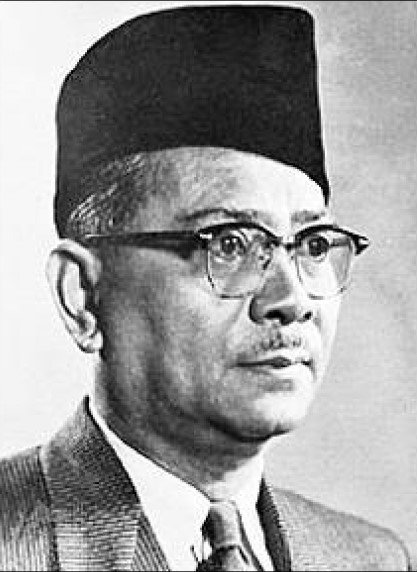
1903—1990
Tunku Abdul Rahman
First Prime Minister of MalaysiaThe independence leader who became Malaya’s first prime minister and helped define the federation that would become modern Malaysia.Read biography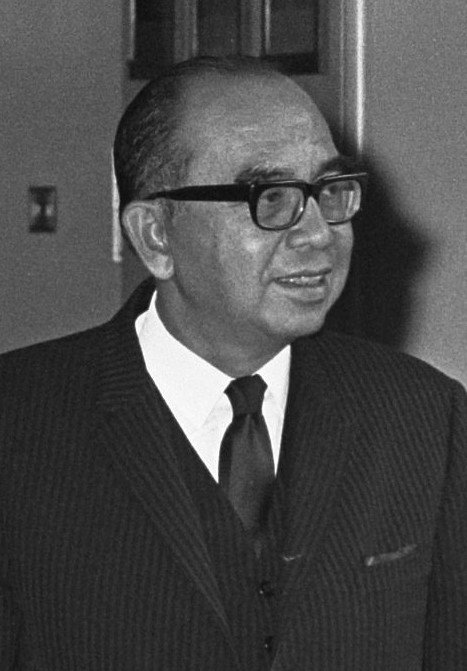 Malaysia · Politics
1922—1976
Abdul Razak Hussein
Second Prime Minister of MalaysiaMalaysia’s second prime minister, remembered for rural development, post-1969 reconstruction and a far-reaching programme of social and economic restructuring.Read biography Malaysia · Politics
1925—
Mahathir Mohamad
Fourth and seventh Prime Minister of MalaysiaA physician-politician whose two premierships—separated by fifteen years—made him the longest-serving and one of the most consequential leaders in Malaysian history.Read biography Malaysia · Politics
1953—
Najib Razak
Sixth Prime Minister of MalaysiaA political heir who led Malaysia for nine years before an historic election defeat and convictions in the SRC International and main 1MDB cases.Read biography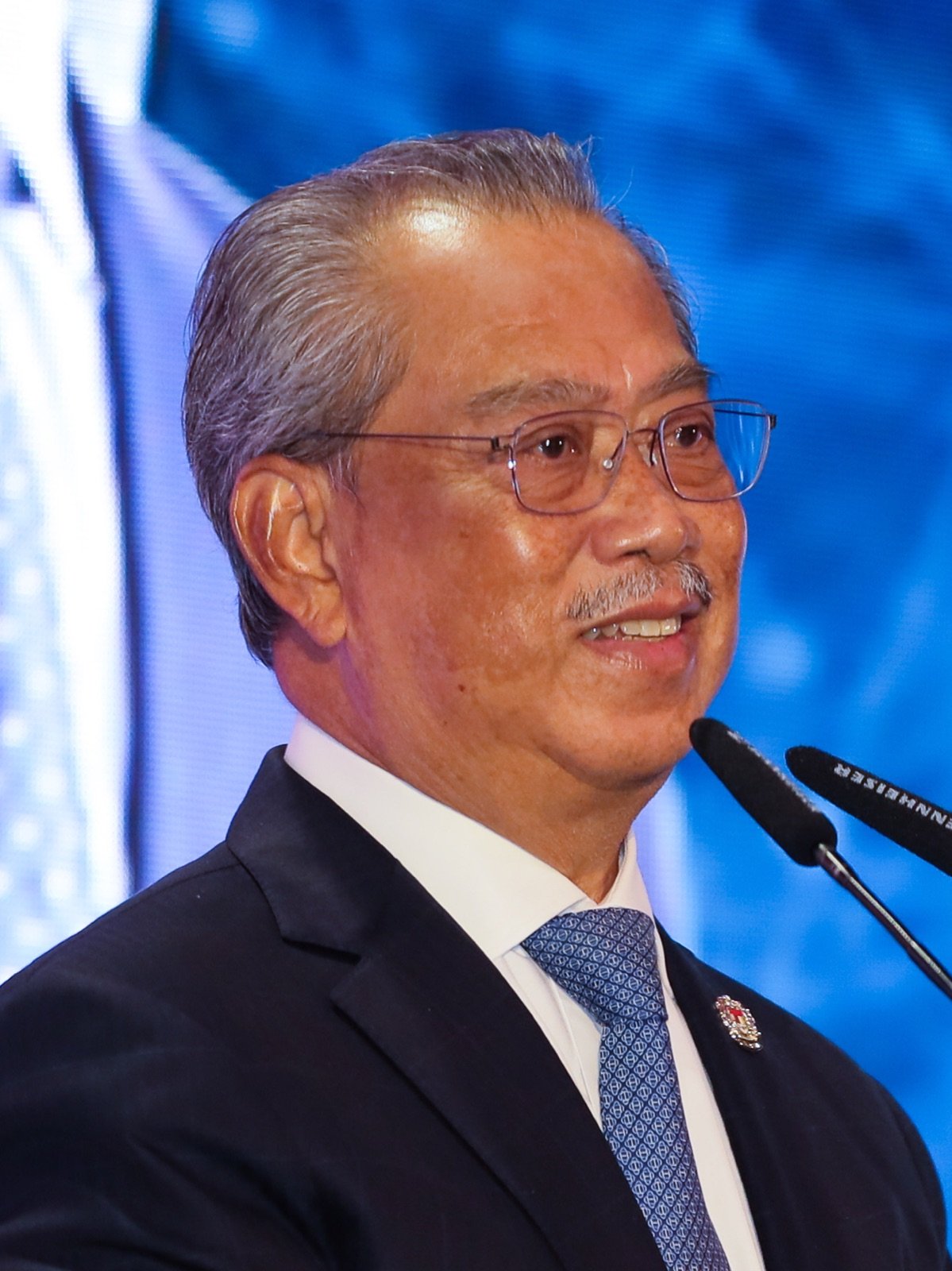 Malaysia · Politics
1947—
Muhyiddin Yassin
Eighth Prime Minister of MalaysiaA veteran Johor politician who became prime minister after the 2020 coalition crisis and governed through the most disruptive phase of the pandemic.Read biography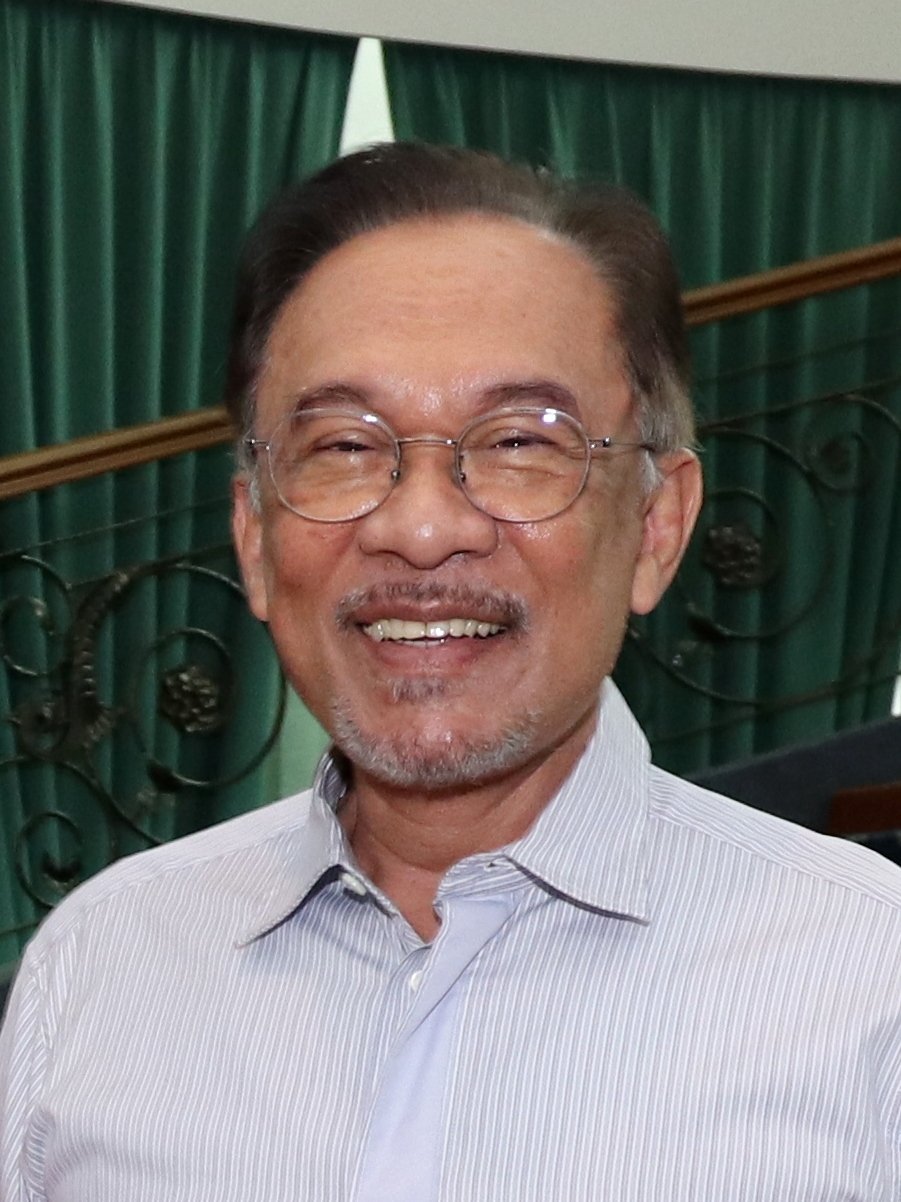 Malaysia · Politics
1947—
Anwar Ibrahim
Tenth Prime Minister of MalaysiaA student activist turned government minister, opposition leader and Malaysia’s tenth prime minister after one of the longest routes to national office.Read biographyQuick answers
Common questions
- Who is the current prime minister of Malaysia?
- Anwar Ibrahim is the current and tenth prime minister. He was sworn in on 24 November 2022. This answer was reviewed on 3 October 2026.
- Who was the first prime minister of Malaysia?
- Tunku Abdul Rahman became the first prime minister at Malayan independence on 31 August 1957 and remained in office when Malaysia formed in 1963.
- How many prime ministers has Malaysia had?
- Malaysia counts ten numbered premierships held by nine people. Mahathir Mohamad is counted twice because he served two non-consecutive periods.
- Why was Mahathir both the fourth and seventh prime minister?
- Mahathir served from 1981 to 2003, left office for more than fourteen years and returned after Pakatan Harapan won the 2018 election. The second premiership received a new number.
- Who was Malaysia’s longest-serving prime minister?
- Mahathir Mohamad is the longest-serving prime minister. His first premiership lasted more than twenty-two years, and he later served again from May 2018 to February 2020.
- Does Malaysia elect its prime minister directly?
- No. Voters elect the Dewan Rakyat. The Yang di-Pertuan Agong appoints a member of that House who is likely to command majority confidence.
- Must Malaysia’s prime minister be a member of Parliament?
- Yes. Article 43 requires the prime minister to be appointed from among the members of the Dewan Rakyat, the elected lower house.
- Which prime minister first replaced Barisan Nasional federally?
- Mahathir Mohamad returned as the seventh prime minister on 10 May 2018 after Pakatan Harapan achieved the first federal electoral transfer of power.
- Which Malaysian prime minister died in office?
- Abdul Razak Hussein died in office on 14 January 1976. Deputy Prime Minister Hussein Onn became prime minister the following day.
- Why did Malaysia have three prime ministers between 2020 and 2022?
- Coalition changes and disputed parliamentary majorities produced two mid-term transitions: Mahathir resigned in 2020, and Muhyiddin resigned in 2021. The 2022 election then produced a hung parliament before Anwar’s appointment.
Primary and institutional sources
How this history was checked
The Prime Minister’s Office establishes the official sequence and current officeholder. Parliamentary records, institutional biographies, the 2020 Royal Address and national-news-agency reporting verify the constitutional rule and recent transitions. This article was reviewed on 3 October 2026.
- Prime Minister’s Office of MalaysiaFormer Prime Ministers of Malaysia
- Prime Minister’s Office of MalaysiaProfile of Prime Minister Anwar Ibrahim
- Parliament of MalaysiaParliamentary democracy and Article 43 majority confidence
- Parliament of MalaysiaGeneral information — independence and parliamentary government
- Parliament of MalaysiaRoyal Address of 18 May 2020 — resignation and interim appointment
- Perdana Leadership FoundationTunku Abdul Rahman biography
- Perdana Leadership FoundationMahathir Mohamad biography and both premierships
- BERNAMAMuhyiddin Yassin appointed eighth prime minister
- BERNAMAIsmail Sabri takes oath as ninth prime minister
- Prime Minister’s Office of MalaysiaAnwar Ibrahim sworn in as tenth prime minister
- Prime Minister’s Office of MalaysiaDewan Rakyat confidence motion for Anwar Ibrahim