
The short answer
Sabah’s 2018 election ended with BN and the Warisan–PH side tied at 29 seats each, leaving STAR’s two representatives to determine the first government. STAR support allowed Musa Aman to be sworn in, but six BN-winning members then shifted support and Shafie Apdal was appointed two days later. The result ended fifteen years of Musa’s leadership and opened Sabah’s modern era of competitive coalition politics.
Results at a glance
Seats won in the 2018 Sabah election
Warisan was the largest party, but neither its cooperation with PH nor BN reached the 31 elected seats required for a majority. STAR’s two seats initially broke the tie.
| Party | Seats won | Share of 60 seats | Change from 2013 |
|---|---|---|---|
| Warisan | 21 | 35.0% | New party |
| UMNO / BN | 17 | 28.3% | −14 |
| PBS / BN | 6 | 10.0% | −1 |
| DAP / PH | 6 | 10.0% | +2 |
| UPKO / BN | 5 | 8.3% | +1 |
| PKR / PH | 2 | 3.3% | −5 |
| STAR / United Sabah Alliance | 2 | 3.3% | +1 |
| PBRS / BN | 1 | 1.7% | No change |
Chronology
A timeline of the turning points
Shafie Apdal breaks with UMNO and founds Warisan
The former federal minister built a Sabah-based multiracial party after his removal from the cabinet and departure from UMNO.
The Sabah assembly is dissolved
The state poll was scheduled alongside Malaysia’s fourteenth general election.
Candidates are nominated
BN defended all 60 seats while Warisan cooperated with Pakatan Harapan and multiple regional parties contested independently.
The election produces a 29–29 split
BN won 29 seats; Warisan and PH won 29 between them; the STAR-led United Sabah Alliance won the remaining two.
STAR supports a BN-led government
Jeffrey Kitingan and Robert Tawik supplied the two seats that gave Musa Aman declarations of support from 31 assembly members.
Musa Aman is sworn in
The Yang di-Pertua Negeri appointed Musa at about 11 p.m. and swore in his cabinet immediately afterwards.
Six BN-winning members shift support
Statutory declarations from two UPKO and four UMNO assembly members gave Shafie’s bloc a 35-seat elected majority.
Shafie Apdal becomes chief minister
After concluding that Musa no longer commanded majority confidence, the state head appointed Shafie at about 9 p.m.
The Warisan-led cabinet is appointed
The official gazette lists ministers drawn from Warisan, PH and UPKO, including three deputy chief ministers.
The assembly is dissolved
A new defection crisis led Shafie to seek dissolution, ending the legislature and triggering the 2020 state election.
Who won the 2018 Sabah state election?
No party or pre-election bloc won the 31 elected seats required for a majority. Barisan Nasional finished with 29 seats, while the electoral cooperation between Warisan and Pakatan Harapan also produced 29. The STAR-led United Sabah Alliance won the final two seats and therefore held the immediate balance of power.
Warisan was the largest individual party with 21 seats. DAP won six and PKR two under the PH banner, taking their combined side to 29. BN’s 29 consisted of seventeen UMNO, six PBS, five UPKO and one PBRS representative.
The election result and the government that emerged must therefore be distinguished. The ballot created a hung 60-member assembly; negotiations and changes of allegiance over the next three days determined who could demonstrate majority confidence to the Yang di-Pertua Negeri.
How did the vote divide between the main blocs?
ElectionData records 42.1 percent of valid votes for BN, 32.1 percent for Warisan and 15.0 percent for PH. Combined, Warisan and PH received about 47.1 percent. The STAR-led United Sabah Alliance received 7.6 percent and won Tambunan and Bingkor.
Turnout was approximately 77.6 percent from an electorate of more than 1.1 million. The close seat result did not mean that every constituency was close: DAP won several urban seats by large margins, while decisive rural and interior contests were often multi-cornered and much tighter.
First-past-the-post converted the two leading sides’ different geographic coalitions into exactly 29 seats each. Warisan–PH led the vote count but did not reach an elected majority, while BN remained competitive enough across rural, west-coast and interior constituencies to match its opponent’s seat total.
How did Warisan change Sabah’s electoral map?
Warisan had been founded less than two years before polling, but Shafie Apdal brought a long parliamentary base in Semporna, federal cabinet experience and networks from his earlier career in Sabah UMNO. The party presented itself as a multiracial regional vehicle rather than a component of a peninsula-led coalition.
Its strongest advance came along Sabah’s east coast, where research published in How Malaysia Voted in 2018 calculated a roughly 23-point rise for the Warisan–PH side compared with Pakatan Rakyat’s 2013 performance. Warisan also moved into west-coast and interior contests through former UMNO and opposition organisers.
The campaign joined state-rights and development arguments to national dissatisfaction over 1MDB, living costs and Najib Razak’s government. Shafie won Senallang by 5,301 votes, while Warisan took 21 of the 45 constituencies it contested and became the assembly’s largest party.
Why did BN fall from 48 seats to 29?
UMNO fell from 31 seats in 2013 to seventeen, the largest single component of BN’s nineteen-seat decline. PBS won six, UPKO five and PBRS one; LDP, Gerakan and MCA failed to win a seat.
Shafie’s departure divided the Muslim-bumiputera base that had helped sustain BN, particularly in eastern Sabah. DAP retained an urban advantage with six of the seven seats it contested, and PKR added two seats to the Warisan–PH total.
Several BN figures still won convincingly. Hajiji Noor retained Sulaman by 7,774 votes and Masidi Manjun kept Karanaan by 3,782. Musa Aman retained Sungai Sibuga, but his majority fell to 2,184—far below the 11,569 margin recorded in 2013.
How did STAR become the kingmaker?
Jeffrey Kitingan moved from Bingkor to Tambunan and won by 1,037 votes. Robert Tawik captured Bingkor by only 165. Those two victories were enough to decide which 29-seat bloc could first claim majority support.
STAR chose to support Musa and BN. The Federal Court’s later account of the dispute records that the agreement produced declarations from 31 of the 60 elected assembly members, the minimum needed for a majority.
The decision made STAR pivotal but did not produce a durable government. Its leverage depended on the original 29–29 balance; when six representatives elected under BN shifted their support, the arithmetic moved beyond STAR’s ability to preserve Musa’s majority.
Why was Musa Aman sworn in on 10 May?
Under Article 6(3) of the Sabah Constitution, the Yang di-Pertua Negeri appoints as chief minister the assembly member judged likely to command the confidence of a majority. With BN’s 29 and STAR’s two, Musa presented support from 31 elected members.
The state head swore Musa in at approximately 11 p.m. on 10 May and then appointed the cabinet on Musa’s advice. This ended the first phase of the hung-assembly negotiations and, at that moment, established a BN–STAR administration.
Musa also advised the appointment of six nominated assembly members, but the state head did not execute those instruments. Nominated members were not needed to prove the original 31-seat elected majority, yet the disagreement later became one element of Musa’s constitutional case.
How did the majority change within two days?
The arrangement changed when six members elected under BN—two from UPKO and four from UMNO—declared support for Shafie. That moved the Warisan–PH side from 29 to 35 elected supporters and reduced the group behind Musa below the majority line.
The state head met the assembly members and received statutory declarations. The later High Court record held that these declarations could provide evidence of lost confidence outside a formal vote on the assembly floor.
Sabah’s party system was already fluid, and the federal transfer to a PH government altered the incentives facing component parties and individual representatives. The episode nevertheless remained constitutionally contentious because Musa had been validly appointed only two days earlier and did not tender a resignation.
Why was Shafie Apdal appointed on 12 May?
On the morning of 12 May, the Yang di-Pertua Negeri asked Musa to resign after concluding that he no longer commanded majority confidence. Musa refused. At about 9 p.m., the state head swore in Shafie under Article 6(3), read with the constitutional power governing the appointment of the chief minister.
The Sabah State Gazette formally records Shafie’s appointment with effect from 12 May 2018. On 16 May, a cabinet was appointed with Wilfred Madius Tangau, Christina Liew and Jaujan Sambakong as deputy chief ministers, alongside ministers from Warisan, PH and UPKO.
The transfer ended Musa’s fifteen-year administration and gave Sabah its first change of government since the 1994 PBS collapse. Unlike the 1994 episode, however, the 2018 transition occurred at the same time that BN lost federal power for the first time.
What did the courts decide about the transition?
Musa challenged Shafie’s appointment. The High Court held that no assembly vote was constitutionally mandatory where other properly established evidence showed that the chief minister had lost majority confidence. It treated Musa as having vacated office after he declined to resign and found Shafie’s appointment lawful.
The Court of Appeal later treated the dispute as academic after evidence showed that Musa no longer had majority support. Federal Court proceedings over leave to appeal produced divided reasoning, and the 2020 dissolution further limited any practical remedy.
The litigation remains important because it documents the exact 29–29–2 result, the STAR agreement, both swearing-in ceremonies and the role of the six statutory declarations. It also shows why an election result and constitutional government formation are related but legally distinct questions.
What was the longer-term impact of the 2018 result?
The election ended BN’s long state dominance and established Warisan as a major Sabah party. It also accelerated the collapse of the old BN component structure: PBS and PBRS left the coalition, while Sabah UMNO leaders later moved into Bersatu or reorganised their alliances.
Shafie governed in alignment with the PH federal administration until the 2020 national realignment. When another group of assembly members shifted support, he obtained a dissolution on 30 July 2020 rather than surrendering the government without an election.
The snap poll that followed produced a different coalition system and brought Hajiji Noor to office. The 2018 contest therefore marks both the end of Musa’s long era and the beginning of Sabah’s continuing period of competitive, regionalised and frequently shifting coalition politics.
Continue the chronology
Related history guides
STAR Sabah: History and Elections
See why STAR’s two assembly members briefly decided the first post-election majority.
Read the timeline1994–presentUPKO Sabah: History and Elections
Understand why the five-seat BN component changed alignment after this tied election.
Read the timeline2016–presentParti Warisan Sabah: History and Elections
Follow the new regional party that became Sabah’s largest individual party in its first election.
Read the timeline26–29 September 2020The 2020 Sabah State Election
Continue to the snap election that ended Shafie’s government and brought Hajiji Noor to office.
Read the timeline5 May 2013The 2013 Sabah State Election
Begin with the election where BN retained 48 seats and the opposition expanded to twelve.
Read the timeline9 May 2018Malaysia’s 2018 General Election
Place Sabah’s hung assembly inside the national election that ended BN’s federal rule.
Read the timeline1963–presentChief Ministers of Sabah: Complete List
Compare the disputed 2018 transition with every Sabah administration since 1963.
Read the timeline1973–presentBarisan Nasional: History and Parties
Follow the coalition from state dominance to its 29-seat result and component-party breakup.
Read the timeline2015–presentPakatan Harapan: History and Parties
See how DAP and PKR cooperated with Warisan during Malaysia’s first federal transfer.
Read the timelineBiography context
Explore Sabah, Malaysia through connected lives
Influential People from Sabah
Explore biographies of Shafie Apdal, Musa Aman, Jeffrey Kitingan and other leaders connected to the transition.
Explore the biographiesCountry archiveExplore Malaysia
Connect Sabah’s election to the national GE14 result, political parties and federal transition.
Explore the biographiesConnected biographies
Twelve biographies connected to the 2018 election

1956—
Shafie Apdal
President of Parti Warisan and Member of Parliament for SempornaThe Semporna parliamentarian, former federal minister and Warisan founder who led Sabah from 2018 until the 2020 state election.Read biography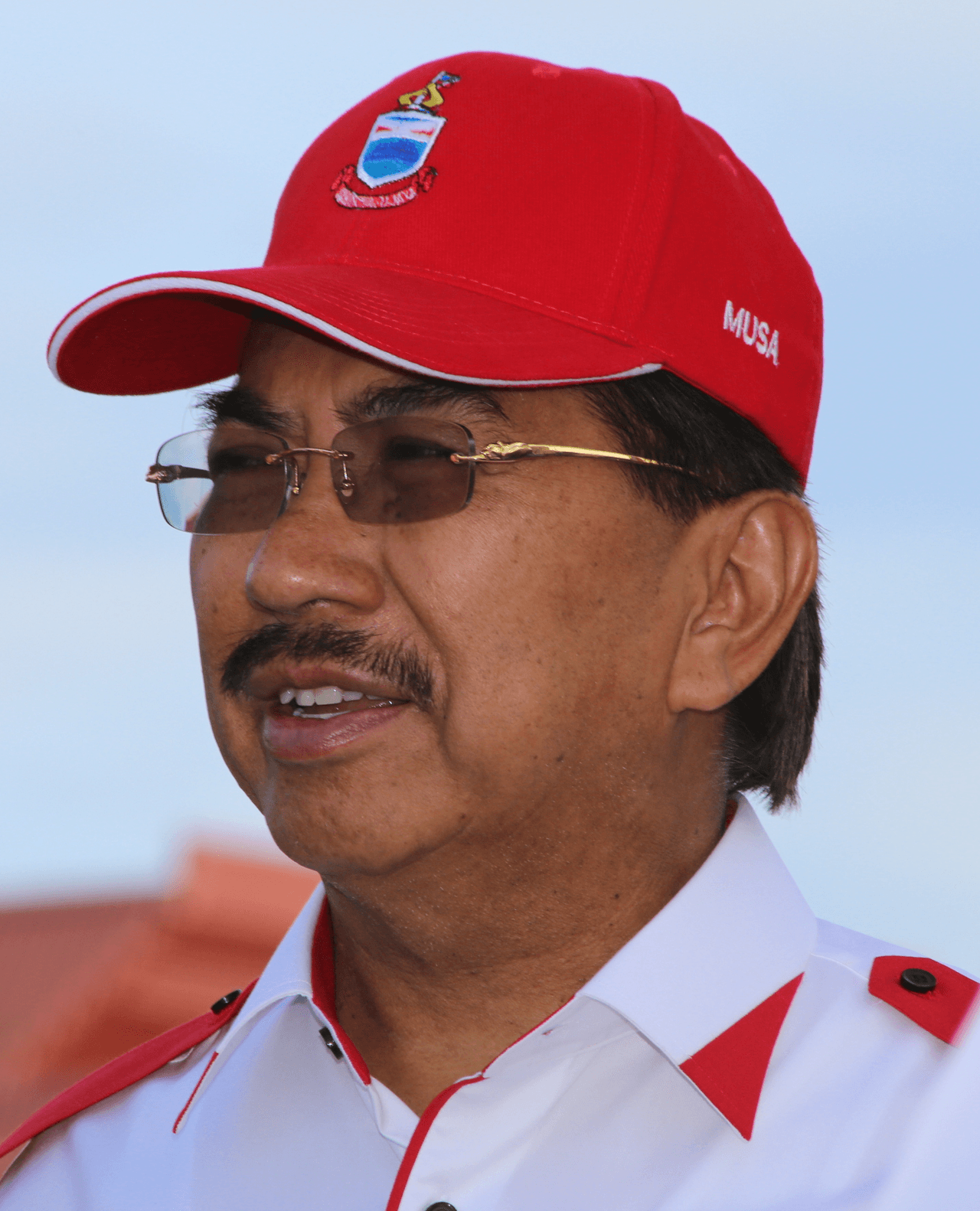
1951—
Musa Aman
Yang di-Pertua Negeri of SabahThe former Sungai Sibuga assemblyman who led Sabah for fifteen years, contested the 2018 transition and returned as Yang di-Pertua Negeri.Read biography
1948—
Jeffrey Kitingan
President of STAR and Member of Parliament for KeningauThe Keningau MP, Tambunan assemblyman and STAR founder whose long career centres on Sabah autonomy, MA63 and Indigenous political representation.Read biography
1958—
Wilfred Madius Tangau
Member of Parliament for Tuaran and Assemblyman for TamparuliThe forester and development researcher who became a long-serving Tuaran MP, led UPKO and won a second elected mandate in Tamparuli in 2025.Read biography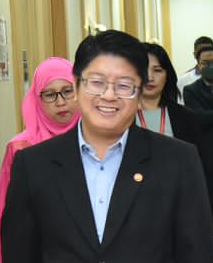
1983—
Ewon Benedick
Deputy Chief Minister of Sabah and President of UPKOThe Penampang MP and Kadamaian assemblyman who leads UPKO and became Sabah’s Deputy Chief Minister III after the 2025 state election.Read biography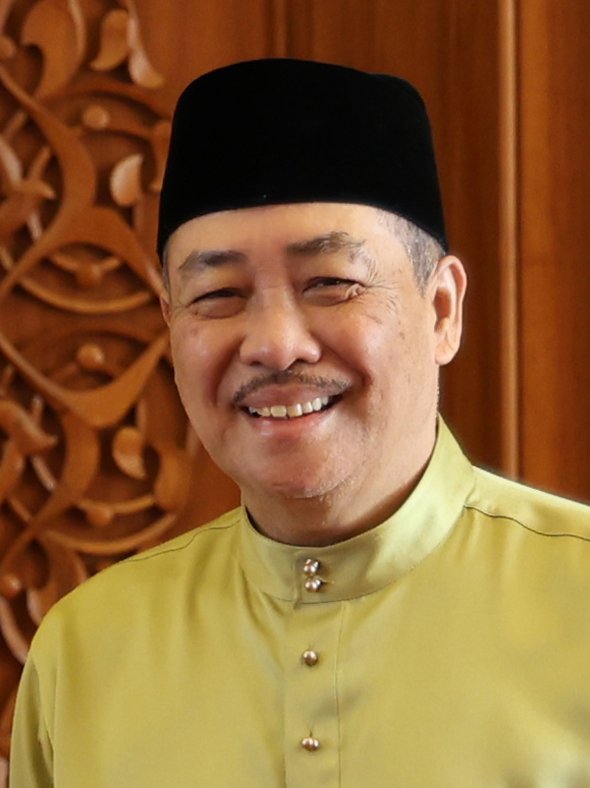
1955—
Hajiji Noor
Chief Minister of Sabah and Chairman of Gabungan Rakyat SabahThe long-serving Sulaman assemblyman who became Sabah chief minister in 2020 and won a second term at the 2025 state election.Read biography
1950—
Masidi Manjun
Deputy Chief Minister and Finance Minister of SabahThe lawyer and former public administrator who has represented Karanaan since 2004 and now serves as Sabah’s Deputy Chief Minister II and finance minister.Read biography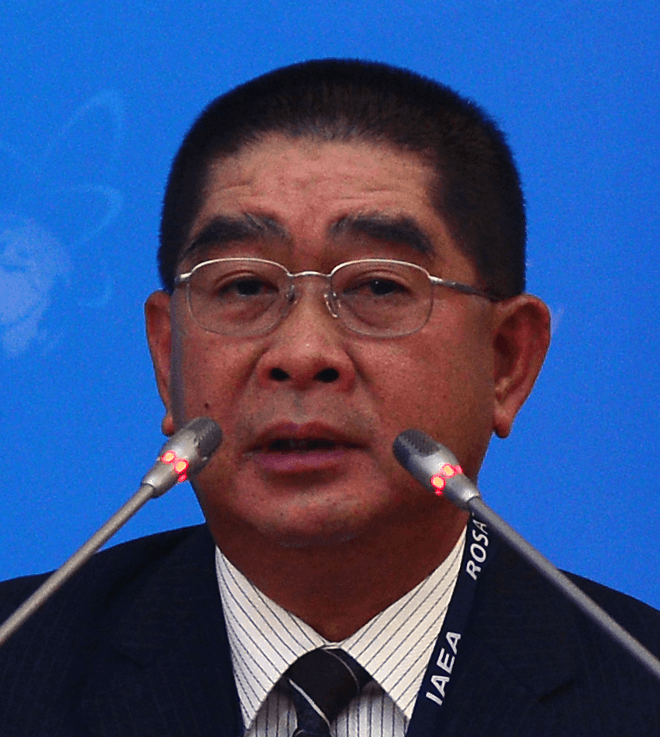
1953—
Maximus Ongkili
Chairman of the Energy Commission of Sabah and former PBS PresidentThe researcher-turned-politician who represented Sabah in Parliament for twenty-seven years, led several federal ministries and became PBS’s second president.Read biography1958—
Joachim Gunsalam
Deputy Chief Minister of Sabah and President of PBSThe physician and six-term Kundasang assemblyman who rose through PBS, entered Sabah’s senior cabinet and became the party’s third president.Read biography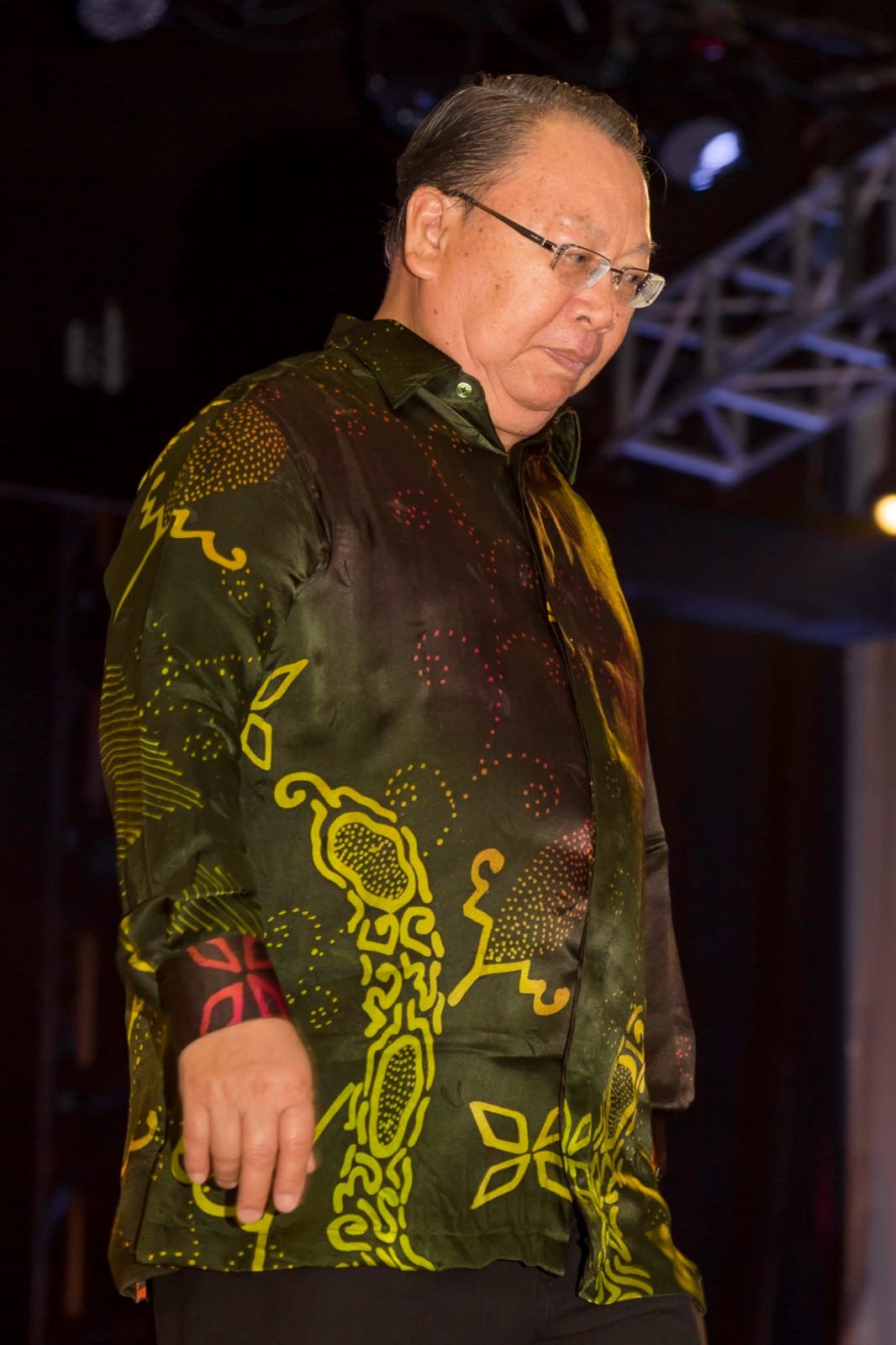
1940—
Joseph Pairin Kitingan
Founder of PBS and former Chief Minister of SabahThe lawyer and Kadazandusun leader who founded PBS, led four consecutive state-election victories and served as Sabah’s chief minister for nearly nine years.Read biography
1925—
Mahathir Mohamad
Fourth and seventh Prime Minister of MalaysiaA physician-politician whose two premierships—separated by fifteen years—made him the longest-serving and one of the most consequential leaders in Malaysian history.Read biography
1953—
Najib Razak
Sixth Prime Minister of MalaysiaA political heir who led Malaysia for nine years before an historic election defeat and convictions in the SRC International and main 1MDB cases.Read biographyQuick answers
Common questions
- When was the 2018 Sabah state election held?
- Polling took place on 9 May 2018 alongside Malaysia’s fourteenth general election.
- How many seats did BN win in Sabah in 2018?
- BN won 29 of the 60 elected state constituencies.
- How many seats did Warisan and PH win?
- Warisan won 21, DAP six and PKR two, giving the cooperating Warisan–PH side 29 seats.
- Why was STAR called the kingmaker?
- STAR’s two winners initially supported BN, turning BN’s 29 seats into a 31-member majority behind Musa Aman.
- Why were two chief ministers sworn in?
- Musa Aman was appointed on 10 May with 31 declared supporters. Six BN-winning assembly members then supported Shafie Apdal, who was appointed on 12 May after the state head concluded that Musa had lost majority confidence.
- Who became chief minister after the transition?
- Shafie Apdal became chief minister with effect from 12 May 2018, as recorded in the Sabah State Gazette.
- What was voter turnout?
- ElectionData records 866,725 voters and turnout of approximately 77.6 percent.
- Did the court uphold Shafie Apdal’s appointment?
- The High Court dismissed Musa Aman’s challenge and held that Shafie’s appointment was lawful. Later appellate proceedings were affected by the dispute becoming academic.
Primary and institutional sources
How this history was checked
ElectionData establishes the ballots, turnout and seat totals; the Sabah Gazette records Shafie Apdal’s appointment and cabinet; the Federal Court judgment documents the constitutional chronology; academic and legal studies explain the vote shift and contested transfer. This article was reviewed on 4 October 2026.
- Election Commission of Malaysia, Sabah OfficeDates of Parliamentary and State Elections in Sabah
- ElectionData.mySabah 2018 State Election Results
- Sabah State GazetteAppointment of Shafie Apdal as Chief Minister, 12 May 2018
- Federal Court of Malaysia · judgment hosted by eLawMusa Aman v Juhar Mahiruddin and Shafie Apdal: Judgment and Chronology
- Cambridge University PressSabah: The End of BN and a New Order?
- NUS PressTowards a New Malaysia? The 2018 Election and Its Aftermath
- Universiti Malaysia SabahFederal–State Relations in Sabah after GE14
- SkrineA Constitutional Crisis Revisited: The 2018 Sabah Transition
- Borneo PostMusa Officially Sworn In as Chief Minister of Sabah
- Wikimedia CommonsShafie Apdal Portrait and CC BY 3.0 Record