

The short answer
Malaysia’s Election Commission does more than run polling day. It maintains the electoral roll, sets election machinery in motion and proposes constituency boundaries through a process shared with the executive and Parliament. Understanding its real powers also reveals which electoral reforms require constitutional or legislative change elsewhere.
Institutional map
What the Commission controls—and what it does not
Election integrity depends on several bodies. Assigning every decision to SPR hides where legal responsibility actually sits.
| Institution | Core responsibility | Key authority | Important limit |
|---|---|---|---|
| Election Commission | Elections, electoral rolls and boundary-review recommendations | Articles 113–120, Elections Act and regulations | Does not finally enact laws or decide petitions |
| Parliament | Election laws, federal seat numbers and boundary-report approval | Constitutional amendment and ordinary legislation | Does not administer individual polling streams |
| Returning officer | Nomination, official addition of votes and declaration | Elections Act, regulations and Commission writ | Acts within one assigned constituency |
| Police and MACC | Investigation within criminal and anti-corruption powers | Criminal law, Election Offences Act and MACC Act | Do not invalidate an election result themselves |
| Public prosecutor | Decides whether to institute or discontinue criminal proceedings | Article 145 and criminal procedure | Does not hear election petitions |
| Election Court | Tests a return on pleaded statutory grounds | Articles 118–118A and Election Offences Act | Does not design the nationwide electoral system |
Chronology
A timeline of the turning points
The Election Commission is established
Article 114 creates a chairman and two members for independent Malaya. The Commission begins with constitutional responsibility for elections and electoral rolls.
The first delimitation supports the new Dewan Rakyat
Constituencies are prepared for the first post-independence parliamentary election, connecting boundary design to the representative system from its beginning.
Malaysia expands the Commission and electoral map
Formation adds Sabah, Sarawak and Singapore to the federation. Commission membership expands and the Constitution recognises separate units for boundary review.
A deputy-chairman office is added
A constitutional amendment creates the deputy chair, enlarging the Commission’s leadership structure.
Membership expands to seven commissioners
The Commission becomes a chairman, deputy chairman and five other members, including membership reflecting Sabah and Sarawak.
A parliamentary committee reviews electoral reform
The bipartisan select committee examines rolls, postal voting, enforcement, boundaries and the distribution of the Commission’s functions, creating a major official reform record.
Parliament approves the Peninsular redelineation report
A disputed review changes constituency names and boundaries shortly before GE14. It becomes a central case study in debates over malapportionment, consultation and timing.
Undi18 transforms the electoral roll
Parliament approves voting at 18 and automatic registration in 2019. Implementation on 15 December 2021 substantially expands the electorate and the Commission’s registration workload.
The expanded roll is used in GE15
The Commission records 21.8 million registered electors and 222 parliamentary contests in the first federal election conducted after Undi18 implementation.
Boundary review and institutional reform return to the agenda
The constitutional eight-year interval has passed for the Peninsular unit, while the Commission’s archive records a Sarawak review process. Proposals for parliamentary scrutiny of commissioner appointments remain proposals, not enacted constitutional changes as of 4 October.
What is the Election Commission of Malaysia?
The Election Commission of Malaysia is the constitutional body commonly called the EC in English and Suruhanjaya Pilihan Raya, or SPR, in Malay. Articles 113 to 120 place it at the centre of federal and state elections, while federal statutes and regulations define the machinery it administers.
Its three core constitutional functions are to conduct elections to the Dewan Rakyat and state legislative assemblies, prepare and revise electoral rolls, and review the division of constituencies. Those functions connect the entire chain from who appears on a roll to where a ballot is cast and which territory one representative serves.
The Commission is not Parliament, a court, police force or political party regulator for every purpose. Parliament writes election law and fixes the number of federal seats; courts decide petitions; enforcement agencies investigate offences within their powers; and the Registrar of Societies regulates party registration. Institutional accountability begins by keeping those roles separate.
Who appoints the commissioners?
Article 114 provides for a chairman, deputy chairman and five other members. The Yang di-Pertuan Agong appoints them after consultation with the Conference of Rulers. In making the appointments, the Constitution expressly requires regard to the importance of securing a Commission that enjoys public confidence.
The constitutional text must be read with the general advice rule in Article 40. Public debate therefore focuses not only on the formal appointing authority but also on how candidates are identified, what advice is supplied and whether the process permits meaningful scrutiny before appointment.
Commissioners serve until the constitutional retirement age unless they resign, become disqualified or are removed on the like grounds and in the like manner as a Federal Court judge. Remuneration is charged on the Consolidated Fund and cannot be reduced to a member’s disadvantage after appointment. These are tenure protections, not proof that every operational dependency has been removed.
What does the Commission control during an election?
After dissolution or a vacancy, the Commission issues the writ and fixes nomination, advance-voting and polling dates. It appoints or authorises returning officers, presiding officers and other election workers; designates centres and streams; supplies ballots and equipment; administers ordinary, advance and postal voting; and publishes official information.
At constituency level, returning and presiding officers exercise powers assigned by the Elections Act and regulations. Candidate-appointed agents observe polling and counting safeguards. The returning officer completes the official addition of votes and declares the elected candidate; the Commission then publishes results and statutory records.
The Commission also coordinates campaign-enforcement teams, voter education, observer accreditation and election logistics. But police, anti-corruption investigators, prosecutors and courts retain their own legal functions. Describing every enforcement decision as an EC decision obscures who can actually investigate, charge or invalidate a result.
How does the Commission maintain the electoral roll?
The roll identifies eligible citizens and places each voter in a constituency. Since 15 December 2021, eligible citizens aged 18 and above are registered automatically using official identity and address data. Supplementary rolls are certified and opened for checking, claims and objections under the registration regulations.
A citizen may still need to update the address held by the National Registration Department and apply through the prescribed route to transfer voting locality. Automatic registration does not authorise the Commission to infer an unrecorded home move from daily life, employment or tenancy information.
Roll quality involves additions, deaths, disqualifications, corrections, transfers and transparent public verification. Undi18 removed the old application barrier for new voters, but accuracy still depends on reliable administrative data, timely gazettement, accessible checking and a fair process for correcting errors.
How are electoral boundaries reviewed?
Article 113 and the Thirteenth Schedule divide boundary review into three units: the states of Malaya, Sabah and Sarawak. Ordinarily, at least eight years must pass between completion of one review for a unit and commencement of the next. Once formally begun, a review must be completed within two years.
The Commission develops provisional recommendations using the constitutional principles and current rolls. It must notify the Speaker and prime minister, publish proposals and allow representations. A state government, affected local authority or group of at least one hundred registered electors in an affected constituency may trigger a local inquiry by making a qualifying objection.
The Commission submits its final report to the prime minister. The report reaches the Dewan Rakyat with a draft order, and approval can modify the recommendations within the constitutional procedure. The Commission therefore initiates and researches boundaries, but the final scheme is not insulated completely from the executive and parliamentary stages.
What principles govern constituency boundaries?
The Thirteenth Schedule requires convenient polling opportunities, respect for state boundaries, available administrative facilities, approximately equal electorate sizes within a state, a measure of area weightage for rural constituencies and regard for local ties and disruption caused by change.
These principles must be considered “as far as possible” and the Constitution does not now prescribe a fixed maximum percentage deviation between constituencies. That flexibility may accommodate geography and access, especially in large rural territories, but it can also produce large disparities between the number of electors represented by different MPs.
Malapportionment describes unequal electorate size. Gerrymandering describes strategic boundary placement that advantages a group. A defensible review needs electorate data, maps, stated reasons and meaningful objections because the visual shape of a seat alone cannot establish either problem.
Why is the 2018 redelineation controversial?
The Peninsular review began in 2016 and was approved by the Dewan Rakyat on 28 March 2018, shortly before Parliament was dissolved for GE14. It altered boundaries and constituency names without increasing the number of Peninsular federal seats.
Opposition parties and civil-society groups argued that the proposals preserved severe voter disparities, grouped communities in politically consequential ways and provided inadequate remedies for objectors. SUHAKAM’s 2018 report recorded dissatisfaction about boundary equality, consultation and perceived partisan effect.
Approval under the constitutional procedure and criticism of representational fairness are different propositions. A rigorous account should neither call every unequal seat unlawful automatically nor treat formal approval as proof that public-confidence concerns were answered.
What changed with Undi18?
The 2019 constitutional amendment lowered the voting and candidacy ages from 21 to 18 and authorised automatic voter registration. After implementation in December 2021, GE15 had about 21.8 million registered electors—roughly 40 per cent more than GE14 according to the Commission’s open-data portal.
The reform expanded formal inclusion and ended the need for eligible young citizens to submit an initial voter-registration application. It also changed constituency populations quickly, increasing pressure on roll administration, voter education, polling capacity and future boundary review.
Undi18 did not introduce proportional representation, compulsory voting, direct prime-ministerial elections or automatic address transfers. Treating it as a bundle of reforms it did not enact leads to false expectations about what the Commission can do under the current Constitution.
What reforms to the Commission are proposed?
Recurring proposals include a transparent nomination panel, parliamentary confirmation or scrutiny, published selection criteria, annual reporting to Parliament and a budget or service structure less dependent on the executive. Supporters argue that public confidence requires visible independence before disputes arise, not only tenure protection after appointment.
A 2012 parliamentary select committee also recorded proposals to separate election administration, electoral-roll management and boundary review into distinct bodies. Later civil-society work has developed variants in which a permanent election commission is joined by separate registration and boundaries institutions.
Other reform demands concern equal-vote standards, objection rights, accessible voting, postal voting, enforcement, political finance, media access and caretaker-government rules. These are not interchangeable. Changing commissioner appointments would not by itself redraw unequal seats or enact a political-finance law.
What is the reform status in October 2026?
The seven-member constitutional structure and existing appointment rule remain in force as of 4 October 2026. Dato’ Sri Ramlan Harun is the serving chairman according to 2026 Commission publications. Proposals for parliamentary oversight of nominations and annual reporting remain advocacy positions rather than enacted amendments to Articles 113 and 114.
Boundary review is active as an institutional issue. The Commission’s 2026 media archive records a Sarawak redelineation process and subsequent clarification about proposed additional state seats. For the states of Malaya, the eight-year minimum interval from completion of the 2018 exercise has passed; that permits a review but does not make commencement or a particular map automatic.
Readers should distinguish preparation, formal commencement, provisional recommendations, public inquiry, final report and parliamentary approval. A meeting, procurement notice or political announcement may show readiness or intent without creating new legal boundaries.
How should the Commission be evaluated?
Evaluate legal design and actual performance separately. Appointment and tenure rules address structural independence; operational evidence includes roll accuracy, accessible polling, clear directions, consistent enforcement, transparent counting, timely data and reasoned responses to complaints.
Use official writs, gazettes, forms, result files and boundary notices for what the Commission formally did. Then compare observer reports, court judgments, parliamentary records and civil-society evidence for whether access, equality and public confidence were achieved in practice.
Neutral administration does not mean avoiding every contested decision. Election management necessarily allocates dates, places, staff and procedures. The stronger test is whether decisions follow published law, use consistent evidence, remain open to observation and can be challenged through meaningful review.
Continue the chronology
Related history guides
Malaysia Elections: GE12–GE15 Compared
Compare the electorate, turnout and outcomes administered across four election cycles.
Read the timeline1955–presentHow Malaysia’s Elections Work
Follow registration, nomination, polling, counting, government formation and petitions.
Read the timeline2005–presentMalaysia’s Bersih Movement
Trace demands over rolls, boundaries, enforcement, media access and institutional independence.
Read the timeline2018Malaysia’s 2018 General Election
Examine the election held after the disputed Peninsular redelineation.
Read the timeline1957–presentHow Malaysia’s Parliament Works
See where election laws, seat numbers and boundary reports enter the legislative process.
Read the timelineBiography context
Explore Malaysia through connected lives
Explore Malaysia
Browse biographies and sourced guides to Malaysia’s political institutions.
Explore the biographiesAppointment contextMalaysia’s Constitutional Monarchy
Understand royal appointments, constitutional advice and consultation with the Conference of Rulers.
Explore the biographiesLegal reviewHow Malaysia’s Courts Work
Distinguish election administration, judicial review and election petitions.
Explore the biographiesConnected biographies
Five political lives shaped by electoral rules, boundaries and competition
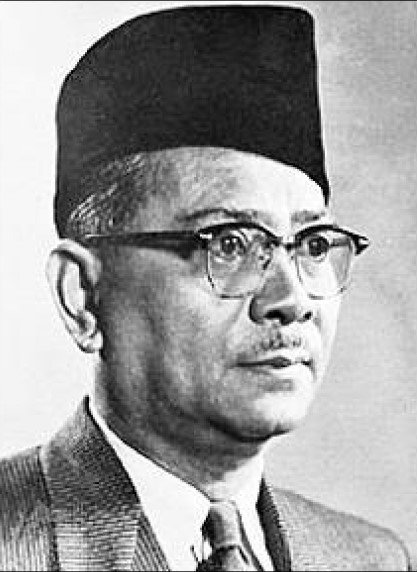 Malaysia · Politics
1903—1990
Tunku Abdul Rahman
First Prime Minister of MalaysiaThe independence leader who became Malaya’s first prime minister and helped define the federation that would become modern Malaysia.Read biography Malaysia · Politics
1925—
Mahathir Mohamad
Fourth and seventh Prime Minister of MalaysiaA physician-politician whose two premierships—separated by fifteen years—made him the longest-serving and one of the most consequential leaders in Malaysian history.Read biography Malaysia · Politics
1953—
Najib Razak
Sixth Prime Minister of MalaysiaA political heir who led Malaysia for nine years before an historic election defeat and convictions in the SRC International and main 1MDB cases.Read biography Malaysia · Politics
1952—
Wan Azizah Wan Ismail
Member of Parliament and former deputy prime ministerThe ophthalmologist who became a central Reformasi leader, Malaysia’s first woman opposition leader and its first woman deputy prime minister.Read biography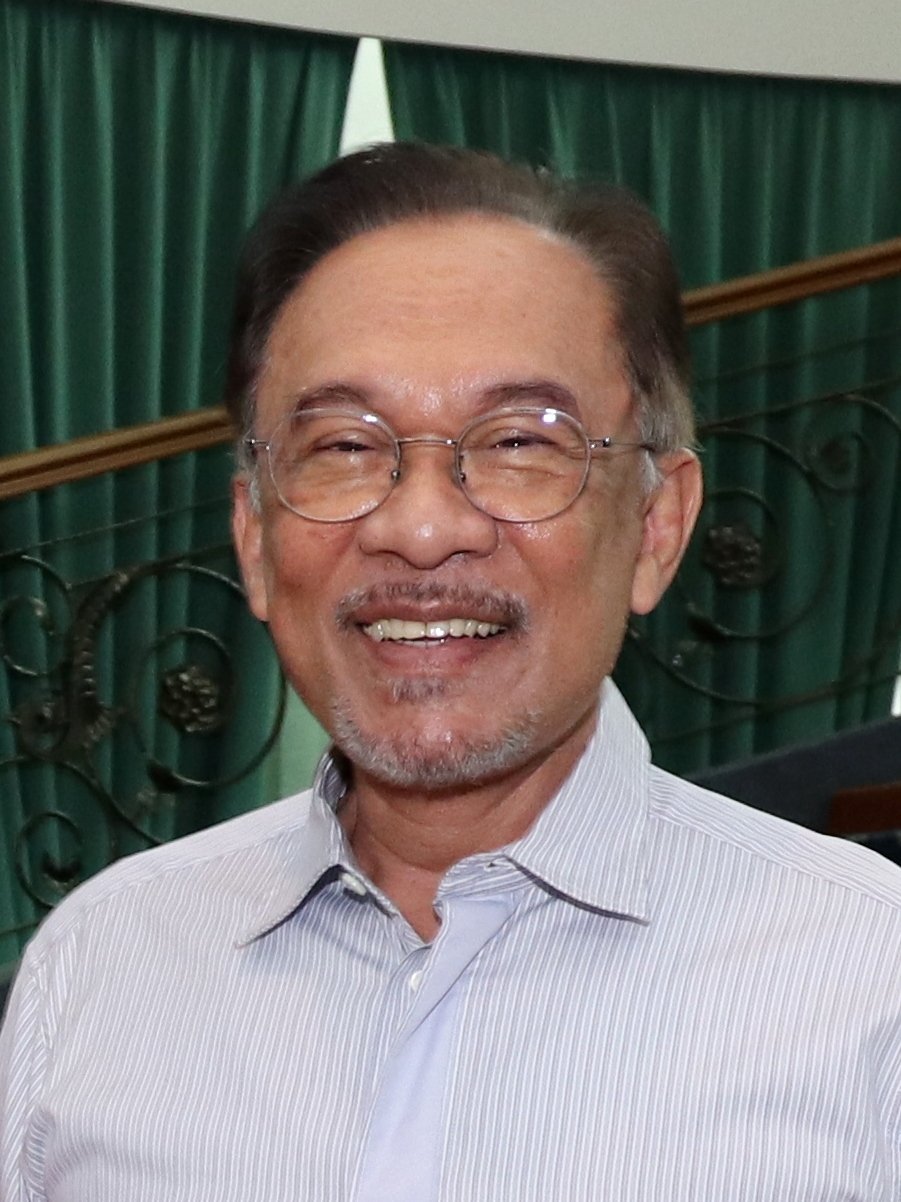 Malaysia · Politics
1947—
Anwar Ibrahim
Tenth Prime Minister of MalaysiaA student activist turned government minister, opposition leader and Malaysia’s tenth prime minister after one of the longest routes to national office.Read biographyQuick answers
Common questions
- What does SPR stand for in Malaysia?
- SPR stands for Suruhanjaya Pilihan Raya, the Election Commission of Malaysia.
- What are the Election Commission’s main functions?
- It conducts Dewan Rakyat and state elections, prepares and revises electoral rolls, and reviews federal and state constituency boundaries.
- Who appoints Malaysia’s election commissioners?
- The Yang di-Pertuan Agong appoints a chairman, deputy chairman and five members after consultation with the Conference of Rulers under Article 114.
- Can an election commissioner be dismissed by the government?
- A commissioner cannot be removed at ordinary executive pleasure. Article 114 applies the like grounds and manner used for removal of a Federal Court judge, alongside specific disqualification rules.
- Does the Election Commission decide how many MPs Malaysia has?
- No. Article 46 and legislation determine seat numbers. The Commission reviews constituency boundaries within the constitutional process.
- How often can Malaysia redraw electoral boundaries?
- Ordinarily at least eight years must separate completion of one review for a review unit and commencement of the next. A formally commenced review must finish within two years.
- What is the difference between malapportionment and gerrymandering?
- Malapportionment is unequal electorate size between constituencies. Gerrymandering is strategic boundary design to create political advantage. They can overlap but are not the same.
- Has Malaysia reformed the Election Commission appointment process?
- Not as of 4 October 2026. Transparent nomination and parliamentary-oversight models remain reform proposals; the existing Article 114 structure continues to apply.
Primary and institutional sources
How this history was checked
The Constitution defines the Commission, its protections and the redelineation framework. Commission publications verify operational practice and current administration; parliamentary, human-rights and civil-society reports document competing reform assessments. This article was reviewed on 4 October 2026.
- Attorney General’s Chambers of MalaysiaFederal Constitution — Official Legislation Portal
- Election Commission of MalaysiaElection Legislation and Constitutional Provisions
- Election Commission of MalaysiaHistory of the Election Commission
- Election Commission of MalaysiaConstituency Redelineation: Principles, Timing and Procedure
- Election Commission Voter Education PortalRedelineation Questions and Answers
- Election Commission of MalaysiaOfficial Explanation of Undi18
- Election Commission of MalaysiaOfficial Open Data Portal
- Election Commission of Malaysia2026 Media Statement Archive
- Parliament of MalaysiaSpecial Select Committee on Electoral Reform — Final Report, 2012
- Human Rights Commission of MalaysiaSUHAKAM Annual Report 2018 — Election Observation
- BERSIHInstitutional Reforms for Electoral Management
- Election Commission of MalaysiaChairman Ramlan Harun — Official 2026 Publication