
The short answer
Malaysia’s King is elected for five years by nine hereditary rulers, ordinarily acts on Cabinet advice and holds limited discretion when appointing a prime minister or considering a dissolution request. The system joins state monarchies, parliamentary government and a federal Conference of Rulers without making the crown an absolute executive office.
The constitutional architecture
Five institutions that share—not duplicate—authority
The monarchy makes sense only when each office is read together with its constitutional function and limiting rule.
| Institution | Who or what | Primary function | Key constitutional limit |
|---|---|---|---|
| Yang di-Pertuan Agong | A ruler elected by the nine state rulers | Head of state and performer of federal constitutional acts | Normally acts on advice; discretion exists only where provided |
| Conference of Rulers | Nine rulers plus four governors for applicable business | Elects the King and performs specified consultative or consent functions | Not a general legislative chamber or executive cabinet |
| Prime Minister and Cabinet | Ministers drawn from Parliament | Direct federal government and advise the King | Collectively responsible to the Dewan Rakyat |
| Parliament | King, Dewan Negara and elected Dewan Rakyat | Exercises federal legislative power | Bound by the Constitution and required legislative procedure |
| State rulers and governors | Nine monarchs and four Yang di-Pertua Negeri | Perform state constitutional functions | Operate within state and federal allocations of authority |
Chronology
A timeline of the turning points
The first Durbar brings Malay rulers together
Four rulers of the Federated Malay States meet at Kuala Kangsar. The gathering becomes an institutional ancestor of the modern Conference of Rulers.
The modern Conference of Rulers first meets
The Federation of Malaya settlement creates a common council for the nine Malay rulers, preserving state monarchies inside a new federal order.
The elected federal monarchy begins
The Constitution takes effect at independence. Tuanku Abdul Rahman of Negeri Sembilan serves as the first Yang di-Pertuan Agong.
The office becomes part of the new federation
Malaysia is formed with Sabah, Sarawak and Singapore. The federal monarchy continues while the non-monarchical states are represented by governors.
A constitutional dispute changes the lawmaking process
Amendments and a political settlement place time limits around royal assent, clarifying that an elected Parliament’s legislation cannot be blocked indefinitely.
The Special Court is created
Constitutional amendments end personal immunity from legal proceedings in ordinary form and establish a special judicial route for cases involving a ruler.
Malaysia records its first royal abdication
Sultan Muhammad V resigns as Yang di-Pertuan Agong before completing his term. The Conference of Rulers elects a successor under the existing procedure.
Royal discretion becomes central to government formation
After a coalition collapse and the prime minister’s resignation, the King consults MPs and appoints the person judged likely to command majority support.
A hung parliament requires another confidence assessment
No coalition wins a majority at the general election. After consultations with political leaders and the rulers, Anwar Ibrahim is appointed prime minister.
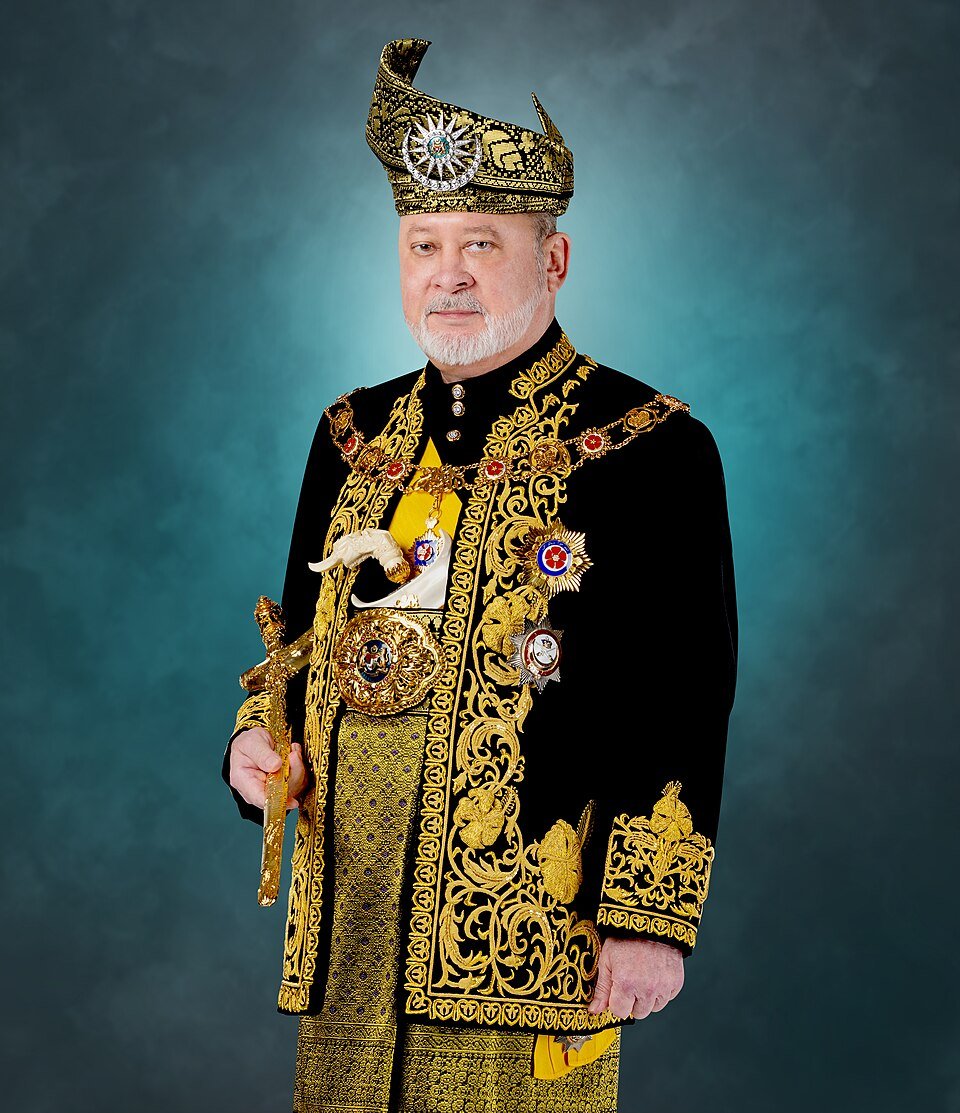
Sultan Ibrahim begins the seventeenth reign
The Sultan of Johor takes the oath for a five-year term as Yang di-Pertuan Agong; his formal installation follows on 20 July.
What kind of monarchy does Malaysia have?
Malaysia is a federal constitutional monarchy and a parliamentary democracy. The Yang di-Pertuan Agong is the Supreme Head of the Federation, while the prime minister and Cabinet direct the government and remain collectively responsible to the elected Dewan Rakyat. The Constitution distributes authority among these offices rather than giving the King unlimited personal power.
The federal crown is elective and rotating. Nine states have Malay rulers: the sultans of Johor, Kedah, Kelantan, Pahang, Perak, Selangor and Terengganu, the Raja of Perlis and the Yang di-Pertuan Besar of Negeri Sembilan. Most follow their own dynastic succession rules, while Negeri Sembilan preserves a state electoral custom. From among themselves, the nine rulers elect one to serve nationally for five years.
Penang, Malacca, Sabah and Sarawak do not have hereditary rulers. Each has a Yang di-Pertua Negeri, or governor. The four governors belong to the Conference of Rulers for many functions but neither vote nor stand in the election of the Yang di-Pertuan Agong. This mix of nine monarchies and four governor-led states is central to Malaysia’s federal design.
How is the Yang di-Pertuan Agong elected?
The election is conducted by the Conference of Rulers under Article 32 and the Third Schedule of the Federal Constitution. Only the nine hereditary rulers participate. The Keeper of the Rulers’ Seal confirms whether each ruler is willing to be considered, and voting takes place by secret ballot at a special election meeting.
The process normally follows a rotation list shaped by the order in which the states completed the first cycle. A ballot presents one eligible ruler at a time, beginning with the state at the head of the list. The candidate must receive at least five votes. If he declines or does not receive the required majority, the next eligible ruler is considered.
Rotation is therefore a strong convention, not automatic succession. A ruler may decline nomination, be ineligible because he is a minor or be judged unsuitable by the required secret vote. The elected ruler must accept the office and take the constitutional oath before exercising its functions. A deputy king is then elected through a similar procedure.
How long does the King of Malaysia serve?
The constitutional term is five years. A Yang di-Pertuan Agong may resign in writing to the Conference of Rulers, may be removed by the Conference under the constitutional procedure or leaves the office if he ceases to be ruler of his state. He does not hold the federal throne for life and his children do not automatically inherit it.
During the federal reign, the monarch remains the ruler of his home state. A regent or council performs designated state duties according to that state’s constitution. When the federal term ends, the ruler returns fully to the state role and the next elected monarch takes the national oath.
A vacancy does not convert the office into a hereditary succession. The deputy may exercise functions temporarily, while the Conference must arrange a new election within four weeks. The 2019 abdication demonstrated that the system can replace a monarch between regular five-year transitions.
Does the King rule on the government’s advice?
For most constitutional and legal functions, yes. Article 40 states that the Yang di-Pertuan Agong acts in accordance with the advice of the Cabinet or a minister acting under Cabinet authority, unless the Constitution provides otherwise. The King is entitled to government information, but the general rule is responsible government through elected ministers.
This distinction explains why formal acts may be issued in the King’s name without becoming personal royal policy. Appointments, proclamations and executive instruments often involve the monarch, yet the legal source of the decision may be ministerial advice, a commission’s recommendation or another process specified by the Constitution.
Calling Malaysia a monarchy is therefore incomplete; calling the King merely ceremonial is also too simple. The office supplies constitutional continuity and performs real legal functions, but those functions have different decision rules. The first question should always be whether a power is advised, consultative or discretionary.
When can the Yang di-Pertuan Agong use discretion?
Article 40 identifies a limited core of discretion. The best-known powers are appointing a prime minister and withholding consent to a request to dissolve Parliament. The King may also call a meeting of the Conference of Rulers concerned solely with the rulers’ privileges, position, honours and dignities, and has other discretion where the Constitution expressly provides it.
Discretion does not mean a free choice among political preferences. Article 43 directs the King to appoint a member of the Dewan Rakyat who in his judgment is likely to command the confidence of a majority. When one coalition clearly holds that majority, the practical choice is straightforward. When support is disputed, the monarch may need evidence such as party decisions, written declarations or direct consultations.
A refusal to dissolve Parliament does not by itself give a defeated prime minister authority to continue indefinitely. If the prime minister no longer commands majority confidence, Article 43(4) requires the Cabinet to resign unless Parliament is dissolved. The constitutional objective is a government accountable to the House, not a royal government independent of it.
What is the King’s role in Parliament and lawmaking?
Article 44 defines Parliament as the Yang di-Pertuan Agong, the Dewan Negara and the Dewan Rakyat. The King summons Parliament, may prorogue it and dissolves it within the constitutional framework. A royal address traditionally opens a parliamentary session, but ministers prepare the government programme expressed in that speech.
Bills passed through Parliament are presented for royal assent. Under Article 66, a bill becomes law after thirty days even if assent has not been signified. Royal participation remains part of the legislative form, while the time limit prevents a permanent personal veto over legislation approved through the parliamentary process.
The monarch also makes important appointments, but many are governed by advice, consultation and independent constitutional bodies. Judges, commissioners and senior officers do not simply hold office through unfettered royal preference. Reading the appointment clause and its required advisers is essential to understanding where responsibility lies.
What does the Conference of Rulers do?
The Conference is more than an electoral college. It brings together the nine hereditary rulers and four governors to deliberate on matters assigned by the Constitution. These include agreeing or being consulted on specified national appointments, questions of policy affecting royal institutions and matters relating to Islam and Malay custom within the constitutional allocation of responsibilities.
Not every member takes part in every decision. The governors are excluded when the Conference elects or removes the King and deputy, considers the rulers’ privileges or deals with religious acts and observances extending across the federation. A state ruler may also be excluded when the Conference discusses an act or practice particular to him.
Certain constitutional amendments require the Conference’s consent, including changes touching the rulers’ constitutional position and other protected provisions. This gives the institution a safeguarding role without turning it into a general second legislature. Parliament still legislates; the Conference participates where the Constitution specifically requires it.
What are the King’s religious, military and pardoning roles?
The Yang di-Pertuan Agong is Supreme Commander of the armed forces under Article 41. Operational command and defence policy nevertheless run through the elected government and the institutions established by law. The title expresses the constitutional location of military authority, not day-to-day personal direction of deployments.
Each hereditary ruler is head of Islam in his own state. The Yang di-Pertuan Agong is head of Islam in Penang, Malacca, Sabah, Sarawak and the federal territories, whose state structures do not include a hereditary Malay ruler. This arrangement should not be mistaken for a single national religious administration under one office; federal and state jurisdiction both matter.
Article 42 provides pardoning powers and requires Pardons Boards for the relevant territories. The King has a formal role for offences tried in the federal territories and certain other cases, while state rulers or governors act in their jurisdictions. Because the Constitution specifies boards, membership and procedure, a pardon is a structured constitutional act rather than an informal private favour.
Why did the monarchy become more visible after 2018?
For decades, one governing coalition usually entered each federal transition with a clear parliamentary majority. The 2018 change of government, the 2020 coalition collapse, the 2021 transition and the hung parliament of 2022 made confidence less obvious. Powers that had always existed became more visible because the political facts required the palace to verify support.
The monarchy did not acquire a new general power to choose governments. Instead, fragmentation increased the number of moments when the existing Article 43 judgment mattered. Consultations, statutory declarations and meetings with party leaders were methods for answering the constitutional question: who was likely to command the elected House?
This visibility makes precision especially important. Political actors may praise or criticise an outcome, but the durable test is whether government formation returns to demonstrable parliamentary confidence. The monarchy’s stabilising value depends on remaining inside that rule-based role rather than becoming a substitute for elections or legislative accountability.
What makes the Malaysian system distinctive?
Other constitutional monarchies rotate regents, elect monarchs or preserve multiple royal houses, but Malaysia combines all three elements in a durable federal system. Nine state sovereigns retain their own dynastic institutions while sharing one national crown for fixed terms. The Conference connects those state traditions to the federation.
The design was a political settlement as well as a royal custom. Independence required a common head of state without erasing the rulers who had entered the federation. Election and rotation balanced equality among ruling houses; parliamentary responsibility linked the monarchy to democratic government; written limits supplied a legal framework for both.
Its success cannot be measured only by ceremony. The essential questions are whether transitions occur lawfully, whether ministers remain accountable to Parliament and whether royal functions are exercised through the correct advice or discretion. Constitutional monarchy works when each institution respects both its authority and its boundary.
Continue the chronology
Related history guides
How Malaysia’s Elections Work
See how elected constituency results lead to dissolution, majority confidence and appointment of a prime minister.
Read the timeline1957–presentHow Malaysia’s Courts Work
Continue from constitutional appointment to judicial review, appeals and the Special Court.
Read the timeline1957–presentHow Malaysia’s Parliament Works
Continue from the King’s legislative role to the two Houses, bills, budgets and committees.
Read the timeline1957–presentPrime Ministers of Malaysia
Follow every appointment, election route and transfer of executive leadership.
Read the timeline9 May 2018Malaysia’s 2018 General Election
See how the first federal transfer worked through elections and constitutional appointment.
Read the timeline1998–presentMalaysia’s Reformasi Movement
Connect institutional reform to coalition change and the 2022 hung parliament.
Read the timeline1955–presentMalaysia History Timeline
Place royal transitions inside independence, federation and democratic change.
Read the timelineBiography context
Explore Malaysia through connected lives
Explore Malaysia
Browse biographies and sourced guides to the country’s political and social history.
Explore the biographiesLeadership collectionMalaysian Prime Ministers
Compare the heads of government who served alongside successive monarchs.
Explore the biographiesCurrent monarchSultan Ibrahim
Read the life of the Sultan of Johor and seventeenth Yang di-Pertuan Agong.
Explore the biographiesConnected biographies
Four lives connecting the federal crown, independence and parliamentary government
 Malaysia · Politics
1958—
Sultan Ibrahim
17th Yang di-Pertuan Agong of MalaysiaThe Sultan of Johor who became Malaysia’s seventeenth Yang di-Pertuan Agong in 2024 under the country’s elected, rotating constitutional monarchy.Read biography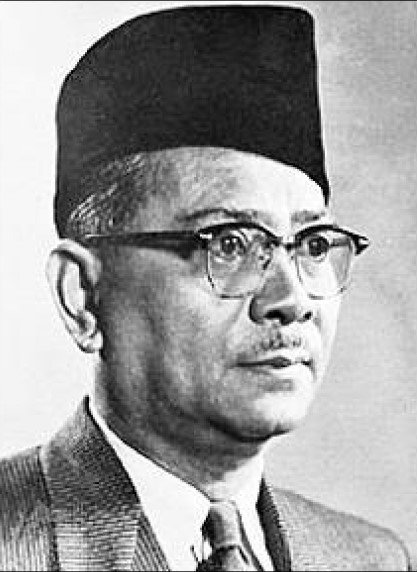 Malaysia · Politics
1903—1990
Tunku Abdul Rahman
First Prime Minister of MalaysiaThe independence leader who became Malaya’s first prime minister and helped define the federation that would become modern Malaysia.Read biography Malaysia · Politics
1925—
Mahathir Mohamad
Fourth and seventh Prime Minister of MalaysiaA physician-politician whose two premierships—separated by fifteen years—made him the longest-serving and one of the most consequential leaders in Malaysian history.Read biography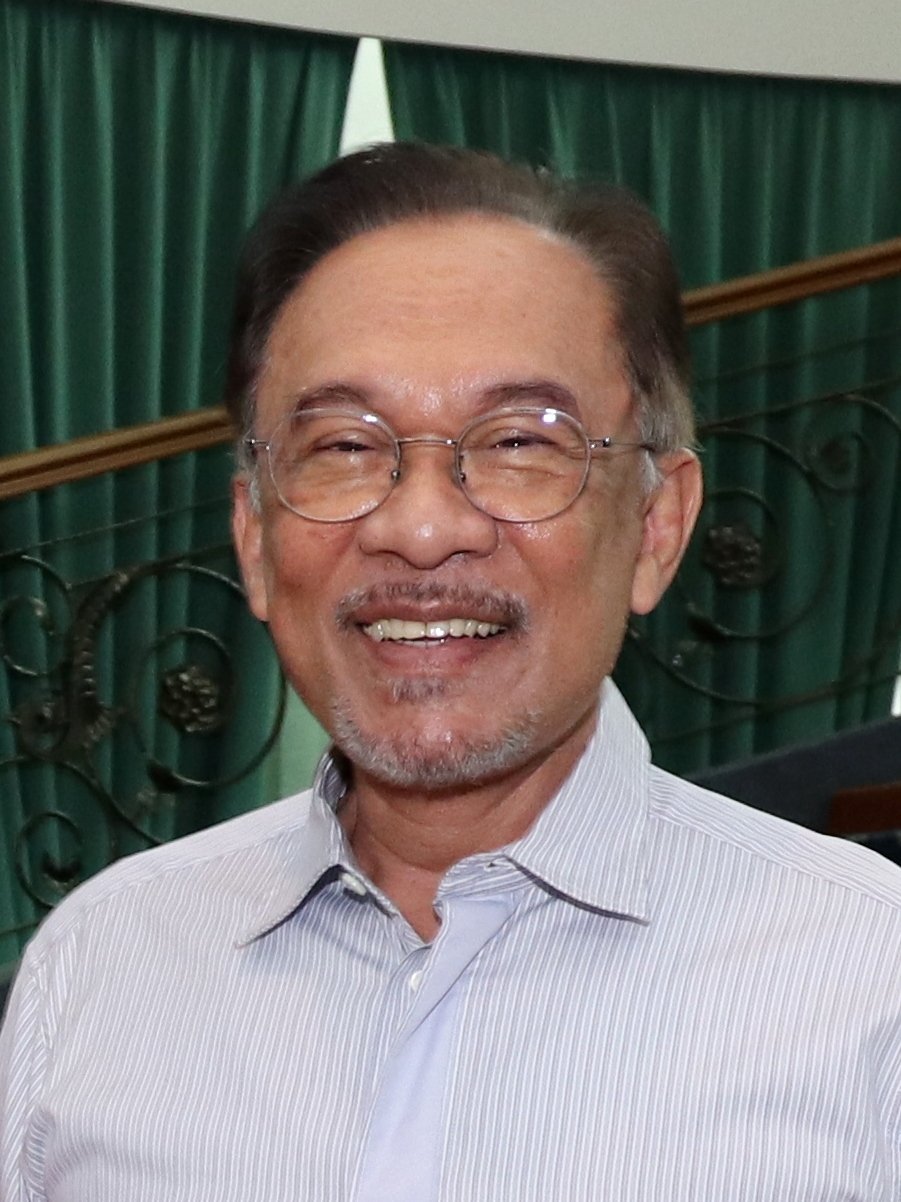 Malaysia · Politics
1947—
Anwar Ibrahim
Tenth Prime Minister of MalaysiaA student activist turned government minister, opposition leader and Malaysia’s tenth prime minister after one of the longest routes to national office.Read biographyQuick answers
Common questions
- Is the King of Malaysia elected?
- Yes. The nine hereditary Malay rulers elect the Yang di-Pertuan Agong by secret ballot for a five-year term under the Federal Constitution’s Third Schedule.
- Does Malaysia rotate its King automatically?
- The states normally follow an established rotation list, but the office is still elected. A ruler may decline, be ineligible or fail to receive the required five votes.
- How many royal families can provide Malaysia’s King?
- Nine ruling houses participate: Johor, Kedah, Kelantan, Negeri Sembilan, Pahang, Perak, Perlis, Selangor and Terengganu.
- Can the Yang di-Pertuan Agong choose any prime minister?
- No. The King must appoint a member of the Dewan Rakyat who in his judgment is likely to command the confidence of a majority of that chamber.
- Can the King of Malaysia refuse to dissolve Parliament?
- Yes. Withholding consent to a prime minister’s request for dissolution is one of the discretion areas expressly identified by Article 40.
- Can the King veto a bill permanently?
- No. Article 66 provides a time-limited process after which a bill passed by Parliament becomes law even if royal assent has not been signified.
- Are all Malaysian states monarchies?
- No. Nine states have hereditary rulers. Penang, Malacca, Sabah and Sarawak have appointed governors and cannot provide a candidate for the federal throne.
- Who is the current Yang di-Pertuan Agong?
- Sultan Ibrahim of Johor is the seventeenth Yang di-Pertuan Agong. He began his five-year reign on 31 January 2024.
Primary and institutional sources
How this history was checked
The Federal Constitution supplies the controlling rules. The Conference of Rulers, Parliament, courts and Istana Negara provide official explanations and records of how those rules operate, while Bernama verifies the current reign and installation. This article was reviewed on 4 October 2026.
- Attorney General’s Chambers of MalaysiaFederal Constitution — Current Official Legislation Portal
- Judicial Appointments Commission MalaysiaFederal Constitution — English Text
- Office of the Keeper of the Rulers’ SealElection of the Yang di-Pertuan Agong
- Office of the Keeper of the Rulers’ SealConference of Rulers — History, Membership and Functions
- Parliament of MalaysiaParliamentary Democracy and Constitutional Monarchy
- Parliament of MalaysiaConstitutional Amendments and the Special Court — 19 January 1993
- Federal Court of MalaysiaRoyal Assent and Article 66 — Grounds of Judgment Summary
- Istana NegaraOfficial Biography of Sultan Ibrahim
- BernamaInstallation of Sultan Ibrahim as Malaysia’s 17th King