The short answer
UMNO was founded in 1946 during opposition to the Malayan Union, led the Alliance at independence and became the central party of BN rule. Its history also includes the 1988 re-registration, the 1998 Reformasi rupture, defeat in 2018 and a new role as a junior federal governing partner after GE15.
Leadership chronology
UMNO presidents from Onn Jaafar to Ahmad Zahid Hamidi
The list follows the party’s political lineage while preserving the legal rupture and re-registration of 1988.
| President | Party leadership | National significance |
|---|---|---|
| Onn Jaafar | 1946–1951 | Founding president; Malayan Union campaign |
| Tunku Abdul Rahman | 1951–1971 | Built the Alliance and led independence |
| Abdul Razak Hussein | 1971–1976 | NEP and expansion into Barisan Nasional |
| Hussein Onn | 1976–1981 | Post-Razak consolidation |
| Mahathir Mohamad | 1981–2003 | Industrialisation and 1988 re-registration |
| Abdullah Ahmad Badawi | 2003–2009 | Large 2004 victory; GE12 setback |
| Najib Razak | 2009–2018 | GE13, 1MDB and first federal defeat |
| Ahmad Zahid Hamidi | 2018–present | Opposition period and unity-government pact |
Chronology
A timeline of the turning points
The Malayan Union begins
British constitutional plans reduced the rulers’ authority and proposed a wider common citizenship, prompting organised Malay opposition.
UMNO is founded in Johor Bahru
Representatives of 41 Malay organisations approved the party charter and chose Onn Jaafar as founding president.
Tunku builds the Alliance
Tunku Abdul Rahman succeeded Onn and developed electoral cooperation with MCA and MIC.
Malaya becomes independent
The Alliance government led by Tunku negotiated independence and UMNO became the dominant party of the new federal executive.
Razak reshapes the governing coalition
After the 1969 crisis, Abdul Razak introduced the New Economic Policy and expanded the Alliance into Barisan Nasional.
UMNO is declared unlawful and re-registered
A court ruling after the 1987 leadership contest voided the organisation; Mahathir’s group registered UMNO (Baru).
Anwar is dismissed and expelled
The rupture inside government and UMNO helped launch the Reformasi movement and a durable new opposition party.
UMNO and BN lose federal power
GE14 ended the Alliance–BN governing lineage’s uninterrupted federal tenure.
UMNO returns to Cabinet and the premiership
UMNO joined the post-PH governing alignment before Ismail Sabri Yaakob became prime minister in August 2021.
GE15 changes UMNO’s role again
BN won 30 seats and became a pivotal partner in the broad government led by Anwar Ibrahim.
Zahid leads UMNO into its eightieth year
The party remained the largest BN component and a federal unity-government partner under president Ahmad Zahid Hamidi.
Why was UMNO founded?
UMNO was created during opposition to the Malayan Union, a British constitutional scheme introduced in 1946. Malay organisations objected to the reduction of the rulers’ authority and to citizenship provisions they believed weakened the political position of the Malay population.
At the third Malay Congress in Johor Bahru on 11 May 1946, delegates approved the charter of the United Malays National Organisation and elected Onn Jaafar as president. UMNO brought dozens of existing associations into one national organisation.
The campaign helped replace the Malayan Union with the Federation of Malaya in 1948. That success established UMNO as the principal organiser of Malay nationalism before the transition to elected self-government.
How did UMNO lead Malaya to independence?
Onn left in 1951 after failing to persuade the party to open membership beyond Malays. Tunku Abdul Rahman succeeded him and pursued an electoral compact with the Malayan Chinese Association; the Malayan Indian Congress later completed the Alliance.
The Alliance won 51 of 52 elected seats in the 1955 federal election. Tunku became chief minister and led negotiations with Britain, culminating in independence on 31 August 1957.
UMNO supplied the prime minister while coalition bargaining distributed constituencies and offices among communal partners. The model delivered broad electoral reach but placed UMNO at the centre of an unequal governing structure.
How did UMNO shape policy after 1969?
The 1969 election and subsequent communal violence ended Tunku’s premiership. Abdul Razak restored Parliament in 1971, launched the New Economic Policy and widened the Alliance into Barisan Nasional in 1974.
UMNO’s programme combined Malay political leadership, Bumiputera economic advancement, state-led development and negotiated multi-party government. The balance between redistribution, growth and patronage became one of the central debates of Malaysian public life.
Under Mahathir Mohamad after 1981, industrialisation and executive centralisation accelerated. UMNO remained the route through which leadership succession, cabinet careers and much national policy were organised.
What happened to UMNO in 1988?
Mahathir narrowly defeated Tengku Razaleigh Hamzah in the 1987 party election. Dissidents challenged the result, and on 4 February 1988 the High Court held that UMNO was an unlawful society because unregistered branches had participated.
Mahathir and allies applied to register UMNO (Baru) on 13 February. The new organisation re-entered BN, while Razaleigh later led Semangat 46. UMNO’s official narrative treats the re-registration as organisational continuity after a crisis; legally, the episode involved a new registration.
The distinction matters because “founded in 1946” describes the political lineage, while the present organisation’s legal history includes the 1988 rupture and re-registration.
Why did UMNO lose power in 2018?
UMNO and BN had weakened across the 2008 and 2013 elections. In 2018, public concern over 1MDB, living costs, institutional accountability and a coordinated opposition combined with regional and constituency shifts.
Mahathir, Muhyiddin Yassin and other former UMNO figures campaigned with Anwar Ibrahim’s allies under PH. The opposition’s ability to reach both long-standing anti-BN voters and former government supporters helped produce the first federal turnover.
Ahmad Zahid Hamidi became UMNO president after Najib Razak stepped down. He inherited a party confronting defections, legal cases, the loss of federal resources and debate over whether cooperation or opposition offered the better route back.
What is UMNO’s role in 2026?
UMNO is the largest component of BN and Ahmad Zahid is both party president and BN chair. After GE15 produced no majority, BN supported Anwar Ibrahim’s government and Zahid became deputy prime minister.
The arrangement does not make UMNO a PH component. It remains a separate Malay nationalist party with its own organisation, candidates and policy positions inside a wider federal governing agreement.
At the party’s September 2026 general assembly, Zahid presented the partnership as a response to changed political realities while defending UMNO’s core identity. State-level electoral arrangements may still differ from the federal partnership.
Continue the chronology
Related history guides
Barisan Nasional: History and Parties
Place UMNO inside the Alliance and BN coalition system.
Read the timeline31 August 1957Malayan Independence
Follow the election and negotiations led by the Alliance.
Read the timeline1971–1990Malaysia’s New Economic Policy
Examine the policy settlement introduced under Abdul Razak.
Read the timeline9 May 2018Malaysia’s 2018 General Election
Read the election that removed UMNO and BN from federal power.
Read the timelineBiography context
Explore Malaysia through connected lives
Connected biographies
Five UMNO leaders across foundation, independence, development, dominance and coalition change
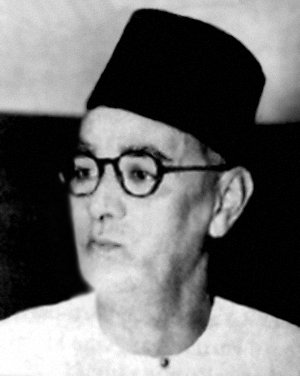 Malaysia · Politics
1895—1962
Onn Jaafar
Founder and first president of UMNOThe Johor statesman who founded UMNO, opposed the Malayan Union and later argued for a more inclusive model of national politics.Read biography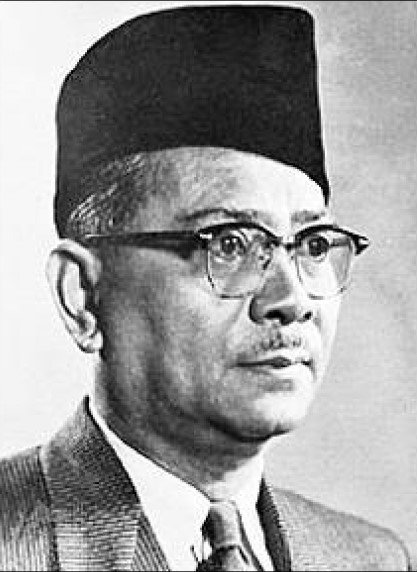 Malaysia · Politics
1903—1990
Tunku Abdul Rahman
First Prime Minister of MalaysiaThe independence leader who became Malaya’s first prime minister and helped define the federation that would become modern Malaysia.Read biography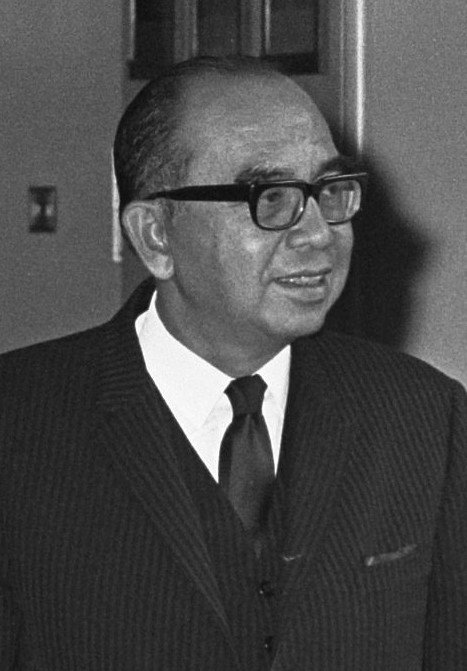 Malaysia · Politics
1922—1976
Abdul Razak Hussein
Second Prime Minister of MalaysiaMalaysia’s second prime minister, remembered for rural development, post-1969 reconstruction and a far-reaching programme of social and economic restructuring.Read biography Malaysia · Politics
1925—
Mahathir Mohamad
Fourth and seventh Prime Minister of MalaysiaA physician-politician whose two premierships—separated by fifteen years—made him the longest-serving and one of the most consequential leaders in Malaysian history.Read biography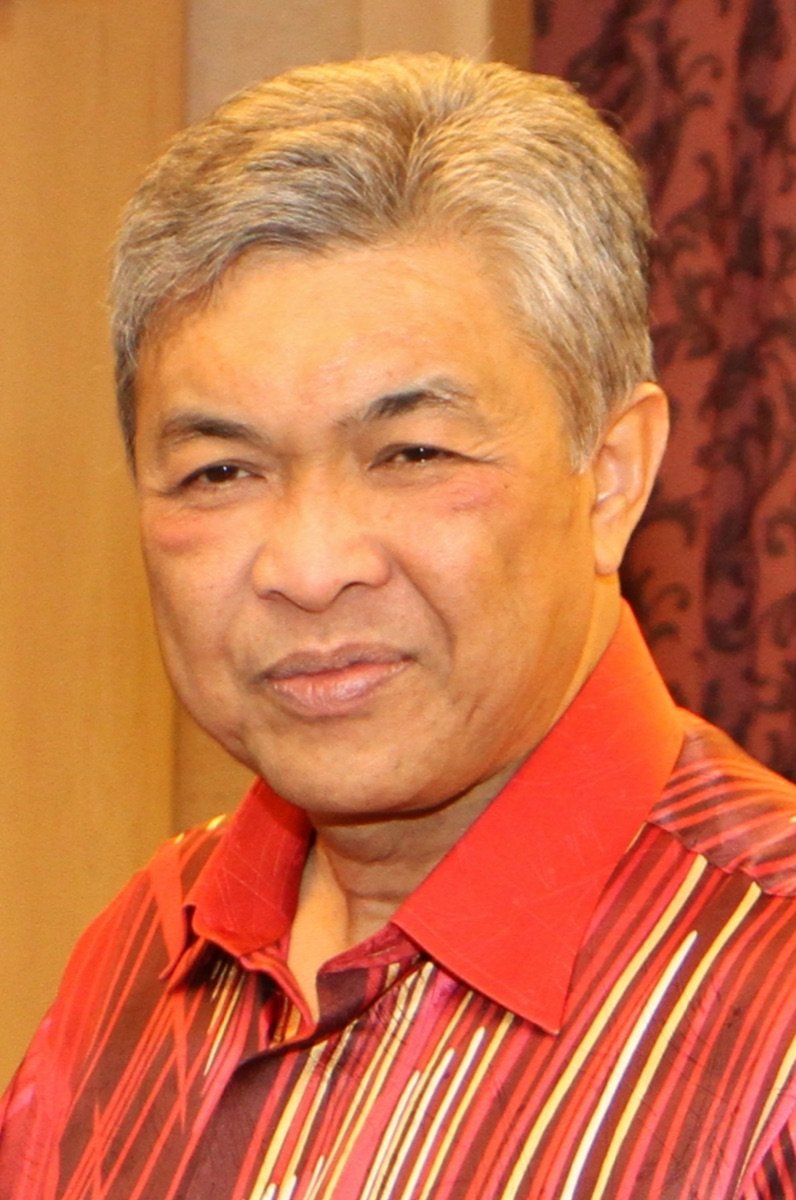 Malaysia · Politics
1953—
Ahmad Zahid Hamidi
Deputy Prime Minister and Minister of Rural and Regional DevelopmentThe UMNO president and Bagan Datuk member of Parliament who returned to the deputy premiership in 2022 after first holding the office from 2015 to 2018.Read biographyQuick answers
Common questions
- What does UMNO stand for?
- UMNO stands for United Malays National Organisation, or Pertubuhan Kebangsaan Melayu Bersatu in Malay.
- When was UMNO founded?
- Its founding congress approved the charter in Johor Bahru on 11 May 1946.
- Who founded UMNO?
- Onn Jaafar united representatives of 41 Malay organisations and became UMNO’s first president.
- Is UMNO the same as Barisan Nasional?
- No. UMNO is a party and the largest component of BN; Barisan Nasional is a coalition of several parties.
- Why was UMNO declared unlawful in 1988?
- A High Court ruling found that unregistered branches had participated in the disputed 1987 party election. Mahathir’s group then registered UMNO (Baru).
- Who is UMNO president in 2026?
- Ahmad Zahid Hamidi remained president at this page’s 4 October 2026 review date.
- How many seats did BN win at GE15?
- BN won 30 of 222 Dewan Rakyat seats. UMNO was its largest component.
- Is UMNO in Anwar Ibrahim’s government?
- Yes, through BN’s participation in the federal unity government. UMNO and PH nevertheless remain separate parties and coalitions.
Primary and institutional sources
How this history was checked
UMNO’s own chronology establishes party dates and leadership claims; election records establish electoral outcomes; ISEAS supplies independent coalition analysis. Party-source interpretations are identified rather than treated as neutral consensus. This article was reviewed on 4 October 2026.
- United Malays National OrganisationImportant Events in UMNO History
- United Malays National Organisation2026 Presidential Policy Address
- United Malays National OrganisationUMNO at Eighty Years
- Election Commission of MalaysiaMalaysia’s General Election Journey
- Inter-Parliamentary UnionMalaysia House of Representatives Election, November 2022
- ISEAS – Yusof Ishak InstituteRuling Coalitions and Policy Change Since GE14