The short answer
1MDB began as a state development company and became a cross-border test of public accountability. This chronology connects the PetroSaudi transfer, Goldman-arranged bonds, parliamentary findings, global forfeiture cases, Malaysia’s 2018 transfer of power and later court judgments—while keeping allegations, convictions and the separate SRC case legally distinct.
Do not conflate the cases
SRC International case versus the main 1MDB case
Both arose from the wider 1MDB era, but they involved different money, charges, judgments and procedural status.
| Case | Money at issue | Completed judgment | Status on 3 Oct 2026 |
|---|---|---|---|
| SRC International | RM42 million | Seven convictions upheld by Federal Court in 2022 | Conditional pardon changed how the reduced SRC term is served |
| Main 1MDB–Tanore trial | RM2.3 billion | 25 convictions in High Court on 26 December 2025 | Appeal pending; conviction not cancelled by the SRC pardon |
Chronology
A timeline of the turning points
Terengganu fund becomes 1MDB
The federal government took over the Terengganu Investment Authority and renamed it 1Malaysia Development Berhad, a Minister of Finance Incorporated company intended to promote strategic development.
1MDB enters the PetroSaudi joint venture
1MDB agreed to invest US$1 billion. U.S. forfeiture complaints later alleged that US$700 million was diverted to a Good Star account controlled by Low Taek Jho rather than the joint venture.
Further money reaches Good Star
The U.S. Justice Department alleged that about US$330 million more was sent under the guise of financing linked to the PetroSaudi venture.
Three Goldman Sachs bond deals raise US$6.5 billion
The Magnolia, Maximus and Catalyze offerings financed energy acquisitions and a joint venture. Goldman later admitted its Malaysian subsidiary’s role in a foreign-bribery conspiracy.
The Tanore phase moves funds through offshore entities
Investigators traced part of the 2013 bond proceeds through offshore accounts. Money linked to this phase became central to the later criminal case concerning deposits into Najib Razak’s accounts.
Debt and missing-value questions intensify
Delayed accounts, repeated borrowing and questions over purported overseas investment proceeds brought 1MDB’s liquidity, governance and transactions under growing scrutiny.
The Auditor-General and PAC investigations begin
The Cabinet ordered an audit and Parliament’s Public Accounts Committee examined governance, PetroSaudi, Cayman Islands investments, financing and changes of auditor.
Reports identify deposits in Najib’s accounts
International reporting on transfers transformed a corporate-debt controversy into a crisis involving the prime minister. Najib denied wrongdoing and said large deposits were a donation.
Parliament’s PAC tables its 1MDB report
The report documented weak board control, management failures, large borrowing and decisions made without adequate information or compliance with governance requirements.
The U.S. files landmark forfeiture actions
The Justice Department sought assets allegedly traceable to money diverted from 1MDB. Its later cases described more than US$4.5 billion misappropriated from 2009 through 2015.
GE14 removes Barisan Nasional from federal power
1MDB was not the election’s only cause, but it became a central accountability issue in Malaysia’s first federal transfer between rival coalitions. Investigations were reopened after the result.
Najib is charged and Jho Low remains abroad
Malaysian prosecutors brought multiple cases against former prime minister Najib Razak. Authorities also charged Low, who remained at large and was still described as wanted in 2026.
Goldman resolves the foreign-bribery case
Goldman Sachs agreed to pay more than US$2.9 billion in the U.S. resolution, while its Malaysian subsidiary pleaded guilty over the bribery conspiracy connected with the bond deals.
The Federal Court upholds the separate SRC conviction
Malaysia’s highest court affirmed Najib’s seven-count conviction concerning RM42 million from SRC International. SRC had once been a 1MDB subsidiary, but this was not the main 1MDB-Tanore trial.
U.S. returns reach approximately US$1.4 billion
The U.S. Justice Department announced another US$156 million repatriation and said its total returned or assisted return to Malaysia had reached about US$1.4 billion.
Najib is convicted in the main 1MDB case
The High Court found him guilty on four abuse-of-power and 21 money-laundering charges involving RM2.3 billion, imposing a 15-year term and RM11.4 billion fine. He filed an appeal.
Malaysia reports the remaining financial burden
The Finance Ministry reported RM51.4 billion of government-borne obligations, RM42.5 billion paid, RM8.9 billion outstanding and RM31.3 billion recovered.
Conditional pardon changes the SRC sentence, not the 1MDB case
Najib was allowed to serve the remainder of his SRC term under house arrest subject to conditions. MACC said the separate 1MDB case was unchanged; his appeal and stay application remained pending.
What was 1MDB supposed to do?
1Malaysia Development Berhad was a company wholly owned by Malaysia’s Minister of Finance Incorporated. It grew from the Terengganu Investment Authority and was renamed in 2009. Its stated purpose was to promote strategic development, partnerships and foreign direct investment for the country’s benefit.
The structure concentrated unusual influence around the federal executive. Najib Razak was prime minister, finance minister and chair of 1MDB’s board of advisers. The company borrowed heavily and pursued energy, property and joint-venture transactions while relying on government support and, in several deals, guarantees or arrangements involving foreign state entities.
A development company can carry debt without being corrupt. The core problem was how money raised in 1MDB’s name moved through opaque transactions, how directors and public institutions were informed, and how liabilities remained with Malaysia after funds were diverted. Parliamentary, court and enforcement records must be read together to see those different layers.
How did the alleged money trail begin?
In September 2009, 1MDB entered a joint venture with PetroSaudi International and committed US$1 billion. According to U.S. civil-forfeiture complaints, US$700 million of that transfer went to a Swiss account in the name of Good Star Limited. The complaints alleged that Good Star was controlled by Low Taek Jho, commonly known as Jho Low, rather than by PetroSaudi or the joint venture.
The Justice Department alleged that another US$330 million reached the same account in 2011 under purported financing arrangements. It divided the wider scheme into phases—including Good Star, Aabar-BVI and Tanore—because different transactions, shell entities and bank accounts were used at different times.
A civil complaint is an allegation, not by itself a criminal conviction. Later forfeitures, corporate admissions and Malaysian court findings supply additional evidence, but each record has its own legal status. This page labels allegations as allegations and does not treat every person named in reporting as convicted.
Why were the 2012 and 2013 Goldman bonds important?
Goldman Sachs arranged three bond offerings that raised US$6.5 billion for 1MDB in 2012 and 2013. The transactions were known internally as Project Magnolia, Project Maximus and Project Catalyze. They funded energy acquisitions and a proposed strategic partnership, but also generated unusually high fees and placed large new obligations on 1MDB.
In its 2020 U.S. resolution, Goldman admitted that employees and agents conspired with Low to pay more than US$1.6 billion in bribes and that more than US$2.7 billion from the bond offerings was diverted. Goldman Sachs (Malaysia) pleaded guilty, while the global group entered a deferred-prosecution agreement and the worldwide resolution exceeded US$2.9 billion.
These corporate admissions do not make every disputed transaction or individual allegation identical. They do establish that misconduct was embedded in the financing of the fund, not merely in how luxury assets were purchased later. The bonds explain why a scandal about offshore transfers became a long-term Malaysian public-debt issue.
What did Malaysia’s Public Accounts Committee find?
Parliament’s Public Accounts Committee began proceedings in 2015 and tabled its report in April 2016. It examined the PetroSaudi venture, financing, Cayman Islands investments, governance and changes of external auditor. The report described a board that did not always receive complete information and management actions taken without the required approval or compliance.
The PAC recommended investigation of former chief executive Shahrol Azral Ibrahim Halmi and others in management. It also urged the removal of 1MDB’s board of advisers, clearer board oversight and stronger monitoring by the Minister of Finance Incorporated. The report was a parliamentary governance finding, not a criminal verdict against every participant.
Its significance lies in showing that the scandal was also an institutional failure. Complex fraud becomes easier when boards cannot verify transactions, audit warnings do not produce timely action and control is concentrated without effective challenge. Asset recovery addresses money already lost; governance reform addresses how such losses become possible.
How did 1MDB become a global case?
Money and assets crossed many jurisdictions. Investigations or enforcement action involved the United States, Singapore, Switzerland, Luxembourg, the United Kingdom, the United Arab Emirates and others. Banks faced penalties, employees were prosecuted and assets ranging from real estate and artwork to a superyacht were seized or surrendered.
The U.S. Justice Department filed its first major civil-forfeiture actions in July 2016. It later described more than US$4.5 billion as misappropriated from 1MDB between 2009 and 2015 and called the asset-recovery effort the largest under its Kleptocracy Asset Recovery Initiative. The filings traced funds into luxury purchases and the production of the film The Wolf of Wall Street.
International action mattered because no one national investigation controlled every account or asset. It also meant figures changed over time as cases were settled and property was sold. A reliable timeline dates each recovery number rather than treating it as a final lifetime total.
How did 1MDB affect Malaysia’s 2018 election?
By 2018, 1MDB had become shorthand for accountability, cost and institutional independence. Mahathir Mohamad left UMNO, joined former opponents and made removal of Najib’s government a central political objective. Muhyiddin Yassin, dismissed from Najib’s cabinet after raising concerns, also became part of the opposition coalition.
Pakatan Harapan won 113 of 222 parliamentary seats on 9 May, ending uninterrupted Alliance–Barisan Nasional federal government. The new administration reopened investigations, restricted travel by key figures and established an asset-recovery effort. Najib was charged in several proceedings beginning in 2018.
1MDB was a major cause but not the only one. Living costs, GST, opposition coordination, regional voting, candidate effects and longer-term competition also mattered. The scandal’s clearest electoral significance is that it connected a complex international money trail to a simple domestic question: could a government be removed and investigated?
What is the difference between the SRC and 1MDB cases?
SRC International was created as a 1MDB subsidiary in 2011 and later placed directly under the Minister of Finance Incorporated. Najib’s first completed criminal trial concerned RM42 million from SRC that reached his bank accounts. The High Court convicted him in 2020, and the Federal Court upheld all seven convictions and the sentence in August 2022.
The main 1MDB-Tanore case was different. It concerned four abuse-of-power and 21 money-laundering charges involving RM2.3 billion linked to 1MDB. On 26 December 2025, the High Court convicted Najib on all 25 charges, imposed an effective 15-year term and a total RM11.4 billion fine, and ordered a recoverable sum. Najib filed an appeal on 29 December.
In September 2026, the King granted a conditional pardon allowing Najib to serve the remainder of his existing SRC sentence under house arrest until August 2028, subject to payment of the RM50 million fine and other conditions. MACC said the separate 1MDB case and appeal remained unchanged. As of 3 October 2026, the 1MDB conviction was under appeal and an application to stay its sentence was scheduled for hearing on 14 October.
How much money has been recovered?
Recovery figures depend on date, currency and scope. The U.S. Justice Department said in June 2024 that it had returned or assisted in returning approximately US$1.4 billion to Malaysia. That total covered U.S.-linked forfeiture work, not every settlement or recovery worldwide.
Malaysia’s Finance Ministry reported on 13 September 2026 that RM31.3 billion had been received through recovery efforts. It also reported RM51.4 billion in total 1MDB obligations borne by the government, comprising RM42.5 billion already paid and RM8.9 billion outstanding. On those official figures, the ministry described a public loss approaching RM20 billion after recoveries.
Recovered assets do not automatically cancel gross debt one-for-one at the same moment. Sales, legal costs, exchange rates, interest, settlement schedules and combined references to 1MDB and former subsidiary SRC can change presentation. This guide therefore preserves the date and source beside each headline number.
Where is Jho Low?
Low Taek Jho had no formal position at 1MDB, but U.S. complaints and later cases described him as exercising extensive influence over its dealings. Malaysian and U.S. authorities charged him, and Malaysia has continued to seek his return. His precise location has not been officially confirmed.
In May 2026, Malaysia’s police chief said the investigation continued and authorities still regarded Low as a fugitive at large. The Malaysian government rejected suggestions that it would consider a pardon for him, while later reports about his whereabouts or supposed negotiations were publicly denied.
Calling him a fugitive describes his legal and enforcement status; it does not resolve outstanding charges without a trial. His absence is one reason civil recovery and cases against institutions and other individuals have carried so much of the accountability process.
What has 1MDB changed?
Politically, 1MDB helped end Malaysia’s first era of uninterrupted coalition rule. Legally, it produced cases across jurisdictions against public officials, bankers and corporate entities. Financially, the government continues to service obligations even after billions have been recovered.
Institutionally, the scandal exposed the danger of combining public borrowing, opaque corporate structures and concentrated executive authority without sufficiently independent oversight. Parliamentary scrutiny, professional boards, protected auditors, beneficial-ownership transparency and cross-border enforcement are not procedural extras; they are controls on public loss.
The story is not finished. Appeals, civil suits, asset-recovery actions and the search for Low remained active at the reviewed date. A verified timeline must therefore distinguish settled findings from allegations and attach dates to every status claim. That is how an evolving legal record can be explained without outrunning the evidence.
Continue the chronology
Related history guides
Attorney General vs Public Prosecutor
Separate investigation papers, prosecution decisions, court orders and the proposed institutional reform.
Read the timeline1957–presentHow Malaysia’s Courts Work
Read the trial and appeal stages in 1MDB-related cases with the correct court hierarchy.
Read the timeline1967–presentMACC: History, Powers and Oversight
Separate anti-corruption investigation from prosecution, court judgment and parliamentary scrutiny.
Read the timeline1957–presentHow Malaysia’s Parliament Works
Understand the PAC, Auditor-General reports, supply and public-account oversight.
Read the timeline2005–presentMalaysia’s Bersih Movement
See how clean-government and institutional demands shaped the public response to 1MDB.
Read the timeline9–10 May 2018Malaysia’s 2018 General Election
See how accountability, living costs and coalition change produced the first federal turnover.
Read the timeline1998–presentMalaysia’s Reformasi Movement
Trace the longer opposition and institutional-reform movement that preceded GE14.
Read the timeline1957–presentPrime Ministers of Malaysia
Place the scandal, federal transfer and later recovery effort across successive governments.
Read the timeline1955–presentMalaysia History Timeline
Connect 1MDB to Malaysia’s wider constitutional, economic and democratic history.
Read the timelineBiography context
Explore Malaysia through connected lives
Explore Malaysia
Browse biographies of the leaders and institutional figures around the 1MDB era.
Explore the biographiesLeadership collectionMalaysian Prime Ministers
Compare Najib’s administration with the governments that investigated and managed its legacy.
Explore the biographiesInstitutions and economyBuilders of Modern Malaysia
Meet the policymakers, central bankers and business leaders shaping public finance and growth.
Explore the biographiesConnected biographies
Four lives connecting 1MDB, cabinet dissent, the 2018 transfer and later asset recovery
 Malaysia · Politics
1953—
Najib Razak
Sixth Prime Minister of MalaysiaA political heir who led Malaysia for nine years before an historic election defeat and convictions in the SRC International and main 1MDB cases.Read biography Malaysia · Politics
1925—
Mahathir Mohamad
Fourth and seventh Prime Minister of MalaysiaA physician-politician whose two premierships—separated by fifteen years—made him the longest-serving and one of the most consequential leaders in Malaysian history.Read biography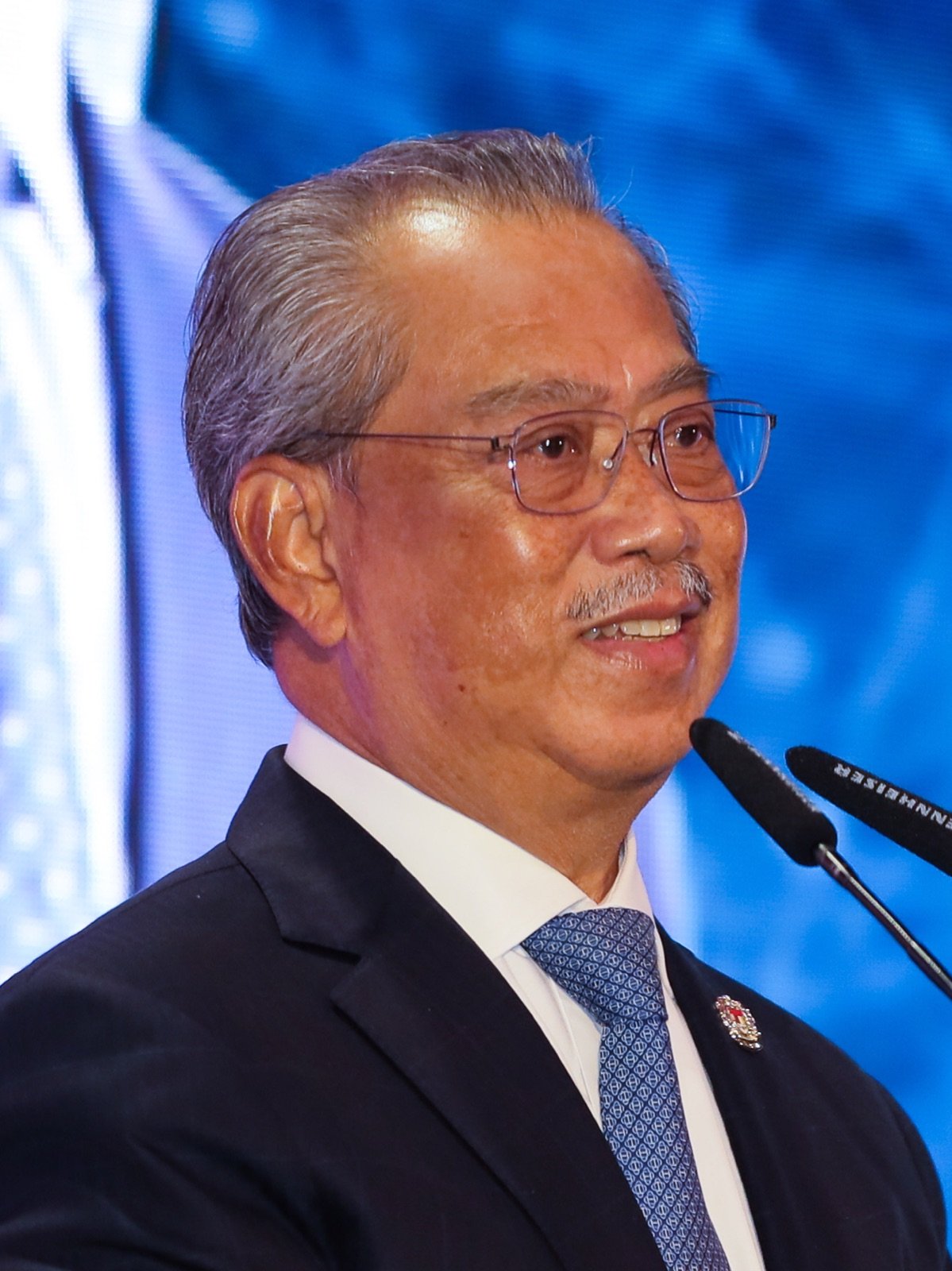 Malaysia · Politics
1947—
Muhyiddin Yassin
Eighth Prime Minister of MalaysiaA veteran Johor politician who became prime minister after the 2020 coalition crisis and governed through the most disruptive phase of the pandemic.Read biography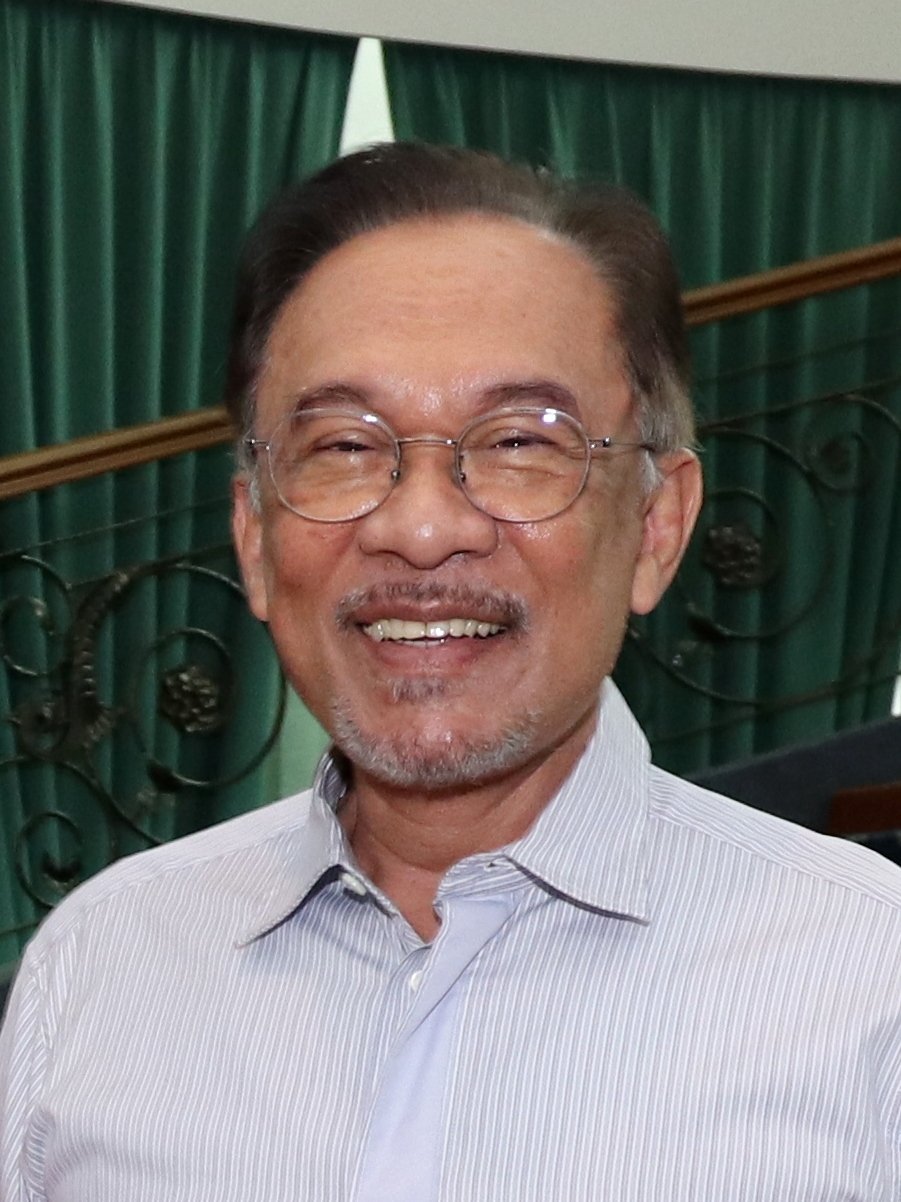 Malaysia · Politics
1947—
Anwar Ibrahim
Tenth Prime Minister of MalaysiaA student activist turned government minister, opposition leader and Malaysia’s tenth prime minister after one of the longest routes to national office.Read biographyQuick answers
Common questions
- What was the 1MDB scandal?
- It was a global corruption, money-laundering and governance scandal involving funds raised by Malaysia’s state-owned development company. U.S. authorities said more than US$4.5 billion was misappropriated between 2009 and 2015.
- What did 1MDB stand for?
- 1MDB stood for 1Malaysia Development Berhad, a company wholly owned by Malaysia’s Minister of Finance Incorporated and created to pursue strategic development and investment.
- How much did 1MDB borrow through Goldman Sachs?
- Three Goldman-arranged bond offerings in 2012 and 2013 raised a combined US$6.5 billion for 1MDB.
- Was Najib Razak convicted in the 1MDB case?
- Yes. The High Court convicted him on 26 December 2025 on four abuse-of-power and 21 money-laundering charges involving RM2.3 billion. He appealed, so the conviction was under appeal as of 3 October 2026.
- Are the SRC International and main 1MDB cases the same?
- No. SRC was once a 1MDB subsidiary, but the completed SRC case concerned RM42 million and seven charges. The main 1MDB-Tanore case concerned RM2.3 billion and 25 separate charges.
- Did Najib’s 2026 conditional pardon cancel the 1MDB conviction?
- No. The conditional pardon concerned how he would serve the remainder of his SRC sentence. MACC said the separate 1MDB case and appeal remained unchanged.
- How much 1MDB money has Malaysia recovered?
- Malaysia’s Finance Ministry reported RM31.3 billion in recoveries on 13 September 2026. The U.S. Justice Department separately reported approximately US$1.4 billion returned or assisted in returning by June 2024.
- Is Jho Low still wanted?
- Yes. Malaysian authorities still described Low Taek Jho as a fugitive at large in 2026, and police said their investigation and international cooperation continued.
Primary and institutional sources
How this history was checked
Parliament establishes the domestic governance record; U.S. court filings and corporate resolutions trace the international money flow; Malaysian judgments and current official reporting establish distinct criminal cases, recoveries and the legal status reviewed on 3 October 2026. This article was reviewed on 3 October 2026.
- Parliament of MalaysiaPublic Accounts Committee Report on 1MDB Governance
- U.S. Department of Justice2016 Civil Forfeiture Complaint — The Good Star, Aabar-BVI and Tanore Phases
- U.S. Department of JusticeGoldman Sachs Resolves Foreign Bribery Case and Agrees to Pay Over US$2.9 Billion
- U.S. Department of JusticeJustice Department Repatriates US$1.4 Billion in Misappropriated 1MDB Funds
- Federal Court of MalaysiaGrounds of Judgment — Najib v Public Prosecutor in the SRC Appeals
- BERNAMA1MDB Case: Najib Jailed 15 Years, Fined RM11.4 Billion
- Ministry of Finance MalaysiaMalaysia Remains Steadfast in Recovering 1MDB Assets — 13 September 2026
- Ministry of Finance MalaysiaGovernment and JPMorganChase Resolve 1MDB Matters
- BERNAMA1MDB Case Status Remains Unchanged Following Conditional Pardon — MACC
- BERNAMAInvestigation into Fugitive Jho Low Continues — Inspector-General of Police
- BERNAMAHigh Court to Hear Najib’s Stay Bid over 1MDB Conviction on 14 October