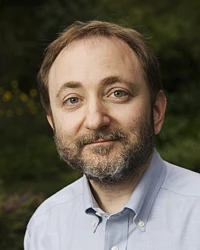
In this biography
Quick facts
- Born
- 1918
- Died
- 2007
- Birthplace
- Brooklyn, NY, USA
- Country
- United States
- Nationality
- Not independently established
- Known for
- Purification of DNA polymerase and experimental study of DNA synthesis
Why this life matters
His contribution is best understood through both a purified reaction and the collaborative laboratory that made such reactions accessible to others.
Timeline
Key moments
Birth
Born in Brooklyn, NY, USA.
Nobel recognition
Received the Nobel Prize in Physiology or Medicine.
From medicine to purified enzymes
Arthur Kornberg trained as a physician before making the chemistry of living cells his central subject. Born in Brooklyn in 1918, he graduated from the City College of New York and received his medical degree at Rochester in 1941. Service in the Public Health Service brought him to the National Institutes of Health. Training with Severo Ochoa and Carl Cori then helped turn nutritional questions into investigations of particular enzymes. In 1953 he moved to Washington University in St. Louis, where his laboratory pursued the machinery that makes DNA.
A copying reaction outside the cell
Kornberg's group isolated DNA polymerase from bacteria in 1956. The achievement made DNA synthesis an experimentally separable chemical reaction. His 1959 Nobel lecture distinguished copying genetic information from using that information to make proteins. The reaction required pre-existing DNA and activated nucleotide building blocks; an enzyme alone did not manufacture a meaningful sequence from nothing. Robert Lehman, Maurice Bessman and Ernest Simms were among the colleagues associated with the foundational polymerase papers. Kornberg shared that year's medicine prize with Ochoa.
Building a place for biochemistry
In 1959 Kornberg organised Stanford's biochemistry department. Robert Baldwin's recollections describe a group that shared enzymes and pursued complementary problems, making department building part of the discovery's history. Kornberg later investigated inorganic polyphosphate and wrote accounts of DNA replication and his scientific career. He died in 2007. His contribution is best understood through both a purified reaction and the collaborative laboratory that made such reactions accessible to others.
Quick answers
Frequently asked questions about Arthur Kornberg
- What is Arthur Kornberg known for?
- Purification of DNA polymerase and experimental study of DNA synthesis.
Keep exploring
Lives connected to this story
- Marshall Nirenberg
Compare the related experimental question and research career.
- Severo Ochoa
Compare the related experimental question and research career.
- Charles Townes
Compare Townes’s controlled molecular-state selection with other experimental programmes that isolated a process before applying it more widely.
- Roger Kornberg
Read Roger Kornberg’s separate research career in RNAtranscription, distinct from Arthur Kornberg’s DNA-polymerase work.
- Arthur Harden
Explore Arthur Harden’s related research on fermentation.
- Fritz Lipmann
Explore Fritz Lipmann’s related research on coenzyme a.
- Hans Adolf Krebs
Explore Hans Adolf Krebs’s related research on metabolism.
- Konrad Bloch
Explore Konrad Bloch’s related research on cholesterol biosynthesis.
- Paul D. Boyer
Explore Paul D. Boyer’s related research on atp synthase.
- Peter Mitchell
Explore Peter Mitchell’s related research on chemiosmosis.
- Christian de Duve
Explore Christian de Duve’s related research on lysosomes.
- Irwin Rose
Explore Irwin Rose’s related research on ubiquitin.
Sources and further reading
Explore the evidence
These references support the biography and offer further reading. Official records, first-person accounts and independent reporting provide different perspectives; image records document attribution and licensing.
- 1. Nobel Prize OutreachArthur Kornberg — Facts
Source scope: Birth/death and award metadata; short official work summary.
- 2. Nobel FoundationArthur Kornberg — Biographical
Source scope: Selected historical passages, as recorded in the research evidence ledger; not a full-document reading claim.
- 3. Nobel FoundationArthur Kornberg — Nobel lecture
Source scope: Selected historical passages, as recorded in the research evidence ledger; not a full-document reading claim.
- 4. Robert L. Baldwin / Protein ScienceRecollections of Arthur Kornberg and the beginning of the Stanford Biochemistry Department
Source scope: Paragraphs on polymerase I, training, department formation and shared enzymes; web lines62–80 and subsequent research-sharing passages.