In this biography
Quick facts
- Born
- 1941
- Died
- 2015
- Birthplace
- New Haven, CT, USA
- Country
- United States
- Nationality
- Not independently established
- Known for
- Purification and reconstitution of G-protein components in receptor signalling
Why this life matters
The history also warns against reading the name of a deficient cell line as a complete mechanism: the defect had to be investigated through rescue experiments and biochemical analysis.
Timeline
Key moments
Birth
Born in New Haven, CT, USA.
Nobel recognition
Received the Nobel Prize in Physiology or Medicine.
A pharmacological upbringing
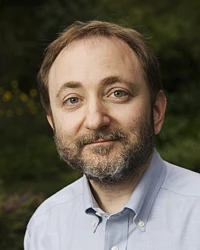
Alfred Goodman Gilman was born in New Haven in 1941. His father, Alfred Gilman, co-authored the influential pharmacology textbook associated with Goodman and Gilman; the son later helped edit it. His Nobel autobiography describes a childhood close to laboratory science and a university career that increasingly centred on biochemical mechanisms. At Virginia, genetically altered cell lines and collaboration with Elliott Ross supplied a way to dissect the connection between a surface receptor and production of the messenger cyclic AMP.
Restore a missing response
Gilman's group used S49 lymphoma-cell variants with defective signalling as experimental material. A 1980 paper by John Northup, Paul Sternweis, Michael Smigel, Lutz Schleifer, Ross and Gilman reported purification of a regulatory component then called G/F. Adding the purified material restored several forms of stimulated adenylyl-cyclase activity in deficient preparations. Reconstitution tied an isolated biochemical fraction to a function. It made a stronger identification than merely observing a protein near an enzyme in a membrane.
A molecular answer to a functional question
Gilman moved to Dallas in 1981 to chair pharmacology at the University of Texas Southwestern Medical Center. He shared the 1994 medicine prize with Rodbell and died in 2015. His autobiography gives Ross and Sternweis prominent credit and connects department building with continuing research. The contribution is best described as identifying and characterising components that couple recognition to response. The history also warns against reading the name of a deficient cell line as a complete mechanism: the defect had to be investigated through rescue experiments and biochemical analysis.
Quick answers
Frequently asked questions about Alfred G. Gilman
- What is Alfred G. Gilman known for?
- Purification and reconstitution of G-protein components in receptor signalling.
Keep exploring
Lives connected to this story
- Martin Rodbell
Compare the related experimental question and research career.
- Edwin G. Krebs
Compare the related experimental question and research career.
- Robert Lefkowitz
Read Lefkowitz’s receptor-binding research alongside the history of G-protein signal transmission.
Sources and further reading
Explore the evidence
These references support the biography and offer further reading. Official records, first-person accounts and independent reporting provide different perspectives; image records document attribution and licensing.
- 1. Nobel Prize OutreachAlfred G. Gilman — Facts
Source scope: Birth/death and award metadata; short official work summary.
- 2. Nobel FoundationAlfred G. Gilman — Biographical
Source scope: Selected historical passages, as recorded in the research evidence ledger; not a full-document reading claim.
- 3. Northup and colleagues / PNASPurification of the regulatory component of adenylate cyclase
Source scope: Complete indexed abstract; G/F purification and reconstitution in deficient and uncoupled S49 variants. Poorly spaced Nobel lecture extraction is not relied on for technical claims.