In this biography
Quick facts
- Born
- 28 July 1915
- Died
- 27 January 2015
- Birthplace
- Greenville, South Carolina, United States
- Country
- United States
- Nationality
- Not independently established
- Known for
- Leading the ammonia-maser collaboration and developing the theoretical optical-maser proposal with Arthur Schawlow
Why this life matters
His career links the selection of molecular states with practical coherent radiation, while showing the separate work of proposing, building and applying an instrument.
Timeline
Key moments
Born in Greenville
Townes was born on 28 July.
Ammonia maser operated
The Columbia team achieved microwave oscillation.
Physics Nobel
Shared the prize with Nikolay Basov and Aleksandr Prokhorov.
Training before the microwave laboratory
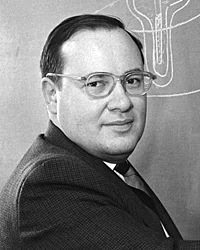
Charles Hard Townes was born in Greenville, South Carolina, in 1915. He studied physics and modern languages at Furman University, continued at Duke and earned a Caltech doctorate in 1939. His early scientific training included isotope separation and nuclear spins. He then joined Bell Laboratories, where wartime radar work gave him practical experience with microwaves. The university memorial dates that move to 1939; an inconsistent earlier date in the Nobel autobiography is not used here. The transition connects his later spectroscopy with the instruments and techniques of wartime research.
A Columbia instrument built through teamwork
After joining Columbia University in 1948, Townes pursued interactions between molecules and microwave radiation. The ammonia-maser project involved graduate student James Gordon and postdoctoral researcher Herbert Zeiger. By 1954 the team had an operating device, and their publications named all three researchers. Townes’s later lecture credits Gordon’s crucial role in making the system work. The maser used selected excited molecules to supply coherent microwave radiation. It was a laboratory achievement involving design, construction and sustained experimental work, rather than a finished invention produced at the moment an idea first occurred.
An optical proposal was a further step
Townes subsequently worked with Arthur Schawlow on extending maser principles to infrared and optical wavelengths. Their paper appeared in December 1958 and analysed a resonator and a possible amplifying medium. A theoretical design was not yet an operating laser. The eventual development of laser technology also involved researchers outside this partnership. Townes shared the 1964 physics Nobel Prize with Nikolay Basov and Aleksandr Prokhorov for work in quantum electronics; the award should not erase the distinct contributions of the Columbia maser team or the later builders of lasers.
A career extending beyond the original device
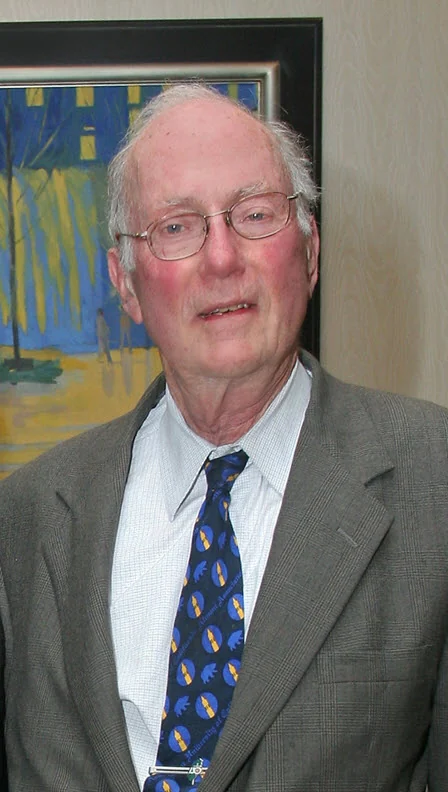
Townes’s institutional career included Columbia, MIT and, from 1967, the University of California, Berkeley. His research also encompassed radio and infrared astronomy. He died on 27 January 2015. The most useful way to read his legacy is as a sequence of related problems: producing coherent radiation, establishing reliable operation and using those capabilities to investigate nature. An instrument can be both a new object and a means of asking better questions. His biography keeps the named collaborators and the different stages of that process visible.
Quick answers
Frequently asked questions about Charles Townes
- Who worked with Charles Townes on the first ammonia maser?
- James Gordon and Herbert Zeiger worked with Townes at Columbia; the original maser reports name the three researchers.
- Was Townes and Schawlow’s 1958 paper an operating laser?
- No. It was a theoretical optical-maser proposal that analysed how such a device could operate.
Keep exploring
Lives connected to this story
- Arthur Kornberg
Compare another research leader’s use of a controlled experimental system; the connection is methodological, not a shared laboratory.
Sources and further reading
Explore the evidence
These references support the biography and offer further reading. Official records, first-person accounts and independent reporting provide different perspectives; image records document attribution and licensing.
- 1. University of California Academic SenateCharles Hard Townes: In Memoriam
The university memorial places Townes at Bell Laboratories from 1939, following his doctorate. The Nobel autobiography’s 1933 start is inconsistent with that chronology; 1939 is used.
- 2. Gordon, Zeiger and Townes / American Physical SocietyMolecular Microwave Oscillator and New Hyperfine Structure in the Microwave Spectrum of NH3
- 3. Gordon, Zeiger and Townes / American Physical SocietyThe Maser—New Type of Microwave Amplifier, Frequency Standard, and Spectrometer
- 4. Charles H. Townes / Nobel LectureProduction of Coherent Radiation by Atoms and Molecules
- 5. Schawlow and Townes / American Physical SocietyInfrared and Optical Masers
- 6. Nobel Prize OutreachCharles Townes — Facts
- 7. Nobel Prize OutreachCharles Townes — Biographical