
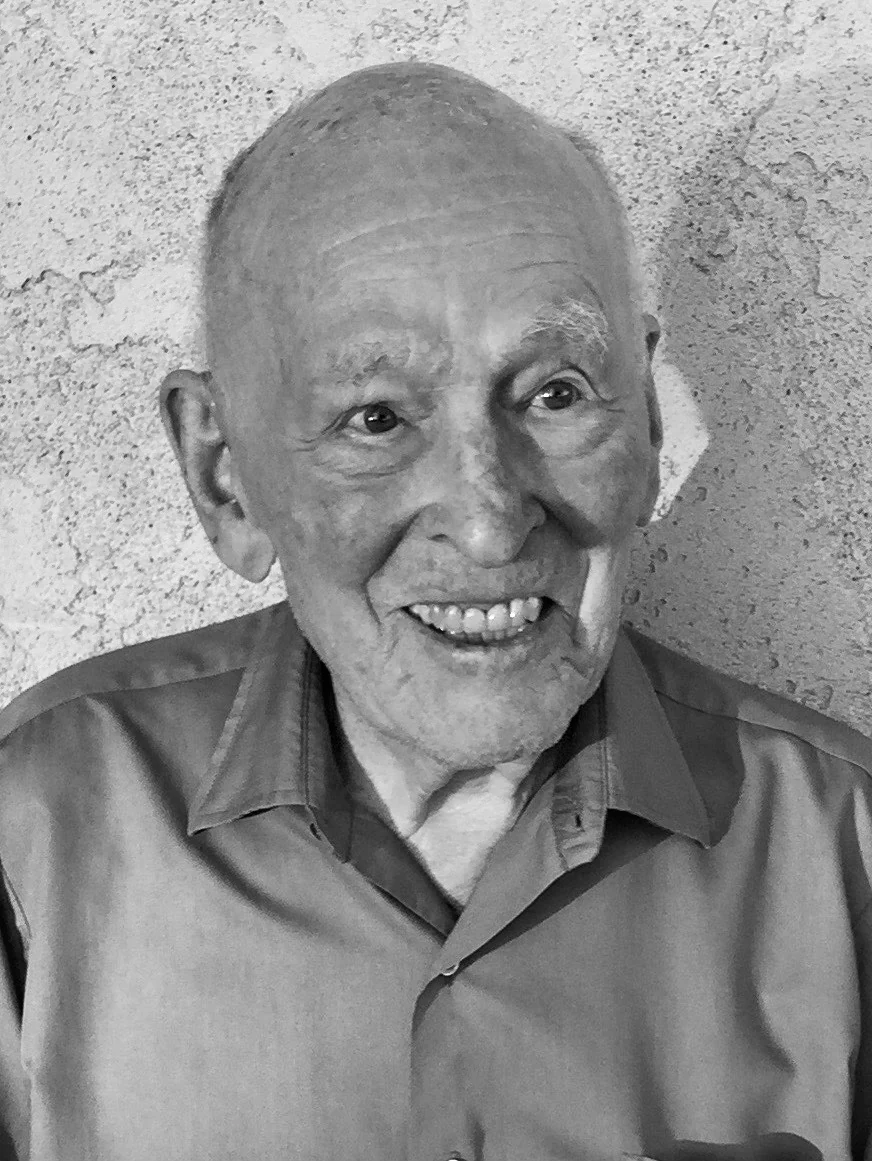
In this biography
Quick facts
- Born
- 31 July 1918
- Died
- 2 June 2018
- Birthplace
- Provo, UT, USA
- Country
- United States
- Nationality
- Not independently established
- Known for
- Developing the binding-change explanation of ATP synthesis
Why this life matters
Developing the binding-change explanation of ATP synthesis
Timeline
Key moments
Birth
Paul D. Boyer was born in Provo, UT, USA.
Energy-coupling proposal
Proposed energy-dependent release of site-bound ATP with Cross and Momsen.
Nobel recognition
Received Nobel recognition for the work described in the official award record.
From Utah to a biochemical research career
Paul Delos Boyer was born in Provo, Utah, in 1918. His mother’s death from Addison’s disease influenced his interest in biochemistry, as his later autobiography explains. He went to Wisconsin for graduate study in 1939 and completed his doctorate in 1943. Working with Paul Phillips and alongside Henry Lardy exposed him to a strong programme in nutrition, metabolism and enzymes. His research career consequently developed through practical biochemical problems before the ATP-synthase mechanism became its defining question.
Protein research preceded a long ATP investigation
During the Second World War, Boyer worked at Stanford on stabilising blood-plasma proteins. He later joined the University of Minnesota and moved to UCLA in 1963, bringing students and postdoctoral colleagues. An earlier enzyme-bound phosphohistidine result turned out to concern a different metabolic reaction rather than the sought mechanism of oxidative phosphorylation. His account preserves that correction. It is a useful part of the career: an experimentally real intermediate can be important without being the solution to the question that originally motivated the search.
Sources for this section: [4]
Chemical exchange challenged a simple energy story
Boyer, Richard Cross and Wayne Momsen’s 1973 paper used exchange observations to propose that energy could promote release of ATP already tightly bound at a catalytic site. The claim was presented as a working hypothesis. Daniel Smith and Boyer’s 1976 chloroplast study supplied additional evidence about transient ATP binding and committed substrates, while refining the earlier exchange interpretation. The later binding-change account therefore should not be backdated in every detail to the first proposal. Experiments progressively constrained the roles of binding, formation and release.
A mechanism connected chemistry with conformational change
Boyer shared part of the 1997 Nobel Prize in Chemistry with John Walker for work on the enzymatic mechanism of ATP synthesis; Jens Skou received the other half for a different ion-transport discovery. Boyer died in Los Angeles in 2018. His contribution is best understood as a sustained enquiry into how energy changes the behaviour of catalytic sites. It did not depend on treating ATP as a substance that could only be formed once energy was paid directly at one chemical bond. Distinguishing a bound product from a released product opened a more precise mechanistic question.
Quick answers
Frequently asked questions about Paul D. Boyer
- Who coauthored Boyer’s 1973 paper?
- Richard Cross and Wayne Momsen.
- Who shared Boyer’s ATP-synthesis Nobel recognition?
- John Walker shared that half of the 1997 chemistry prize.
Keep exploring
Lives connected to this story
- Arthur Kornberg
Compare enzyme-mechanism questions with distinct work on biological synthesis and nucleotide chemistry.
Sources and further reading
Explore the evidence
These references support the biography and offer further reading. Official records, first-person accounts and independent reporting provide different perspectives; image records document attribution and licensing.
- 1. Boyer, Cross and Momsen, PNAS, 1973A new concept for energy coupling in oxidative phosphorylation based on a molecular explanation of the oxygen exchange reactions
- 2. Daniel J. Smith and Paul D. Boyer, PNAS, 1976Demonstration of a transitory tight binding of ATP and of committed Pi and ADP during ATP synthesis by chloroplasts
- 3. Nobel Prize OutreachPaul D. Boyer — Facts
- 4. Nobel Prize OutreachPaul D. Boyer — Biographical