In this biography
Quick facts
- Born
- 29 September 1920
- Died
- 10 April 1992
- Birthplace
- Mitcham, United Kingdom
- Country
- United Kingdom
- Nationality
- Not independently established
- Known for
- Formulating chemiosmotic coupling between membrane reactions
Why this life matters
Formulating chemiosmotic coupling between membrane reactions
Timeline
Key moments
Birth
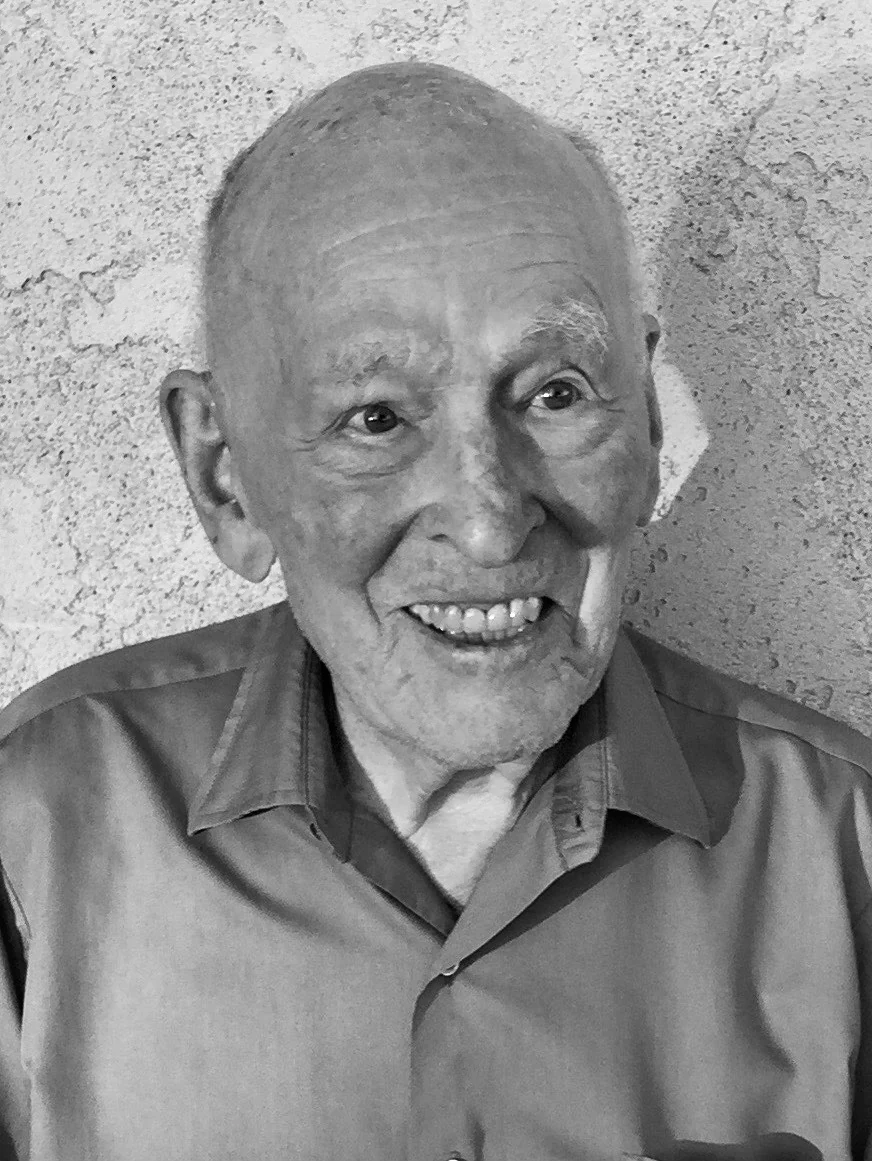
Peter Mitchell was born in Mitcham, United Kingdom.
Chemiosmotic proposal
Published the membrane-coupling hypothesis in Nature.
Nobel recognition
Received Nobel recognition for the work described in the official award record.
A broad education led toward membrane questions
Peter Mitchell was born in Mitcham, Surrey, in 1920. He entered Cambridge in 1939 and studied a broad combination of natural sciences before specialising in biochemistry. A research appointment with James Danielli in 1942 introduced him to membrane-related questions. His doctorate, completed in 1951, concerned penicillin action rather than a finished theory of mitochondrial ATP synthesis. That early route matters because transport, boundaries and chemical organisation became central tools for a later problem often approached primarily through individual reaction intermediates.
An Edinburgh programme produced a different coupling proposal
Mitchell moved to Edinburgh in 1955 to establish a Chemical Biology Unit. His 1961 Nature paper proposed a chemiosmotic mechanism linking phosphorylation with electron and hydrogen transfer. The proposal treated membrane organisation as essential to energy coupling. In a later first-person account he described a proton-circulation framework connecting energy-transducing systems through a common closed membrane. It was a hypothesis designed to guide tests, not a claim that naming an ion gradient had already established every molecular component or coupling ratio.
Glynn research joined theory with sustained investigation
Illness led Mitchell to leave Edinburgh in 1963. He helped convert Glynn House in Cornwall into a laboratory and, with Jennifer Moyle, established the charitable research organisation that supported its work. Research resumed there in 1965 with a small team. The institutional setting was unusual, but the scientific issue remained experimentally specific: whether membrane-linked systems could couple through proton movement and an electrochemical difference. His Nobel lecture distinguished a physiological account of what the system does from a more detailed account of how individual molecular mechanisms work.
Chemical and electrical contributions belonged in one account
Mitchell received the 1978 Nobel Prize in Chemistry for the chemiosmotic theory and died in Cornwall in 1992. The protonic potential in his lecture includes both an electrical contribution and a chemical-activity contribution. This prevented the theory from being reduced to a statement about acidity alone. His career connected transport, membrane integrity and metabolism within a common explanatory framework. The historical achievement can be recognised while keeping its levels separate: an experimentally useful coupling principle does not by itself determine every molecular structure or the exact behaviour of every biological membrane.
Quick answers
Frequently asked questions about Peter Mitchell
- Who worked with Mitchell at Glynn?
- Jennifer Moyle was a central research collaborator and cofounder of the organisation.
- What did the 1961 paper propose?
- A chemiosmotic mechanism coupling phosphorylation with electron and hydrogen transfer.
Keep exploring
Lives connected to this story
- Arthur Kornberg
Compare different questions about biochemical energy and synthesis without treating their experimental systems as interchangeable.
Sources and further reading
Explore the evidence
These references support the biography and offer further reading. Official records, first-person accounts and independent reporting provide different perspectives; image records document attribution and licensing.
- 1. Peter Mitchell, Nature, 1961Coupling of phosphorylation to electron and hydrogen transfer by a chemi-osmotic type of mechanism
- 2. Peter Mitchell, first-person retrospective, 1986Citation Classic: Coupling of phosphorylation to electron and hydrogen transfer
- 3. Nobel Prize OutreachPeter Mitchell — Nobel lecture
- 4. Nobel Prize OutreachPeter Mitchell — Facts
- 5. Nobel Prize OutreachPeter Mitchell — Biographical