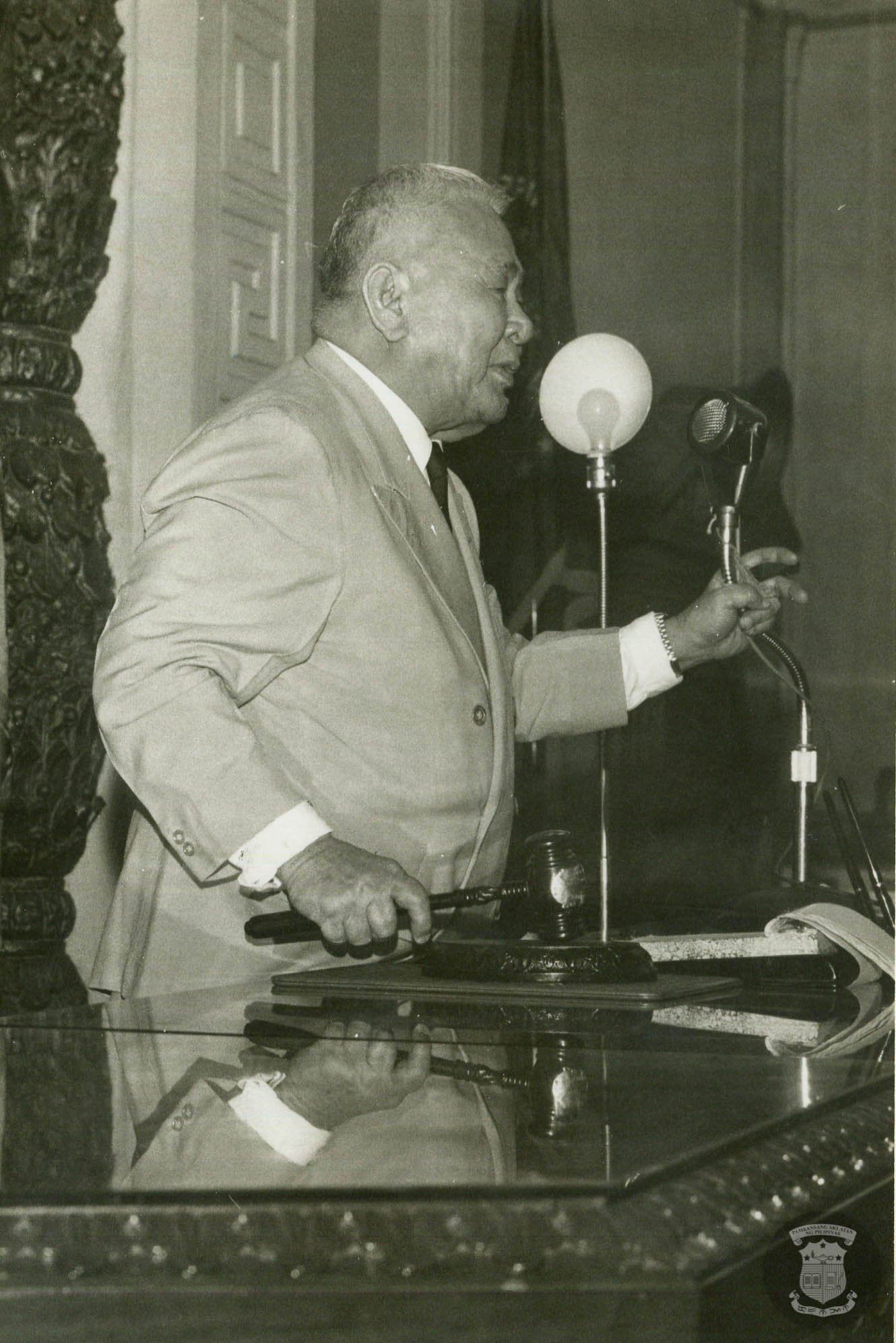

In this biography
Quick facts
- Born
- 19 September 1910
- Died
- 2 August 2004
- Birthplace
- Manila, Philippines
- Country
- Philippines
- Nationality
- Filipino
- Known for
- Leading the Senate in 1966–1967 and becoming a central legal voice in pre-martial-law politics
- House service
- 1949–1957
- Senate service
- 1957–1972 and 1992–1995
- Senate president
- 1966–1967
- Cabinet office
- Foreign minister, 1984–1985
Why this life matters
Tolentino shaped legislation through legal expertise, yet his place on Ferdinand Marcos’s 1986 ticket makes his career a revealing study of institutional continuity and authoritarian power.
Timeline
Key moments
Born in Manila
Born on 19 September and raised in modest circumstances.
Topped the bar examination
Graduated valedictorian and cum laude from the University of the Philippines College of Law.
Served in the House
Represented Manila before winning election to the national Senate.
Became Senate president
Led the chamber during Ferdinand Marcos’s first presidential term.
Ran for vice president
Joined Marcos’s ticket in the disputed snap election that preceded the People Power Revolution.
Returned to the Senate
Won one final term after constitutional democracy had been restored.
A legislative career built on law
Arturo Modesto Tolentino excelled at the University of the Philippines, topped the 1934 bar examination and taught law at several Manila universities. He entered the House in 1949 and moved to the Senate in 1957.
Colleagues associated Tolentino with rapid, technically precise amendments and a command of constitutional and civil law. He became Senate president in 1966, after Ferdinand Marcos left the chamber for the presidency, and served until Gil Puyat succeeded him in 1967.
The legislature closes under martial law
Tolentino remained a senator until the Seventh Congress was cut short after the 1972 martial-law declaration. The closure changed the setting in which legislative lawyers had exercised national influence: presidential decrees and later parliamentary institutions replaced the old bicameral Congress.
He subsequently served in Marcos-era diplomatic and cabinet roles, including as foreign minister in 1984–1985. His continued service illustrates how established political and legal elites could be incorporated into an authoritarian state.
The disputed 1986 ticket and a final term
Tolentino was Marcos’s vice-presidential running mate in the February 1986 snap election. The official Batasang Pambansa proclamation declared their ticket the winner, while the opposition, independent observers and a mass protest movement rejected the count. Corazon Aquino and Salvador Laurel took office after People Power; Tolentino is not included in the official roster of Philippine vice presidents.
He returned through an undisputed national election in 1992 and served in the Senate until 1995. That final term placed a politician formed under the 1935 Constitution inside the democratic institutions of the 1987 charter.
Quick answers
Frequently asked questions about Arturo M. Tolentino
- Who was Arturo M. Tolentino?
- Arturo M. Tolentino was a law professor, senator and Senate president. Tolentino shaped legislation through legal expertise, yet his place on Ferdinand Marcos’s 1986 ticket makes his career a revealing study of institutional continuity and authoritarian power.
- What is Arturo M. Tolentino best known for?
- Arturo M. Tolentino is best known for leading the Senate in 1966–1967 and becoming a central legal voice in pre-martial-law politics.
- When and where was Arturo M. Tolentino born?
- Arturo M. Tolentino was born on 19 September 1910 in Manila, Philippines.
- When did Arturo M. Tolentino die?
- Arturo M. Tolentino died on 2 August 2004.
Sources and further reading
How this biography was checked
Core dates and offices are checked against the sources below. This profile was last reviewed on 9 September 2026.