
The short answer
The 7 February 1986 special election was meant to renew Ferdinand Marcos’s mandate. Instead, competing counts, documented irregularities and a collapse of public trust turned the vote into the immediate political crisis behind the People Power Revolution.
Chronology
A timeline of the turning points
Marcos announces an early election
President Ferdinand Marcos told an American television audience that he would seek a new mandate ahead of the regular schedule.
The Batasang Pambansa calls the election
Batas Pambansa Blg. 883 set a special presidential and vice-presidential election for 7 February 1986.
The opposition forms a unified ticket
Corazon Aquino ran for president with UNIDO leader Salvador Laurel as her vice-presidential candidate.
Filipinos vote
The election took place amid reports of intimidation, violence and irregularities, alongside a large citizen-monitoring effort.
COMELEC computer workers walk out
Computer technicians left the tabulation centre after alleging manipulation of the electronic count.
The official canvass declares Marcos and Tolentino
The Batasang Pambansa proclaimed the incumbent ticket; Aquino and Laurel rejected the result and called for civil resistance.
The crisis becomes People Power
A military breakaway and mass civilian mobilisation on EDSA ended Marcos rule and brought Aquino and Laurel to office.
Why did Ferdinand Marcos call a snap election?
By late 1985, the Marcos government faced a deep legitimacy crisis after the assassination of Benigno Aquino Jr., economic contraction and sustained opposition mobilisation. An early election offered a way to claim a renewed mandate before the regular presidential schedule.
The special election was not simply announced by television. Batas Pambansa Blg. 883 supplied the legal mechanism and fixed the vote for 7 February 1986. Its speed compressed the campaign and forced a divided opposition to settle its leadership question quickly.
The Marcos–Tolentino and Aquino–Laurel campaigns
Marcos ran with Arturo Tolentino and relied on the resources, local networks and media advantages of an entrenched government. Corazon Aquino, the widow of the assassinated opposition leader, became the presidential challenger after a signature campaign encouraged her candidacy.
Salvador Laurel set aside his own presidential bid and ran for vice president, allowing major opposition groups to present one national ticket. The campaign became a referendum not only on candidates, but on the credibility of institutions built during authoritarian rule.
Two counts and a collapse of trust
The official Batasang canvass declared Marcos and Tolentino the winners. NAMFREL, an accredited citizen election monitor, ran a separate partial count that placed Aquino ahead. Neither count can be discussed without explaining its scope: the official tally covered the proclaimed result, while NAMFREL did not complete every precinct.
Reports of violence and irregularities, the walkout by COMELEC computer workers and the contrast between the two tabulations destroyed public confidence in a purely institutional resolution. The election dispute therefore became the immediate political setting for boycott calls, military defection and civilian mobilisation.
What did the election legally produce?
The election did not end with a conventional transfer certified by the incumbent-controlled legislature. Marcos and Aquino each held an inauguration on 25 February, but Marcos left Malacañang that evening and Aquino exercised the powers of government.
Later Supreme Court decisions treated Aquino and Laurel as the incumbent president and vice president recognised by the 1987 Constitution. That legal settlement does not erase the disputed canvass; it explains how revolutionary political change became the accepted constitutional order.
Continue the chronology
Related history guides
The Ninoy Aquino Assassination
The killing and legitimacy crisis that reshaped the opposition.
Read the timeline22–25 Feb 1986The People Power Revolution
How an election dispute became a military and civilian turning point.
Read the timeline1986–1987The 1987 Philippine Constitution
How the transition rebuilt constitutional government.
Read the timelineConnected biographies
The candidates and actors who carried the dispute into a transfer of power
 Philippines · Politics
1933—2009
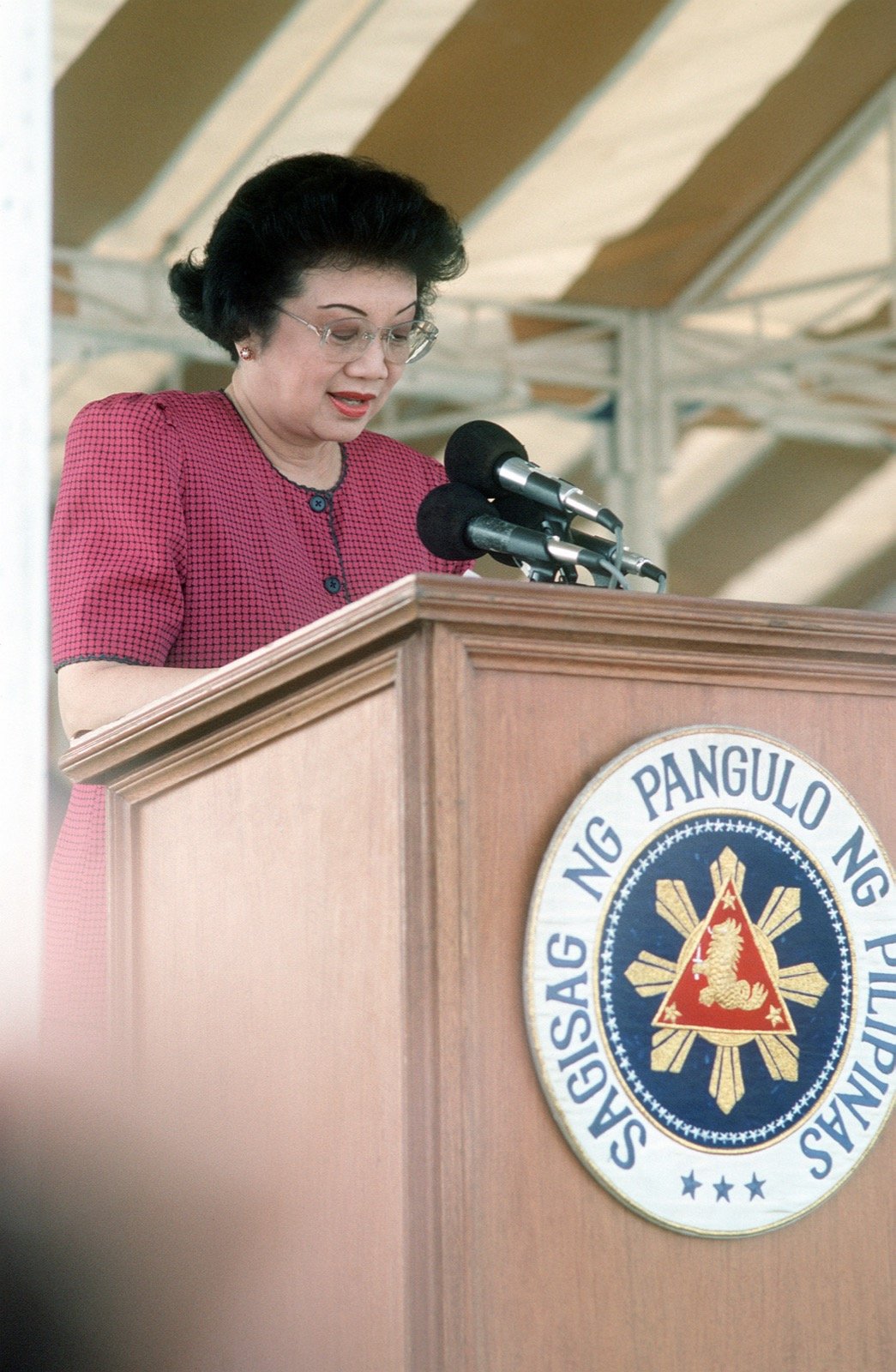
Corazon Aquino
President of the Philippines, 1986–1992The opposition leader who became president after People Power and restored constitutional government following the Marcos dictatorship.Read biography Philippines · Politics
1917—1989
Ferdinand Marcos
President of the Philippines, 1965–1986A president who imposed martial law, dismantled democratic checks and ruled for two decades before the 1986 People Power Revolution forced him from office.Read biography Philippines · Politics
1928—2004
Salvador H. Laurel
Opposition leader and vice president of the PhilippinesA lawyer, senator and opposition coalition leader who became vice president after the disputed 1986 election and People Power Revolution.Read biography Philippines · Politics
1910—2004
Arturo M. Tolentino
Law professor, senator and Senate presidentA bar topnotcher, prolific law teacher and legislator whose long career extended from the Third Republic to the disputed 1986 election and a final Senate term.Read biography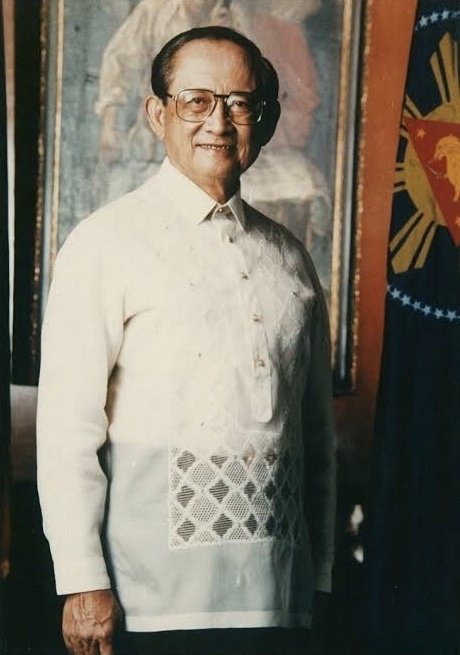 Philippines · Politics
1928—2022
Fidel V. Ramos
President of the Philippines, 1992–1998The general who withdrew support from Ferdinand Marcos during People Power and later served as defence secretary and the Philippines’ twelfth president.Read biography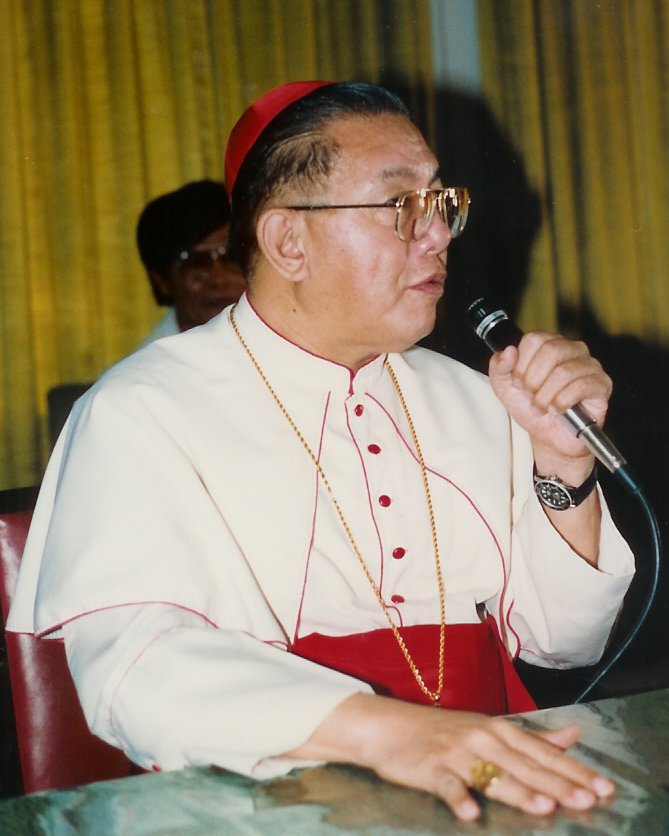 Philippines · Politics
1928—2005
Jaime Cardinal Sin
Cardinal and Archbishop of ManilaThe Archbishop of Manila whose religious authority, democratic advocacy and Radio Veritas appeal helped bring civilians onto EDSA in February 1986.Read biographyQuick answers
Common questions
- When was the 1986 Philippine snap election?
- Voting took place on 7 February 1986 after Batas Pambansa Blg. 883 called a special presidential and vice-presidential election.
- Who ran in the 1986 snap election?
- The principal tickets were Ferdinand Marcos and Arturo Tolentino, and Corazon Aquino and Salvador Laurel.
- Who was officially declared the winner?
- The Batasang Pambansa proclaimed Marcos and Tolentino. Aquino and Laurel rejected the canvass, and the resulting crisis culminated in the transfer of power after People Power.
- How did the election connect to People Power?
- The disputed result intensified civil resistance. A military breakaway on 22 February and the civilian mobilisation that followed ended Marcos rule three days later.
Primary and institutional sources
How this history was checked
Dates, legal milestones and historical claims are checked against the official and institutional records below. This article was reviewed on 9 September 2026.
- The LawPhil ProjectBatas Pambansa Blg. 883 — calling the 1986 special election
- Supreme Court of the Philippines via LawPhilIn re Bermudez — recognition of the Aquino–Laurel incumbency
- National Historical Commission of the PhilippinesEDSA People Power historical marker
- National Citizens’ Movement for Free ElectionsTwenty-fifth anniversary record of the 1986 snap election and Operation Quick Count
- Wikimedia CommonsCorazon Aquino portrait and licence record