
The short answer
Diosdado Macapagal promised a more open economy, social reform and cleaner government. His four-year presidency changed the national independence observance and created a major land-reform framework, yet uneven implementation, regional disputes and a formidable challenger exposed the distance between legislation and transformation.
Chronology
A timeline of the turning points
Macapagal defeats Carlos P. Garcia
The Liberal vice president won the presidency on a programme of reform, anti-corruption and economic change.
Currency and exchange controls are lifted
The Central Bank moved from a tightly controlled exchange system toward decontrol and a market rate for the peso.
Independence Day is observed on June 12
Proclamation No. 28 centred the national celebration on the 1898 declaration at Kawit rather than U.S. recognition in 1946.
Manila talks create Maphilindo
Malaya, Indonesia and the Philippines agreed to consultation while the formation of Malaysia and the Sabah claim strained the arrangement.
The Agricultural Land Reform Code becomes law
Republic Act No. 3844 declared share tenancy contrary to public policy and created leasehold, land-acquisition, credit and adjudication institutions.
Macapagal loses reelection
Ferdinand Marcos won the three-way presidential contest and took office at the end of December.
How did Diosdado Macapagal win in 1961?
Diosdado Macapagal entered the election as vice president under Carlos P. Garcia but belonged to the opposition Liberal Party. He campaigned against corruption and presented his rise from rural poverty as evidence that government could serve citizens outside established wealth and patronage.
His victory ended Garcia’s attempt to win a full second term. Macapagal took office on 30 December 1961 with Emmanuel Pelaez as vice president and foreign secretary, promising both economic modernisation and a more mature democracy.
Decontrol changed the economy quickly—and unevenly
Within weeks, the Central Bank removed exchange controls and allowed the peso to find a market rate. The administration called this a return to free enterprise after years in which licences and currency allocation had shaped imports and created opportunities for political favour.
Devaluation made exports more competitive and reduced one form of administrative discretion, but it also raised the peso price of imported goods. Consumers experienced adjustment through prices, while businesses faced a new combination of opportunity and uncertainty. Decontrol was therefore a major reform, not an instant cure for poverty.
Why did Philippine Independence Day move to June 12?
The republic had celebrated independence on July 4, the date the United States recognised Philippine sovereignty in 1946. Macapagal’s Proclamation No. 28 made 12 June 1962 a special holiday commemorating Emilio Aguinaldo’s 1898 declaration at Kawit.
Republic Act No. 4166 made June 12 the permanent Independence Day in 1964 and designated July 4 as Philippine Republic Day. The change did not erase the constitutional importance of 1946; it shifted the national story’s centre from a former colonial power’s recognition to a Filipino revolutionary claim.
What did the 1963 Agricultural Land Reform Code do?
Republic Act No. 3844 declared agricultural share tenancy contrary to public policy and created a leasehold system intended to improve security and income for cultivators. It also established machinery for land acquisition, agricultural credit, technical support, adjudication and the Land Bank of the Philippines.
The law’s reach was conditional and gradual. Existing share-tenancy contracts could continue until government agencies operated in a declared reform area, while acquisition rules, exemptions, funding and landlord influence limited redistribution. It gave later reform a significant institutional foundation without ending land concentration during Macapagal’s term.
Regional diplomacy collided with the formation of Malaysia
Macapagal pursued closer consultation among Malaya, Indonesia and the Philippines. The 1963 Manila Accord and summit declaration proposed Maphilindo, a loose consultative association built around shared regional and anti-colonial language.
The project was overtaken by disagreement over Malaysia’s formation and the Philippine claim to Sabah. Indonesia began Konfrontasi, the Philippines withheld recognition for a period and Maphilindo did not become a durable organisation. The episode nevertheless anticipated the search for regional mechanisms that later produced ASEAN.
The 1965 election ended the reform presidency
Macapagal sought reelection against Senate president Ferdinand Marcos, who had left the Liberal Party for the Nacionalistas, and reformist third-party candidate Raul Manglapus. The campaign turned on prices, corruption, smuggling, peace and order, and which leader could make government deliver.
Marcos won and Macapagal transferred power at the end of December 1965. Later dictatorship can make this contest look like a simple prelude, but it was still a competitive election in which voters evaluated an incumbent’s incomplete reforms and a challenger’s promise of performance. Its result opened a new presidency; it did not predetermine martial law.
Continue the chronology
Related history guides
The Ramon Magsaysay Presidency
Begin with the reform style and political generation that shaped Macapagal’s rise.
Read the timeline1898 and 1946Philippine Independence in 1946
Understand the two independence dates behind the change to June 12.
Read the timeline9 Nov 1965The 1965 Philippine Presidential Election
Compare the incumbent, Ferdinand Marcos and Raul Manglapus in the election that ended the term.
Read the timelineTwenty-one sourced livesThe Philippines Before Martial Law
Connect the administration to senators, diplomats, opponents and activists across 1957–1972.
Read the timelineConnected biographies
Five lives across reform, succession and the 1965 contest
 Philippines · Politics
1910—1997
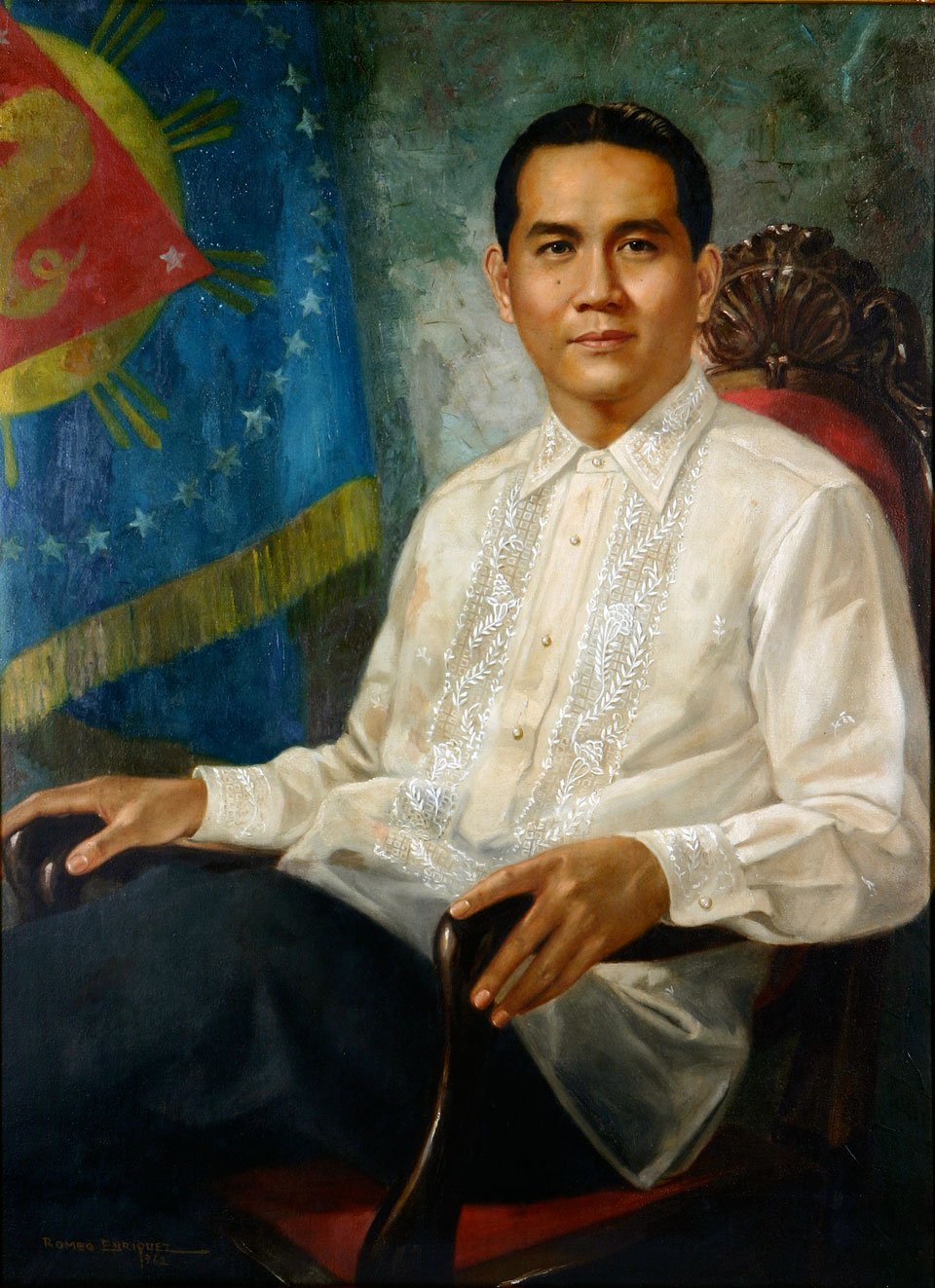
Diosdado Macapagal
President of the Philippines, 1961–1965The president who pursued agricultural land reform, dismantled exchange controls and restored 12 June as the national observance of Philippine independence.Read biography Philippines · Politics
1915—2003
Emmanuel Pelaez
Vice president, senator and diplomatA lawyer and legislator from Misamis Oriental who became vice president, led foreign affairs and later served as ambassador to the United States.Read biography Philippines · Politics
1896—1971
Carlos P. Garcia
President of the Philippines, 1957–1961A Boholano lawyer, poet and president who promoted Filipino ownership, fiscal restraint and a more assertive economic nationalism.Read biography Philippines · Politics
1917—1989
Ferdinand Marcos
President of the Philippines, 1965–1986A president who imposed martial law, dismantled democratic checks and ruled for two decades before the 1986 People Power Revolution forced him from office.Read biography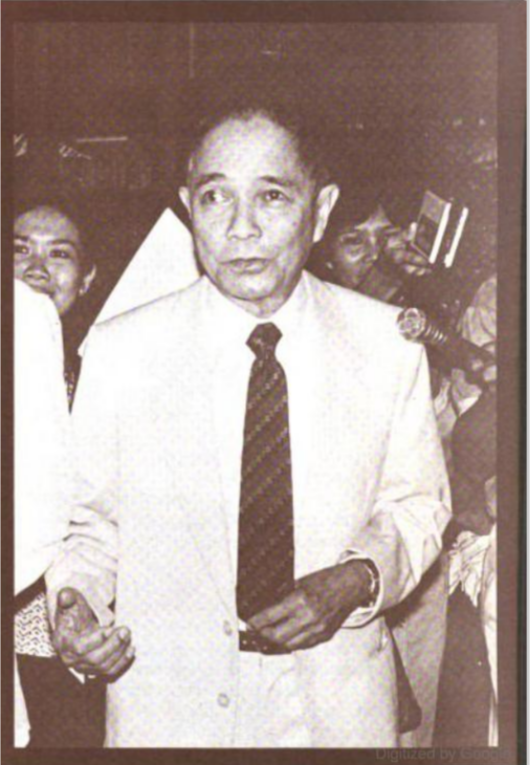 Philippines · Politics
1918—1999
Raul S. Manglapus
Senator, foreign secretary and democratic opposition leaderA wartime prisoner, lawyer, senator and presidential candidate who opposed Ferdinand Marcos from exile and returned to serve in the post-1986 government.Read biographyQuick answers
Common questions
- When was Diosdado Macapagal president?
- He served as president of the Philippines from 30 December 1961 to 30 December 1965.
- What were Diosdado Macapagal’s main achievements?
- His administration is associated with currency decontrol, the 1963 Agricultural Land Reform Code, moving Independence Day to June 12 and an active regional diplomacy that included Maphilindo.
- Did Macapagal abolish share tenancy?
- Republic Act No. 3844 declared agricultural share tenancy contrary to public policy and set out its replacement by leasehold. The transition depended on phased implementation and did not immediately eliminate tenancy or unequal landholding nationwide.
- Why is Philippine Independence Day on June 12?
- June 12 commemorates Emilio Aguinaldo’s 1898 declaration of independence. Macapagal first made it the national observance in 1962, and Republic Act No. 4166 established it by law in 1964.
- Why did Macapagal lose the 1965 election?
- Ferdinand Marcos ran an effective challenge around leadership, prices, corruption and government performance. Macapagal’s reforms had also produced uneven results, while Raul Manglapus offered a smaller third-party alternative.
Primary and institutional sources
How this history was checked
Dates, legal milestones and historical claims are checked against the official and institutional records below. This article was reviewed on 9 September 2026.