
The short answer
The 1965 election brought Ferdinand Marcos to the presidency through a competitive vote and peaceful transfer. It also exposed fluid party loyalties, incomplete reform and the power of a campaign promising forceful executive leadership—conditions that matter when tracing how an elected president later dismantled democratic limits.
Chronology
A timeline of the turning points
Marcos changes parties
After the governing Liberals kept incumbent Diosdado Macapagal as their candidate, Senate president Ferdinand Marcos joined the Nacionalista Party.
Three national tickets compete
Marcos–Lopez, Macapagal–Roxas and Manglapus–Manahan offered voters rival combinations of experience, reform and political organisation.
Foreign observers expect a close race
A U.S. diplomatic assessment predicted a narrow result and overestimated the Progressive ticket’s likely share.
Election day
Voters chose a president, vice president, eight senators and local representatives under the 1935 Constitution.
Marcos wins a clear plurality
He received more than 3.8 million votes, ahead of Macapagal’s roughly 3.19 million and Manglapus’s 384,564.
A peaceful transfer of power
Marcos took office with Fernando Lopez as vice president, beginning the first of his two elected presidential terms.
Who ran for president in 1965?
The incumbent, Diosdado Macapagal, ran for the Liberal Party with Senator Gerardo Roxas. Senate president Ferdinand Marcos, previously a Liberal, moved to the Nacionalista Party and ran with former vice president Fernando Lopez.
Raul Manglapus and Manuel Manahan completed the main field for the Party for Philippine Progress. Their third-party ticket grew from the Magsaysay reform tradition and challenged the idea that voters had to choose between the two established organisations.
Why did Ferdinand Marcos change parties?
Marcos wanted the presidency, but Liberal leaders backed Macapagal’s constitutional right to seek a second term. The Nacionalistas needed a candidate capable of defeating an incumbent and accepted Marcos, who had been Senate president as a Liberal.
The switch demonstrates how Philippine parties often operated as coalitions around candidates and local networks rather than fixed ideological organisations. It gave Marcos the machinery of the principal opposition party while allowing him to present himself as a leader breaking with a disappointing administration.
What issues shaped the campaign?
Prices, peace and order, corruption, smuggling and government performance dominated the contest. Macapagal defended decontrol, land reform and his anti-corruption programme; Marcos promised decisive leadership and infrastructure; Manglapus argued that neither major party had completed the reforms demanded after the Magsaysay era.
Foreign policy also formed part of the background. The Philippines was closely aligned with the United States, the Vietnam War was escalating and relations with Malaysia and Indonesia had been strained by the Sabah claim and Konfrontasi. Domestic concerns nevertheless decided how most voters experienced the campaign.
What were the 1965 election results?
Marcos received more than 3.8 million presidential votes, Macapagal about 3.19 million and Manglapus 384,564. The margin was large enough to produce a clear transfer despite pre-election predictions of a much closer contest.
Fernando Lopez narrowly defeated Gerardo Roxas for vice president, while Manuel Manahan finished third. Separate voting meant that the presidency and vice presidency were counted independently, even though the winning candidates belonged to the same Nacionalista ticket.
Why did Marcos win?
Marcos combined national visibility, an organised opposition party and a campaign built around competence and action. Macapagal’s reforms had produced important laws and visible change, but rising prices and incomplete implementation weakened the claim that his programme had transformed ordinary life.
Manglapus offered a substantive alternative but lacked the provincial machinery of the major parties. The result showed both the reach of established networks and the persuasive force of a candidate who could appropriate reform language while promising a stronger executive.
How should the election be understood after martial law?
Marcos later declared martial law and built an authoritarian government, so the 1965 result is often read backward from 1972. That outcome belongs in the history, but it should not erase the election’s immediate meaning as a competitive transfer under the 1935 Constitution.
Voters in 1965 did not cast a referendum on a dictatorship that had not yet been established. The useful question is how democratic institutions, political parties, elite competition and public dissatisfaction enabled a successful candidate to accumulate power over the next seven years.
Continue the chronology
Related history guides
The Diosdado Macapagal Presidency
Review the reforms, limits and regional disputes behind the incumbent’s campaign.
Read the timeline11 Nov 1969The 1969 Philippine Presidential Election
Continue to Marcos’s reelection contest against Sergio Osmeña Jr. four years later.
Read the timelineJan–Mar 1970The First Quarter Storm
Continue to the mass protests during Marcos’s second elected term.
Read the timeline1972–1986The Marcos Martial Law Era
Trace how an elected presidency became an authoritarian system seven years later.
Read the timelineTwenty-one sourced livesThe Philippines Before Martial Law
Compare the candidates with senators, diplomats, journalists and democratic opponents.
Read the timelineConnected biographies
Six political lives behind the election and its aftermath

1917—1989
Ferdinand Marcos
President of the Philippines, 1965–1986A president who imposed martial law, dismantled democratic checks and ruled for two decades before the 1986 People Power Revolution forced him from office.Read biography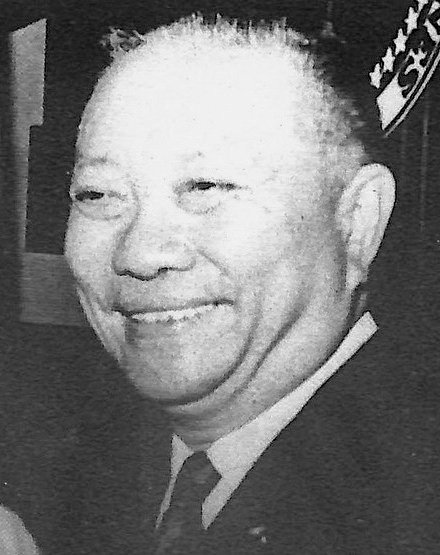
1904—1993
Fernando Lopez
Vice president, senator and business executiveAn Iloilo lawyer, senator and business leader who served two non-consecutive periods as vice president and repeatedly led national agricultural policy.Read biography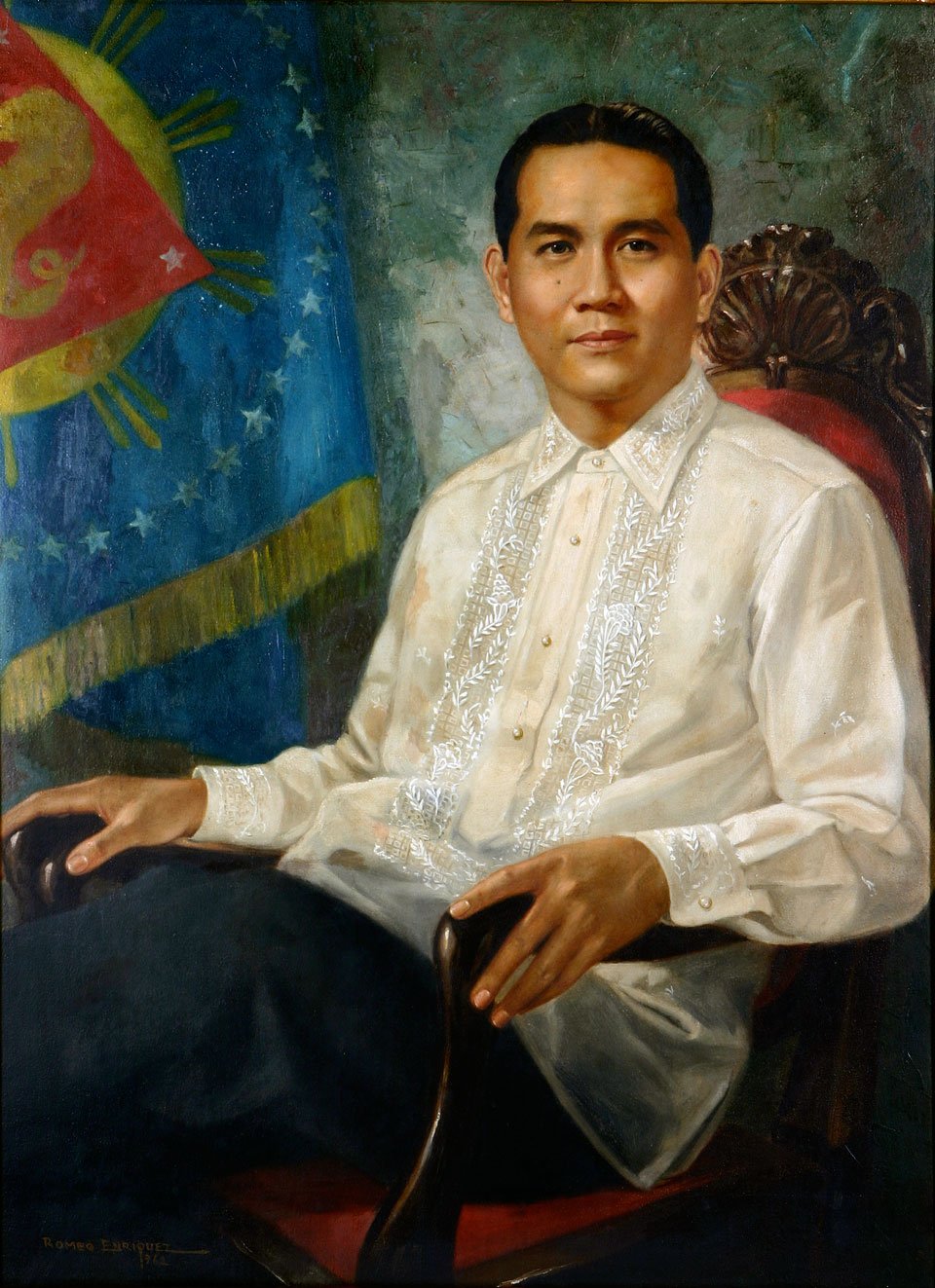
1910—1997
Diosdado Macapagal
President of the Philippines, 1961–1965The Lubao-born president who pursued economic decontrol and agricultural reform, and changed the national calendar to commemorate the 1898 declaration of independence.Read biography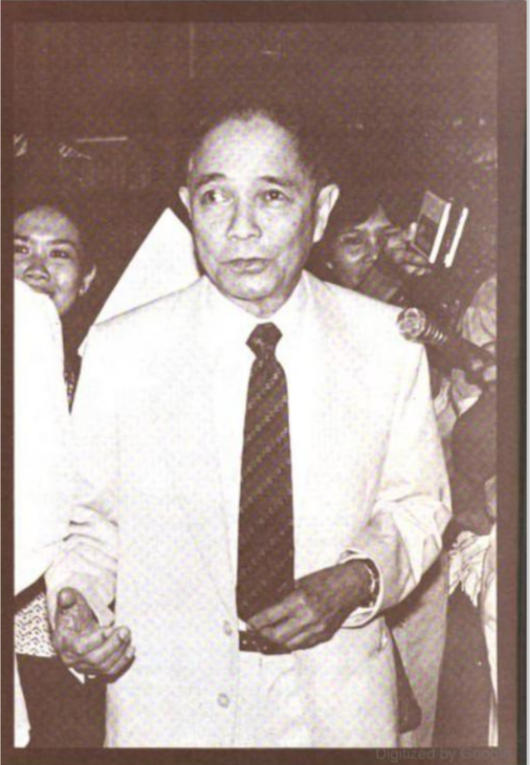
1918—1999
Raul S. Manglapus
Senator, foreign secretary and democratic opposition leaderA wartime prisoner, lawyer, senator and presidential candidate who opposed Ferdinand Marcos from exile and returned to serve in the post-1986 government.Read biography
1915—2003
Emmanuel Pelaez
Vice president, senator and diplomatA lawyer and legislator from Misamis Oriental who became vice president, led foreign affairs and later served as ambassador to the United States.Read biography
1910—2004
Arturo M. Tolentino
Law professor, senator and Senate presidentA bar topnotcher, prolific law teacher and legislator whose long career extended from the Third Republic to the disputed 1986 election and a final Senate term.Read biographyQuick answers
Common questions
- Who won the 1965 Philippine presidential election?
- Ferdinand Marcos of the Nacionalista Party defeated incumbent Liberal president Diosdado Macapagal and Progressive candidate Raul Manglapus.
- When was the 1965 Philippine election held?
- The general election was held on 9 November 1965.
- Who were the vice-presidential candidates?
- Fernando Lopez ran with Marcos, Gerardo Roxas with Macapagal and Manuel Manahan with Manglapus. Lopez won the separately counted vice-presidential vote.
- How many votes did Ferdinand Marcos receive in 1965?
- The accepted national total is more than 3.8 million votes. Macapagal received about 3.19 million and Manglapus 384,564.
- Was the 1965 election the start of martial law?
- It began Marcos’s presidency, but martial law was imposed almost seven years later in September 1972. The intervening period included a second election, mass protest, political violence and growing concentration of executive power.
Primary and institutional sources
How this history was checked
Dates, legal milestones and historical claims are checked against the official and institutional records below. This article was reviewed on 9 September 2026.
- U.S. Department of State, Office of the HistorianPhilippine national elections, 9 November 1965
- U.S. Department of State, Office of the HistorianPost-election assessment from Manila, 26 November 1965
- Senate of the PhilippinesSenator Raul S. Manglapus profile
- Senate of the PhilippinesFifth Congress roster, 1962–1965