
The short answer
Ferdinand Marcos placed the Philippines under martial law in September 1972. Although the formal proclamation was lifted in 1981, authoritarian rule continued until 1986, leaving a documented record of repression, contested development, corruption and democratic resistance.
Chronology
A timeline of the turning points
Proclamation No. 1081 is dated and signed
President Ferdinand Marcos placed the Philippines under martial law, citing armed rebellion, subversion and threats to public order as the legal and political justification.
Arrests, closures and a public announcement
Opposition figures, journalists and activists were arrested, while major media outlets were closed. Marcos announced martial law on television on 23 September.
A new constitutional order is proclaimed
Marcos issued Proclamation No. 1102 declaring the 1973 Constitution ratified after voting through citizens’ assemblies, a process challenged by opponents and litigated before the Supreme Court.
An interim assembly election is held
Elections for the Interim Batasang Pambansa restored a national legislature under rules and institutions dominated by the administration.
Formal martial law is lifted
Proclamation No. 2045 formally terminated the state of martial law. Marcos nevertheless retained the presidency and extensive powers within the political system built during the previous eight years.
Benigno Aquino Jr. is assassinated
The opposition leader was killed after returning from exile, intensifying protest, political mobilisation and scrutiny of the regime.
A disputed special election
Marcos faced Corazon Aquino in a presidential election marked by competing counts, allegations of fraud and a deepening crisis of legitimacy.
People Power ends the regime
A military breakaway and a vast civilian mobilisation on EDSA culminated in Aquino taking office and the Marcos family leaving Malacañang and the Philippines.
The state creates a reparations process
Republic Act No. 10368 formally recognised victims of gross human rights violations committed during the Marcos regime and established a claims and memorialisation framework.
When was martial law in the Philippines?
Proclamation No. 1081 bears the date 21 September 1972, but the arrests and media closures that put it into effect accelerated on 22 September and Marcos publicly announced the declaration on 23 September. Those three dates answer different questions: the date on the document, the operational crackdown and the public announcement.
Formal martial law ended on 17 January 1981 under Proclamation No. 2045. The phrase “Martial Law era” commonly extends to 25 February 1986 because Marcos remained in power and the political, security and legal structures created under authoritarian rule continued to shape the country until the People Power Revolution.
How government and public life changed
The declaration concentrated lawmaking and executive authority in the presidency. Congress was closed, presidential decrees became a central means of legislation, curfews and security orders restricted public activity, and the government controlled which media organisations could operate.
A new constitution and later legislative institutions changed the formal structure without restoring the competitive checks that had existed before 1972. Elections and assemblies resumed in limited forms, but opposition activity took place amid detention, censorship, surveillance and an administration-dominated political system.
Human rights violations and official recognition
Republic Act No. 10368 records the Philippine state’s recognition of summary execution, torture, enforced disappearance and other gross human rights violations committed during the Marcos regime. The law established reparations and a memorial commission so that individual experiences would become part of the official historical record.
The Human Rights Victims’ Claims Board approved 11,103 claimants for monetary reparation. That figure is a verified administrative roll, not an estimate of every person harmed: it counts claims that were filed, documented and approved under a specific statute and deadline.
Economy, patronage and ill-gotten wealth
The era included major infrastructure and state-led development projects, but it also entrenched political patronage, monopolies tied to favoured associates and heavy borrowing. External debt pressure and a severe recession marked the regime’s final years, worsening the social and political crisis after 1983.
After People Power, Executive Order No. 1 created the Presidential Commission on Good Government to recover wealth accumulated by Marcos, his family and associates. The commission’s continuing legal mandate is why corruption and asset recovery are part of the era’s institutional history, not merely later political rhetoric.
Resistance, memory and the end of the regime
Resistance took many forms: underground organising, legal opposition, labour and student action, religious and human-rights networks, independent journalism, armed insurgency and electoral mobilisation. The 1983 assassination of Benigno Aquino Jr. drew many previously cautious citizens into a wider anti-authoritarian movement.
The February 1986 election crisis and military defections created the immediate opening for People Power. Remembering the era responsibly requires separating documented facts from partisan slogans, making victims visible and recognising that the formal lifting of martial law in 1981 did not itself restore democratic government.
Continue the chronology
Related history guides
The 1981 Presidential Election
Separate formal martial-law termination, the opposition boycott and the official electoral record.
Read the timelineOctober–December 1975La Tondeña: Labour Organising Under Martial Law
Examine permanent-employment demands, military intervention and the later changes to strike restrictions.
Read the timelineJan–Mar 1970The First Quarter Storm
Begin with the protest wave and constitutional tensions visible more than two years before martial law.
Read the timelineTwenty-one sourced livesThe Philippines Before Martial Law
Compare the presidents, legislators, journalists and activists whose institutions were transformed or closed.
Read the timeline1972–1973The 1973 Philippine Constitution
Examine how a new charter was drafted and declared ratified under martial law.
Read the timeline24 biographiesDemocracy, Dictatorship and Restoration
Connect election, constitutional rupture, authoritarian government, resistance and democratic reconstruction.
Read the timeline1521—presentPhilippines History Timeline
Place authoritarian rule and resistance inside the longer national chronology.
Read the timeline19 biographiesPeople Power and Philippine Democracy Figures
Compare state power with victims, student, labour and Indigenous resistance, rights advocacy, journalism and political opposition.
Read the timeline21 Aug 1983The Ninoy Aquino Assassination
Examine the airport killing, investigation, retrial and unresolved responsibility.
Read the timeline22—25 Feb 1986The People Power Revolution
Follow the four-day mobilisation that ended Marcos rule.
Read the timelineConnected biographies
Sixteen biographies framing dictatorship, resistance and democratic restoration

1917—1989
Ferdinand Marcos
President of the Philippines, 1965–1986A president who imposed martial law, dismantled democratic checks and ruled for two decades before the 1986 People Power Revolution forced him from office.Read biography
1932—1983
Benigno Aquino Jr.
Senator and opposition leaderThe senator known as Ninoy whose imprisonment, exile and assassination on returning to Manila transformed opposition to Ferdinand Marcos.Read biography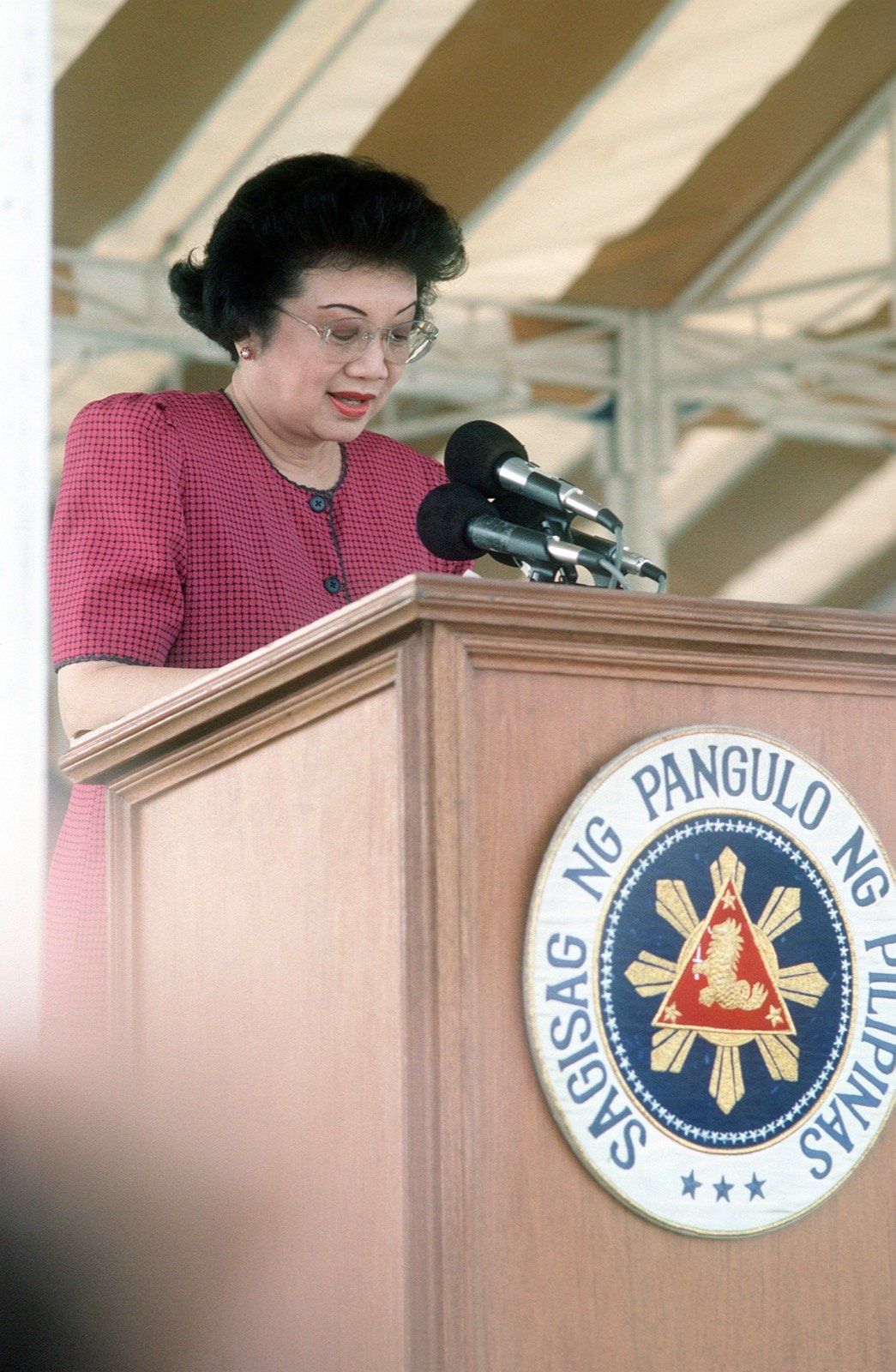
1933—2009
Corazon Aquino
President of the Philippines, 1986–1992The opposition leader who became president after People Power and restored constitutional government following the Marcos dictatorship.Read biography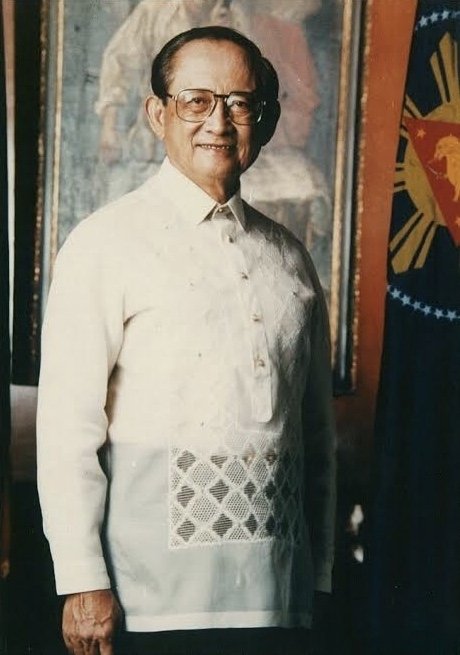
1928—2022
Fidel V. Ramos
President of the Philippines, 1992–1998The general who withdrew support from Ferdinand Marcos during People Power and later served as defence secretary and the Philippines’ twelfth president.Read biography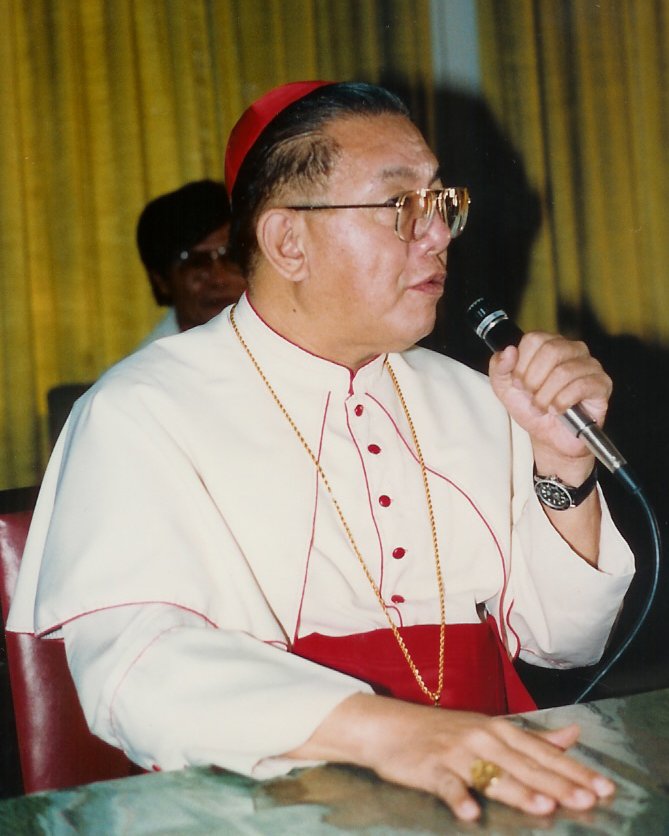
1928—2005
Jaime Cardinal Sin
Cardinal and Archbishop of ManilaThe Archbishop of Manila whose religious authority, democratic advocacy and Radio Veritas appeal helped bring civilians onto EDSA in February 1986.Read biography
1924—2025
Juan Ponce Enrile
Defence minister and Senate presidentThe lawyer and defence minister whose career stretched from the declaration of martial law to the EDSA breakaway, four Senate terms and the Senate presidency.Read biography
1922—1987
Jose W. Diokno
Senator, lawyer and human rights advocateA Filipino senator and civil-liberties lawyer known as Ka Pepe who was detained without charge under martial law and built a national network of human rights defenders.Read biography
1898—1992
Lorenzo Tañada
Senator, nationalist and anti-dictatorship leaderA four-term Filipino senator known as Ka Tanny who returned from retirement to defend political prisoners and lead public resistance under martial law.Read biography
1920—2016
Jovito Salonga
Opposition senator and post-EDSA Senate presidentA Filipino lawyer, opposition leader and statesman who survived wartime imprisonment and the Plaza Miranda bombing before helping rebuild the Senate after EDSA.Read biography
1913—1988
Chino Roces
Publisher, journalist and democracy campaignerA Filipino newspaper publisher whose media organisations were closed under martial law and who later became a visible organiser of democratic protest.Read biography
1913—2006
Cecilia Muñoz-Palma
Supreme Court justice and constitutional leaderA pioneering Filipino jurist whose martial-law dissents defended civilian courts and whose post-EDSA leadership helped frame the 1987 Constitution.Read biography1950—1973
Liliosa Hilao
Student journalist and martial-law victimA Filipino student journalist whose death in military custody made the human cost of martial law visible within its first year.Read biography1948—1982
Edgar Jopson
Student, labour and anti-dictatorship organiserA Filipino organiser known as Edjop whose path from moderate student reform to labour and underground activism reflected the closing political space of the martial-law era.Read biographyc. 1930—1980
Macli-ing Dulag
Kalinga elder and Indigenous land defenderA Butbut Kalinga pangat whose defence of ancestral land against a major dam project became a national symbol of Indigenous resistance.Read biography
1942—1986
Evelio Javier
Governor and democratic opposition leaderA Filipino lawyer and former Antique governor whose assassination during the 1986 election canvass intensified public anger before People Power.Read biography1960—1987
Lean Alejandro
Student and multisectoral movement leaderA Filipino student and movement organiser who helped build broad anti-dictatorship coalitions and was assassinated after democratic government returned.Read biographyQuick answers
Common questions
- Was martial law declared on 21 or 23 September 1972?
- Both dates refer to different stages. Proclamation No. 1081 is dated 21 September; arrests and closures accelerated on 22 September; Marcos announced martial law publicly on 23 September.
- How long did martial law last?
- Formal martial law lasted from September 1972 to 17 January 1981. Marcos remained president until 25 February 1986, so historical accounts often use 1972–1986 for the wider authoritarian era.
- Why did Marcos say martial law was necessary?
- Proclamation No. 1081 cited communist insurgency, rebellion, violence and threats to public order. Critics and later official measures documented how the declaration also dismantled democratic checks and enabled repression.
- How many martial law victims were officially recognised?
- The Human Rights Victims’ Claims Board approved 11,103 claimants under Republic Act No. 10368. This is the official reparations roll, not a complete count of everyone who experienced abuse.
- Did martial law end the same day Marcos left office?
- No. Formal martial law was lifted in January 1981. Marcos remained in power for another five years and left after the People Power Revolution in February 1986.
Primary and institutional sources
How this history was checked
Dates, legal milestones and historical claims are checked against the official and institutional records below. This article was reviewed on 8 September 2026.
- The LawPhil ProjectProclamation No. 1081 — placing the Philippines under martial law
- The LawPhil ProjectGeneral Order No. 5 — public assembly and security restrictions
- The LawPhil ProjectProclamation No. 1102 — declared ratification of the 1973 Constitution
- The LawPhil ProjectAdministrative Order No. 30 — Martial Law Historical Advisory Committee
- The LawPhil ProjectProclamation No. 2045 — formal termination of martial law
- The LawPhil ProjectRepublic Act No. 10368 — Human Rights Victims Reparation and Recognition Act
- Commission on Human Rights PhilippinesClarification on the 11,103 approved HRVCB claims
- Presidential Commission on Good GovernmentPCGG mandate and recovery of ill-gotten wealth
- World BankPhilippines GDP growth — historical data