The short answer
The 1971 Constitutional Convention began as an elected effort to revise a charter written during the Commonwealth. It ended after martial law had closed Congress, detained opposition leaders and transformed the conditions of public debate. Its history therefore requires attention to both the text delegates drafted and the political order in which they finished it.
Chronology
A timeline of the turning points
Congress calls for a constitutional convention
A resolution began the formal process for proposing amendments to or revision of the 1935 Constitution.
Republic Act No. 6132 sets the rules
The law provided for 320 delegates, district representation and a nonpartisan delegate election.
Voters elect convention delegates
Candidates formally ran without party labels, although established political networks remained influential.
The convention opens
Former president Carlos P. Garcia was chosen to lead the body but died within two weeks.
Diosdado Macapagal becomes convention president
Another former president took over the drafting assembly amid debate over succession and executive power.
Martial law transforms the convention’s setting
Arrests, media closures and the shutdown of Congress removed the open constitutional order around the delegates.
Delegates approve a proposed constitution
The draft replaced the presidential and bicameral design with a nominally parliamentary, unicameral system.
Why was a constitutional convention called?
The 1935 Constitution had been designed during the Commonwealth transition under United States sovereignty. By the 1960s, reformers across political camps argued that population growth, economic inequality, local representation and the structure of executive and legislative power required a new constitutional settlement.
Congress formally called a convention in 1967 and refined the process in 1969. Republic Act No. 6132 then established the election and composition of the body, presenting a convention as a route to comprehensive revision rather than piecemeal amendment.
How were the 320 delegates chosen?
The act apportioned 320 seats across representative districts and required candidates to run without formal party designation. Public officials were treated as resigned when they filed, an attempt to separate constitution-making from ordinary officeholding.
Nonpartisan ballots did not erase political networks, wealth or family influence. The delegates nevertheless included lawyers, local leaders, academics, former officials and younger reformers with competing views about land, rights, nationalism, the legislature and the presidency.
Who led the convention?
Former president Carlos P. Garcia was elected convention president when proceedings opened on 1 June 1971. His death days later created an immediate leadership change, and delegates selected another former president, Diosdado Macapagal.
The choice of two former presidents gave the convention experience and public stature, but also underscored how constitution-making remained connected to the rivalries of the political class. Macapagal had lost the presidency to Marcos in 1965 and became an opponent of extending presidential power.
What questions did the delegates debate?
Delegates considered whether to retain a presidential system or create a parliamentary one, how to organise the legislature, how strongly to limit reelection and how to define social justice, national territory, economic ownership and citizens’ rights.
The possibility that a new charter could change term limits made the process inseparable from Ferdinand Marcos’s approaching succession deadline. Debate was therefore about institutional design and about who might benefit from the transition rules attached to it.
How did political violence affect the convention?
The body worked during the First Quarter Storm’s aftermath, the Plaza Miranda bombing, suspension of the privilege of the writ of habeas corpus and armed conflict. These events heightened demands for reform while also giving the executive a growing language of emergency.
Convention independence became a public concern as delegates alleged lobbying, patronage and pressure. Not every vote can be reduced to presidential control, but the drafting process was never insulated from the unequal political power surrounding it.
What changed after martial law?
Marcos imposed martial law in September 1972 before the convention completed its work. Opposition politicians were detained, Congress did not resume and major media organisations were closed. Delegates continued deliberating inside a political order in which ordinary checks and public debate had been sharply constrained.
The convention approved its proposed constitution on 29 November. The text created a parliamentary framework, but its transitory provisions and the circumstances of implementation allowed Marcos to retain and consolidate authority rather than transfer power through a normal parliamentary process.
Did the convention itself ratify the 1973 Constitution?
No. A constitutional convention proposes a text; ratification belongs to the electorate under the amendment rules then in force. Presidential Decree No. 73 initially scheduled a secret-ballot plebiscite for 15 January 1973.
That plebiscite was postponed, and the government instead relied on voting reported through citizens’ assemblies. Proclamation No. 1102 announced ratification on 17 January, producing the legal conflict decided in Javellana v. Executive Secretary.
Continue the chronology
Related history guides
The 1969 Philippine Presidential Election
Begin with the reelection that made succession under the 1935 Constitution urgent.
Read the timeline21 Aug 1971The Plaza Miranda Bombing
Read the political violence and emergency response surrounding the convention.
Read the timeline1972–1973The 1973 Philippine Constitution
Continue from the approved draft to the postponed plebiscite, citizens’ assemblies and Supreme Court case.
Read the timeline1986–1987The 1987 Philippine Constitution
Compare the later charter designed after People Power to restore elected institutions and checks.
Read the timelineConnected biographies
Five lives across convention leadership, presidential power and opposition
 Philippines · Politics
1896—1971
Carlos P. Garcia
President of the Philippines, 1957–1961A Boholano lawyer, poet and president who promoted Filipino ownership, fiscal restraint and a more assertive economic nationalism.Read biography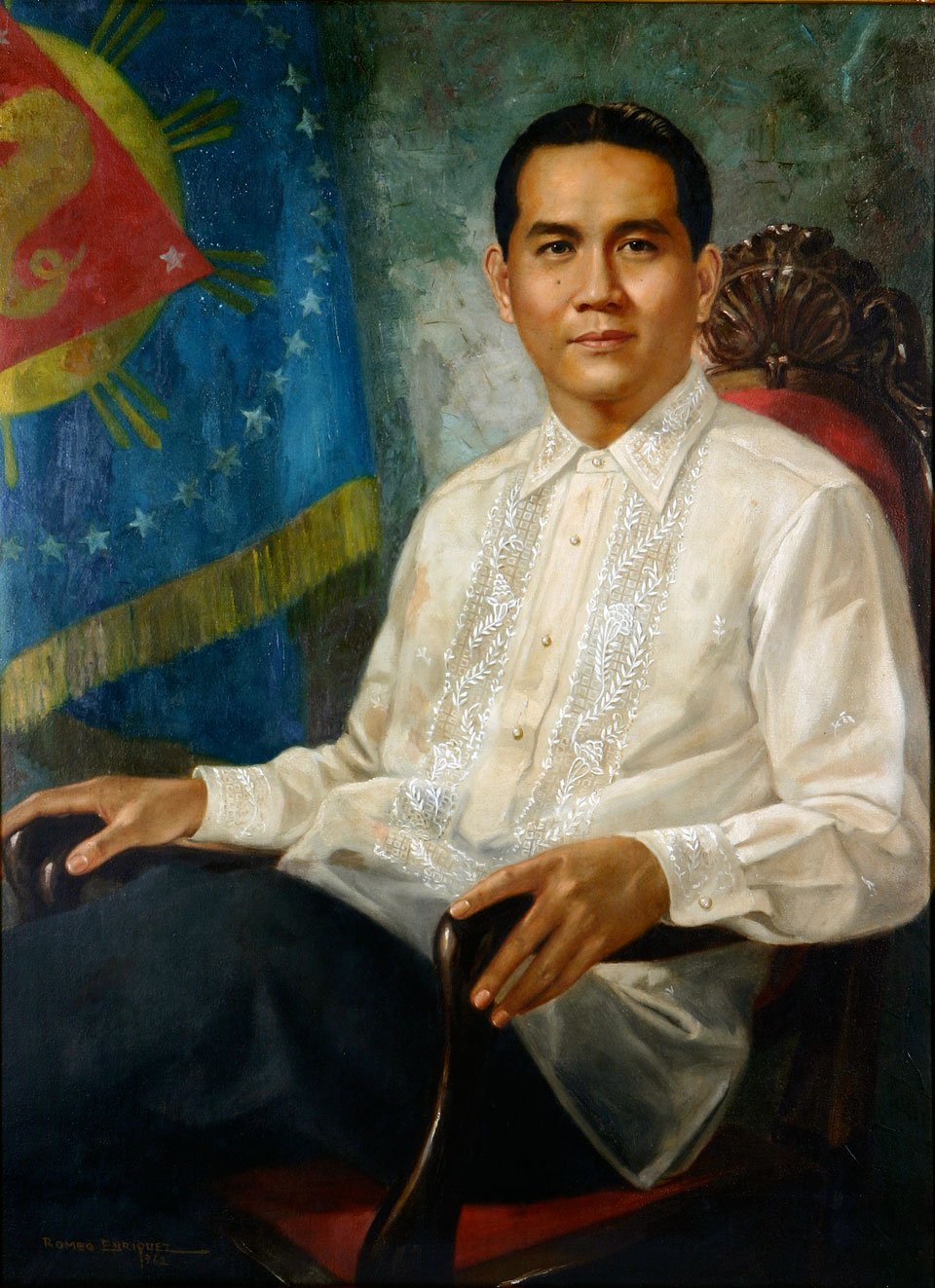 Philippines · Politics
1910—1997
Diosdado Macapagal
President of the Philippines, 1961–1965The president who pursued agricultural land reform, dismantled exchange controls and restored 12 June as the national observance of Philippine independence.Read biography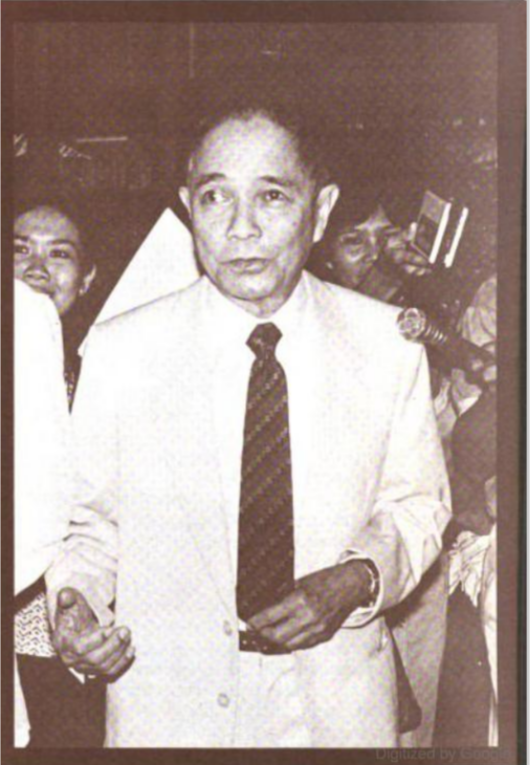 Philippines · Politics
1918—1999
Raul S. Manglapus
Senator, foreign secretary and democratic opposition leaderA wartime prisoner, lawyer, senator and presidential candidate who opposed Ferdinand Marcos from exile and returned to serve in the post-1986 government.Read biography Philippines · Politics
1917—1989
Ferdinand Marcos
President of the Philippines, 1965–1986A president who imposed martial law, dismantled democratic checks and ruled for two decades before the 1986 People Power Revolution forced him from office.Read biography Philippines · Politics
1928—2004
Salvador H. Laurel
Opposition leader and vice president of the PhilippinesA lawyer, senator and opposition coalition leader who became vice president after the disputed 1986 election and People Power Revolution.Read biographyQuick answers
Common questions
- When did the 1971 Constitutional Convention begin?
- It formally opened on 1 June 1971 after delegates had been elected on 10 November 1970.
- How many delegates were in the convention?
- Republic Act No. 6132 provided for 320 delegates apportioned among Philippine representative districts.
- Who was president of the 1971 Constitutional Convention?
- Former president Carlos P. Garcia was elected first but died shortly after the opening. Former president Diosdado Macapagal then led the convention.
- Was the convention created to extend Marcos’s term?
- The process began in 1967 and addressed many longstanding reform questions. By 1971–1972, however, presidential succession and possible transition provisions made Marcos’s political future a central conflict.
- What constitution did the convention produce?
- It approved the proposed 1973 Constitution, which replaced the 1935 charter’s presidential and bicameral design with a nominally parliamentary, unicameral system.
Primary and institutional sources
How this history was checked
Dates, legal milestones and historical claims are checked against the official and institutional records below. This article was reviewed on 9 September 2026.
- Senate of the Philippines Legislative Reference BureauRepublic Act No. 6132 — the 1971 Constitutional Convention Act
- The LawPhil ProjectProclamation No. 859 — opening of the convention
- Senate of the PhilippinesResolution commemorating the 1971 Constitutional Convention
- Supreme Court of the Philippines via LawPhilJavellana v. Executive Secretary, G.R. No. L-36142