The short answer
The 1973 Constitution promised a parliamentary republic but entered force through a ratification process conducted under martial law and outside the secret-ballot plebiscite originally scheduled. The text, the transition decrees and the divided Supreme Court decision must be read together to understand how constitutional form and authoritarian power coexisted.
Chronology
A timeline of the turning points
Convention approves the proposed charter
Delegates completed a text establishing a nominally parliamentary government and unicameral National Assembly.
A national plebiscite is scheduled
Presidential Decree No. 73 set a secret-ballot ratification vote for 15 January 1973.
Citizens’ assemblies receive a national role
Presidential decrees created and expanded local assemblies that were asked about the new constitution and martial law.
The scheduled plebiscite is postponed
General Order No. 20 suspended both the vote and the temporary space for free public debate.
Marcos proclaims ratification
Proclamation No. 1102 relied on reported voting in citizens’ assemblies and declared the new constitution in effect.
The Supreme Court decides Javellana
A divided Court found no further judicial obstacle to treating the constitution as in force, without a majority holding that it was validly ratified.
Amendments reshape the parliamentary text
Marcos combined presidential and prime-ministerial authority, convened the Interim Batasang Pambansa and retained power after formal martial law ended.
The constitutional order is replaced
People Power, the Freedom Constitution and ratification of the 1987 Constitution ended the 1973 framework.
What did the original 1973 Constitution propose?
The charter replaced the 1935 Constitution’s separately elected president and bicameral Congress with a parliamentary design. Legislative power belonged to a unicameral National Assembly, a prime minister would head the government and a president would serve as head of state.
It also contained a bill of rights, social-justice commitments and provisions on national territory, citizenship and economic ownership. Reading the text alone, however, does not explain how its transitory machinery operated under martial law.
How was ratification originally supposed to work?
The 1971 Constitutional Convention approved the proposed charter on 29 November 1972. Presidential Decree No. 73 then called a plebiscite for 15 January 1973, with secret ballots asking voters to approve or reject the full text.
That plan was recognisable as a national constitutional vote under the 1935 charter. It also provided for publication, polling places, election inspectors and canvassing by the Commission on Elections.
Why did the scheduled plebiscite not happen?
At the end of December, Marcos created citizens’ assemblies as local consultation bodies. Presidential Decree No. 86-A asked them to consider the new constitution, continuation of martial law, the reopening of Congress and scheduled elections.
General Order No. 20 postponed the 15 January plebiscite until further notice and again restricted free public debate. The government then treated reported assembly responses as a direct act of ratification rather than returning to the secret-ballot process described in Presidential Decree No. 73.
What did Proclamation No. 1102 claim?
On 17 January 1973, Marcos announced that the proposed constitution had been ratified through citizens’ assemblies. The proclamation reported 14,976,561 votes for adoption and 743,869 against, figures that were not certified through the ordinary Commission on Elections canvass planned for the postponed plebiscite.
The same day, Proclamation No. 1103 said the Interim National Assembly would not be convened, and Proclamation No. 1104 continued martial law. These acts show why the constitution’s effective meaning cannot be separated from executive control of its transition.
What did Javellana v. Executive Secretary decide?
Petitioners asked the Supreme Court to stop implementation, arguing that citizens’ assemblies and the proclamation did not satisfy constitutional ratification requirements. The justices produced multiple opinions and no single majority reasoning that cleanly validated the process.
A majority did not agree that the constitution had been validly ratified, but the vote also failed to produce the relief needed to stop it. The Court’s dispositive conclusion was that there was “no further judicial obstacle” to the new constitution being considered in force. Describing Javellana as a simple approval therefore misses the division at the centre of the case.
Did the Philippines immediately become a normal parliamentary democracy?
No. The Interim National Assembly named in the transitory provisions did not convene. Marcos continued governing through martial-law powers and presidential decrees. Amendments approved in 1976 created an Interim Batasang Pambansa while allowing him to exercise both presidential and prime-ministerial authority.
The Interim Batasang Pambansa first met in 1978. Formal martial law ended in January 1981, but executive dominance, controlled elections, detention powers and restrictions on opposition continued. Institutional labels changed more quickly than the distribution of power.
How did the 1973 Constitution end?
The disputed February 1986 election and People Power Revolution removed Marcos from office. Corazon Aquino initially governed under a provisional Freedom Constitution while an appointed commission drafted a replacement.
Voters ratified the 1987 Constitution on 2 February. It restored a presidential system and bicameral Congress, limited the president to one six-year term and imposed time limits plus legislative and judicial review on future martial-law declarations.
Continue the chronology
Related history guides
The 1971 Constitutional Convention
Begin with the elected body that drafted the proposed parliamentary charter.
Read the timeline1972–1986The Marcos Martial Law Era
Place the constitutional transition inside the broader system of decrees, repression and resistance.
Read the timeline22–25 Feb 1986The People Power Revolution
Follow the election crisis and mass mobilisation that ended the Marcos government.
Read the timeline1986–1987The 1987 Philippine Constitution
Compare the restored presidential system, bicameral Congress and new safeguards.
Read the timelineConnected biographies
Five lives across drafting, executive power, legal challenge and democratic opposition
 Philippines · Politics
1917—1989
Ferdinand Marcos
President of the Philippines, 1965–1986A president who imposed martial law, dismantled democratic checks and ruled for two decades before the 1986 People Power Revolution forced him from office.Read biography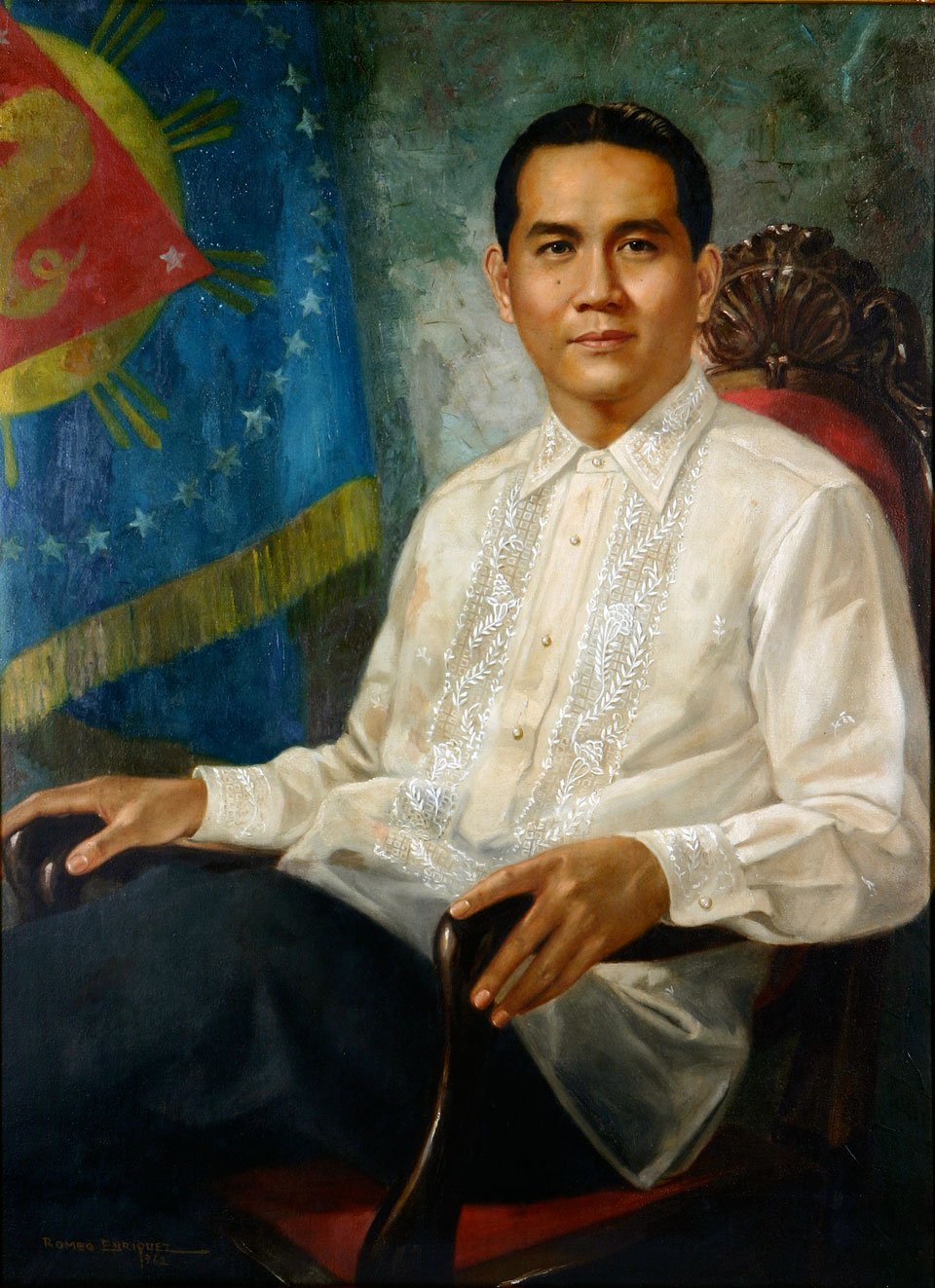 Philippines · Politics
1910—1997
Diosdado Macapagal
President of the Philippines, 1961–1965The president who pursued agricultural land reform, dismantled exchange controls and restored 12 June as the national observance of Philippine independence.Read biography Philippines · Politics
1910—2004
Arturo M. Tolentino
Law professor, senator and Senate presidentA bar topnotcher, prolific law teacher and legislator whose long career extended from the Third Republic to the disputed 1986 election and a final Senate term.Read biography Philippines · Politics
1898—1992
Lorenzo Tañada
Senator, nationalist and anti-dictatorship leaderA four-term Filipino senator known as Ka Tanny who returned from retirement to defend political prisoners and lead public resistance under martial law.Read biography Philippines · Politics
1920—2016
Jovito Salonga
Opposition senator and post-EDSA Senate presidentA Filipino lawyer, opposition leader and statesman who survived wartime imprisonment and the Plaza Miranda bombing before helping rebuild the Senate after EDSA.Read biographyQuick answers
Common questions
- When did the 1973 Philippine Constitution take effect?
- Proclamation No. 1102 declared it ratified and in effect on 17 January 1973. The legality of that process was immediately challenged.
- Was there a plebiscite for the 1973 Constitution?
- A secret-ballot plebiscite was scheduled for 15 January 1973 but postponed by General Order No. 20. The government instead relied on reported voting through citizens’ assemblies.
- What form of government did the 1973 Constitution create?
- Its original design was parliamentary, with a unicameral National Assembly, a prime minister as head of government and a president as head of state. Amendments and transitory arrangements concentrated authority in Marcos.
- Did the Supreme Court uphold the 1973 Constitution?
- Javellana produced divided opinions. No majority held that ratification was valid, but the Court concluded that there was no further judicial obstacle to treating the charter as in force.
- When was the 1973 Constitution replaced?
- It was displaced by the provisional Freedom Constitution in March 1986 and replaced by the 1987 Constitution ratified on 2 February 1987.
Primary and institutional sources
How this history was checked
Dates, legal milestones and historical claims are checked against the official and institutional records below. This article was reviewed on 9 September 2026.
- The LawPhil Project1973 Constitution of the Republic of the Philippines
- The LawPhil ProjectPresidential Decree No. 73 — scheduled ratification plebiscite
- The LawPhil ProjectGeneral Order No. 20 — postponement of the plebiscite
- The LawPhil ProjectProclamation No. 1102 — announced ratification
- Supreme Court of the Philippines via LawPhilJavellana v. Executive Secretary, G.R. No. L-36142