The short answer
The 2021 coup did not restore stable military rule. Mass civil resistance became armed revolt, new People’s Defence Forces connected with older ethnic conflicts and the military increasingly relied on air power, detention and conscription. A controlled election in 2025–2026 changed formal institutions without ending the war.
Names in the news
The main anti-coup institutions and networks explained
These terms overlap, but they are not interchangeable and do not describe a single command structure.
| Name | What it is | How it emerged | Role in the resistance |
|---|---|---|---|
| Civil Disobedience Movement · CDM | Decentralised non-cooperation movement | Work stoppages and boycotts after the coup | Withheld labour and legitimacy from military administration |
| Committee Representing Pyidaungsu Hluttaw · CRPH | Body formed by lawmakers elected in 2020 | Organised after parliament was prevented from convening | Claimed continuity of the elected Union Parliament |
| National Unity Government · NUG | Parallel opposition government announced in April 2021 | Linked elected lawmakers with other democratic and ethnic representatives | Pursued diplomacy, administration and coordination of resistance |
| People’s Defence Forces · PDFs | Local and regional anti-military armed groups | Expanded after lethal repression of peaceful protest | Fight military forces with varied links to the NUG and ethnic organisations |
| Ethnic armed organisations · EAOs | Long-established forces rooted in ethnic conflicts and territorial claims | Most predate the 2021 coup by decades | Some train or ally with PDFs; strategies and relations differ widely |
Chronology
A timeline of the turning points
Military detained elected leaders and seized power
President Win Myint, State Counsellor Aung San Suu Kyi and others were arrested before the new parliament could convene.
Mass protest and civil disobedience spread
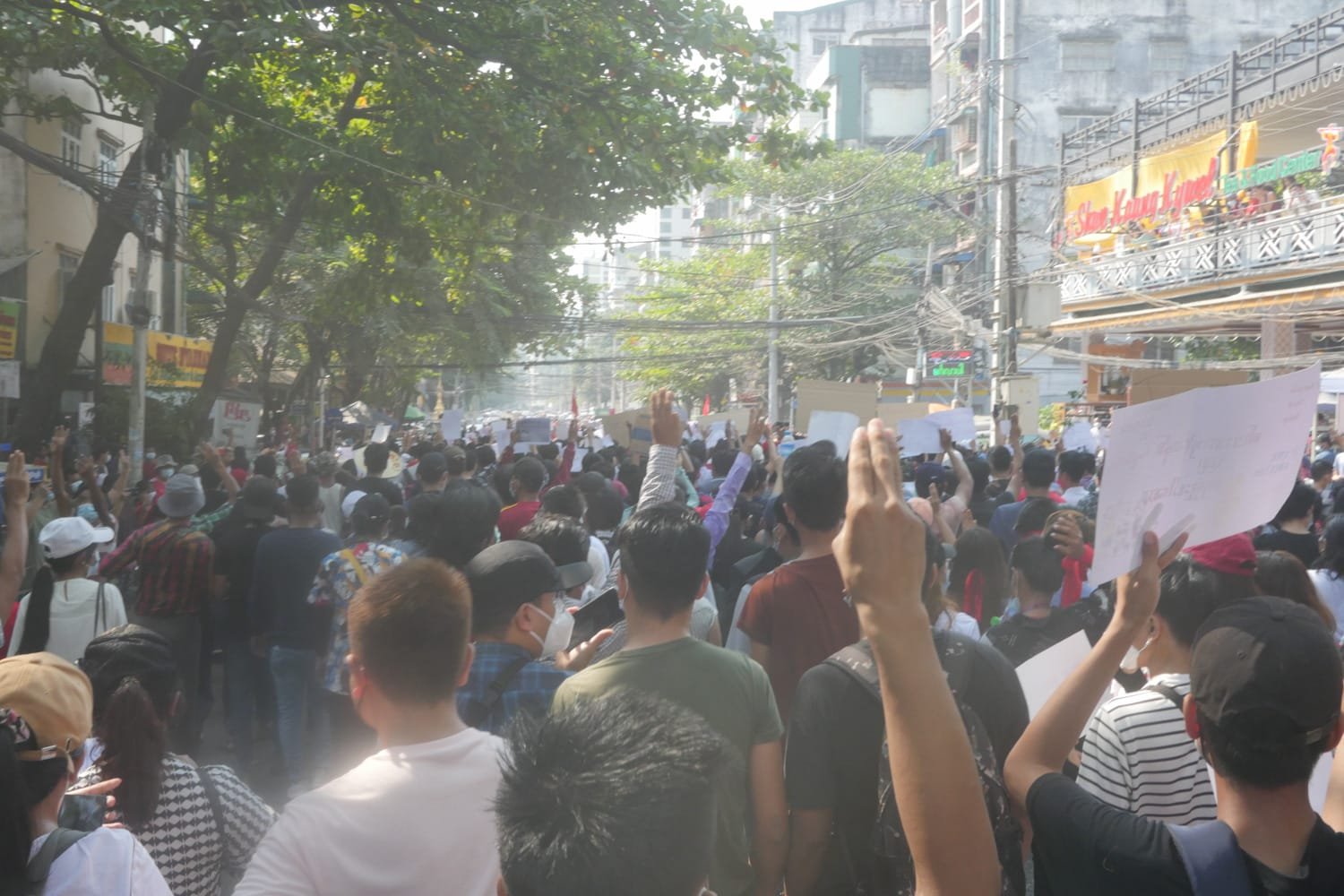
Workers, medical staff, civil servants, students and neighbourhood groups organised strikes and demonstrations.
National Unity Government formed
Opposition representatives announced a parallel government linked to elected lawmakers and ethnic political actors.
ASEAN adopted the Five-Point Consensus
Regional leaders called for an end to violence, dialogue, a special envoy, humanitarian aid and access to all parties.
Armed resistance expanded
People’s Defence Forces emerged and the NUG announced a defensive war against military rule.
UN Security Council adopted Resolution 2669
The Council demanded an end to violence and urged the release of arbitrarily detained prisoners.
Operation 1027 opened a new military phase
The Three Brotherhood Alliance attacked military positions in northern Shan State and triggered wider offensives.
Military activated national conscription
Enforcement of the long-dormant People’s Military Service Law widened fear, flight and forced recruitment concerns.
State of emergency ended for a controlled election
Military authorities announced a three-phase poll while conflict, repression and exclusion continued.
Military-run polling produced a USDP landslide
The UN did not observe or support the election and reported that opposition participation was severely restricted.
New military-dominated legislature selected its leadership
UN reporting described the outcome as consolidation of military power rather than a civilian transition.
Internal displacement approached 3.8 million
UNICEF reported 16.2 million people in need of humanitarian assistance as fighting and airstrikes continued.
What happened on 1 February 2021?
Hours before the parliament elected in November 2020 was due to convene, the military detained President Win Myint, State Counsellor Aung San Suu Kyi, election officials and other political figures. It declared a state of emergency and transferred authority to Commander-in-Chief Min Aung Hlaing through the newly created State Administration Council.
The armed forces said alleged election irregularities justified emergency action under Sections 417 and 418 of the 2008 Constitution. Independent observers had identified shortcomings but judged the result reflective of voters’ will. The UN Special Rapporteur concluded that the takeover violated the constitution because the required presidential and parliamentary procedures were not lawfully followed.
How did protest become nationwide armed conflict?
The first response was overwhelmingly civilian: street demonstrations, workplace stoppages, boycotts and the Civil Disobedience Movement. Security forces used lethal force, mass arrest and torture against opponents. Elected lawmakers organised the Committee Representing Pyidaungsu Hluttaw, and opposition figures announced the National Unity Government in April 2021.
People’s Defence Forces then formed across many towns and regions. Some worked with the NUG or long-established ethnic armed organisations; others remained locally organised. Myanmar already had decades of armed conflict before the coup. What changed after 2021 was the spread of anti-military warfare into central Bamar-majority regions and the growing interaction between new resistance groups and older ethnic struggles.
What did ASEAN and the United Nations do?
ASEAN leaders agreed a Five-Point Consensus in April 2021: an immediate end to violence, dialogue among all parties, mediation by a special envoy, humanitarian assistance and an envoy visit meeting all concerned parties. Repeated ASEAN statements later acknowledged inadequate implementation. The organisation restricted Myanmar’s military leadership from high-level political representation but did not suspend the country’s membership.
The UN General Assembly adopted Resolution 75/287 in June 2021, calling for respect for the 2020 election result and an end to arms flows. In December 2022 the Security Council adopted Resolution 2669, its first resolution focused on Myanmar, demanding an end to violence and urging the release of Win Myint, Aung San Suu Kyi and other detainees. These measures created diplomatic pressure but did not end the conflict.
Why was Operation 1027 a turning point?
On 27 October 2023, the Myanmar National Democratic Alliance Army, Ta’ang National Liberation Army and Arakan Army launched coordinated attacks in northern Shan State. The offensive overran military positions, disrupted border routes and encouraged simultaneous campaigns by other organisations. It exposed weaknesses in a force already stretched across many fronts.
A China-brokered ceasefire temporarily reduced fighting in northern Shan, but renewed offensives and conflict in Rakhine, Kachin, Karenni, Karen and central regions continued to change territorial control. In February 2024 the military activated national conscription. UN reporting linked enforcement to forced recruitment, civilian flight and further regional instability.
Did the 2025–2026 election restore civilian government?
Military authorities ended the formal emergency in July 2025 and staged voting in phases from late 2025 into January 2026. Major opposition participation was severely restricted, the NLD had been dissolved under military-controlled registration rules, voting did not cover all conflict areas and criticism of the election could bring severe punishment.
The USDP won a predictable landslide and military appointees again held 25% of parliamentary seats. The military described the polls as free and fair. The United Nations did not support or observe them, and its Special Envoy reported that the outcome was widely viewed as consolidation of military power, not a transition to civilian rule. Both claims should be identified rather than collapsed into a false consensus.
What was the civilian impact by 2026?
The humanitarian crisis grew with repeated displacement, economic decline, airstrikes, artillery fire, landmines, detention and restrictions on aid. By the end of June 2026, UNICEF reported nearly 3.8 million internally displaced people and another 1.6 million refugees and asylum seekers in neighbouring countries. Some 16.2 million people needed humanitarian assistance.
UN investigators reported deliberate attacks on civilians, arbitrary detention, torture and sexual violence by the military, while also investigating alleged crimes by anti-military armed groups. These findings matter for accurate language: the conflict has multiple armed actors, but the military controls state aircraft, heavy weapons, prisons and laws and has been identified by UN mechanisms as responsible for the largest documented pattern of violations.
Continue the chronology
Related history guides
The 2020 Election: Results and Coup Claims
Read the mandate, administrative flaws and unproven fraud claims immediately preceding the takeover.
Read the timeline1988—2026National League for Democracy: History and Elections
Trace the governing party overthrown in 2021 and distinguish it from the CRPH and broader NUG coalition.
Read the timelineNovember 2015—April 2016The 2015 Election and Transfer of Power
Return to the electoral handover and military safeguards whose failure framed the 2021 takeover.
Read the timeline2010—2020Myanmar’s Democratic Transition
Understand the elected order and unresolved military power that preceded the takeover.
Read the timeline2008—todayMyanmar’s 2008 Constitution Explained
Read the emergency clauses and military safeguards invoked in 2021.
Read the timeline1978—2026The Rohingya Crisis: Timeline and Accountability
Follow the earlier expulsions, accountability cases and renewed abuses in post-coup Rakhine State.
Read the timelineMarch—September 1988Myanmar’s 8888 Uprising
Compare the post-coup resistance with the earlier nationwide democracy movement.
Read the timeline1990—2012The 1990 Election and Government in Exile
Compare today’s rival government with an earlier unimplemented election and exile administration.
Read the timelineAugust—September 2007Myanmar’s Saffron Revolution
Compare the coup resistance with the earlier monk-led uprising and its political-prisoner legacy.
Read the timeline1948—2026Myanmar Presidents and Heads of State
Distinguish the elected presidency, the disputed acting presidency and the office created after the 2025–2026 election.
Read the timeline1948—2026Myanmar Prime Ministers
Separate the military-appointed premiership from the NUG’s parallel cabinet and the post-April 2026 office gap.
Read the timeline2011—presentVice Presidents of Myanmar
Trace Myint Swe’s disputed acting role, the later vacancies and the 2026 officeholders.
Read the timelineBiography context
Explore Myanmar through connected lives
Myanmar Biographies
Explore 57 sourced lives across politics, business, sport and culture.
Explore the biographiesPolitics collectionMyanmar Political Leaders
Compare independence, military government, diplomacy and democratic opposition.
Explore the biographiesCulture collectionMyanmar Culture and Resistance
Follow writers, publishers, satirists and artists working under censorship and military power.
Explore the biographiesConnected biographies
Ten biographies connecting elected government, constitutional holdovers, resistance, political execution, rival authority and military rule
1956—
Min Aung Hlaing
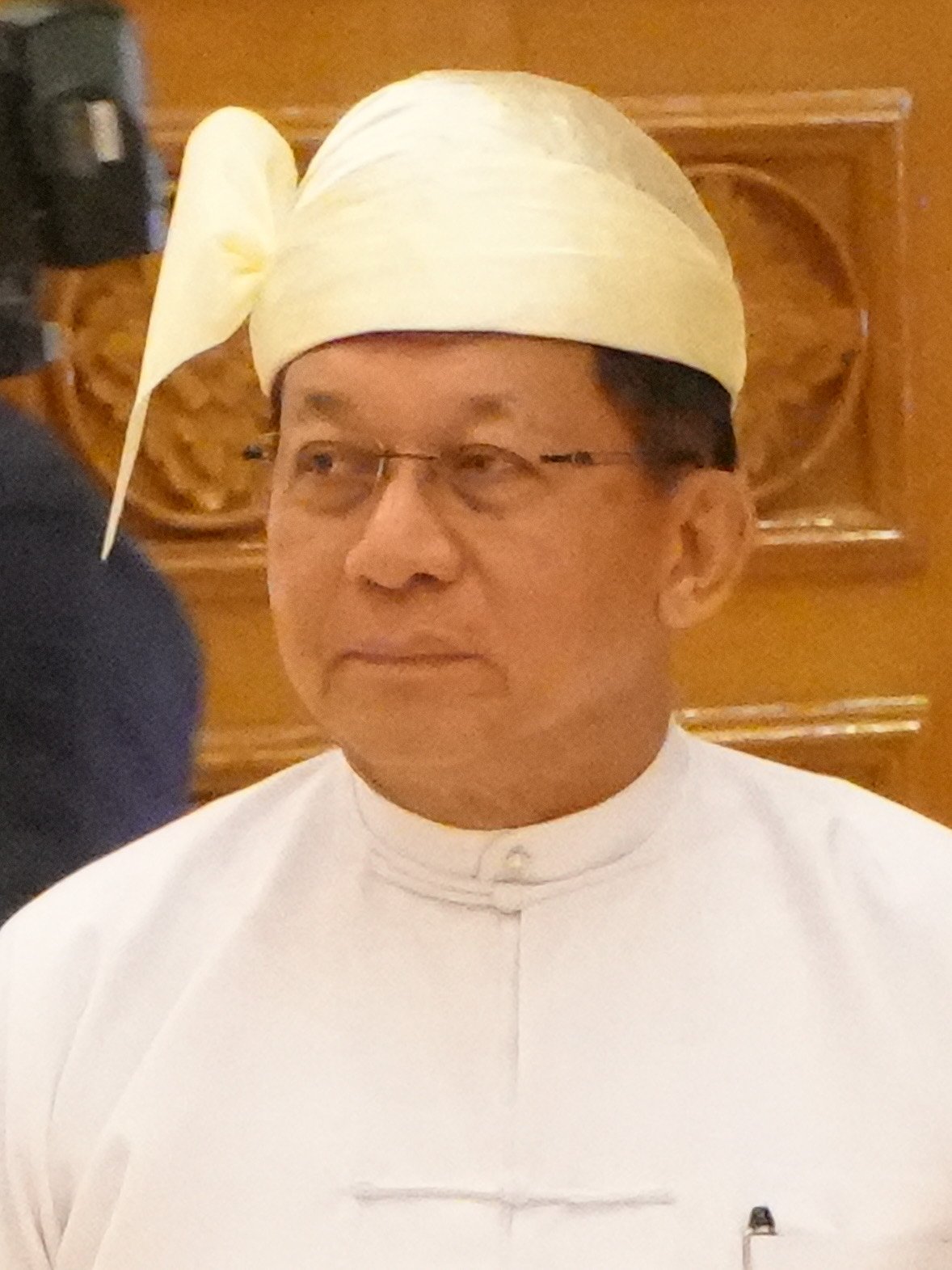
President of Myanmar and leader of the 2021 military takeoverThe former commander-in-chief who led Myanmar’s 2021 coup, presided over nationwide war and became president through a military-controlled political process in 2026.Read biography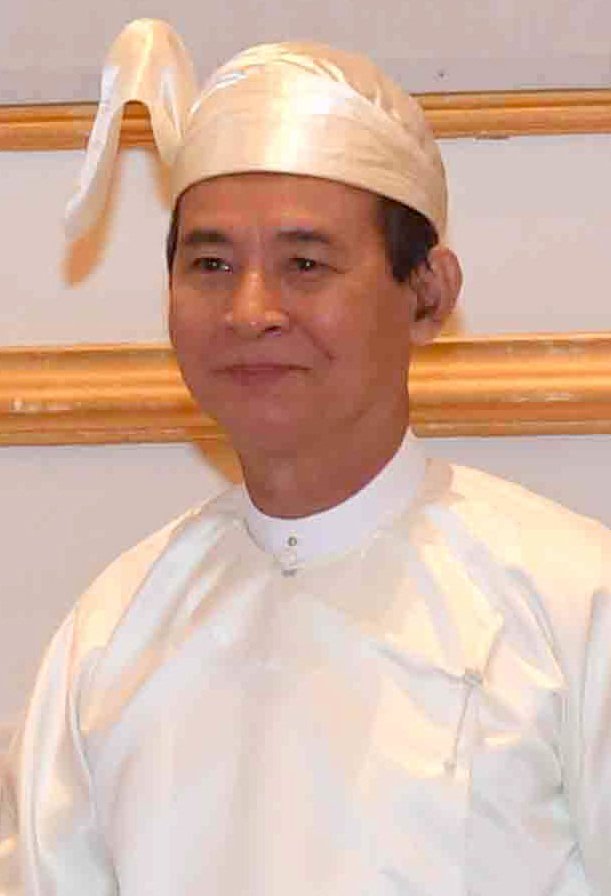
1951—
Win Myint
Lawyer and former president of MyanmarThe lawyer, 1988 democracy activist and parliamentary speaker who became president before the military detained and removed him in the 2021 coup.Read biography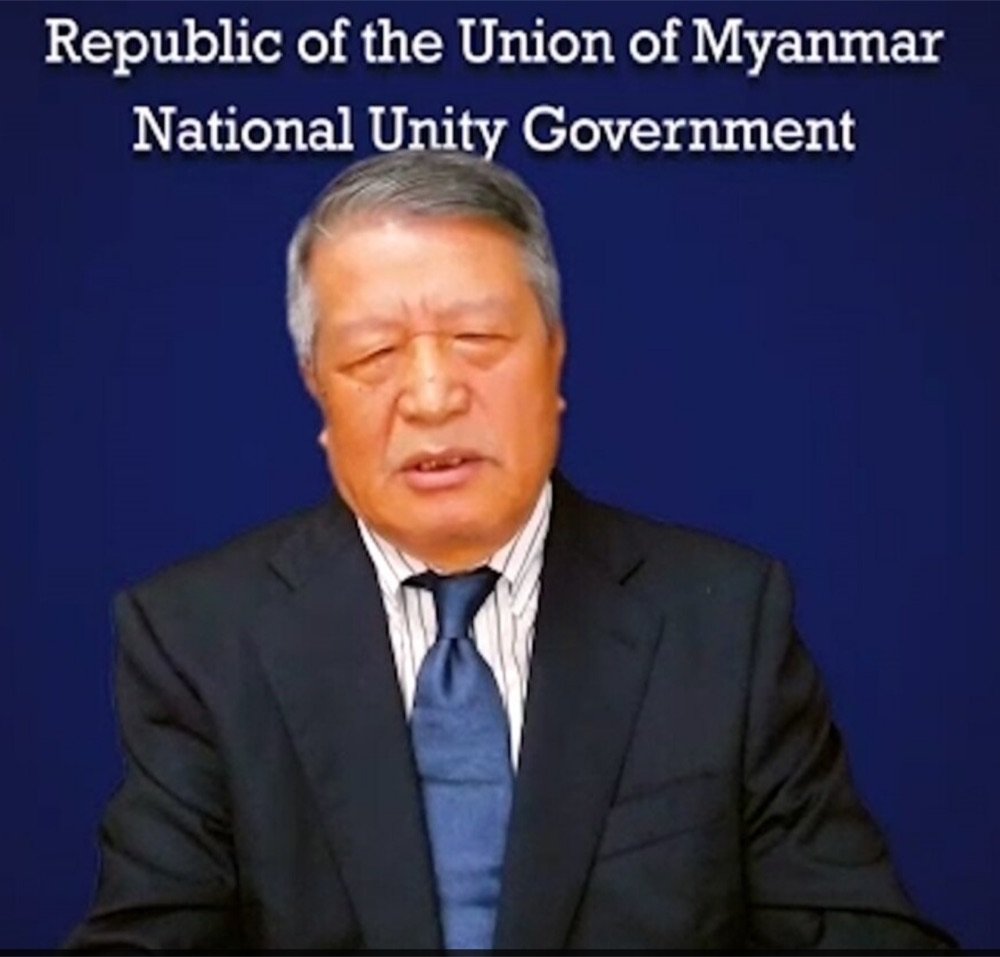
1950—
Duwa Lashi La
Kachin lawyer and acting president of Myanmar’s National Unity GovernmentThe Kachin lawyer and civil-society leader appointed vice-president and acting president of Myanmar’s opposition National Unity Government.Read biography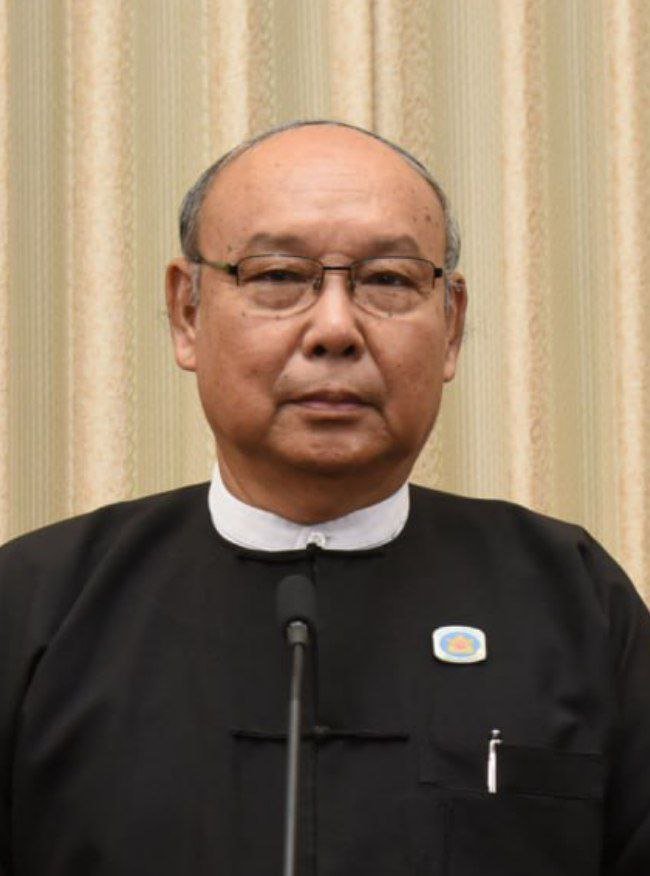
1952—
Mahn Win Khaing Than
Prime minister of Myanmar’s National Unity GovernmentThe Karen lawyer and former upper-house speaker who became prime minister of the parallel National Unity Government in April 2021.Read biography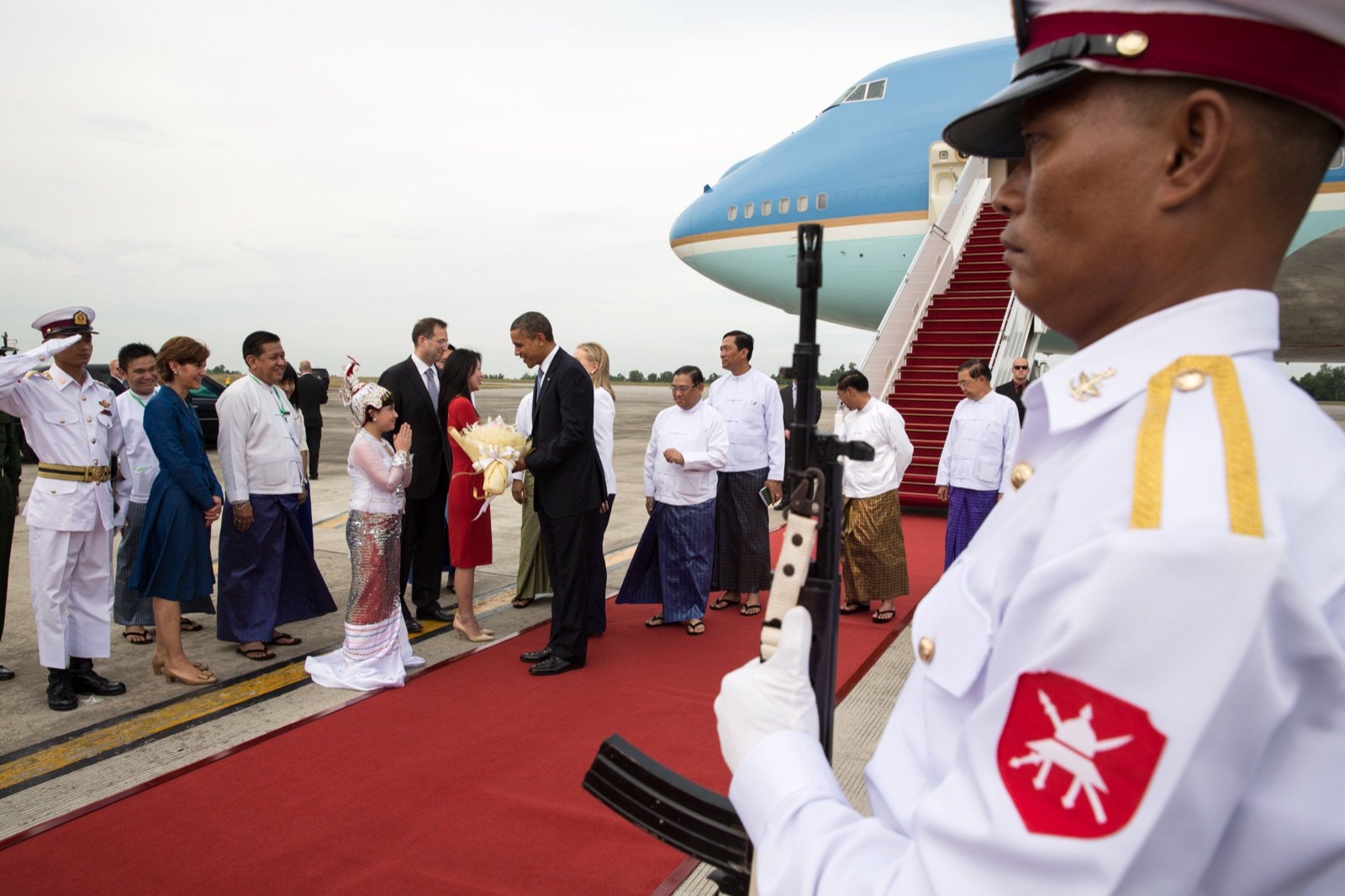
1951—2025
Myint Swe
Military officer, first vice-president and disputed acting presidentThe former general who became Yangon chief minister, military-selected first vice-president and the formal constitutional instrument of the 2021 takeover.Read biography
1945—
Aung San Suu Kyi
Nobel laureate, NLD leader and former state counsellor of MyanmarThe opposition leader who spent about fifteen years in detention, won a parliamentary seat in 2012 and later led Myanmar’s civilian government through the office of state counsellor.Read biographyLiving
Nyo Saw
First vice-president and former military-appointed prime minister of MyanmarThe retired general and military-business executive who briefly headed the cabinet during the junta’s election transition and then became first vice-president.Read biography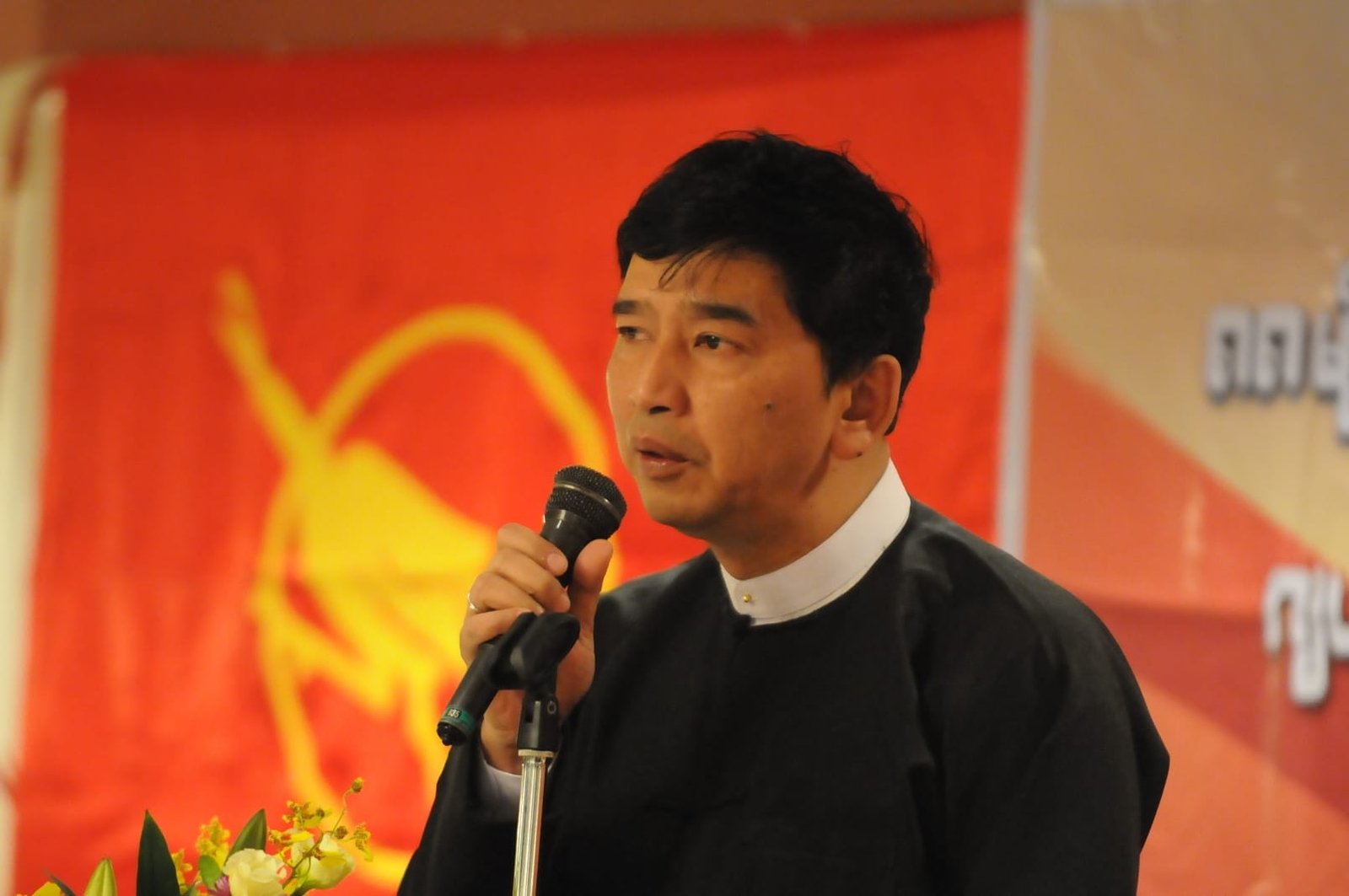
1962—
Min Ko Naing
Student leader and veteran democracy activistThe student organiser whose adopted name means “conqueror of kings” and whose repeated imprisonment made him a symbol of Burma’s 88 Generation.Read biography1969—2022
Kyaw Min Yu (Ko Jimmy)
Writer, 88 Generation activist and political prisonerThe writer and veteran student activist who spent much of his adult life in prison before Myanmar’s military executed him in 2022.Read biography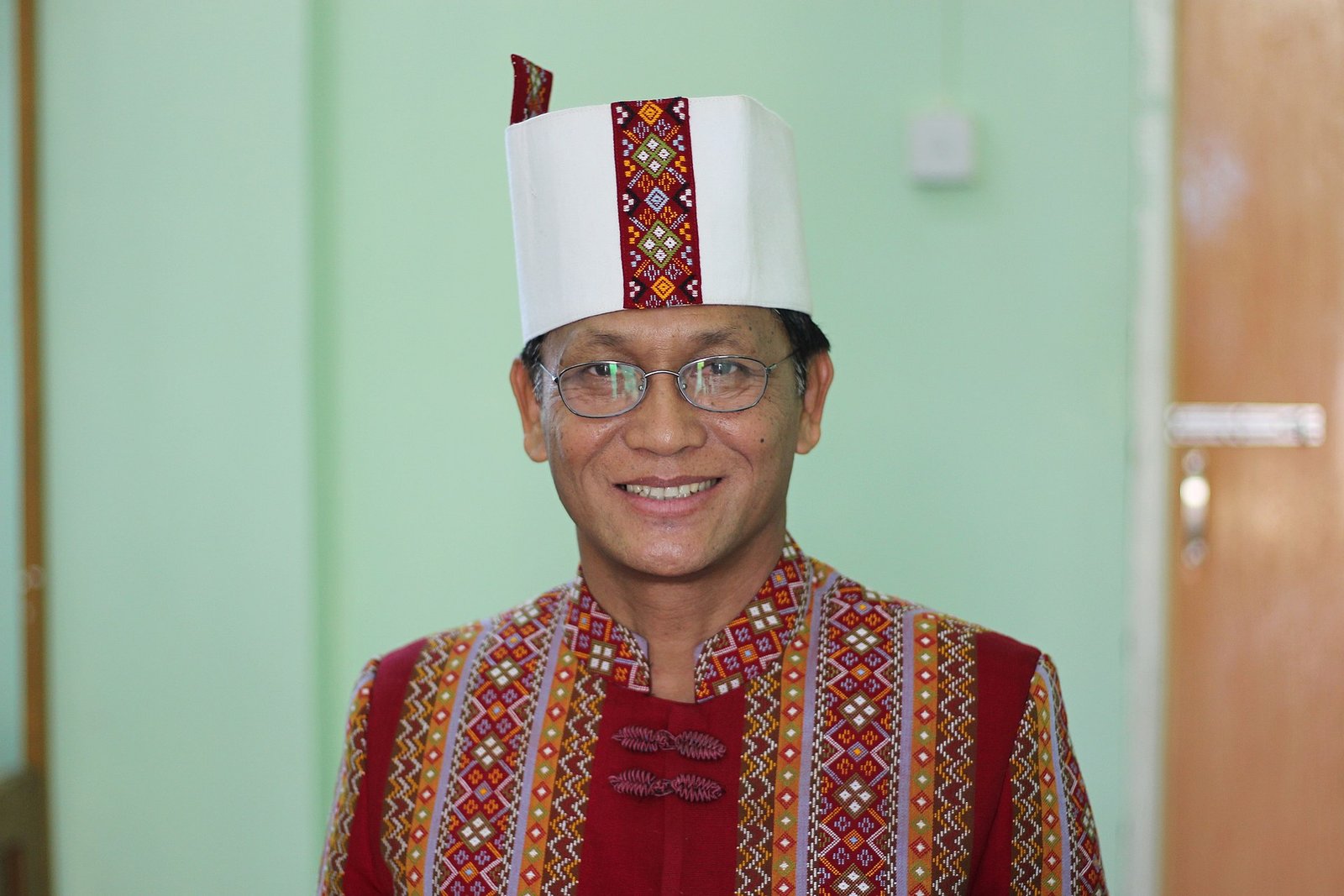
1958—
Henry Van Thio
Second vice president of Myanmar from 2016 to 2024The former army major and Chin State senator whose sudden nomination placed an ethnic Christian politician in Myanmar’s 2016 executive trio.Read biographyQuick answers
Common questions
- Why did Myanmar’s military stage a coup in 2021?
- The military alleged widespread fraud in the 2020 election, which the NLD won decisively. Independent observers found shortcomings but concluded that the result reflected the electorate’s will.
- Was the Myanmar coup constitutional?
- The military cited emergency clauses in the 2008 Constitution, but UN officials and constitutional analysts concluded that the takeover did not follow the required lawful procedure.
- What is Myanmar’s National Unity Government?
- The NUG is a parallel opposition government announced in April 2021 and linked to lawmakers elected in 2020, democratic activists and ethnic representatives.
- What are Myanmar’s People’s Defence Forces?
- PDFs are local and regional armed resistance groups formed after the coup. Their organisation and relationships with the NUG and ethnic armed organisations vary.
- What is ASEAN’s Five-Point Consensus?
- It calls for an end to violence, dialogue among all parties, mediation by an ASEAN envoy, humanitarian assistance and an envoy visit meeting all concerned parties.
- What was Operation 1027?
- It was a coordinated offensive launched by the Three Brotherhood Alliance in northern Shan State on 27 October 2023, producing major military losses and wider offensives.
- Did Myanmar hold an election after the coup?
- Yes. Military authorities staged a phased election in late 2025 and January 2026. The UN did not support or observe it and said severe restrictions prevented it from representing a civilian transition.
- How many people were displaced in Myanmar by 2026?
- UNICEF reported nearly 3.8 million internally displaced people by the end of June 2026, in addition to roughly 1.6 million refugees and asylum seekers in neighbouring countries.
Primary and institutional sources
How this history was checked
This guide is current through 4 October 2026. Humanitarian figures are dated because conflict, access and displacement continue to change. This article was reviewed on 4 October 2026.
- UN Human Rights Council · Special Rapporteur on MyanmarReport A/HRC/46/56 on the February 2021 takeover
- Association of Southeast Asian NationsChairman’s Statement and Five-Point Consensus · 24 April 2021
- United Nations General AssemblyResolution 75/287 · The situation in Myanmar
- United Nations Security CouncilResolution 2669 (2022) meeting record and summary
- UN Human Rights OfficeA/HRC/56/23 · Operation 1027 and human rights developments
- UN Human Rights OfficeAnnual update on the human rights situation in Myanmar · 2025
- United Nations Department of Political and Peacebuilding AffairsSpecial Envoy briefing on the election completed in January 2026
- UNICEF MyanmarHumanitarian Situation Report · January–June 2026
- Independent Investigative Mechanism for Myanmar2026 annual report on attacks, detention, torture and sexual violence