
The short answer
The 1990 election delivered one of Southeast Asia’s clearest opposition landslides—and no transfer of power. This guide follows the vote, the declaration that changed its meaning, the repression of elected MPs and the government in exile that kept part of their mandate visible for twenty-two years.
Election result
How the 485 decided seats were distributed
Voting took place in 492 constituencies, but results were declared for 485 seats. The NLD converted about three fifths of the valid vote into more than four fifths of those seats. The table uses the seat totals reported in UN and parliamentary records; smaller parties and independent candidates are grouped because the central constitutional story is the size of the opposition mandate and the military-backed party’s defeat.
| Party or grouping | Seats won | Share of decided seats | Political position |
|---|---|---|---|
| National League for Democracy | 392 | 80.8% | Main opposition party; prevented from governing |
| Shan Nationalities League for Democracy | 23 | 4.7% | Largest ethnic-nationality party result |
| National Unity Party | 10 | 2.1% | Military-backed successor to the BSPP |
| Mon National Democratic Front | 5 | 1.0% | Mon ethnic-nationality party |
| Other parties and independents | 55 | 11.3% | Remaining winners across smaller organisations |
Chronology
A timeline of the turning points
The SLORC seizes power after the uprising
Saw Maung’s military council suspends the Constitution but promises a multiparty election after restoring order.
The National League for Democracy is founded
Aung San Suu Kyi, Tin Oo, Aung Gyi and other organisers create the party that becomes the principal electoral opposition.
Aung San Suu Kyi and Tin Oo are detained
The authorities remove the NLD’s most recognisable leaders from the campaign before voting.
The NLD wins 392 of 485 decided seats
Voters deliver an overwhelming defeat to the military-backed National Unity Party.
Declaration No. 1/90 blocks an immediate transfer
The SLORC says it will retain state power and assigns elected representatives a constitution-drafting role.
Authorities suppress plans for an interim government
MPs linked to meetings in Mandalay are arrested, disqualified or forced into hiding and exile.
The NCGUB forms at Manerplaw
Elected representatives and opposition groups select Sein Win to lead a government in exile.
The CRPP asserts the elected Parliament’s mandate
The NLD and allied MPs create the Committee Representing the People’s Parliament inside Myanmar.
The NCGUB dissolves during political opening
The exile cabinet ends after twenty-two years as the NLD re-enters formal politics at home.
A different parallel government—the NUG—is formed
The CRPH and allied groups respond to the 2021 coup with a new government rooted in the 2020 election and Federal Democracy Charter.
Why did the military hold an election after the 8888 Uprising?
The armed forces crushed the 1988 uprising and created the State Law and Order Restoration Council, or SLORC. Its chairman, Saw Maung, described the takeover as a temporary intervention whose tasks included restoring order and holding a multiparty election. More than two hundred parties registered, including the National League for Democracy and the National Unity Party, which inherited much of the old socialist party organisation.
The promise did not create a free political environment. Martial law remained in force, independent media did not exist and thousands of activists had been killed, detained or driven into border areas. Aung San Suu Kyi and Tin Oo were arrested in July 1989. The NLD could campaign through local candidates and its national symbol, but its general secretary was under house arrest and could not stand as a candidate.
What were the 1990 Myanmar election results?
Voting on 27 May produced an unmistakable opposition victory. The NLD won 392 of the 485 seats for which results were declared—about 81 per cent—despite receiving roughly 59 per cent of valid votes. The Shan Nationalities League for Democracy won 23 seats. The military-backed National Unity Party won only ten, demonstrating the weakness of the ruling establishment when voters received a competitive ballot.
This was a legislative election, not a direct vote for a president or prime minister. Aung San Suu Kyi was neither a candidate nor an elected MP because she was detained. The elected representatives were expected to form the Pyithu Hluttaw under the 1989 election law, but the central question after the count became whether the military would allow that assembly to meet and exercise state authority.
How did Declaration No. 1/90 change the meaning of the vote?
On 27 July the SLORC issued Declaration No. 1/90. It stated that the council continued to hold legislative, executive and judicial power and that a government could be formed only after a new constitution. Elected representatives were assigned responsibility for constitution-making rather than being allowed to convene as a legislature capable of replacing the military cabinet.
Human Rights Watch’s chronology notes that this contradicted the structure anticipated by the election law. The military later assembled a National Convention dominated by hand-picked delegates; only 99 of its 702 initial delegates were MPs from the 1990 election. The NLD withdrew from that convention in 1995. Its final product, after repeated suspension and redesign, was the military-protected 2008 Constitution.
What happened to the elected MPs?
Some representatives tried to preserve the mandate by discussing an interim government and a parliamentary meeting in Mandalay. Authorities arrested participants, banned parties, cancelled results and used retroactive legal changes to disqualify elected members. The Inter-Parliamentary Union documented a long sequence of detention, forced resignation, imprisonment and exclusion from public life.
Other MPs remained in the country and later created the Committee Representing the People’s Parliament in 1998. Still others crossed into areas held by ethnic armed organisations or went abroad. These different strategies—domestic party organisation, clandestine representation, exile advocacy and armed-border alliances—were responses to the same problem: a landslide election had produced officeholders but no functioning parliament.
What was the National Coalition Government of the Union of Burma?
The NCGUB was established at Manerplaw on 18 December 1990 by elected representatives and opposition organisations. Sein Win, a mathematician who had won Paukkaung Township, became prime minister. The government claimed authority from the election and advocated federal democracy, human rights and recognition of the MPs’ mandate. It later operated largely from the United States.
It was a government in exile, not a cabinet exercising ordinary state control. It did not administer the capital, command the national civil service or replace the SLORC at the United Nations. Its importance lay in maintaining diplomatic advocacy, documenting abuses and giving some elected representatives an institutional voice after the assembly was blocked.
How did the 88 Generation fit into the post-election movement?
The student movement and the electoral opposition overlapped but were not identical. Min Ko Naing and other ABFSU leaders had helped launch the 1988 uprising, yet he was arrested in March 1989 and did not contest the election. After long imprisonment, he and fellow veterans organised the 88 Generation Students Group and again mobilised around civil freedoms and political prisoners.
This distinction matters because Myanmar’s democratic opposition was broader than a single party or exile cabinet. The NLD carried the largest electoral mandate, the NCGUB represented MPs abroad, the CRPP claimed parliamentary continuity at home and former students sustained independent civic activism. Their relationships sometimes converged and sometimes reflected different strategies and political priorities.
Why was the NCGUB dissolved in 2012?
After the military council transferred office to President Thein Sein in 2011, political prisoners were released and the NLD re-entered electoral politics. Aung San Suu Kyi and other party members won parliamentary seats in the April 2012 by-elections. Against that changed background, the NCGUB dissolved on 14 September after twenty-two years.
Dissolution did not mean the 1990 assembly had finally governed. It was a strategic decision to support political participation inside Myanmar’s limited opening. The NLD later won the 2015 election and formed a government in 2016 under the 2008 Constitution—an important transfer of office, but not a delayed seating of the representatives elected in 1990.
What is the difference between the NCGUB and the NUG?
The NCGUB and National Unity Government are separate institutions. The NCGUB formed in December 1990 from MPs and opposition groups after the military refused to implement the 1990 result. Sein Win led it from exile until 2012. Its name used “Coalition Government,” and its work centred on representation and international advocacy during the SLORC and SPDC eras.
The NUG formed on 16 April 2021 after the military overturned the 2020 election and detained the elected government. It emerged through the Committee Representing Pyidaungsu Hluttaw, includes NLD and ethnic representatives and operates under the Federal Democracy Charter. Duwa Lashi La acts as president and Mahn Win Khaing Than as prime minister. The NUG also works with a much larger armed and administrative resistance inside Myanmar. Similar claims to electoral legitimacy do not make the two governments the same organisation.
Why does the 1990 election still matter?
The election demonstrated that military leaders could permit voting yet prevent the result from changing who governed. That experience shaped opposition distrust of later military-designed transitions and made the words “free and fair election” inseparable from whether winners could actually take office. It also created a generation of MPs whose detention became an international parliamentary-rights issue.
The 2015 transfer showed that a later election could produce a civilian-led administration, although the armed forces retained constitutionally protected power. The 2021 coup then removed the NLD after another overwhelming victory in 2020. The repeated gap between ballots and enforceable authority is why the unimplemented 1990 mandate remains central to understanding Myanmar’s modern political history.
Continue the chronology
Related history guides
The 2010 Election and Its Disputed Result
Follow the military’s constitutional replacement for the 1990 mandate and the NLD’s boycott.
Read the timelineMarch—September 1988Myanmar’s 8888 Uprising
Trace the mass movement, repression and military takeover that preceded the election.
Read the timeline1988—2026National League for Democracy: History and Elections
Place the unimplemented mandate inside the party’s complete path from founding to government and renewed exclusion.
Read the timeline1962—1988The 1962 Coup and Burmese Way to Socialism
Understand the one-party order that the 1990 ballot decisively rejected.
Read the timeline2010—2020Myanmar’s Democratic Transition
Follow the NCGUB’s dissolution, NLD parliamentary return and 2015 transfer of office.
Read the timelineNovember 2015—April 2016The 2015 Election and Transfer of Power
Compare the blocked 1990 result with the later NLD victory that produced a peaceful handover.
Read the timelineNovember 2020—February 2021The 2020 Election: Results and Coup Claims
Compare the two NLD mandates stopped by military force and the evidence surrounding the later dispute.
Read the timelineAugust—September 2007Myanmar’s Saffron Revolution
See how election-era opposition and former student prisoners resurfaced in nationwide protest.
Read the timeline2021—2026Myanmar’s Coup and Civil War
Compare the blocked 1990 mandate with the military overthrow of the 2020 election result.
Read the timeline1948—2026Myanmar Prime Ministers
Place Sein Win’s exile premiership beside official, military and later NUG office claims.
Read the timelineBiography context
Explore Myanmar through connected lives
Myanmar Biographies
Explore 57 sourced lives across politics, business, sport and culture.
Explore the biographiesPolitics collectionMyanmar Political Leaders
Compare 44 biographies across independence, military rule, minority rights and democratic resistance.
Explore the biographiesCategory indexPolitical Biographies
Browse elected leaders, opposition organisers and governments in exile across Southeast Asia.
Explore the biographiesConnected biographies
Eight biographies connecting the 1988 uprising, the unimplemented election, exile government and later democratic mandates
1928—1997
Saw Maung
Military ruler and prime minister of Myanmar from 1988 to 1992The army commander who seized power during the 1988 uprising, promised multiparty elections and retained military rule after the opposition won them.Read biography
1945—
Aung San Suu Kyi
Nobel laureate, NLD leader and former state counsellor of MyanmarThe opposition leader who spent about fifteen years in detention, won a parliamentary seat in 2012 and later led Myanmar’s civilian government through the office of state counsellor.Read biography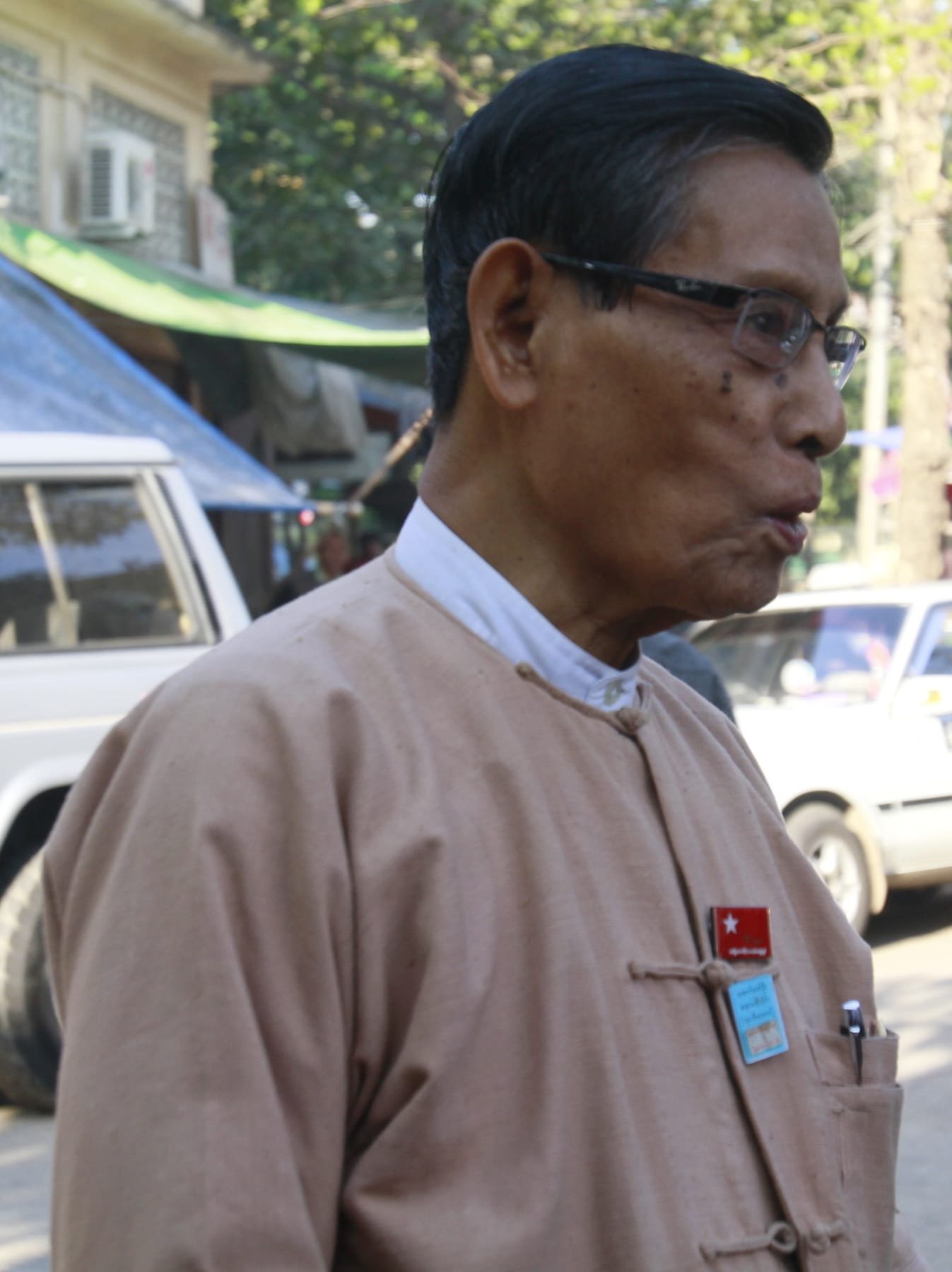
1927—2024
Tin Oo
Former army commander and co-founder of the National League for DemocracyThe former commander-in-chief who was purged by Ne Win, imprisoned and later helped found the NLD after the 1988 uprising.Read biography1943—2026
Dr Sein Win
Prime minister of Burma’s government in exile from 1990 to 2012The mathematician, elected parliamentarian and cousin of Aung San Suu Kyi who led the NCGUB government in exile for twenty-two years.Read biography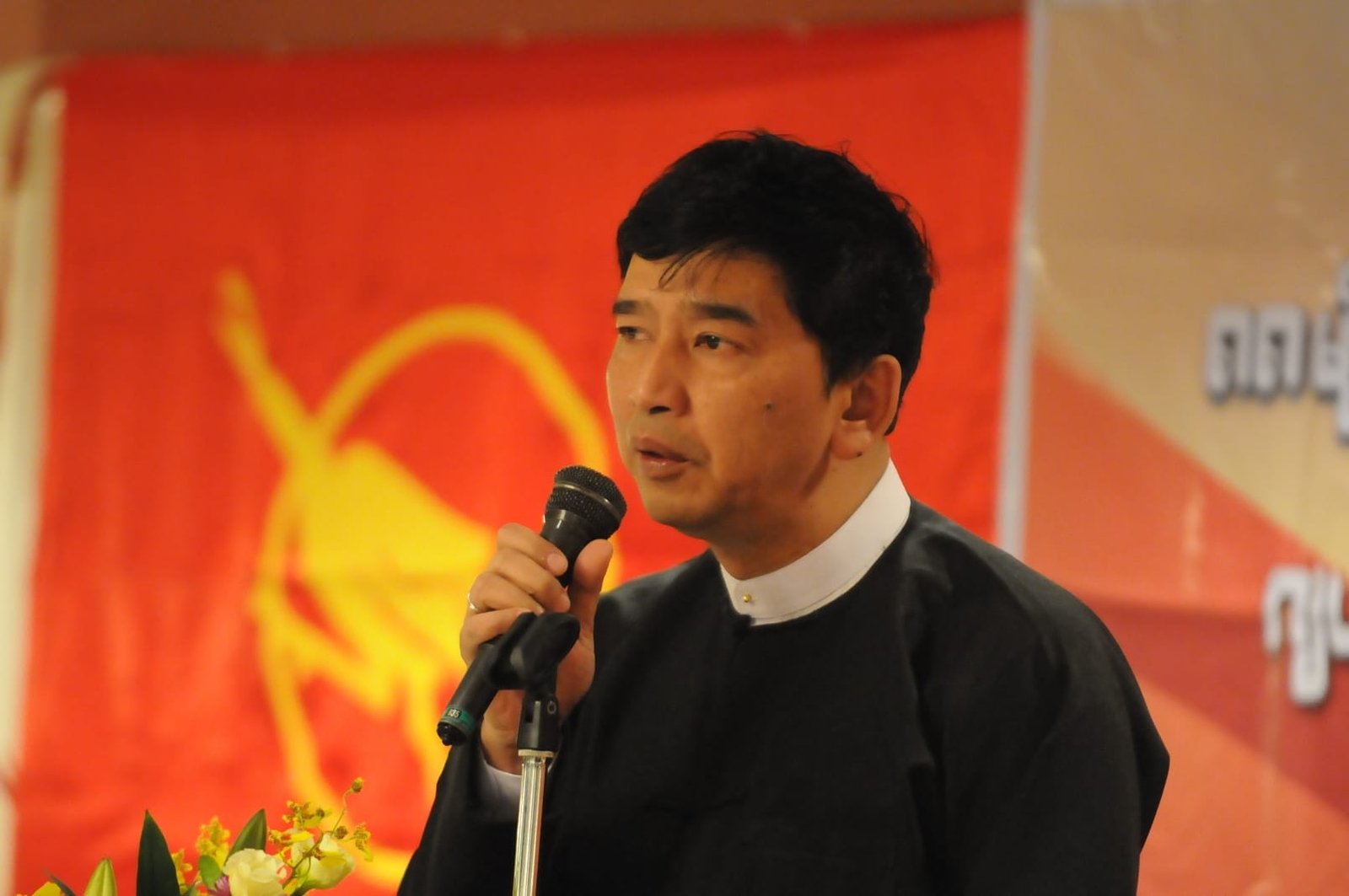
1962—
Min Ko Naing
Student leader and veteran democracy activistThe student organiser whose adopted name means “conqueror of kings” and whose repeated imprisonment made him a symbol of Burma’s 88 Generation.Read biography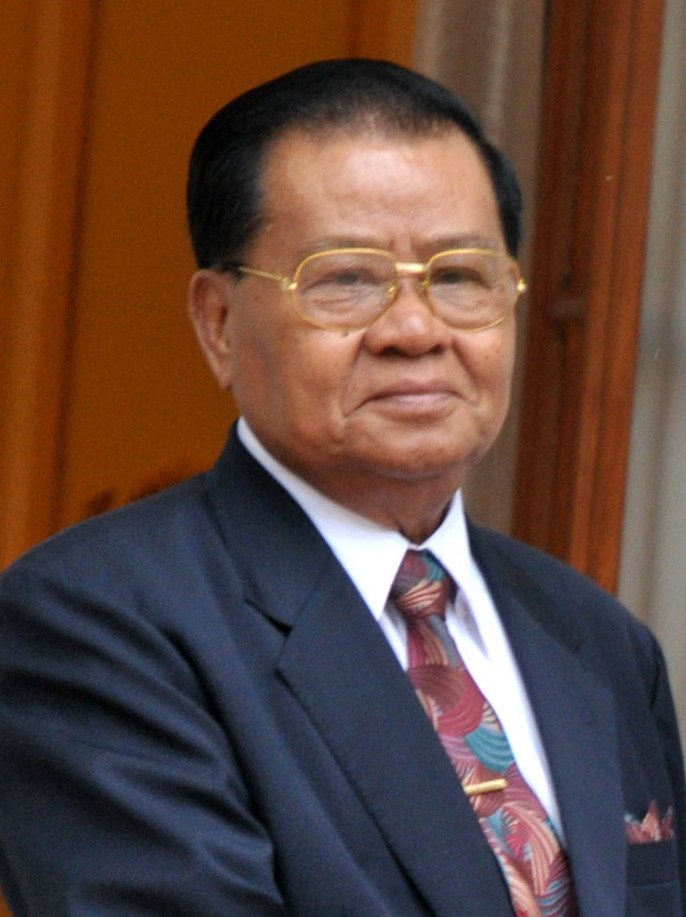
1933—
Than Shwe
Military ruler of Myanmar from 1992 to 2011The senior general who ruled Myanmar for nineteen years, suppressed organised opposition and designed the constitutional system that followed direct military government.Read biography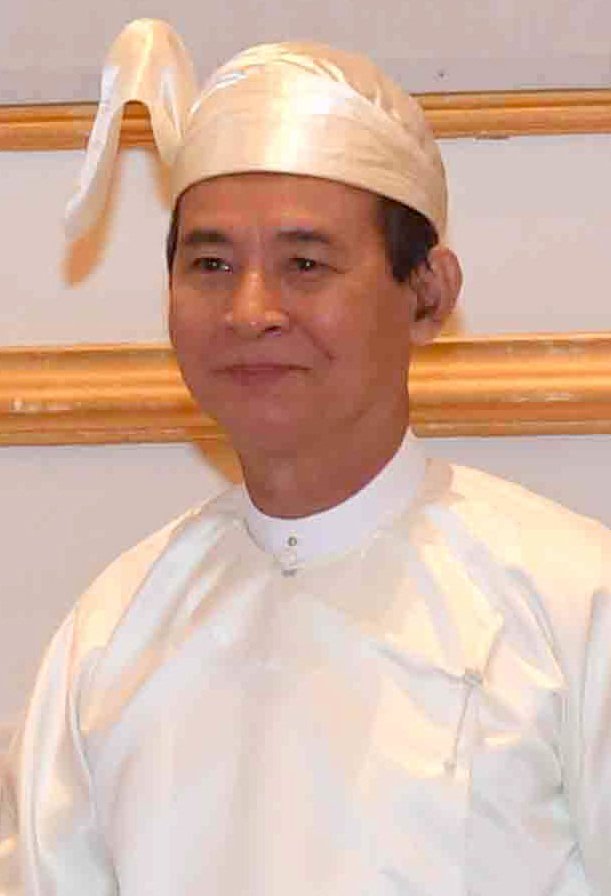
1951—
Win Myint
Lawyer and former president of MyanmarThe lawyer, 1988 democracy activist and parliamentary speaker who became president before the military detained and removed him in the 2021 coup.Read biography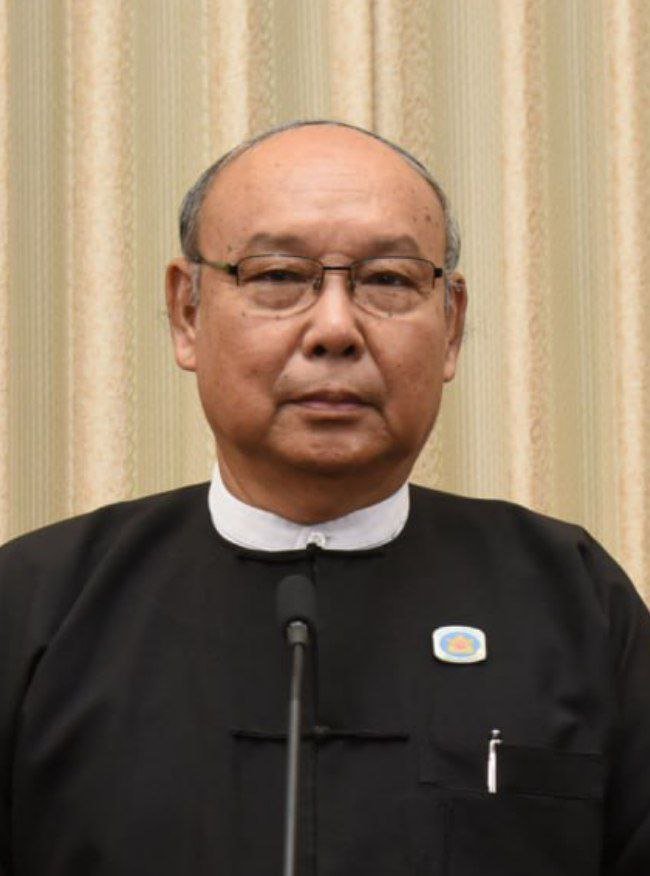
1952—
Mahn Win Khaing Than
Prime minister of Myanmar’s National Unity GovernmentThe Karen lawyer and former upper-house speaker who became prime minister of the parallel National Unity Government in April 2021.Read biographyQuick answers
Common questions
- Who won Myanmar’s 1990 election?
- The National League for Democracy won 392 of the 485 seats for which results were declared, about 81 per cent of the decided seats.
- Why did the NLD not form a government in 1990?
- The SLORC military council retained state power, refused to convene the elected assembly and declared that a new constitution had to be written before any government transfer.
- Was Aung San Suu Kyi elected in 1990?
- No. She was under house arrest and did not stand as a candidate. She led the party that won the election but was not one of its 392 MPs-elect.
- What was Declaration No. 1/90?
- It was the SLORC’s 27 July 1990 declaration asserting that the military council would retain legislative, executive and judicial power and assigning elected representatives a constitution-drafting role.
- What was the NCGUB?
- The National Coalition Government of the Union of Burma was a government in exile formed by elected representatives and opposition groups at Manerplaw on 18 December 1990.
- Who led the NCGUB?
- Sein Win, an elected MP, mathematician and cousin of Aung San Suu Kyi, served as its prime minister from 1990 until the organisation dissolved in 2012.
- Are the NCGUB and NUG the same organisation?
- No. The NCGUB arose from the blocked 1990 election and ended in 2012. The NUG was formed after the 2021 coup and bases its claim on the 2020 election and Federal Democracy Charter.
- When did Myanmar next transfer power after an election?
- The NLD’s 2015 victory produced a civilian-led government in March 2016, although the 2008 Constitution preserved extensive military authority.
Primary and institutional sources
How this history was checked
Dates, legal milestones and historical claims are checked against the official and institutional records below. This article was reviewed on 4 October 2026.
- United Nations General AssemblyReport on the 1990 election and Declaration No. 1/1990 · A/51/466
- United Nations Commission on Human RightsHuman-rights report detailing the 1990 election results · E/CN.4/1993/37
- Inter-Parliamentary UnionResolution on Myanmar’s elected parliamentarians and the unimplemented result
- Human Rights WatchVote to Nowhere · the election, Declaration No. 1/90 and National Convention
- Human Rights WatchChronology of political events in Burma, 1962–2008
- Library of CongressNCGUB official website archive
- Online Burma/Myanmar Library archiveBiographies of elected parliamentarians in exile
- National Unity Government of MyanmarAbout the government formed after the 2021 coup
- Nobel PrizeAung San Suu Kyi · Nobel Peace Prize facts
- Wikimedia CommonsAung San Suu Kyi portrait and CC BY-SA 2.0 record