In this biography
Quick facts
- Born
- 19 June 1945
- Birthplace
- Rangoon, British Burma
- Country
- Myanmar
- Nationality
- Burmese
- Known for
- Leading the NLD through military repression and two national election victories
- Nobel Peace Prize
- 1991
- Detained before 2010
- About 15 of 21 years
- Kawhmu by-election
- 55,902 votes · 85.38% · 2012
- State counsellor
- 6 April 2016–1 February 2021
- Custody announcement · 1 May 2026
- Military authorities announced transfer to a designated residence
Why this life matters
Aung San Suu Kyi’s life connects non-violent resistance and electoral legitimacy to the limits of civilian–military power-sharing, the Rohingya crisis and renewed detention after the 2021 coup.
Timeline
Key moments
Born in Rangoon
Born in Rangoon, then part of British Burma.
Entered the democracy movement
Returned to Burma during the nationwide uprising and became general secretary of the newly formed National League for Democracy.
Won an election mandate and the Nobel Peace Prize
The NLD won overwhelmingly while she remained under house arrest; the Nobel Committee recognised her non-violent struggle the following year.
Returned to legal politics and entered Parliament
Released after the 2010 election, she led the NLD back into registration and won the Kawhmu by-election in 2012.
Led the NLD to government
The NLD won large parliamentary majorities, and she became state counsellor because the Constitution barred her from the presidency.
Appeared for Myanmar at the ICJ
Acted as Myanmar’s agent in proceedings brought under the Genocide Convention following military operations against the Rohingya.
Detained in a military coup
The armed forces removed the elected government on 1 February.
Residence transfer announced
Military authorities announced a transfer on 1 May; the United Nations took note and called for unconditional release.
A political inheritance and an international education
Aung San Suu Kyi was born in Rangoon in 1945, two years before gunmen assassinated her father, independence leader Aung San. Her mother, Khin Kyi, later served as Burma’s ambassador to India. Suu Kyi studied in Delhi and at the University of Oxford, worked at the United Nations in New York and married the Tibet scholar Michael Aris in 1972. Their family life was centred largely in Britain.
That international background later amplified both her political reach and the sacrifices associated with detention. She returned to Burma in 1988 to care for her ill mother just as economic anger and opposition to one-party rule produced a nationwide uprising. Her family name gave her immediate recognition, but organisation and public speaking turned that inheritance into political leadership.
The 1988 uprising, the NLD and the 1990 mandate
On 26 August 1988, Suu Kyi addressed a vast crowd at the Shwedagon Pagoda and called for democratic government. She helped establish the National League for Democracy the following month and became its general secretary. The military seized direct control in September, and authorities placed her under house arrest in July 1989 after her movement continued to mobilise.
The NLD nevertheless won an overwhelming majority in the May 1990 election. The military refused to transfer power, arrested or disqualified elected representatives and treated the vote as a step toward drafting a constitution rather than a mandate to govern. The Nobel Committee awarded Suu Kyi the 1991 Peace Prize for her non-violent struggle, turning a confined opposition leader into an international symbol while the election result remained unimplemented.
Fifteen years of detention and a movement under pressure
Authorities released Suu Kyi in 1995 but restricted her travel and political work. She chose not to leave the country when Michael Aris was dying of cancer in Britain because she feared the government would prevent her return. Further periods of detention followed. After a pro-government mob attacked an NLD convoy near Depayin in 2003, she was taken into custody and eventually returned to house arrest.
Across the twenty-one years from 1989 to 2010, she spent about fifteen years detained. The figure combines separate orders rather than one continuous confinement. She was released on 13 November 2010, six days after a tightly controlled election the NLD had boycotted. Her release did not erase the military-designed Constitution, but it opened the next phase of legal opposition politics.
Sources for this section: [1]
The 2012 by-election and entry into Parliament
After the government revised the party-registration law, the NLD decided in November 2011 to register again. Suu Kyi contested Kawhmu, a rural lower-house constituency south-west of Yangon, in the 1 April 2012 by-elections. Official local data recorded 55,902 votes for her—85.38 per cent of valid votes. The NLD won 43 of the 44 seats it contested and became the largest opposition party, although it still held only about 6.4 per cent of all national parliamentary seats.
The new members initially refused to take their seats because the constitutional oath required them to “safeguard” the Constitution; the NLD wanted language pledging to “respect” it. Suu Kyi reversed course to avoid prolonging the confrontation, and she and her colleagues were sworn in on 2 May. The episode captured the NLD’s central dilemma: it entered institutions it sought to change while those institutions preserved military power.
The 2015 landslide and power without the presidency
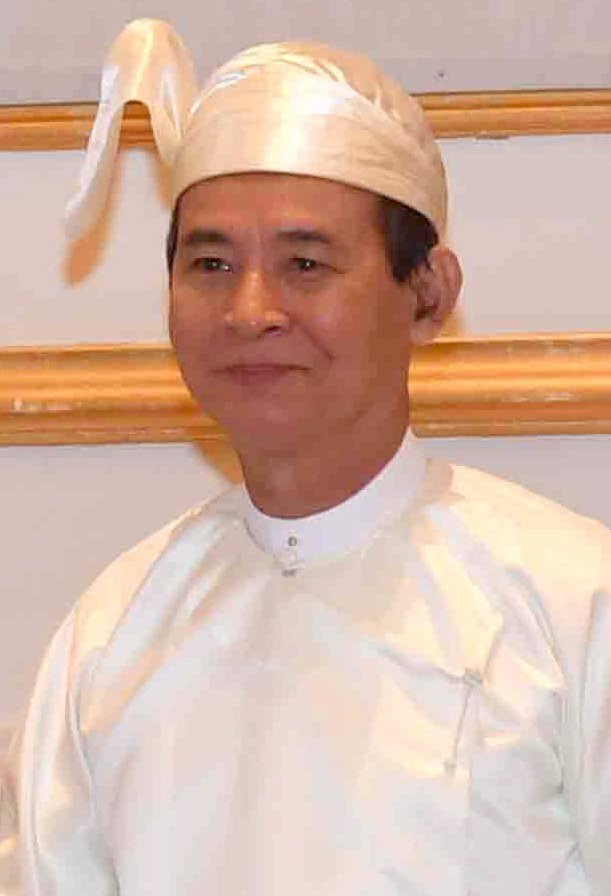
The NLD’s victory in the November 2015 general election gave it decisive elected majorities in both national chambers. The transfer that followed was Myanmar’s first between competing national parties in more than half a century. Yet Article 59(f) of the 2008 Constitution barred Suu Kyi from the presidency because her late husband and two sons were foreign citizens. Parliament instead chose her close ally Htin Kyaw as president.
A new law created the position of state counsellor in April 2016, allowing Suu Kyi to coordinate ministries and operate as the government’s de facto political leader. Constitutional limits remained substantial: serving officers occupied one quarter of parliamentary seats, the commander-in-chief selected the defence, home and border-affairs ministers, and the military retained autonomy over its operations. The NLD governed, but it did not command the armed forces or possess enough votes to amend the charter alone.
The Rohingya crisis and a transformed international reputation
Military operations in Rakhine State in 2017 drove a vast Rohingya exodus into Bangladesh amid documented killings, sexual violence and village destruction. A United Nations fact-finding mission found grounds to investigate senior military leaders for genocide, crimes against humanity and war crimes. Although the armed forces conducted the operations, Suu Kyi’s civilian government rejected many allegations, restricted scrutiny and failed to defend Rohingya citizenship and rights. Her earlier moral authority made that response especially consequential.
In December 2019 she appeared at the International Court of Justice as Myanmar’s agent in a case brought by The Gambia under the Genocide Convention. The case concerns Myanmar’s responsibility as a state, not Suu Kyi’s individual criminal liability. In January 2020 the Court ordered provisional measures to protect rights claimed under the Convention and preserve evidence; that order was not a final judgment on the merits. Her defence of the state consolidated a profound reassessment of her record abroad even as support remained strong among many voters at home.
A second election victory, the 2021 coup and closed trials
The NLD won another large majority in the November 2020 election. Domestic and international observers identified shortcomings, including the exclusion of Rohingya voters and cancelled constituencies, but did not find evidence supporting the military’s claim that fraud invalidated the result. On 1 February 2021, hours before the new Parliament was due to convene, the military detained Suu Kyi, President Win Myint and other civilian leaders and seized power.
Military-controlled courts later convicted her in closed proceedings on multiple charges. The United Nations and rights organisations rejected the process and repeatedly called for her release. On 1 May 2026 the military authorities announced that she had been moved from Nay Pyi Taw Prison to a designated residence to serve the remainder of her sentence. The UN secretary-general’s spokesperson took note of the transfer and called for the swift and unconditional release of all those arbitrarily detained.
How should Aung San Suu Kyi’s legacy be assessed?
Her political life cannot be reduced to either sainthood or betrayal. She endured long confinement, sustained an opposition organisation through repression and won repeated electoral mandates. The 2012 by-election demonstrated public support under a partially opened system, while the 2015 and 2020 results made the NLD’s national strength unmistakable. The 2021 coup showed that electoral legitimacy alone had not displaced the military’s coercive veto.
The same record includes grave failures in office. Constitutional limits explain why the civilian government did not control military operations, but they do not erase its political choices, public denials or neglect of Rohingya rights. A rigorous biography therefore holds both histories together: Suu Kyi remains a central victim and opponent of military authoritarianism, and she was also the dominant civilian leader during a human-rights catastrophe her government did not adequately confront.
Quick answers
Frequently asked questions about Aung San Suu Kyi
- Was Aung San Suu Kyi Myanmar’s president?
- No. Constitution Article 59(f) barred her from the presidency. She became state counsellor in April 2016 and served as the civilian government’s de facto political leader until the February 2021 coup.
- Why did she receive the 1991 Nobel Peace Prize?
- The Norwegian Nobel Committee recognised her non-violent struggle for democracy and human rights while she was under house arrest.
- Was she personally on trial at the ICJ?
- No. In December 2019 she appeared as Myanmar’s agent. The Gambia’s case concerns Myanmar’s responsibility as a state under the Genocide Convention, not her individual criminal liability.
- How long was she detained before her 2010 release?
- She spent approximately fifteen of the twenty-one years from 1989 to 2010 in detention across separate periods, not one continuous fifteen-year confinement.
Keep exploring
Lives connected to this story
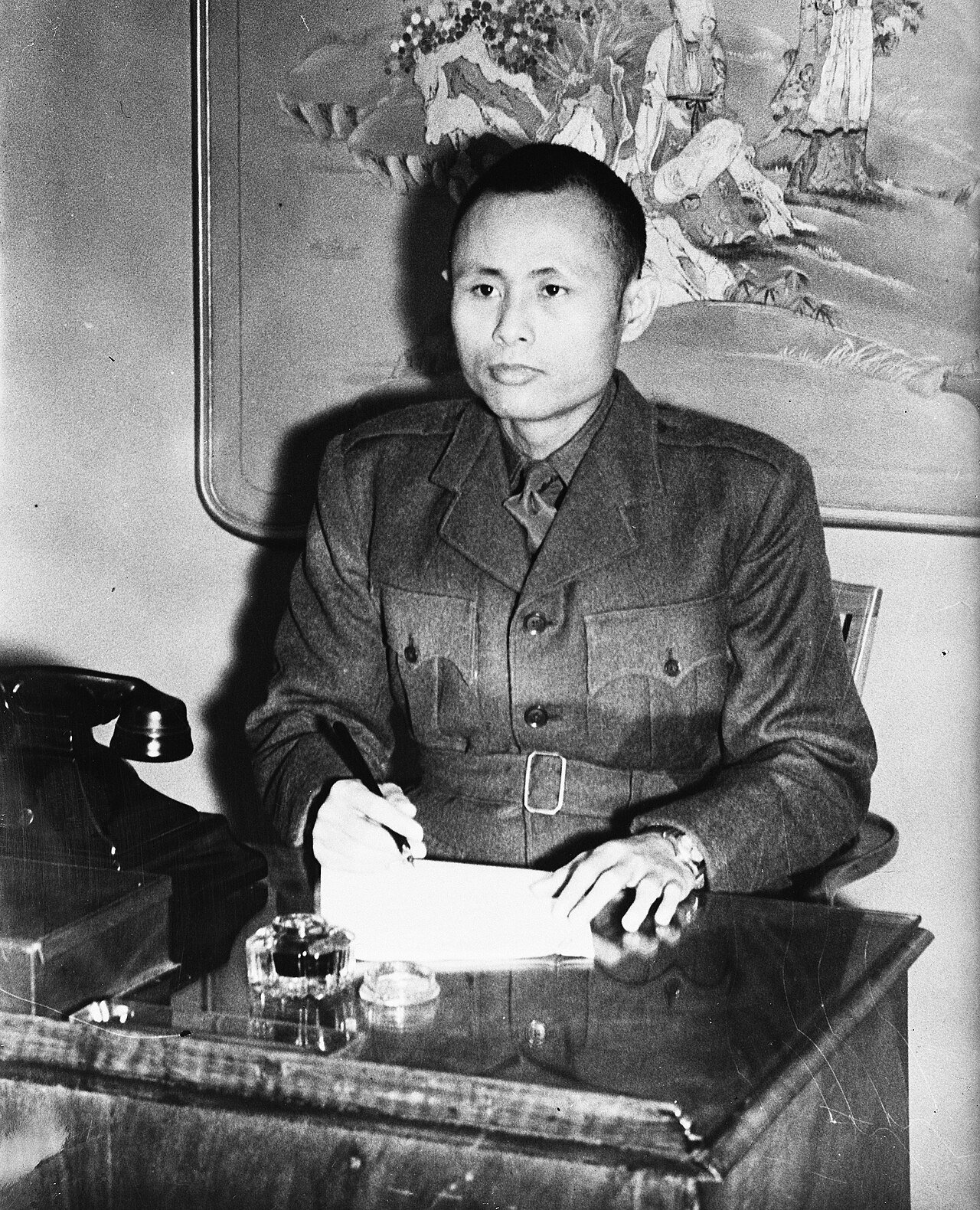
- Aung San
Read about her father’s independence movement and assassination in 1947.
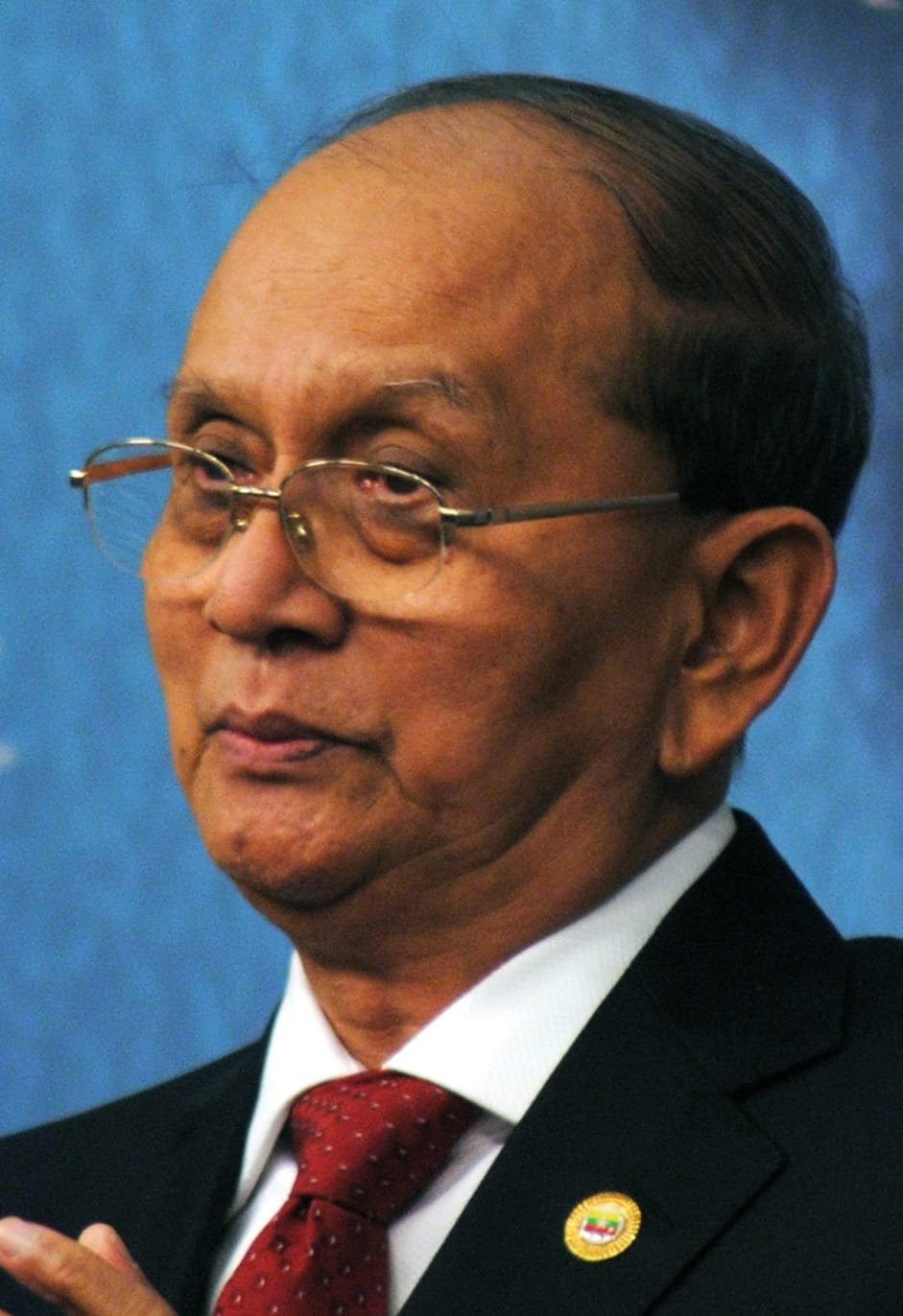
- Thein Sein
Examine the presidency during which the NLD re-entered legal parliamentary politics.
- Min Aung Hlaing
Read the military commander’s career and the 2021 coup that removed her government.
Sources and further reading
Explore the evidence
These references support the biography and offer further reading. Official records, first-person accounts and independent reporting provide different perspectives; image records document attribution and licensing.
- 1. Nobel PrizeAung San Suu Kyi — facts
- 2. United Nations General AssemblyReport of the Secretary-General on the situation in Myanmar
This is A/67/333, not A/67/383. The indexed official document confirms seats and swearing-in; the full PDF could not be freshly opened.
- 3. The Carter CenterObserving Myanmar’s 2015 General Elections · final report
- 4. United Nations Human Rights CouncilReport of the independent international fact-finding mission
- 5. International Court of JusticeThe Gambia v. Myanmar — case record and provisional measures
The proceedings concern state responsibility under the Genocide Convention. The January 2020 provisional-measures order is not a final merits judgment or Suu Kyi’s criminal conviction.
- 6. United Nations in MyanmarStatement by the spokesperson for the Secretary-General on Myanmar · 1 May 2026
The dated statement notes the announced residence transfer and requests unconditional release. It does not independently establish her location or conditions on this biography’s review date.
- 7. Myanmar Ministry of InformationTransfer from Nay Pyi Taw Prison to a designated residence
- 8. Wikimedia Commons2011 portrait and CC BY-SA 2.0 record
- 9. Norwegian Nobel CommitteeSpeech at Aung San Suu Kyi’s Nobel Lecture, 16 June 2012
- 10. Nobel Prize OutreachAung San Suu Kyi: biographical record
- 11. United Nations Development ProgrammeLocal Governance Mapping: Yangon, February 2015
The local-governance study reproduces the Kawhmu vote total and percentage for the 2012 by-election.
- 12. United Nations Human Rights CouncilDetailed findings of the independent fact-finding mission on Myanmar, 2018
UN investigative findings provide constitutional context and criticism of civilian authorities. Findings and recommendations are not criminal convictions.
- 13. The Carter CenterPreliminary statement on the 2020 Myanmar general elections
The preliminary observation statement reports on polling observed while recording discrimination, exclusions and observation limits. It does not establish that every aspect of the election was free of defects.