
The short answer
The NLD won four landmark votes, but only one created a government that completed a term. This guide follows the party from the 1988 uprising and blocked 1990 mandate through parliamentary return, civilian government, the Rohingya crisis, the 2021 coup and the military-appointed commission’s disputed dissolution decision.
Electoral record
Why four NLD victories produced four different outcomes
Seat totals alone do not explain the party’s history. Military decisions and constitutional rules determined whether each mandate produced no legislature, a small opposition caucus, an elected government or a blocked parliament.
| Question | 1990 general | 2012 by-elections | 2015 general | 2020 general |
|---|---|---|---|---|
| NLD result | 392 of 485 decided seats | 43 of 44 seats contested | 390 elected Union seats | 396 of 476 contested Union seats |
| Suu Kyi’s position | Detained; not a candidate | Won Kawhmu | Party leader; barred from presidency | State Counsellor and party leader |
| Immediate outcome | Legislature blocked | Small opposition caucus entered Parliament | Civilian government formed | New Parliament blocked by coup |
| Military position | Ruling council retained all state power | Reserved seats and security ministries retained | Constitutional veto and ministries retained | Seized power before Parliament met |
Chronology
A timeline of the turning points
The 8888 Uprising becomes a nationwide challenge
Students, workers, monks and residents demand an end to one-party military-backed rule, creating the political opening in which new opposition parties form.
The National League for Democracy is founded
Aung San Suu Kyi, Tin Oo, Aung Gyi and other opposition organisers establish the NLD after the military creates the SLORC.
Suu Kyi and Tin Oo are detained
The authorities remove the party’s best-known leaders before the promised multiparty election.
The NLD wins 392 of 485 decided seats
The party converts roughly 59% of valid votes into more than four fifths of the seats for which results are declared.
The military blocks the mandate and represses MPs
The elected legislature never convenes; representatives face arrest, disqualification, exile and pressure to resign.
The CRPP asserts the unimplemented mandate
NLD and allied representatives form the Committee Representing the People’s Parliament to speak for elected MPs.
The Depayin attack brings renewed detention
A violent attack on the NLD convoy is followed by another long period of house arrest for Aung San Suu Kyi and tighter restrictions on the party.
The NLD boycotts and loses legal registration
It refuses to re-register under rules requiring the removal of imprisoned members and does not enter the military-designed general election.
The NLD decides to re-register
Legal amendments and political opening under President Thein Sein allow the party to return to electoral politics.
The NLD wins 43 of the 44 seats it contests
Aung San Suu Kyi wins Kawhmu and the party enters the military-designed Parliament with a small but symbolically important caucus.
The party wins its first implemented national mandate
The NLD takes 390 elected Union Parliament seats and leads the civilian side of government from March 2016.
The NLD governs within military constitutional limits
Htin Kyaw and then Win Myint serve as president while Suu Kyi leads through the State Counsellor office; the armed forces retain reserved seats and security ministries.
A second national landslide produces 396 elected seats
Observers find that the result broadly reflects voters’ will despite serious exclusions and administrative shortcomings.
The military stops the new Parliament from meeting
President Win Myint, Aung San Suu Kyi and other officials are detained as the armed forces overthrow the elected government.
Military-appointed commission declares the NLD dissolved
The party refuses to register under the military authorities’ new law; the UN describes its exclusion as an attack on democratic institutions.
Military-controlled election proceeds without the NLD
Voting excludes major opposition parties and many conflict areas; UN officials say the process does not restore credible civilian rule.
Why was the NLD founded in 1988?
The National League for Democracy emerged from the collapse of Ne Win’s Burma Socialist Programme Party and the mass protests remembered as the 8888 Uprising. The military seized power again on 18 September 1988 but allowed political parties to register for a promised election. Nine days later, opposition figures including Aung San Suu Kyi, former armed-forces commander Tin Oo and retired general Aung Gyi established the NLD.
The founders brought different constituencies together. Suu Kyi supplied the moral authority of the independence movement through her father Aung San and became general secretary. Tin Oo connected former officers to democratic opposition. Aung Gyi initially chaired the party but departed after internal disputes. The NLD survived those early divisions because local organisers turned a leadership coalition into a national electoral network.
How did the NLD win the 1990 election while its leaders were detained?
The campaign was neither free nor equal. Martial law remained in force, independent media did not operate and the authorities placed Suu Kyi and Tin Oo in detention in July 1989. Suu Kyi was not a candidate. Local organisers nevertheless campaigned under the party symbol and voters used the ballot to reject the military-backed National Unity Party.
The NLD won 392 of the 485 seats for which results were declared—80.8%—with roughly 59% of valid votes. It was a legislative election rather than a direct presidential contest. The size of the victory mattered because it showed that the party’s appeal was not limited to Suu Kyi’s personal international profile, even though her name and detention shaped the campaign.
Why did the 1990 victory not produce an NLD government?
The ruling State Law and Order Restoration Council refused to transfer authority. Declaration No. 1/90 said the military council retained legislative, executive and judicial power and assigned elected representatives a constitution-drafting role. The Pyithu Hluttaw chosen by voters never met as a functioning legislature.
Authorities arrested, disqualified or pressured elected MPs, while others entered hiding or exile. Some formed the National Coalition Government of the Union of Burma abroad under Sein Win. Inside Myanmar, the NLD and allied representatives created the Committee Representing the People’s Parliament in 1998. Neither institution could exercise territorial government, but each preserved the claim that the 1990 mandate had not disappeared merely because the military blocked it.
How did the party survive repression from 1990 to 2010?
The NLD endured through local offices, family networks, former prisoners and repeated public campaigns, but it never operated normally. Suu Kyi spent about fifteen years in detention between 1989 and 2010. Tin Oo was also confined for long periods. Party offices were closed, members imprisoned and elected representatives pushed out of public life.
The 2003 Depayin attack demonstrated the danger of open organising. A pro-government crowd attacked the NLD convoy in Sagaing Region, killing and injuring an unknown number of supporters. Suu Kyi was taken into custody and returned to house arrest. By the time the military completed the 2008 Constitution, the party possessed durable symbolic legitimacy but little institutional power.
Why did the NLD boycott the 2010 election?
The new election law required existing parties to re-register and effectively remove imprisoned members, including Suu Kyi. The NLD decided that accepting those terms would abandon its detained leadership and legitimise a constitution it opposed. It therefore declined to register, and the election commission dissolved its legal status before the vote.
The boycott left the military-backed Union Solidarity and Development Party dominant in the new Parliament. Yet the party’s absence did not mean its public support had vanished. Suu Kyi was released six days after voting. Direct talks with President Thein Sein, prisoner releases and amendments to party-registration language created a different strategic choice in 2011: whether limited participation could open a route to broader change.
What did the 2012 by-election change?
The NLD re-registered and contested 44 of 45 vacancies in April 2012. It won 43, including all 37 lower-house constituencies it entered. Suu Kyi won Kawhmu and became an elected legislator for the first time. The result demonstrated that entering the constitutional system had not cost the party its mass support.
The victory changed legitimacy more than arithmetic. The NLD held only about 6.4% of the full Union Parliament after the by-election, while the USDP and appointed military officers retained overwhelming control. A dispute over the oath of office briefly delayed the new MPs, showing that participation required compromise inside a framework the party still wanted to amend.
How did the NLD form a government after the 2015 election?
The November 2015 election was the first national contest under the 2008 Constitution in which the NLD and all main national parties participated. The NLD won 255 elected lower-house seats and 135 elected upper-house seats, for 390 in the Union Parliament. That was enough to control the presidential electoral process despite the military’s unelected quarter of all national seats.
Section 59(f) prevented Suu Kyi from becoming president because her children were foreign citizens. The party selected Htin Kyaw, who took office in March 2016, and Parliament created the State Counsellor position the next month. Suu Kyi led the civilian government through that office. Win Myint replaced Htin Kyaw as president in 2018. This was the first time an NLD national-election victory produced an administration, twenty-six years after the blocked 1990 result.
How much power did the NLD government actually control?
The government controlled most civilian ministries and held large elected majorities, but it did not control the entire state. The Constitution reserved 25% of legislative seats for serving officers, gave the Commander-in-Chief nomination power over Defence, Home Affairs and Border Affairs, and required more than 75% parliamentary support for major amendments. Military appointees could therefore veto constitutional change.
The division was consequential rather than ceremonial. The armed forces retained their own command structure and extensive economic interests. The NLD could make policy, appoint much of the cabinet and pass ordinary laws, yet it could not unilaterally establish civilian control over the military, redesign the federal settlement or remove the constitutional veto.
Why is the NLD government’s record contested?
Supporters point to the peaceful 2016 handover, elected civilian administration, some economic and administrative reforms, and an attempt—ultimately blocked by military votes—to amend the Constitution. Critics point to centralised party decision-making, restrictions on expression, limited progress in the peace process and inadequate inclusion of ethnic political parties.
The Rohingya crisis is the gravest part of that record. The military carried out the 2017 operations that drove roughly three-quarters of a million people to Bangladesh, but the civilian government denied or minimised evidence, restricted scrutiny and defended Myanmar at the International Court of Justice in 2019. Constitutional limits explain why the NLD did not command the armed forces; they do not erase its political choices or responsibility for civilian policy.
What happened in the 2020 election and 2021 coup?
The NLD won 396 of the 476 contested Union Parliament seats in November 2020, improving on its earlier elected-seat total. ANFREL found significant problems—including disenfranchisement, conflict-related cancellations and restrictions—but concluded that the result reflected the electorate’s will. Myanmar’s election commission said there was no evidence supporting allegations of widespread fraud.
The military did not allow the new Parliament to convene. On 1 February 2021 it detained Win Myint, Suu Kyi and other leaders, declared an emergency through military-installed acting president Myint Swe and transferred power to Commander-in-Chief Min Aung Hlaing. The takeover turned the party from governing organisation back into a persecuted opposition network and triggered a much broader resistance movement.
Are the NLD, CRPH and NUG the same organisation?
No. The NLD is the political party founded in 1988. The Committee Representing Pyidaungsu Hluttaw, or CRPH, was formed after the coup by legislators elected in 2020, most of them NLD members, to assert parliamentary representation. The National Unity Government, or NUG, was then established as a broader parallel government involving NLD figures, ethnic representatives and other pro-democracy actors.
The three overlap, but treating them as interchangeable hides important political changes after the coup. The NUG claims a federal-democratic mandate broader than restoration of the former NLD cabinet. Some NLD politicians hold NUG or CRPH roles, while other resistance organisations are independent of the party and have their own constituencies, armed forces and political objectives.
Was the NLD permanently dissolved in 2023?
A military-appointed Union Election Commission declared the NLD and dozens of other parties dissolved in March 2023 after they did not register under a new military-issued law. The party rejected the legitimacy of the post-coup authorities and chose not to enter that process. The UN Secretary-General described the decision as an attempt to undermine democratic institutions rather than a neutral administrative event.
Its present status therefore depends on which authority is being described. Under the military administration’s electoral system, the NLD is excluded and no longer registered. Politically, its 2020 mandate, members and identity continue to shape opposition structures and public debate. “Dissolved” accurately describes the military-appointed commission’s legal action; it does not prove that the party’s support or organisation simply ceased to exist.
What did the 2025–2026 election mean for the NLD?
The military-controlled election took place in phases from December 2025 through January 2026 without the NLD and other major opposition forces. OHCHR reported that voting was limited to 263 of 330 townships, major parties were excluded, dissent was criminalised and conflict prevented credible nationwide participation. The military-linked USDP won a predictable landslide, alongside the Constitution’s reserved military bloc.
That process did not settle the argument over the NLD’s 2020 mandate. UN officials said it entrenched military authority rather than restoring representative civilian rule. As reviewed in October 2026, the NLD’s history remains open-ended: it is barred from the military’s institutions, many leaders and members have been imprisoned or displaced, and the wider opposition has evolved beyond a single party.
Continue the chronology
Related history guides
Myanmar’s 8888 Uprising
Begin with the mass movement, military takeover and political opening from which the NLD emerged.
Read the timeline1990—2012The 1990 Election and Government in Exile
Examine the 392-seat result, blocked legislature, elected MPs and parallel government in detail.
Read the timelineNovember 2010—March 2011The 2010 Election and Its Disputed Result
Understand the NLD boycott, loss of registration and military-backed party’s victory.
Read the timelineApril—May 2012The 2012 By-Elections and NLD Landslide
Read the complete 43-seat result, Suu Kyi’s Kawhmu victory and parliamentary-oath dispute.
Read the timelineNovember 2015—April 2016The 2015 Election and Transfer of Power
Follow the 390-seat landslide, presidential selection and first implemented national mandate.
Read the timeline2010—2020Myanmar’s Democratic Transition
Place NLD participation and government inside the broader opening and its constitutional limits.
Read the timeline1978—2026The Rohingya Crisis: Timeline and Accountability
Examine the gravest failure of the NLD government period and the military operations behind mass displacement.
Read the timelineNovember 2020—February 2021The 2020 Election: Results and Coup Claims
Review the 396-seat mandate, observer findings and evidence behind the military’s fraud claims.
Read the timeline2021—2026Myanmar’s Coup and Civil War
Continue from the blocked Parliament into resistance, the NUG and nationwide conflict.
Read the timelineBiography context
Explore Myanmar through connected lives
Myanmar Biographies
Explore 57 sourced lives across politics, business, sport and culture.
Explore the biographiesPolitics collectionMyanmar Political Leaders
Compare 44 biographies across independence, military rule, elections and resistance.
Explore the biographiesCategory indexPolitical Biographies
Browse party leaders, elected officials, opposition organisers and military rulers across Southeast Asia.
Explore the biographiesConnected biographies
Ten biographies connecting NLD leadership, elections, civilian government, military limits and post-coup resistance

1945—
Aung San Suu Kyi
Nobel laureate, NLD leader and former state counsellor of MyanmarThe opposition leader who spent about fifteen years in detention, won a parliamentary seat in 2012 and later led Myanmar’s civilian government through the office of state counsellor.Read biography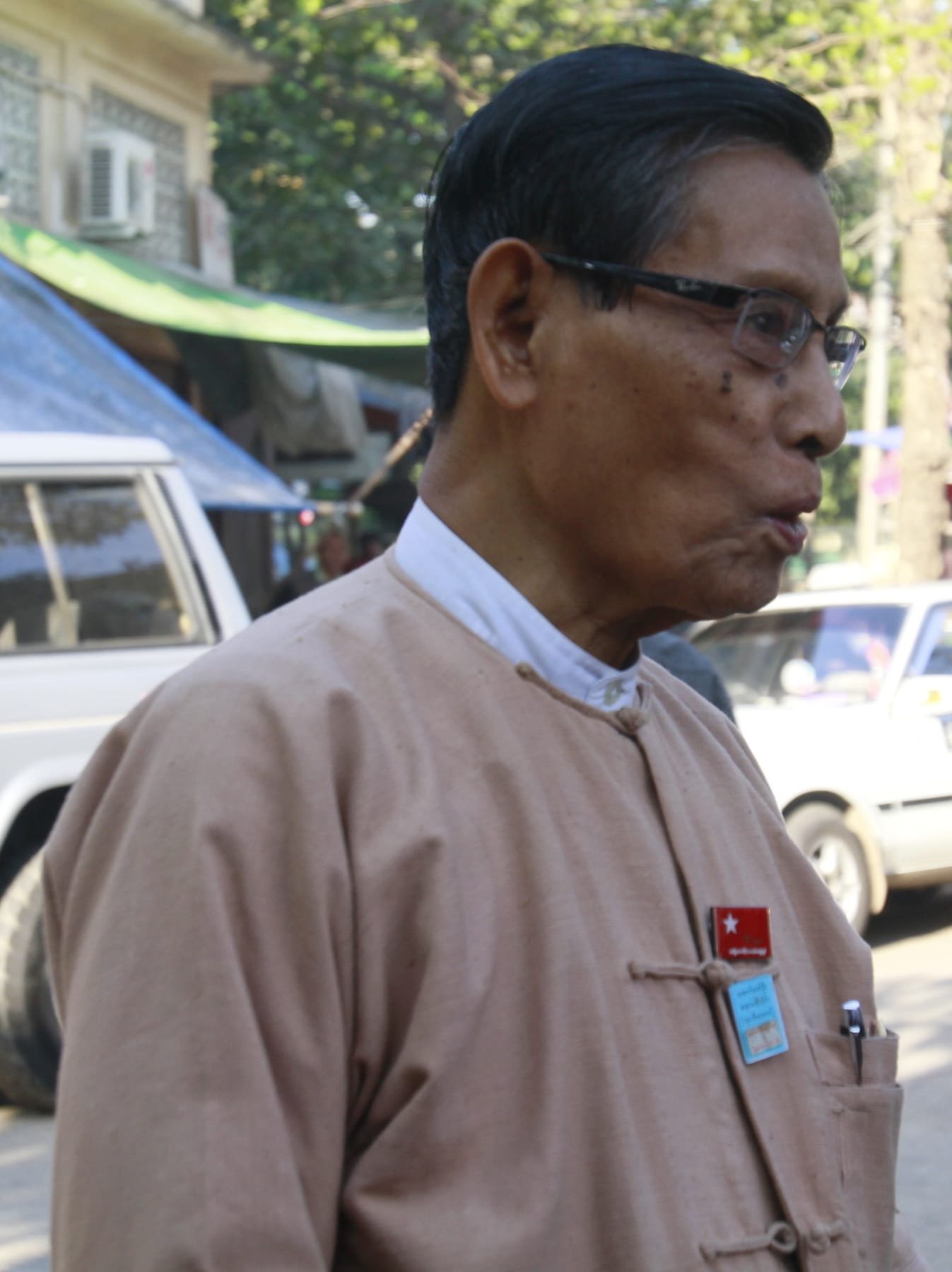
1927—2024
Tin Oo
Former army commander and co-founder of the National League for DemocracyThe former commander-in-chief who was purged by Ne Win, imprisoned and later helped found the NLD after the 1988 uprising.Read biography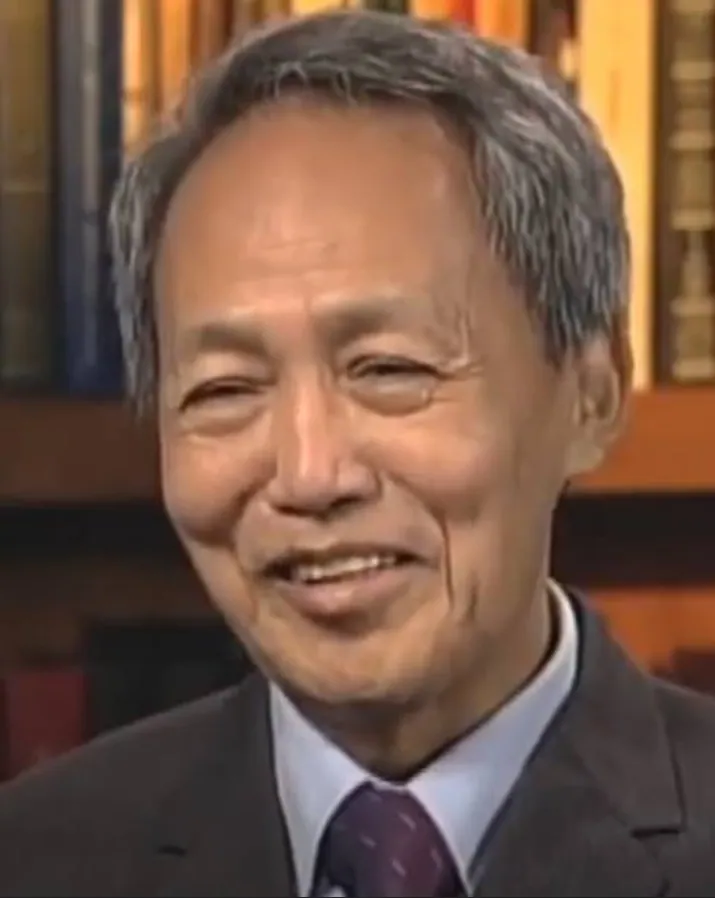
1943—2026
Dr Sein Win
Prime minister of Burma’s government in exile from 1990 to 2012The mathematician, elected parliamentarian and cousin of Aung San Suu Kyi who led the NCGUB government in exile for twenty-two years.Read biography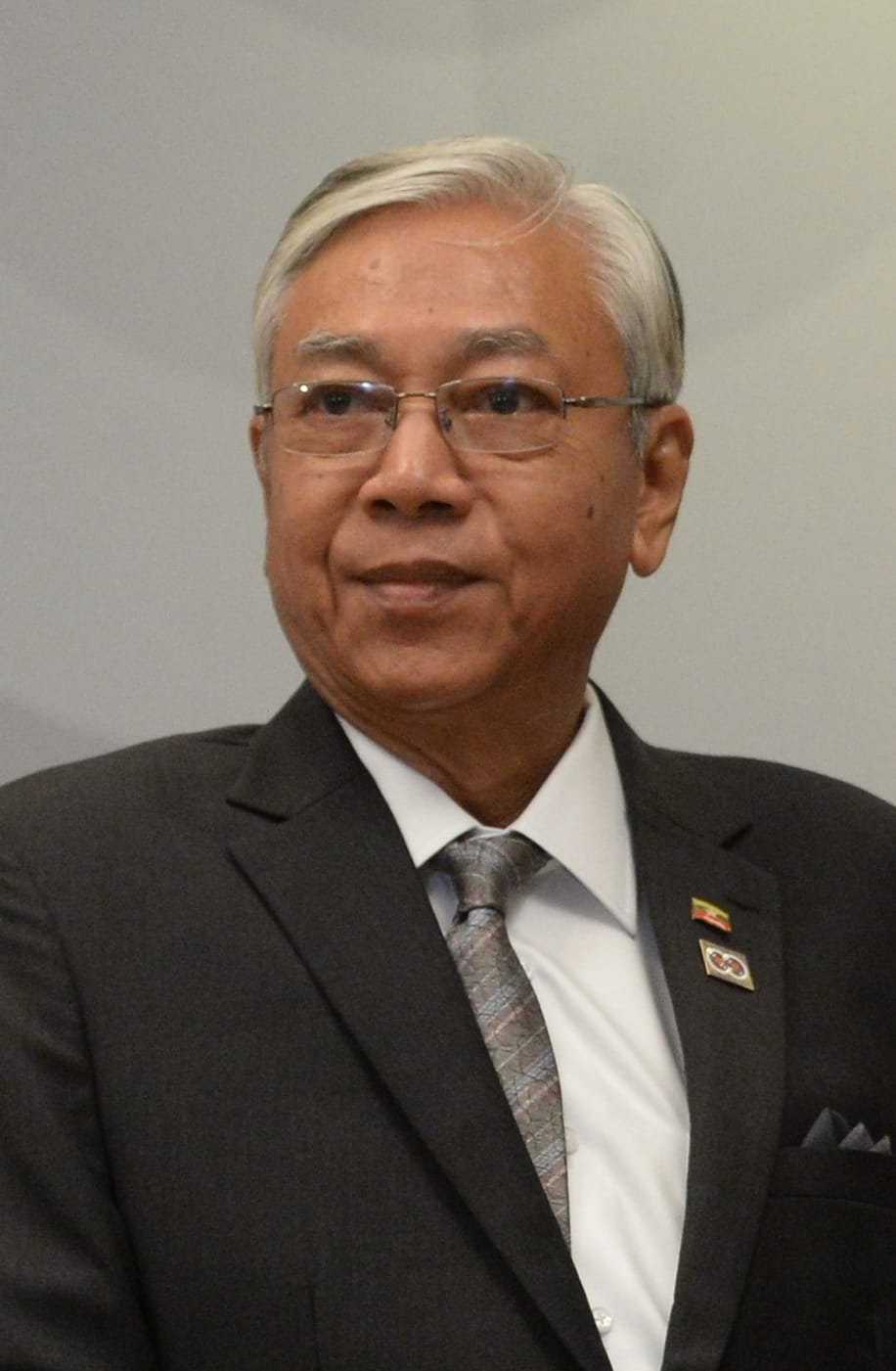
1946—
Htin Kyaw
President of Myanmar from 2016 to 2018The economist, writer and longtime Aung San Suu Kyi associate who became Myanmar’s first civilian president in more than fifty years.Read biography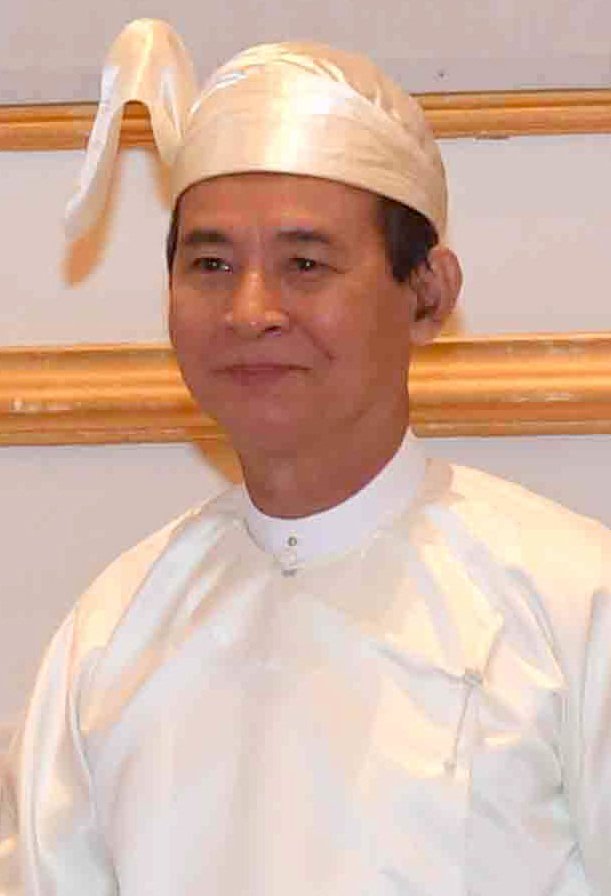
1951—
Win Myint
Lawyer and former president of MyanmarThe lawyer, 1988 democracy activist and parliamentary speaker who became president before the military detained and removed him in the 2021 coup.Read biography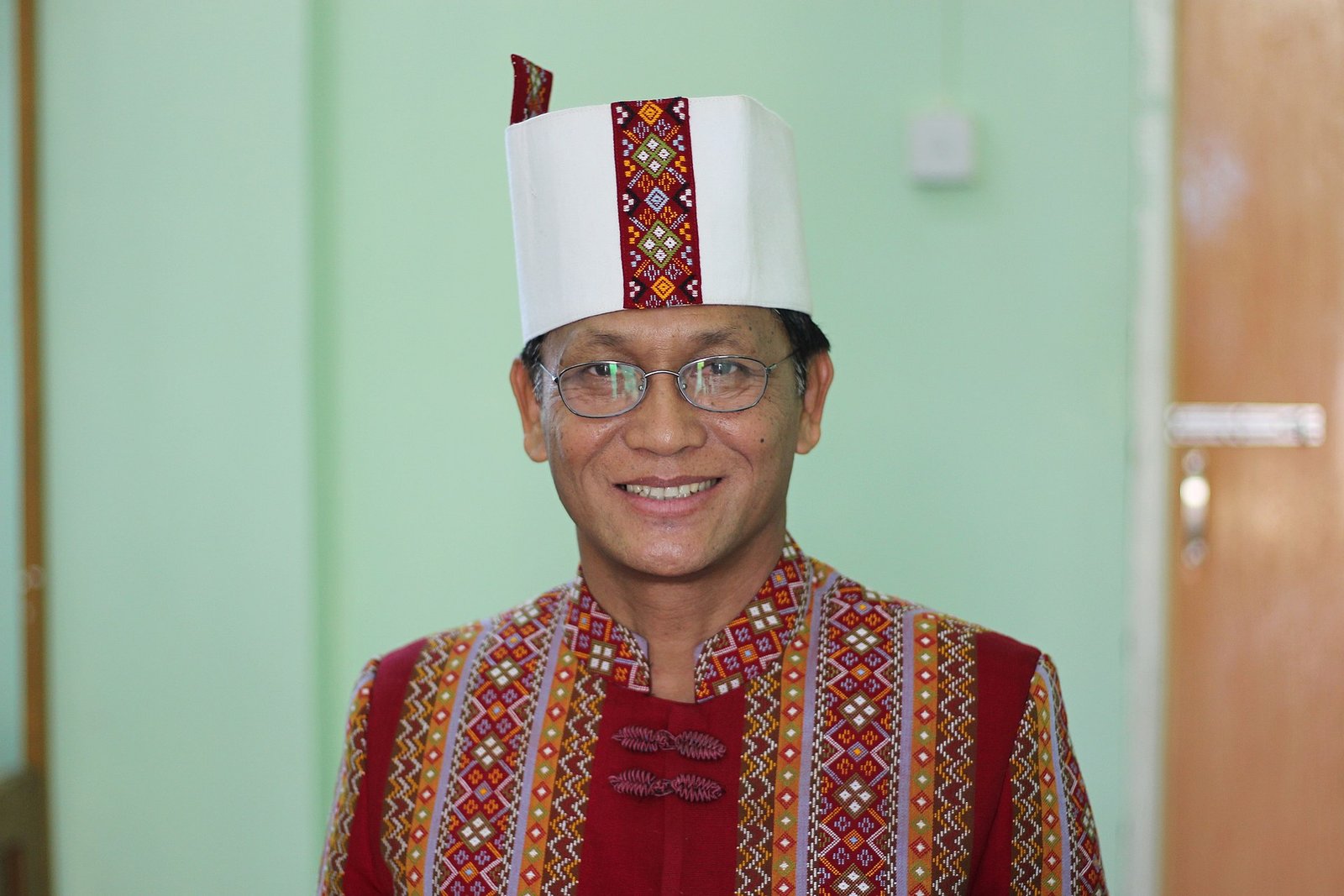
1958—
Henry Van Thio
Second vice president of Myanmar from 2016 to 2024The former army major and Chin State senator whose sudden nomination placed an ethnic Christian politician in Myanmar’s 2016 executive trio.Read biography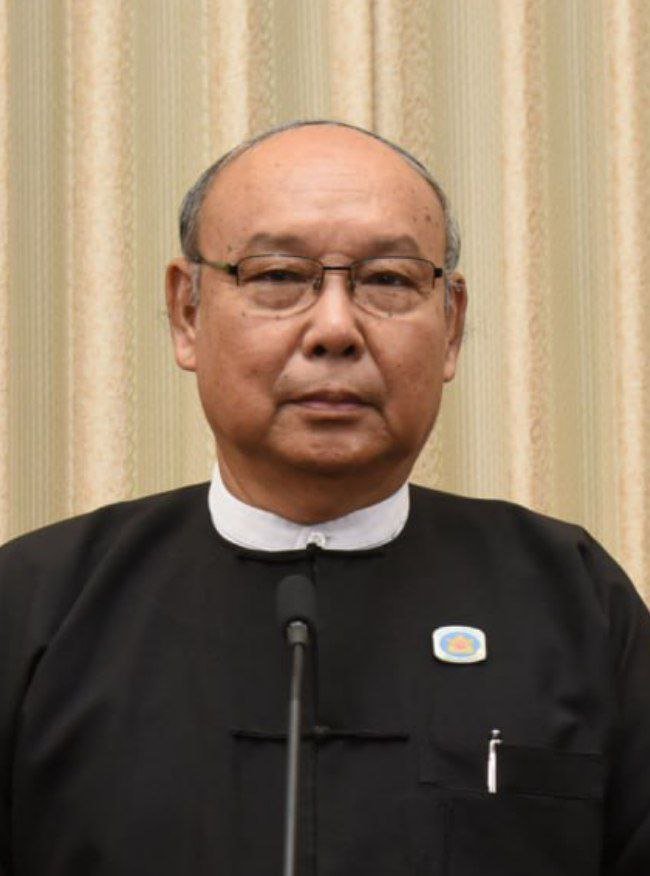
1952—
Mahn Win Khaing Than
Prime minister of Myanmar’s National Unity GovernmentThe Karen lawyer and former upper-house speaker who became prime minister of the parallel National Unity Government in April 2021.Read biography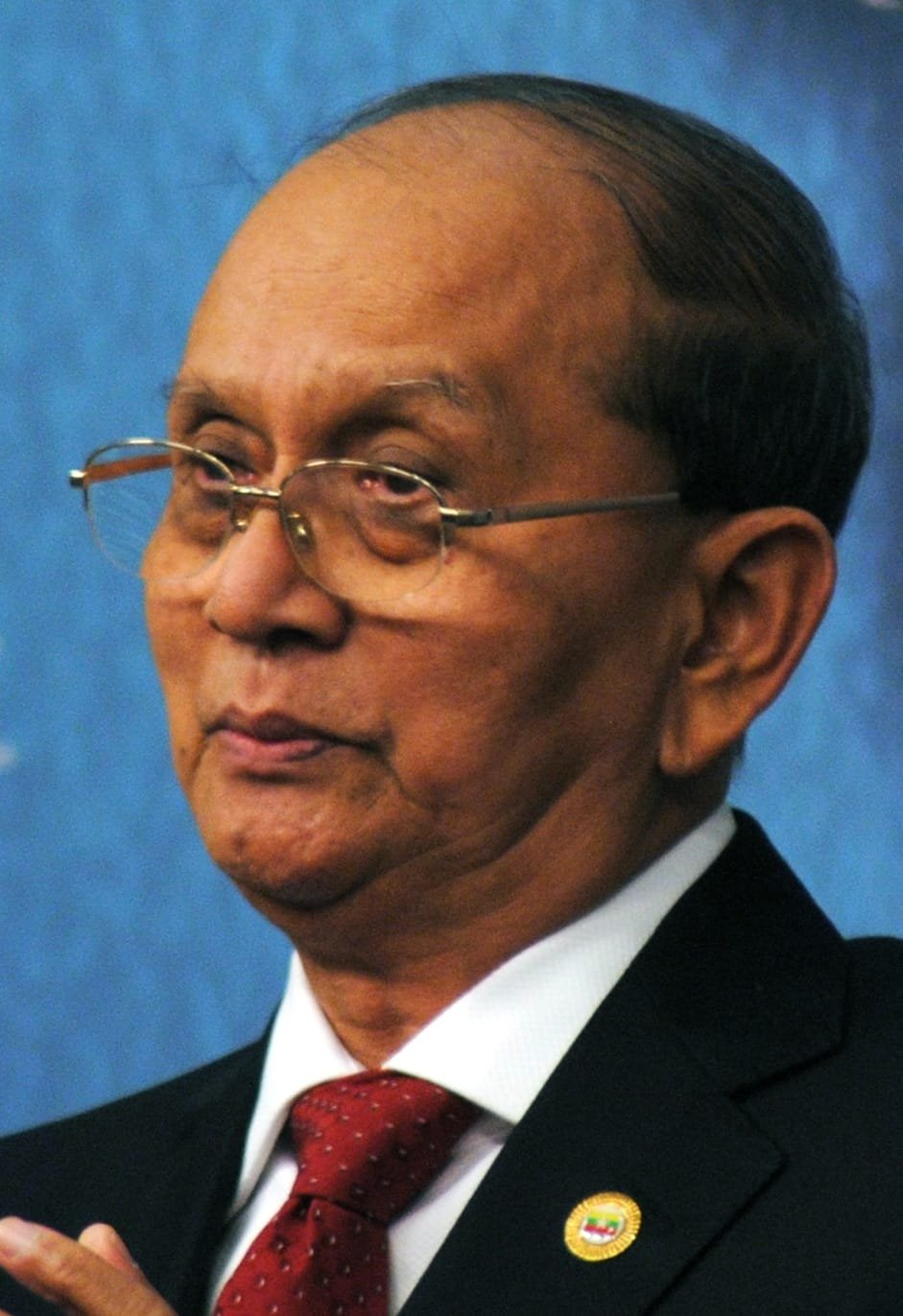
1945—
Thein Sein
President of Myanmar from 2011 to 2016The former general whose presidency released political prisoners, widened civic space and transferred power after the 2015 election without ending military autonomy.Read biography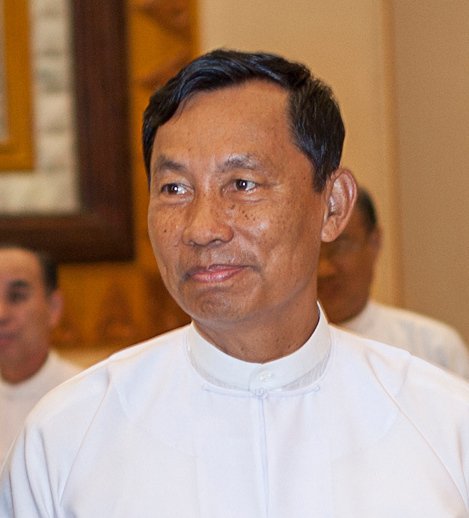
1947—
Shwe Mann
Former general and speaker of Myanmar’s lower houseThe former senior general who became parliament’s first lower-house speaker, challenged parts of the executive’s agenda and lost his party leadership before the landmark 2015 vote.Read biography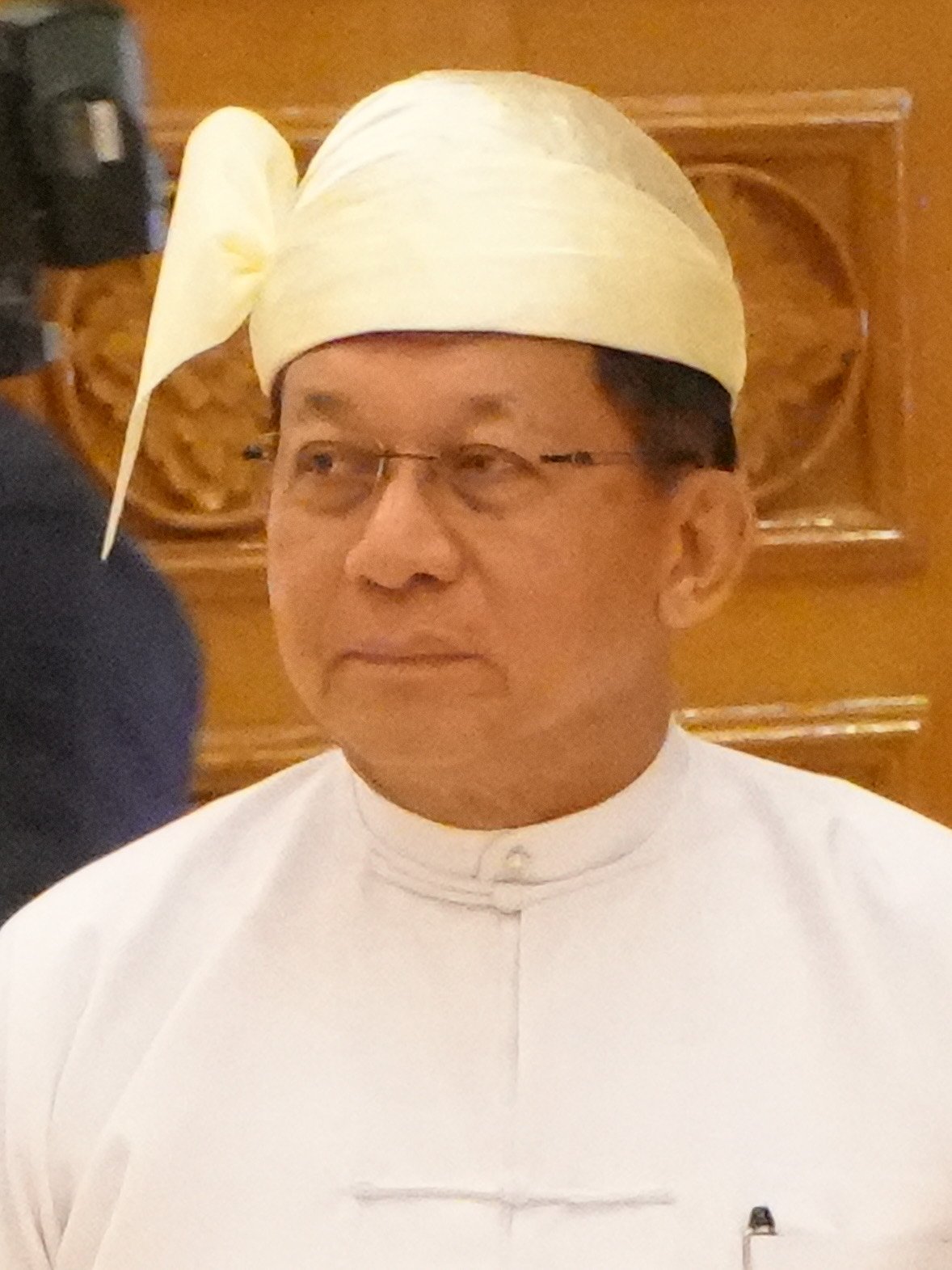
1956—
Min Aung Hlaing
President of Myanmar and leader of the 2021 military takeoverThe former commander-in-chief who led Myanmar’s 2021 coup, presided over nationwide war and became president through a military-controlled political process in 2026.Read biographyQuick answers
Common questions
- What does NLD stand for in Myanmar?
- NLD stands for National League for Democracy, the political party founded during Myanmar’s 1988 uprising and political crisis.
- Who founded Myanmar’s NLD?
- Aung San Suu Kyi, Tin Oo, Aung Gyi and other opposition organisers founded the party on 27 September 1988. Suu Kyi became general secretary and its best-known leader.
- How many seats did the NLD win in 1990?
- It won 392 of the 485 seats for which results were declared, or 80.8%, but the military did not allow the elected legislature to govern.
- Why did the NLD boycott the 2010 election?
- It rejected registration rules that would have required it to remove imprisoned members and participate under a military-designed constitution it opposed.
- How many seats did the NLD win in the 2012 by-elections?
- The party won 43 of the 44 vacancies it contested. Those seats gave it only a small parliamentary minority but restored its legal national platform.
- How many Union Parliament seats did the NLD win in 2015?
- It won 390 elected Union seats: 255 in the lower house and 135 in the upper house. That majority enabled it to choose the civilian president and form a government.
- Did the NLD government control Myanmar’s military?
- No. The 2008 Constitution kept the armed forces outside normal civilian command, reserved 25% of legislative seats and gave the Commander-in-Chief control over three security ministries.
- Did the NLD win Myanmar’s 2020 election?
- Yes. It won 396 of the 476 contested Union seats. Independent observers found that the result reflected voters’ will despite serious exclusions and other shortcomings.
- Is the NLD dissolved or banned today?
- The military-appointed election commission declared it dissolved in March 2023 after it refused to register under the post-coup law. The party and opposition actors reject the military authorities’ legitimacy, so that legal status remains politically contested.
- Is the National Unity Government the same as the NLD?
- No. The NUG includes NLD figures but was designed as a broader parallel government involving elected representatives, ethnic leaders and other pro-democracy actors.
- Why is the NLD’s record controversial?
- Its government restored elected civilian administration but did not end military power, centralised important decisions, made limited peace and federalism progress, and failed to protect the Rohingya or confront abuses effectively.
- Did the NLD participate in Myanmar’s 2025–2026 election?
- No. It was excluded after the military-appointed commission’s 2023 dissolution decision. UN reporting found that the later election lacked the conditions for a credible, inclusive vote.
Primary and institutional sources
How this history was checked
Dates, legal milestones and historical claims are checked against the official and institutional records below. This article was reviewed on 4 October 2026.
- United Nations Human Rights CouncilFact-Finding Mission report · political history, 1990 election and 2017 crisis
- United Nations General AssemblyReport on the 1990 election and Declaration No. 1/1990 · A/51/466
- Human Rights WatchChronology of political events in Burma, 1962–2008
- The Carter CenterObserving Myanmar’s 2015 General Elections · final report
- Asian Network for Free ElectionsDemocracy Under Attack · Myanmar’s 2020 election
- UN Human Rights CouncilHuman-rights implications of the 2020 election and 2021 coup · A/HRC/46/56
- United Nations Secretary-GeneralStatement on the military-appointed commission’s dissolution of opposition parties
- UN Human Rights OfficeBackground paper on Myanmar’s military-controlled election · November 2025
- UN Human Rights Office2026 update on the human-rights situation in Myanmar during 2025
- UN Department of Political and Peacebuilding AffairsSpecial Envoy briefing after the 2025–2026 military-controlled election
- Wikimedia CommonsAung San Suu Kyi portrait and CC BY-SA 2.0 record