
The short answer
Myanmar’s last nationwide election before the coup produced a clear NLD victory, but it also excluded large populations and exposed serious administrative weaknesses. This guide separates the verified count from voter-list allegations, explains what independent observers actually found and follows the result to the military’s prevention of the new Parliament.
Union Parliament result
The NLD won 396 of the 476 elected national seats
The table separates the two elected chambers and excludes the 166 seats appointed by the commander-in-chief. Twenty-two planned elected Union seats were not filled because voting was cancelled.
| Party | Lower house | Upper house | Elected Union seats |
|---|---|---|---|
| National League for Democracy | 258 | 138 | 396 · 83.2% of elected seats filled |
| Union Solidarity and Development Party | 26 | 7 | 33 |
| Shan Nationalities League for Democracy | 13 | 2 | 15 |
| Arakan National Party | 4 | 4 | 8 |
| Nine other winning parties | 14 | 10 | 24 |
| All elected seats filled | 315 of 330 planned | 161 of 168 planned | 476 of 498 planned |
Chronology
A timeline of the turning points
The election date is announced
The Union Election Commission schedules nationwide voting for 8 November while COVID-19 cases remain limited.
COVID-19 reshapes the campaign
A renewed outbreak brings stay-at-home orders and uneven restrictions as parties turn to television, social media and small events.
The commission cancels voting in conflict areas
Announcements remove all or part of many constituencies, especially in Rakhine and Shan States, without sufficiently transparent criteria.
More than 27.5 million voters cast ballots
Turnout reaches 71.89 per cent at almost 40,000 polling stations despite the pandemic and conflict exclusions.
The NLD passes the national majority threshold
Continuing counts confirm that the party can form the next government even with one quarter of seats reserved for military officers.
National results settle at 396 NLD seats
The NLD improves on its 2015 elected-seat total; the USDP wins 33 seats across the two national chambers.
The USDP and military challenge the process
Complaints focus on voter lists, advance voting and administration, while the pre-coup commission rejects demands to overturn the result.
The military prevents the new Parliament from meeting
Troops detain Win Myint, Aung San Suu Kyi and election officials hours before legislators are due to convene.
The post-coup commission annuls the result
A new election commission appointed under the military administration declares the vote invalid; independent observers do not endorse that conclusion.
What did Myanmar voters elect in 2020?
On 8 November voters chose most members of the Pyithu Hluttaw, or lower house; the Amyotha Hluttaw, or upper house; state and regional assemblies; and eligible ethnic-affairs ministers. They did not directly elect a president. Under the 2008 Constitution, the two elected parliamentary groups and the military bloc would each nominate a presidential candidate after the new legislature assembled.
The national Parliament had a constitutional total of 664 seats: 440 in the lower house and 224 in the upper house. The commander-in-chief appointed 110 and 56 members respectively, leaving 498 planned elected seats. Voting took place for 315 lower-house and 161 upper-house seats. Conflict-related cancellations therefore left 22 elected Union seats unfilled before the new Parliament could begin.
How did COVID-19 affect the campaign and election day?
Myanmar’s first major community outbreak began as campaigning approached. Health restrictions limited travel, rallies and in-person observation, but their implementation was not always consistent. Incumbency gave the NLD greater visibility through government communications, while smaller parties had fewer resources for broadcast and digital campaigning. The pandemic also complicated voter education and the training of polling staff.
Election day itself was calmer and better organised than the campaign conditions suggested. Official figures recorded 27,512,855 voters from an electorate of 38,271,447, producing turnout of 71.89 per cent. Nearly 40,000 polling stations operated. The Carter Center’s constrained observation mission assessed voting positively in 94 per cent of the 234 stations it visited and reported no major irregularities in its sample.
What were the complete 2020 national results?
The National League for Democracy won 258 elected lower-house seats and 138 elected upper-house seats, for 396 of the 476 elected Union seats filled. That was 83.2 per cent of the elected result and enough to command a majority even after adding the 166 appointed military legislators. The NLD’s victory was larger than its already decisive 390-seat result in 2015.
The military-aligned Union Solidarity and Development Party won 26 lower-house and seven upper-house seats, a total of 33. The Shan Nationalities League for Democracy won 15, the Arakan National Party eight, and other ethnic or regional parties won the remaining 24. Than Htay, the USDP chair, won Zeyathiri in Naypyidaw even as many party candidates lost elsewhere.
Why were constituencies cancelled and who was excluded?
The election commission cancelled voting where it judged that security conditions prevented a free and fair poll. The most extensive decisions affected Rakhine and Shan States, with additional cancellations in Kachin, Kayin, Mon and Bago. Some conflict conditions were severe, but observers and parties criticised the commission for announcing decisions late, giving little evidence for its boundaries and treating apparently similar areas differently.
The Carter Center estimated that cancellations disenfranchised about 1.4 million people. A separate and longstanding citizenship regime excluded most Rohingya, many of whom had voted in earlier elections before temporary identity documents were invalidated. When conflict cancellations, citizenship restrictions and other barriers are combined, more than two million residents were denied meaningful participation. The nationwide count can reflect the will of those who voted while the system still fails a broader test of inclusion.
Did observers call the election free and fair?
Independent assessments were qualified rather than absolute. The Carter Center found that voters were able to express their will and that election day was orderly, but it criticised military-reserved seats, unequal constituencies, opaque cancellations, weak safeguards for advance voting and exclusionary citizenship rules. COVID-19 limited the mission’s access, so it did not claim to have observed every part of the process.
The Asian Network for Free Elections concluded that the result broadly reflected voters’ will despite structural and administrative shortcomings. International IDEA later summarised the same basic distinction. The most accurate verdict is therefore not simply “free and fair” or “fraudulent”: the count produced a credible national mandate inside a constitutionally unequal and socially exclusionary political system.
What did the USDP and military allege?
The USDP filed complaints and sought a rerun or fuller investigation. The military publicised millions of entries it described as voter-list irregularities and demanded that the election commission and government resolve them. The claims drew attention to duplicate names, people without full identifying data and other weaknesses in a register assembled from inconsistent local records. Advance voting and local administration also generated specific disputes.
Those findings did not by themselves show that duplicate ballots were cast, identify a coordinated scheme or demonstrate enough unlawful votes to reverse a 363-seat gap between the NLD and USDP. A flawed name on a register is an opportunity or administrative error, not proof of a fraudulent ballot. Independent observers documented real shortcomings but did not find evidence that the national outcome failed to reflect the electorate’s choice.
Were the fraud claims ever proven?
No independent investigation established result-changing fraud. The pre-coup Union Election Commission rejected the military’s claims after reviewing complaints. The commission installed after the coup later announced that it had found widespread fraud and annulled the result. That later decision records the military administration’s position, but it cannot be treated as independent validation: the institution was reconstituted by the same authorities that had removed the elected government.
Evidence standards matter. Voter-list errors, legal disputes and poor transparency can justify reform or targeted adjudication without proving that 396 NLD victories were manufactured. A credible fraud finding would need to connect identifiable unlawful votes to particular contests at a scale capable of changing their outcomes. The publicly documented claims did not meet that threshold, while domestic and international observation supported the overall result.
Why did the election not produce a new government?
The outgoing Parliament remained in place until the elected members were due to meet on 1 February 2021. Before dawn, the armed forces detained President Win Myint, State Counsellor Aung San Suu Kyi, election officials and other political leaders. Military-installed acting president Myint Swe then declared an emergency and transferred power to commander-in-chief Min Aung Hlaing.
The military invoked election disputes as justification, but that did not make its succession lawful. A United Nations special rapporteur’s legal analysis concluded that Win Myint had been removed unlawfully and that the constitutional conditions for the emergency had not been met. The takeover prevented the elected Parliament from testing complaints through ordinary institutions and converted an electoral dispute into nationwide resistance and civil war.
What is the 2020 election’s historical legacy?
The result was the second consecutive landslide for the NLD and the clearest available measure of public preference before the coup. It also exposed the limits of the preceding democratic transition. Elected civilians governed, but the military retained its own chain of command, security ministries, an amendment veto and the physical capacity to remove them.
After the takeover, ousted legislators formed the Committee Representing Pyidaungsu Hluttaw, which helped establish the National Unity Government. The military authorities dissolved the NLD in 2023 and organised a separate, tightly controlled election in 2025–2026. Understanding those rival claims starts with a precise account of 2020: a credible popular mandate, serious exclusions and administrative flaws, unproven claims of outcome-changing fraud, and a Parliament stopped by force before it could convene.
Continue the chronology
Related history guides
The 2010 Election and Its Disputed Result
Compare documented advance-vote manipulation with the later fraud claims that preceded the coup.
Read the timeline2015–2016Myanmar’s 2015 Election and Transfer of Power
Compare the first NLD landslide and peaceful handover with the mandate blocked after 2020.
Read the timeline1988—2026National League for Democracy: History and Elections
Connect the party’s final pre-coup victory to its founding, government record and disputed dissolution.
Read the timeline2010–2020Myanmar’s Democratic Transition
Place both elections inside the decade of reform and limited civilian government.
Read the timeline2008—todayMyanmar’s 2008 Constitution Explained
Understand military seats, presidential selection and the emergency provisions invoked in 2021.
Read the timeline1978—2026The Rohingya Crisis: Timeline and Accountability
Connect Rohingya exclusion from the vote with the longer citizenship, displacement and accountability timeline.
Read the timeline2021–2026Myanmar’s Coup and Civil War
Follow the takeover, resistance governments, armed conflict and later controlled election.
Read the timeline1990–2012Myanmar’s 1990 Election and Government in Exile
Compare two NLD mandates the military prevented from producing an elected government.
Read the timeline1948–2026Myanmar Presidents and Heads of State
Trace Win Myint’s removal, Myint Swe’s disputed acting claim and later succession.
Read the timelineBiography context
Explore Myanmar through connected lives
Myanmar Biographies
Explore 57 sourced lives across politics, business, sport and culture.
Explore the biographiesPolitics collectionMyanmar Political Leaders
Compare 44 biographies across elections, military rule, minority rights and rival post-coup authority.
Explore the biographiesCategory indexPolitical Biographies
Browse presidents, legislators, party leaders and movement organisers across Southeast Asia.
Explore the biographiesConnected biographies
Eight biographies explaining the result, fraud claims, coup and competing mandates

1945—
Aung San Suu Kyi
Nobel laureate, NLD leader and former state counsellor of MyanmarThe opposition leader who spent about fifteen years in detention, won a parliamentary seat in 2012 and later led Myanmar’s civilian government through the office of state counsellor.Read biography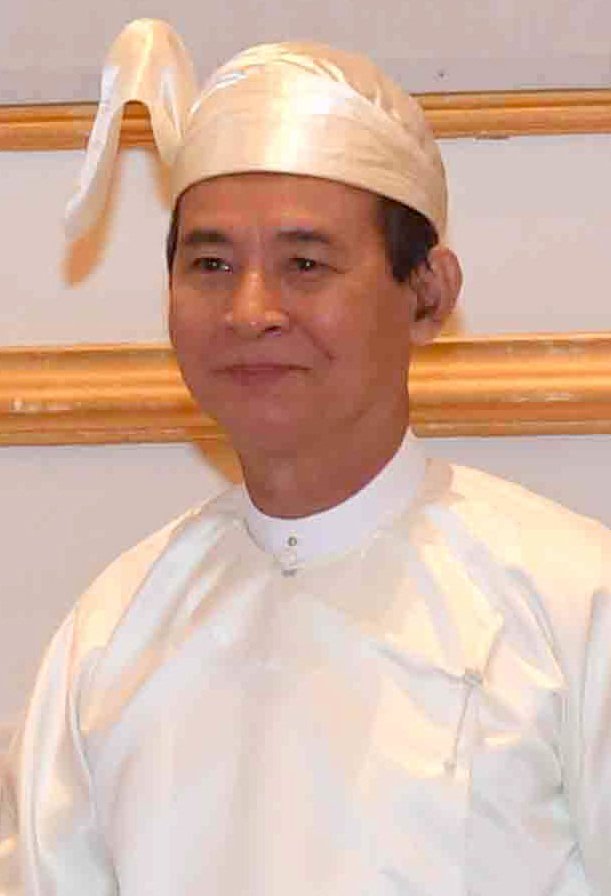
1951—
Win Myint
Lawyer and former president of MyanmarThe lawyer, 1988 democracy activist and parliamentary speaker who became president before the military detained and removed him in the 2021 coup.Read biography
1954—
Than Htay
Former USDP chair, cabinet minister and retired brigadier generalThe former army officer and energy minister who rebuilt the USDP after its 2015 defeat, won a parliamentary seat in 2020 and challenged the NLD landslide.Read biography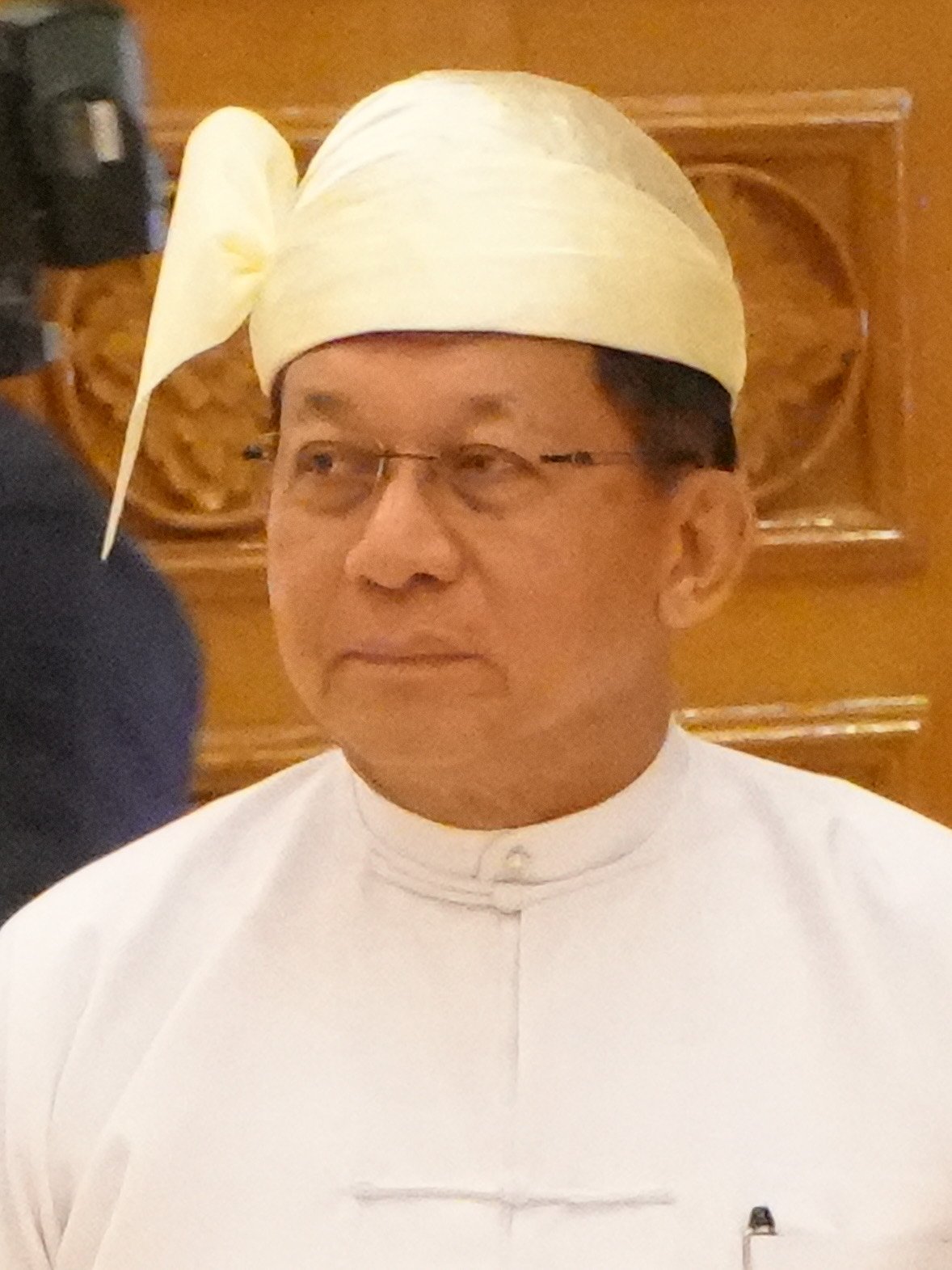
1956—
Min Aung Hlaing
President of Myanmar and leader of the 2021 military takeoverThe former commander-in-chief who led Myanmar’s 2021 coup, presided over nationwide war and became president through a military-controlled political process in 2026.Read biography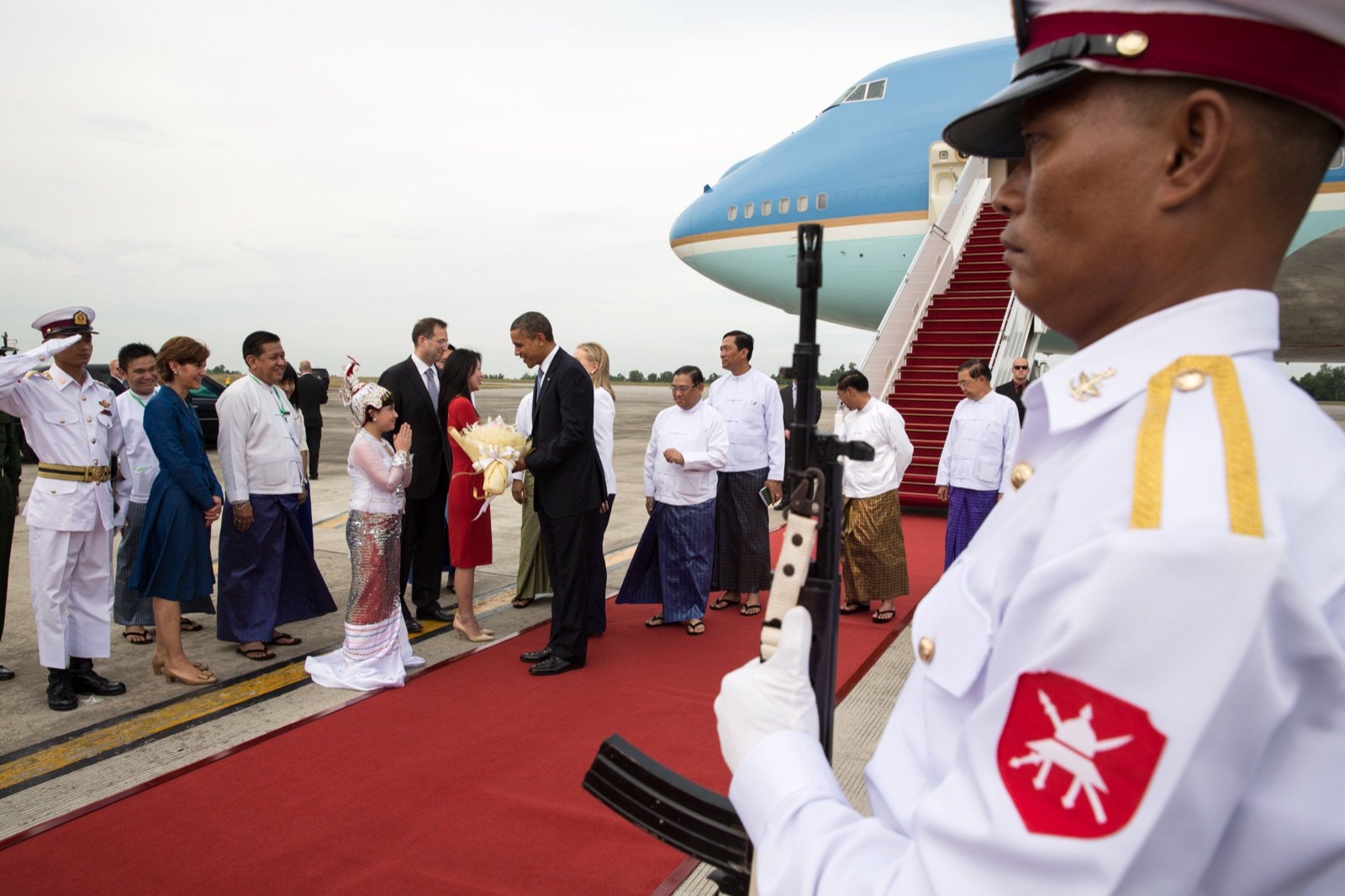
1951—2025
Myint Swe
Military officer, first vice-president and disputed acting presidentThe former general who became Yangon chief minister, military-selected first vice-president and the formal constitutional instrument of the 2021 takeover.Read biography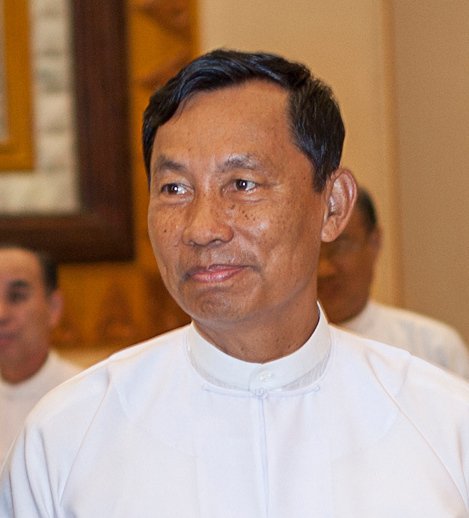
1947—
Shwe Mann
Former general and speaker of Myanmar’s lower houseThe former senior general who became parliament’s first lower-house speaker, challenged parts of the executive’s agenda and lost his party leadership before the landmark 2015 vote.Read biography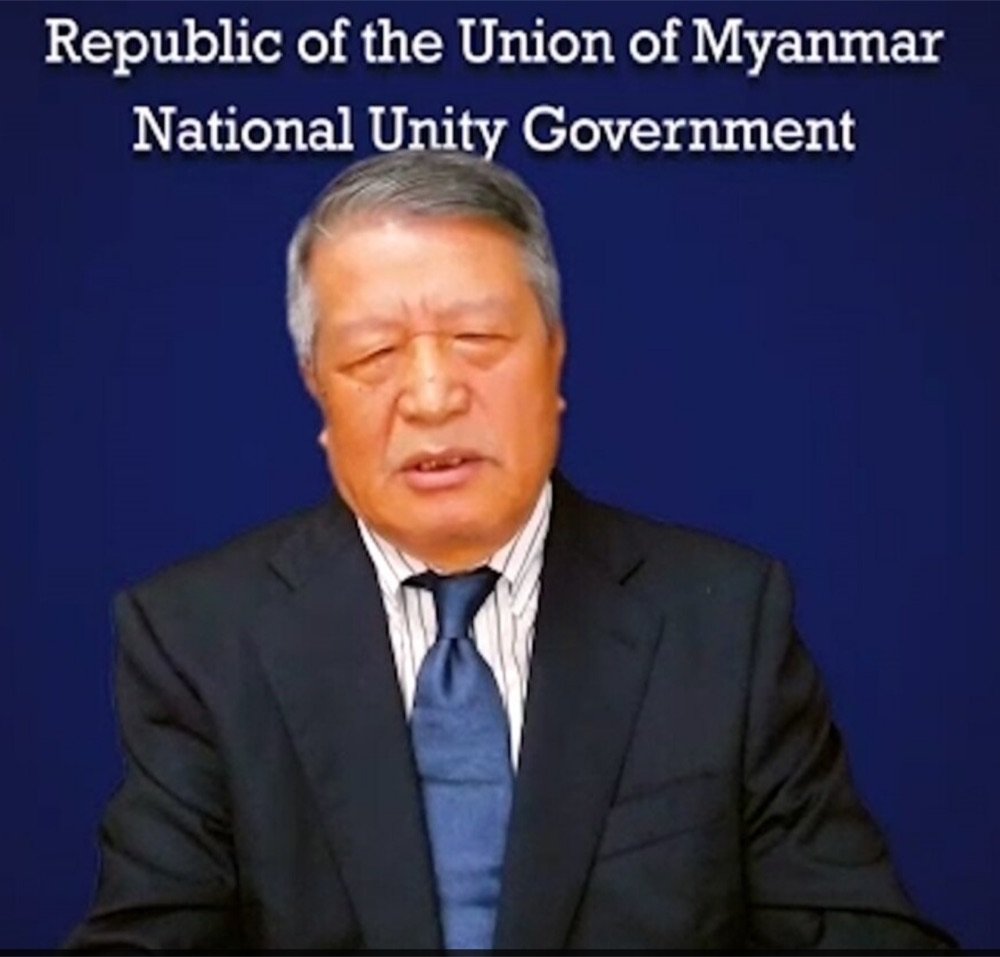
1950—
Duwa Lashi La
Kachin lawyer and acting president of Myanmar’s National Unity GovernmentThe Kachin lawyer and civil-society leader appointed vice-president and acting president of Myanmar’s opposition National Unity Government.Read biography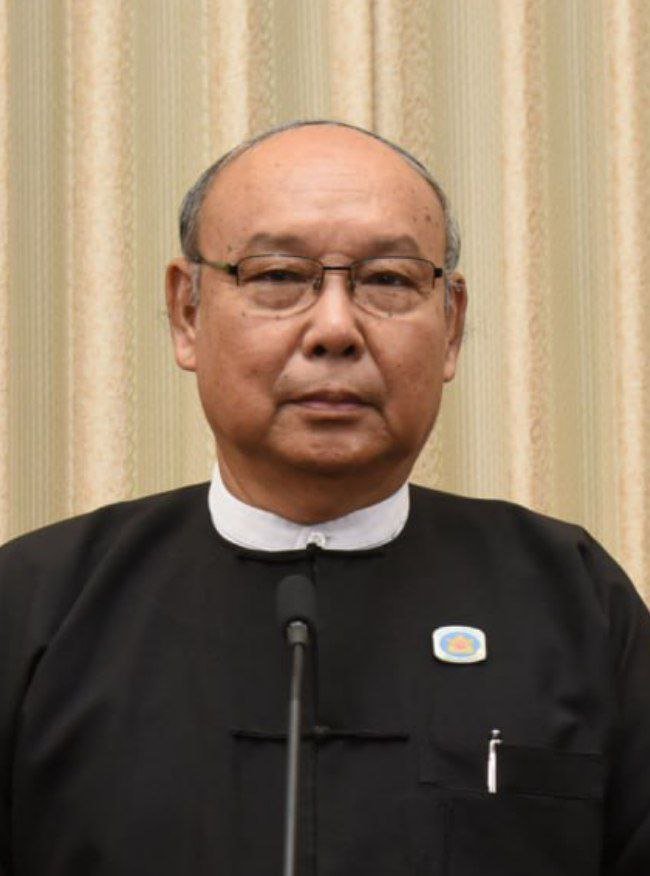
1952—
Mahn Win Khaing Than
Prime minister of Myanmar’s National Unity GovernmentThe Karen lawyer and former upper-house speaker who became prime minister of the parallel National Unity Government in April 2021.Read biographyQuick answers
Common questions
- Who won Myanmar’s 2020 general election?
- Aung San Suu Kyi’s National League for Democracy won 396 of the 476 elected Union Parliament seats filled. The USDP won 33.
- How many seats did the NLD win in 2020?
- The NLD won 258 elected seats in the lower house and 138 in the upper house, for a national total of 396.
- What was turnout in Myanmar’s 2020 election?
- Official figures recorded 27,512,855 voters from 38,271,447 eligible voters, a turnout of 71.89 per cent.
- Was Myanmar’s 2020 election free and fair?
- Observers found that the result broadly reflected voters’ will and reported no major election-day irregularities in their samples, but they also identified military-reserved seats, opaque cancellations, unequal constituencies, weak administration and severe disenfranchisement.
- Were the military’s election-fraud claims proven?
- No independent investigation proved enough fraudulent voting to change the nationwide result. Voter lists had defects, but list anomalies are not evidence that duplicate or unlawful ballots were actually cast.
- How many Union Parliament seats were left unfilled?
- Voting filled 476 of 498 planned elected Union seats. Cancellations left 15 lower-house and seven upper-house seats unfilled, a total of 22.
- Why was voting cancelled in some areas?
- The election commission cited security conditions in conflict-affected areas. Observers criticised the criteria as insufficiently transparent and estimated that cancellations disenfranchised about 1.4 million people.
- Who led the USDP in the 2020 election?
- Former energy minister and retired brigadier general Than Htay chaired the USDP. He won the Zeyathiri lower-house seat, but the party won only 33 elected national seats.
- Why did the new Parliament never meet?
- The military detained elected leaders and seized power on 1 February 2021, the morning the new Parliament was due to convene.
Primary and institutional sources
How this history was checked
Dates, legal milestones and historical claims are checked against the official and institutional records below. This article was reviewed on 4 October 2026.
- The Carter CenterPreliminary statement on Myanmar’s 2020 general election
- Asian Network for Free ElectionsDemocracy Under Attack · 2020 election observation report
- Transnational InstituteThe 2020 General Election in Myanmar · results and analysis
- International IDEAMyanmar election fact sheet
- Myanmar Digital NewsOfficial figures and percentages for the 2020 election
- United Nations Human Rights OfficeElection participation and Rohingya disenfranchisement
- United Nations Special Rapporteur on MyanmarLegal analysis of the 2021 military takeover
- Wikimedia CommonsAung San Suu Kyi portrait · CC BY-SA 2.0