
The short answer
Myanmar’s 2015 election delivered a genuine popular mandate and the first peaceful handover between competing political forces in decades. This guide follows the result through parliament’s indirect presidential vote, explains why Aung San Suu Kyi could not take the presidency and shows exactly which powers the military never surrendered.
How power was allocated
The electorate chose parliament, but parliament chose the president
Myanmar did not hold a direct presidential election. Voters elected most legislators, the armed forces appointed the remaining quarter, and three parliamentary groups nominated presidential candidates. The combined assembly then ranked those candidates by vote.
| Stage | Who participated | Decisive result | Institutional consequence |
|---|---|---|---|
| General election | 23.91 million voters across national and state or regional contests | NLD won 390 elected Union Parliament seats | The party controlled both civilian nomination groups |
| Lower-house nomination | Elected and military-appointed Pyithu Hluttaw members | Htin Kyaw defeated Sai Mauk Kham internally | Htin Kyaw entered the final presidential ballot |
| Upper-house nomination | Elected and military-appointed Amyotha Hluttaw members | Henry Van Thio became the chamber’s nominee | An ethnic Chin NLD senator entered the executive trio |
| Military nomination and final vote | The appointed military bloc nominated Myint Swe; all MPs then voted | Htin Kyaw 360 · Myint Swe 213 · Henry Van Thio 79 | One president and two vice presidents took office |
Chronology
A timeline of the turning points
The NLD returns through parliamentary by-elections
Aung San Suu Kyi and other opposition candidates enter the legislature after the party boycotted the 2010 election.
Constitutional amendments fail
The military bloc prevents proposals from clearing the threshold needed to dilute its veto and alter presidential qualifications.
Shwe Mann is removed as USDP chair
A late-night party operation removes the parliamentary speaker from the governing party leadership while leaving him in the speakership.
Voters go to the polls
More than 23.9 million ballots are cast in national, state and regional elections.
The NLD passes the majority threshold
Continuing results confirm that the party can form the next government despite military-reserved seats.
The new parliament convenes
NLD majorities take their seats alongside ethnic parties, the USDP opposition and appointed military officers.
Parliamentary groups select three candidates
The two houses advance Htin Kyaw and Henry Van Thio, while the military bloc nominates Myint Swe.
The electoral college elects Htin Kyaw
The combined parliament gives him 360 of 652 votes, making him president-elect.
Thein Sein transfers the presidency
Htin Kyaw and the new cabinet take office in the first peaceful handover between competing political forces in decades.
Aung San Suu Kyi becomes State Counsellor
A new law formalises her coordinating role across the elected government and parliament.
Why was the 2015 Myanmar election historically different?
The vote of 8 November 2015 was the first nationwide election since 1990 in which the National League for Democracy and almost all other major parties competed. The military had refused to honour the NLD’s 1990 victory, imprisoned political leaders and later organised a tightly controlled 2010 election that the NLD boycotted. Political opening under President Thein Sein allowed the party to re-register and enter parliament through the 2012 by-elections.
By 2015, political parties could campaign more openly, civil society conducted unprecedented voter education and local media covered a genuine contest for elected power. The election still operated under the military-drafted 2008 Constitution. It was therefore neither a founding election outside the old order nor a simple continuation of military government: voters had meaningful choices, but the institutions limited what their votes could control.
What exactly did voters elect?
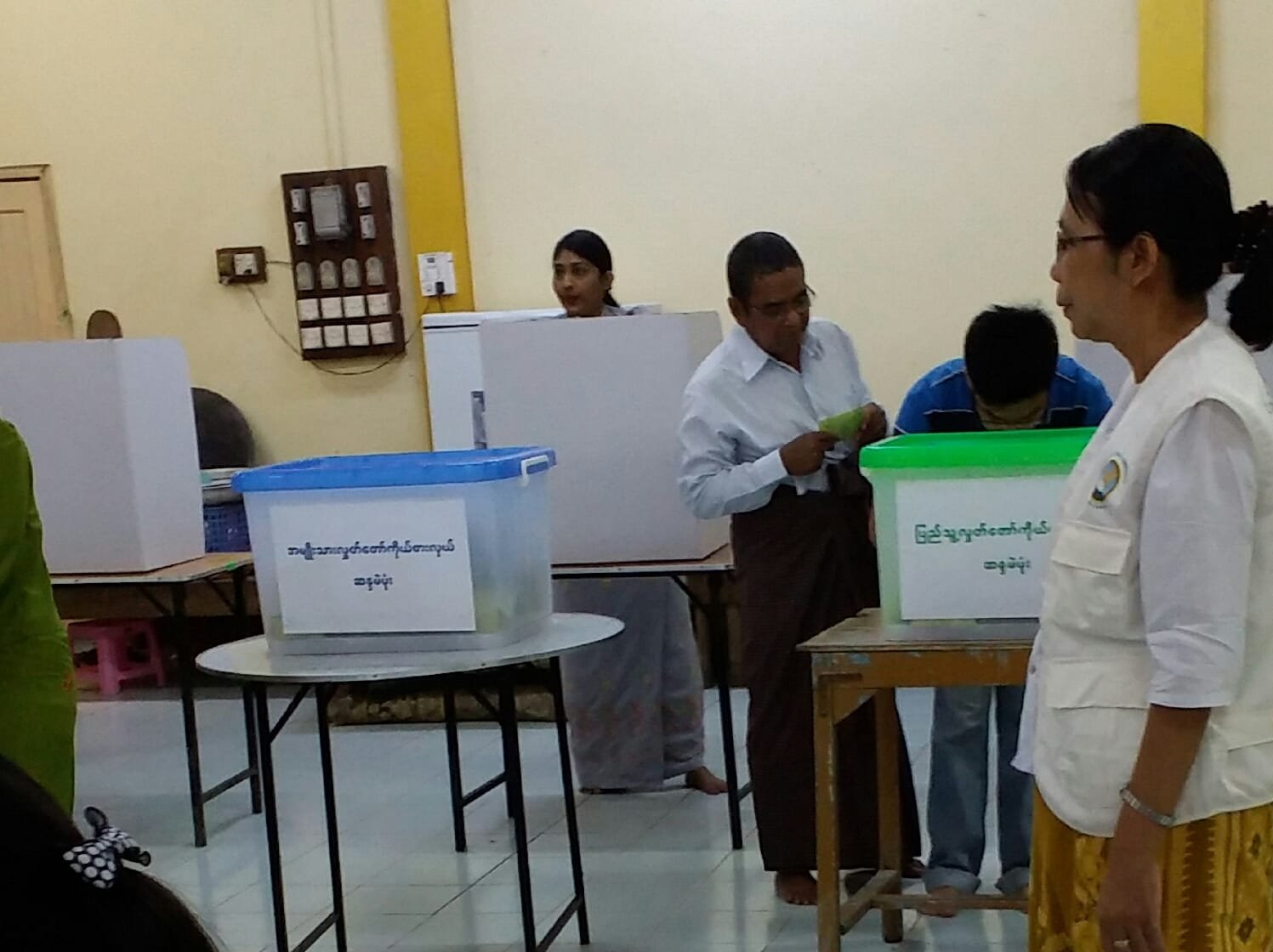
Citizens cast separate ballots for the Pyithu Hluttaw, or lower house; the Amyotha Hluttaw, or upper house; and their state or regional assembly. Eligible minority voters could also choose ethnic-affairs ministers. More than 41,000 polling stations handled contests for 1,150 representatives. The Carter Center recorded 6,074 candidates from 91 parties plus 310 independents after the nomination process was complete.
Only three quarters of the two national chambers were elected. The commander-in-chief appointed 110 of the lower house’s 440 members and 56 of the upper house’s 224 members. Those 166 officers sat and voted without facing the electorate. Because most constitutional amendments required more than 75 per cent support, the military bloc could stop change even when every elected legislator supported it.
Who competed and what happened inside the governing party?
The central contest placed Aung San Suu Kyi’s NLD against the Union Solidarity and Development Party led by former generals from Thein Sein’s government. Ethnic parties were especially important in Rakhine and Shan States, while dozens of smaller parties competed across the country. Campaigns were far more visible than in 2010, and the first national party code of conduct attempted to reduce intimidation and discriminatory speech.
The governing camp was divided. Lower-house speaker Shwe Mann had developed a working relationship with Suu Kyi, supported parliamentary review of the Constitution and emerged as a possible presidential contender. Security personnel surrounded USDP headquarters on 12 August as party leaders removed him from the chair and transferred acting control to Htay Oo. Both men later lost their constituencies, among many senior USDP figures defeated by NLD candidates.
What were the 2015 election results?
The NLD won 255 of the 330 elected lower-house seats and 135 of the 168 elected upper-house seats. Its total of 390 seats gave it a majority of the entire 664-member Union Parliament even after the appointed officers were counted. The USDP won 41 national seats. The Arakan National Party and Shan Nationalities League for Democracy were the strongest ethnic parties at Union level and also led in their respective state assemblies.
Turnout reached 69.72 per cent: 23.91 million of 34.29 million eligible voters cast ballots. Election observers judged the polling and counting broadly credible and found that the result reflected the electorate’s will. President Thein Sein, the commander-in-chief and senior parties publicly accepted the outcome, preventing a repetition of the military’s refusal to recognise the 1990 mandate.
Was the election free, fair and inclusive?
It was competitive and substantially more credible than the 2010 election, but it was not fully democratic or inclusive. The Carter Center documented a lively campaign and generally well-run election day while identifying weak voter registers, opaque out-of-constituency advance voting, restrictions on speech and assembly, and cancellations in conflict-affected areas. More than ninety prisoners of conscience remained incarcerated on election day.
The gravest exclusion affected Rohingya and other former temporary-certificate holders. Hundreds of thousands who had participated in earlier elections lost voting rights when the government invalidated their documents. Candidate scrutiny disproportionately rejected Muslims, and no Muslim candidate won a national, state or regional seat. A complete account must hold both conclusions together: the NLD received a real popular mandate, and many residents were denied equal political participation.
Why did Aung San Suu Kyi not become president?
Section 59(f) of the 2008 Constitution barred a person from the presidency if a spouse or child owed allegiance to a foreign power. Suu Kyi’s late husband and two sons were British. Parliament considered amendments in June 2015, but none removed the barrier. The military’s reserved legislators supplied enough votes to block changes that required more than 75 per cent approval.
The NLD therefore selected Htin Kyaw, a trusted longtime associate and former Daw Khin Kyi Foundation executive, as the lower-house presidential candidate. Its upper-house members selected Henry Van Thio, a newly elected Chin senator. The appointed military group chose Myint Swe, a former general and Yangon chief minister. This arrangement converted the NLD’s parliamentary landslide into an executive without placing its party leader in the constitutional presidency.
How was Htin Kyaw elected and power transferred?
On 15 March the combined parliament voted among the three nominees. Htin Kyaw received 360 votes, Myint Swe 213 and Henry Van Thio 79. The highest total made Htin Kyaw president; the other candidates became first and second vice president. On 30 March he was sworn in, Thein Sein left office and the NLD-led cabinet began work. The United Nations described the peaceful handover as a significant historical moment.
Parliament then created the office of State Counsellor for Aung San Suu Kyi. She also served as foreign minister and publicly led the elected administration, while Htin Kyaw performed the formal functions of head of state. The arrangement respected the text of the presidential restriction while frustrating its political purpose, but it also concentrated authority in a role the Constitution had not originally defined.
What power did the military retain after the handover?
The election changed the civilian government, not the command structure of the armed forces. The commander-in-chief still appointed a quarter of parliament and nominated the ministers of defence, home affairs and border affairs. The military controlled its own budget and personnel, held extensive economic interests and participated in the National Defence and Security Council. Its parliamentary bloc retained an effective veto over fundamental constitutional reform.
These safeguards meant the phrase “transfer of power” needs precision. Thein Sein’s USDP administration transferred the presidency and elected ministries to an opposition-led government. It did not transfer the coercive institutions into full civilian control. Fighting continued in ethnic areas, and the elected government lacked ordinary authority over the armed forces whose operations later drove the Rohingya mass displacement of 2017.
What is the election’s legacy after the 2021 coup?
The 2015 result proved that voters could remove a military-backed governing party through a competitive election and that senior office-holders could accept defeat. It also produced the first peaceful transition between competing political forces in modern Myanmar. Those achievements were genuine even though the government that followed made grave failures on minority rights, accountability and constitutional reform.
The military’s seizure of power on 1 February 2021 exposed the central weakness left unresolved. Constitutional safeguards had preserved an armed institution outside elected control, and force ultimately overrode both the 2015 and 2020 mandates. The 2015 election should therefore be remembered neither as a completed democratic transition nor as an empty performance: it was a popular transfer through institutions that the military still possessed the power to destroy.
Continue the chronology
Related history guides
The 2010 Election and Its Disputed Result
Compare the NLD boycott and opaque advance voting with the competitive election five years later.
Read the timelineApril–May 2012The 2012 By-Elections and NLD Landslide
Trace the NLD’s return to legal politics and the parliamentary breakthrough that preceded its national victory.
Read the timeline1988—2026National League for Democracy: History and Elections
Place the first implemented national mandate inside the party’s longer history of blocked and accepted victories.
Read the timelineNovember 2020—February 2021The 2020 Election: Results and Coup Claims
Compare the second NLD landslide, disputed complaints and the mandate stopped by military takeover.
Read the timeline1990—2012The 1990 Election and Government in Exile
Compare the honoured 2015 result with the NLD mandate the military blocked in 1990.
Read the timeline2008—todayMyanmar’s 2008 Constitution Explained
Read the military-reserved-seat, presidential and emergency rules behind the transition.
Read the timeline2010—2020Myanmar’s Democratic Transition
Place the election inside the broader decade of reform, elections and unresolved military power.
Read the timeline1978—2026The Rohingya Crisis: Timeline and Accountability
Examine disenfranchisement in 2015, the 2017 expulsions and the accountability cases that followed.
Read the timeline2021—2026Myanmar’s Coup and Civil War
Follow how the armed forces destroyed the electoral order that the 2015 handover created.
Read the timeline1948—2026Myanmar Presidents and Heads of State
Compare Htin Kyaw’s selection with every presidential and military succession since independence.
Read the timeline2011—presentVice Presidents of Myanmar
Follow Myint Swe, Henry Van Thio and the complete two-office sequence around the 2016 handover.
Read the timelineBiography context
Explore Myanmar through connected lives
Myanmar Biographies
Explore 57 sourced lives across politics, business, sport and culture.
Explore the biographiesPolitics collectionMyanmar Political Leaders
Compare 44 biographies across independence, military rule, minority rights and democratic resistance.
Explore the biographiesCategory indexPolitical Biographies
Browse presidents, vice presidents, legislators and movement organisers across Southeast Asia.
Explore the biographiesConnected biographies
Eleven biographies explaining the campaign, result, presidential choice and limits of the handover

1945—
Aung San Suu Kyi
Nobel laureate, NLD leader and former state counsellor of MyanmarThe opposition leader who spent about fifteen years in detention, won a parliamentary seat in 2012 and later led Myanmar’s civilian government through the office of state counsellor.Read biography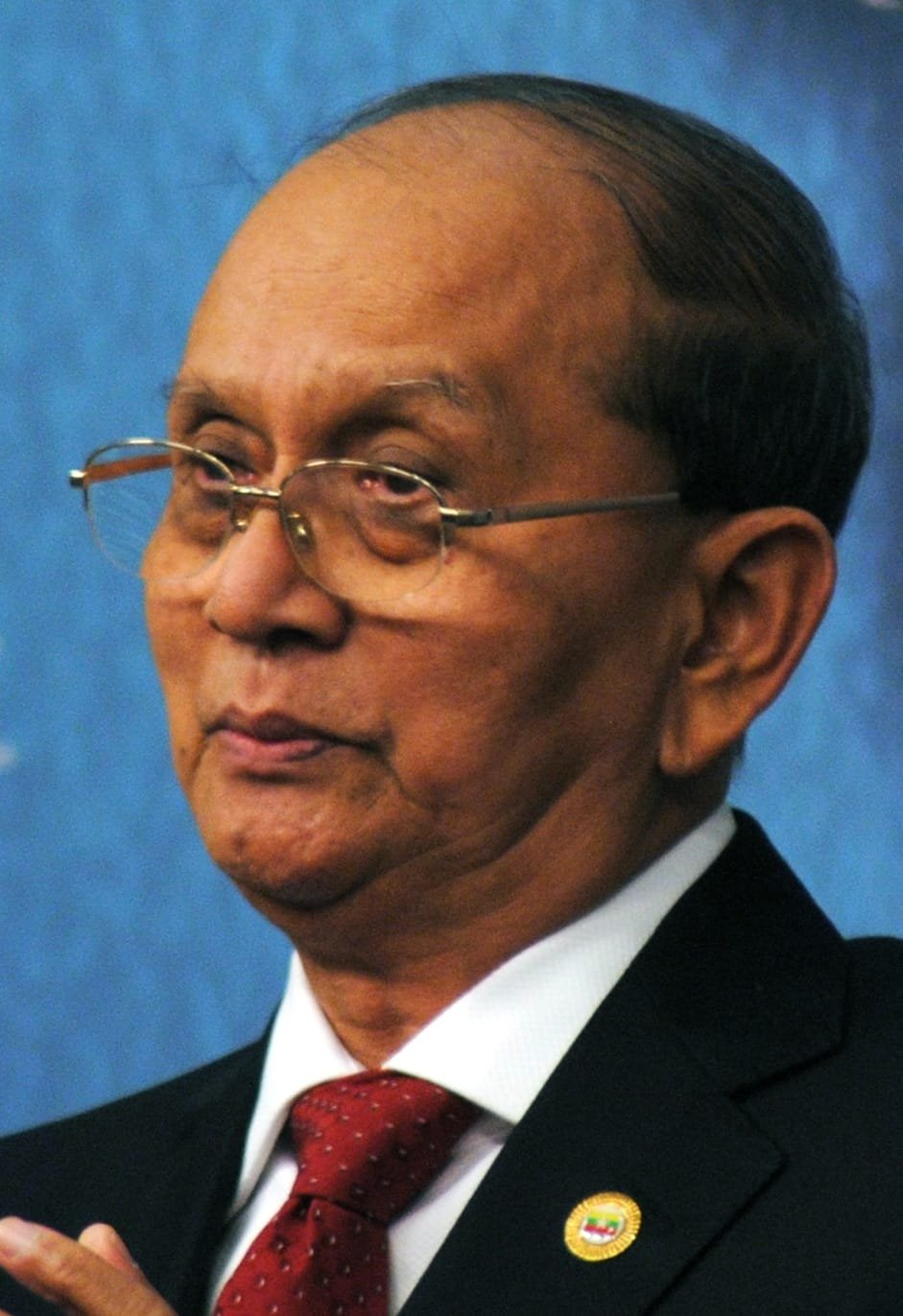
1945—
Thein Sein
President of Myanmar from 2011 to 2016The former general whose presidency released political prisoners, widened civic space and transferred power after the 2015 election without ending military autonomy.Read biography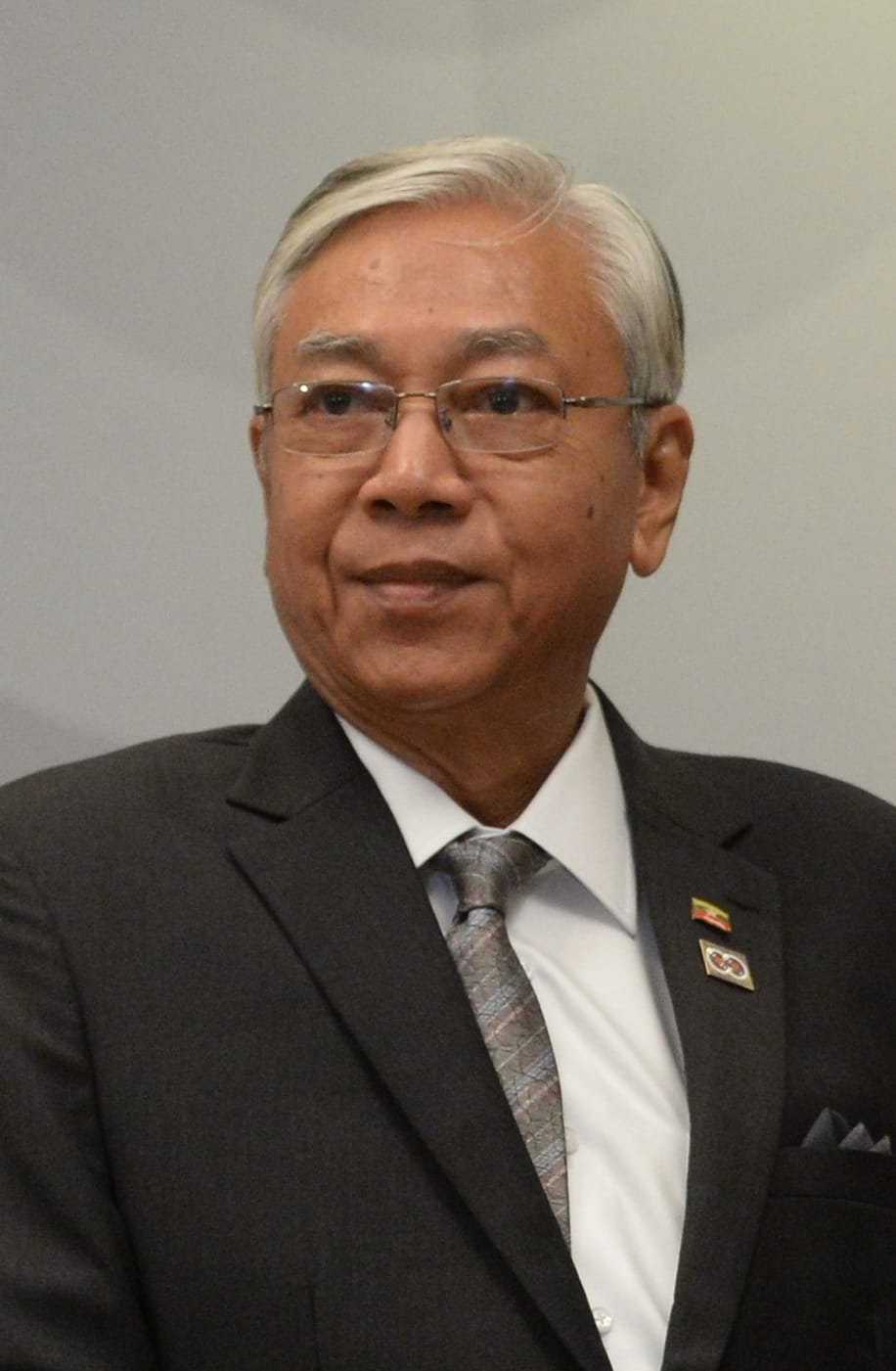
1946—
Htin Kyaw
President of Myanmar from 2016 to 2018The economist, writer and longtime Aung San Suu Kyi associate who became Myanmar’s first civilian president in more than fifty years.Read biography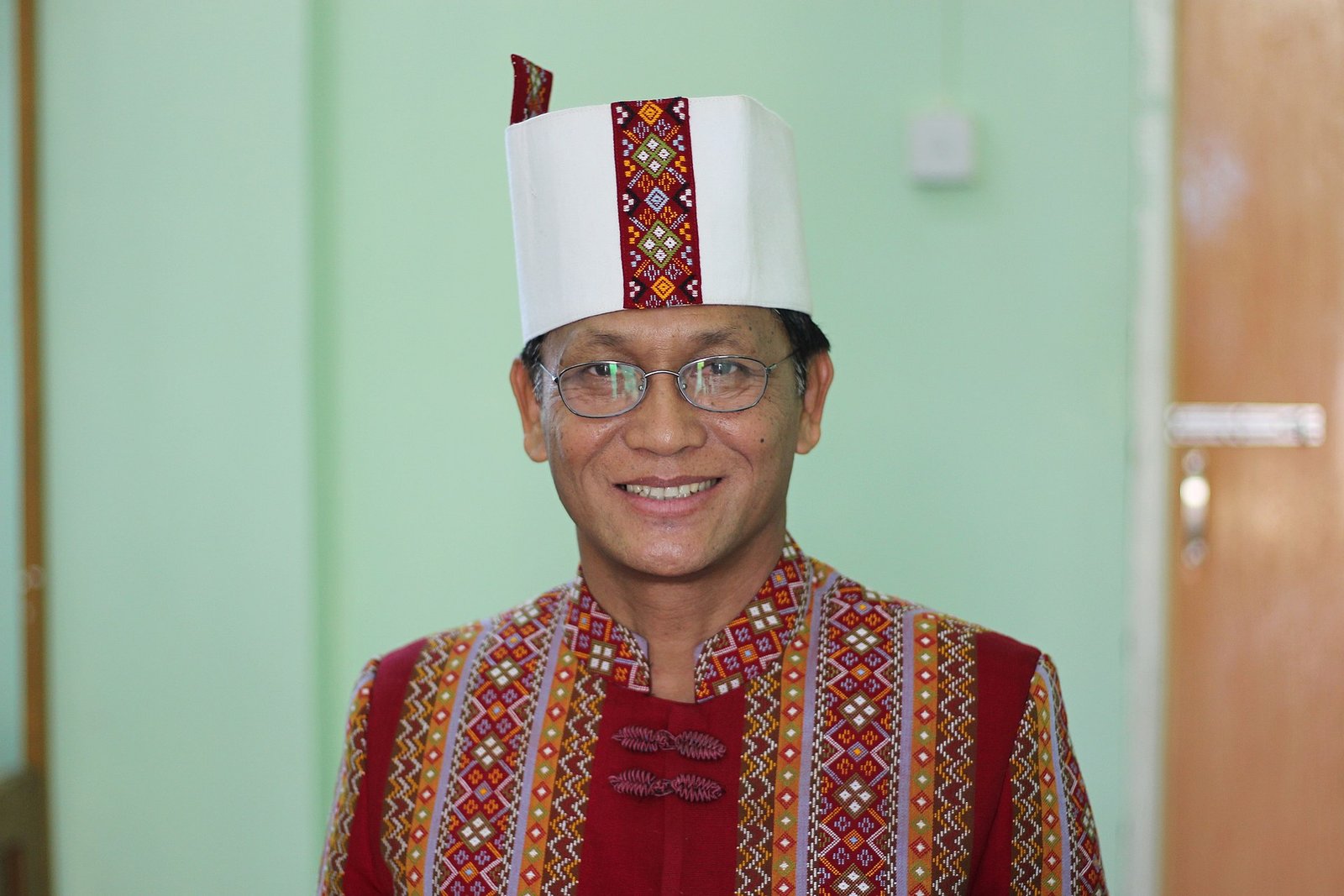
1958—
Henry Van Thio
Second vice president of Myanmar from 2016 to 2024The former army major and Chin State senator whose sudden nomination placed an ethnic Christian politician in Myanmar’s 2016 executive trio.Read biography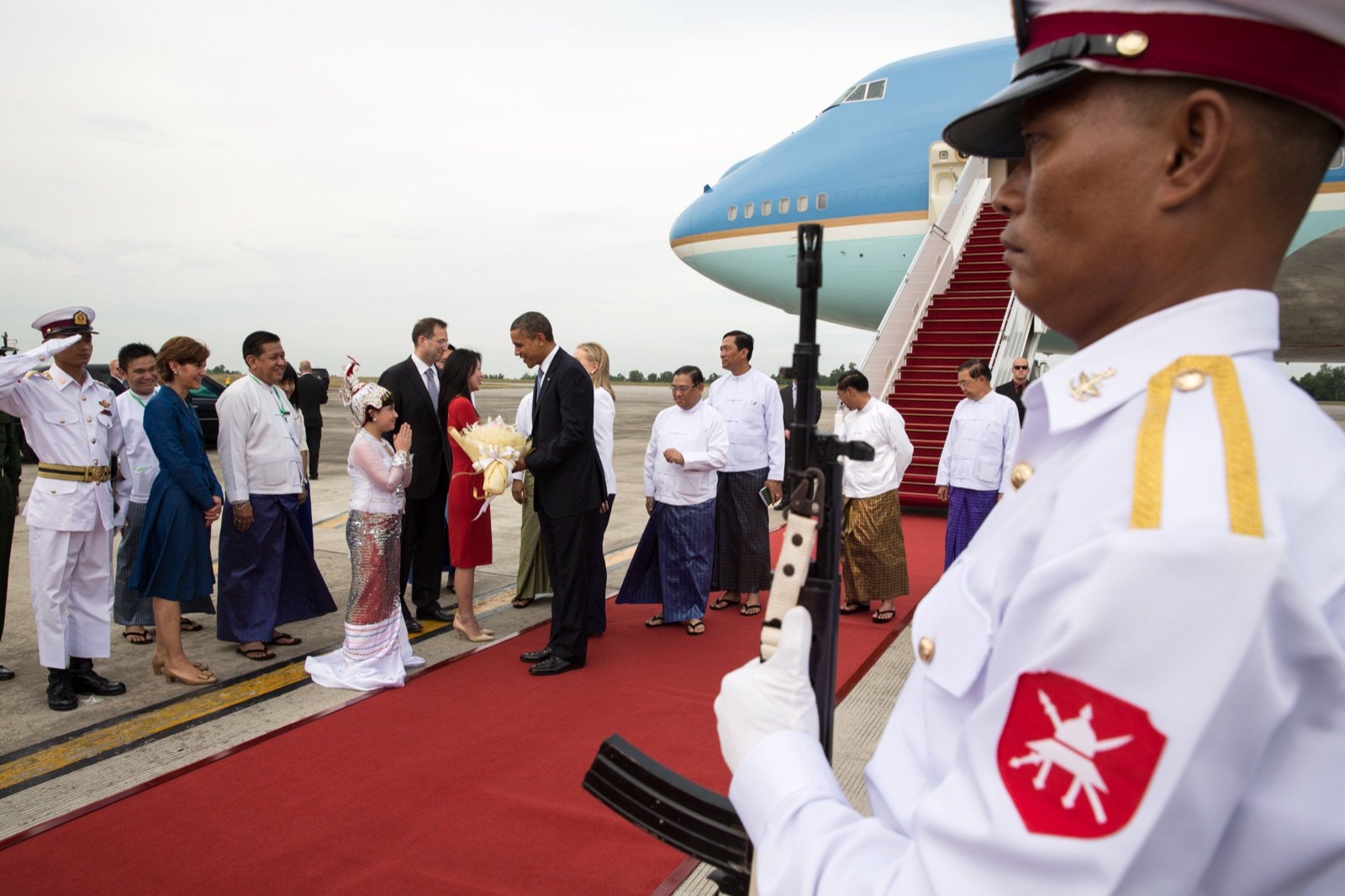
1951—2025
Myint Swe
Military officer, first vice-president and disputed acting presidentThe former general who became Yangon chief minister, military-selected first vice-president and the formal constitutional instrument of the 2021 takeover.Read biography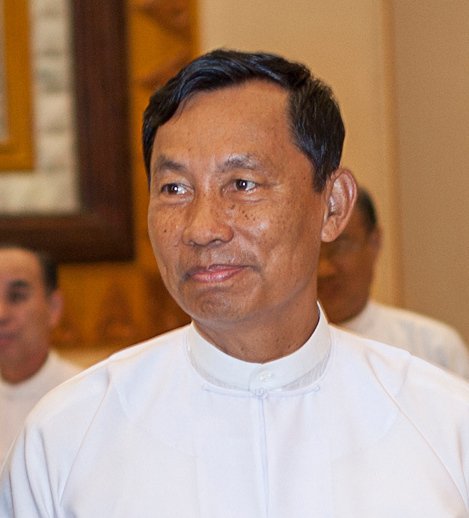
1947—
Shwe Mann
Former general and speaker of Myanmar’s lower houseThe former senior general who became parliament’s first lower-house speaker, challenged parts of the executive’s agenda and lost his party leadership before the landmark 2015 vote.Read biography
1950—
Htay Oo
Former USDP vice-chair, agriculture minister and major generalThe former major general and agriculture minister who converted junta-era mass organisation into electoral party leadership before losing Hinthada in 2015.Read biography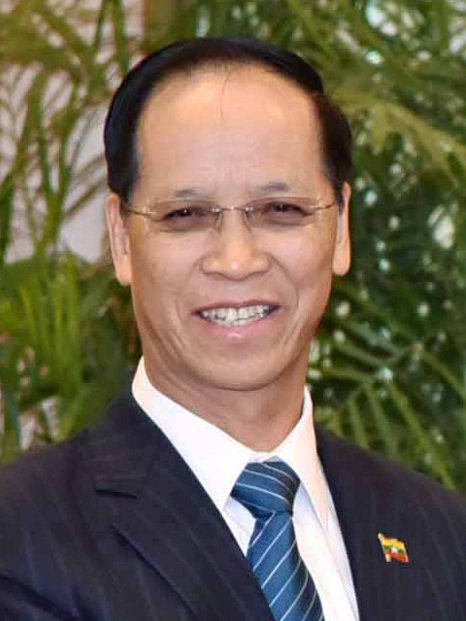
1950—
Sai Mauk Kham
Physician and vice president of Myanmar from 2011 to 2016The Shan physician and cultural organiser who became vice president during Myanmar’s first post-junta government and then returned to parliament in the 2015 election.Read biography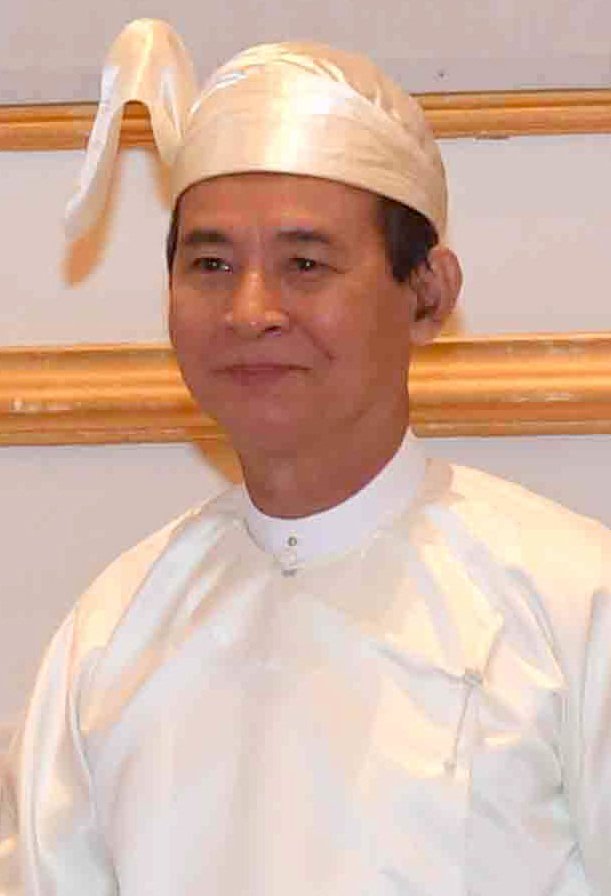
1951—
Win Myint
Lawyer and former president of MyanmarThe lawyer, 1988 democracy activist and parliamentary speaker who became president before the military detained and removed him in the 2021 coup.Read biography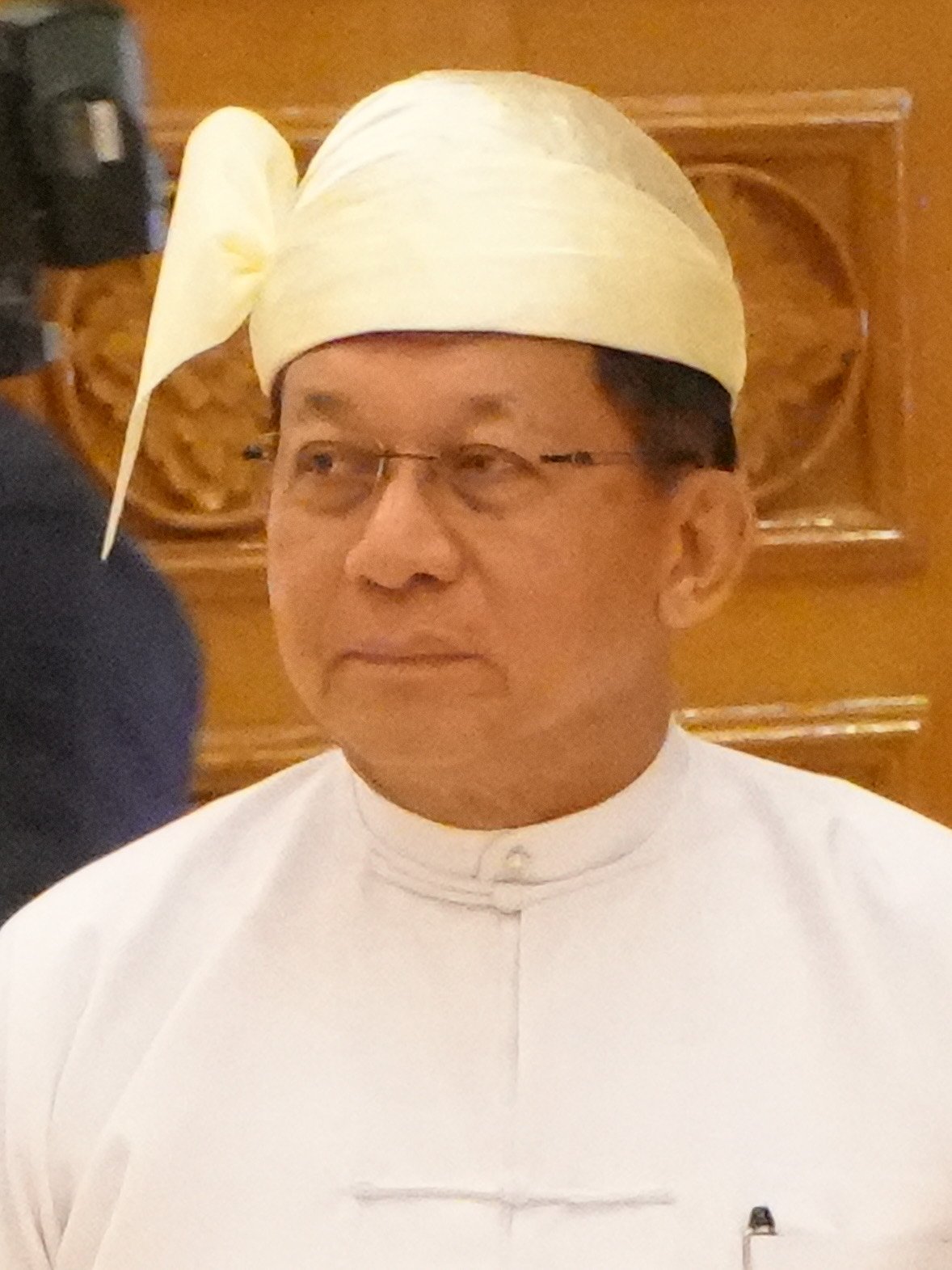
1956—
Min Aung Hlaing
President of Myanmar and leader of the 2021 military takeoverThe former commander-in-chief who led Myanmar’s 2021 coup, presided over nationwide war and became president through a military-controlled political process in 2026.Read biography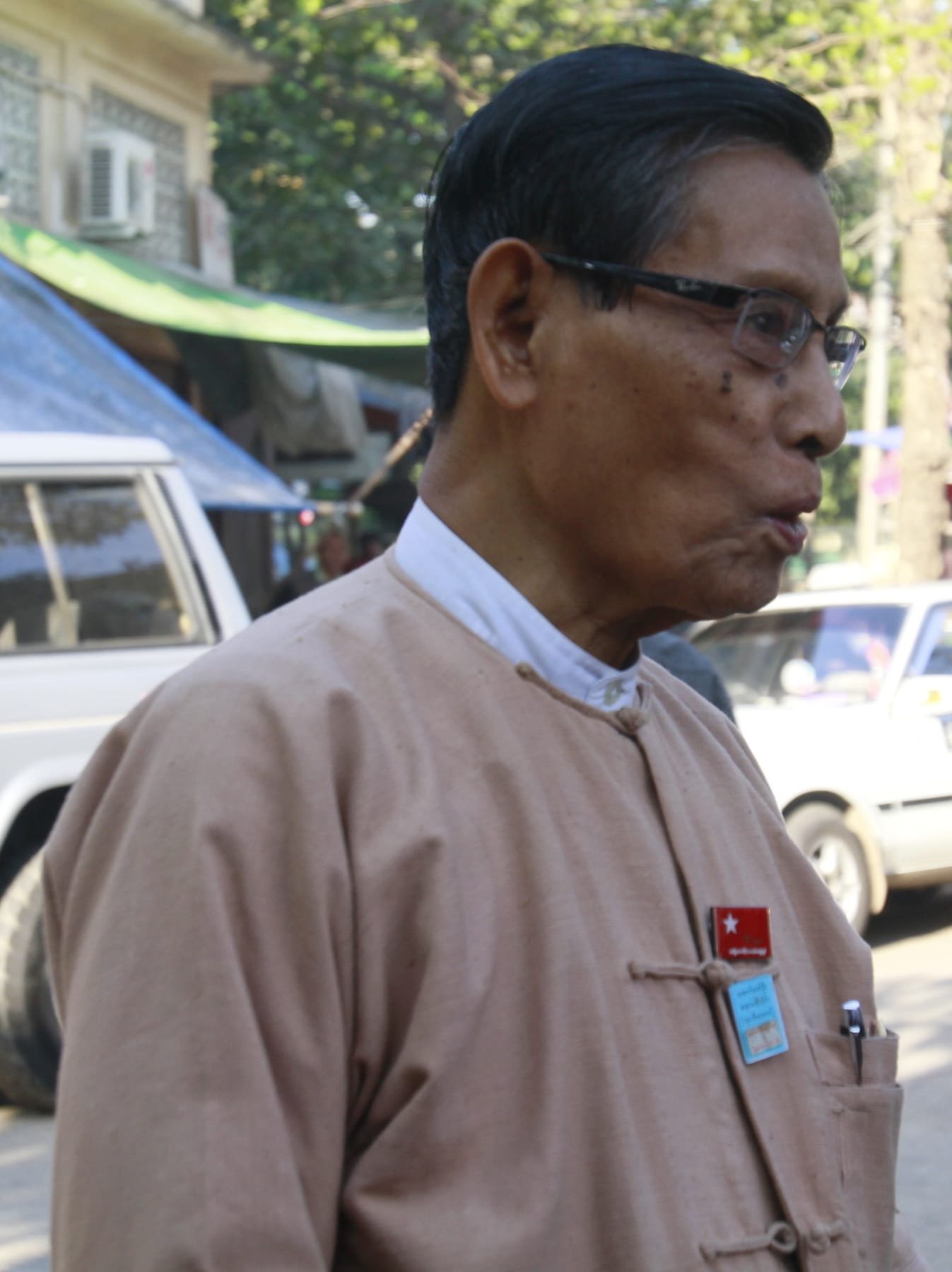
1927—2024
Tin Oo
Former army commander and co-founder of the National League for DemocracyThe former commander-in-chief who was purged by Ne Win, imprisoned and later helped found the NLD after the 1988 uprising.Read biographyQuick answers
Common questions
- When was the 2015 Myanmar general election?
- Voting took place on 8 November 2015 for elected seats in both national chambers, state and regional assemblies, and eligible ethnic-affairs posts.
- Who won the 2015 Myanmar election?
- Aung San Suu Kyi’s National League for Democracy won 255 elected lower-house seats and 135 elected upper-house seats, for 390 seats in the Union Parliament.
- How many people voted?
- Union Election Commission figures cited by the Carter Center recorded 23.91 million ballots from 34.29 million eligible voters, a turnout of 69.72 per cent.
- Why did Aung San Suu Kyi not become president?
- Section 59(f) of the 2008 Constitution barred candidates whose spouse or children owed allegiance to a foreign power. Her two sons were British citizens, and attempts to amend the restriction failed.
- Who became president after the election?
- Parliament elected Htin Kyaw on 15 March 2016. He was sworn in on 30 March, with Myint Swe and Henry Van Thio serving as vice presidents.
- Was Myanmar’s president directly elected?
- No. Three parliamentary groups nominated candidates, and all members of the combined Union Parliament voted. The candidate with the most votes became president and the other two became vice presidents.
- Did Rohingya vote in the 2015 election?
- Most could not. The expiry of temporary identity certificates removed voting rights from hundreds of thousands, and candidate scrutiny also excluded Rohingya and other Muslim candidates.
- Did the 2016 handover end military political power?
- No. The military retained 25 per cent of parliamentary seats, control of three security ministries, constitutional autonomy and an effective amendment veto. It overthrew the elected government in 2021.
Primary and institutional sources
How this history was checked
Dates, legal milestones and historical claims are checked against the official and institutional records below. This article was reviewed on 4 October 2026.
- The Carter CenterObserving Myanmar’s 2015 General Elections · final report
- Inter-Parliamentary UnionMyanmar House of Representatives · November 2015 election results
- Congressional Research ServiceBurma’s 2015 Parliamentary Elections: Issues for Congress
- United NationsPeaceful transfer of power marks a significant historical moment
- United NationsSecretary-General’s remarks on Myanmar’s elected transition
- Asian Development Bank Law and Policy Reform ProgramConstitution of the Republic of the Union of Myanmar · 2008
- United Nations Human Rights OfficeMyanmar election participation and Rohingya disenfranchisement
- Wikimedia CommonsPolling station used in the 2015 election · CC BY-SA 4.0