In this biography
Quick facts
- Born
- 2 February 1933
- Birthplace
- Minzu village near Kyaukse, British Burma
- Country
- Myanmar
- Nationality
- Burmese
- Known for
- Leading the military government that produced the 2008 Constitution and managed the 2011 transfer to a military-designed political order
- Military service
- 1953–2011
- Head of ruling council
- 23 April 1992–30 March 2011
- Prime minister
- 1992–2003
- Capital relocated
- Nay Pyi Taw · 2005–2006
Why this life matters
Than Shwe connected Ne Win’s military state to the 2008 constitutional order, retaining armed-forces power while replacing the ruling council with a nominally civilian government.
Timeline
Key moments
Born near Kyaukse
Born on 2 February in Minzu village in central British Burma.
Entered the army
Joined the armed forces after training at the Officers Training School in Bahtoo.
Joined the new military leadership
Became vice-chairman of the State Law and Order Restoration Council after the 8888 uprising.
Succeeded Saw Maung
Took command of the armed forces and the ruling council on 23 April.
Moved the administrative capital
Government ministries relocated from Yangon to the purpose-built city of Nay Pyi Taw.
Crushed the Saffron Revolution
Security forces used lethal force and mass arrests against largely peaceful monk-led protests.
Held the constitutional referendum
The government proceeded with voting days after Cyclone Nargis devastated the Ayeyarwady Delta.
Dissolved the ruling council
Retired when the SPDC transferred authority to President Thein Sein’s government on 30 March.
A career built inside Ne Win’s military state
Than Shwe was born near Kyaukse in 1933 and entered the army in the first decade after independence. He rose through infantry commands and the military hierarchy created under General Ne Win. By the mid-1980s he was deputy commander-in-chief, placing him near the centre of power as economic crisis and political repression produced nationwide protest in 1988.
The armed forces crushed the uprising and replaced Ne Win’s one-party government with the State Law and Order Restoration Council, or SLORC. Than Shwe became its vice-chairman. The new junta promised elections, but when the National League for Democracy won overwhelmingly in 1990 it did not transfer power. Political detention, censorship and armed conflict remained defining features of the system he inherited.
Nineteen years at the top of the junta
Than Shwe succeeded Saw Maung in April 1992 as commander-in-chief, chairman of the ruling council and prime minister. The council was renamed the State Peace and Development Council in 1997, but the concentration of power changed little. Aung San Suu Kyi spent long periods under house arrest, independent media operated under severe restriction and the United Nations repeatedly pressed the authorities to release detainees and begin substantive political dialogue.
His government opened selected sectors to private and foreign investment while military-linked conglomerates accumulated extensive economic interests. In 2005 ministries abruptly began moving from Yangon to a new administrative capital in central Myanmar. The city, later named Nay Pyi Taw, physically separated national administration from the country’s largest city and became one of the most visible expressions of Than Shwe’s centralised rule.
The Saffron Revolution and Cyclone Nargis
Fuel-price increases in 2007 helped trigger protests that expanded when Buddhist monks entered the movement. The UN fact-finding mission’s historical account records that the SPDC used lethal force to disperse the largely peaceful demonstrations. Raids, arrests and censorship followed. The episode, known internationally as the Saffron Revolution, showed both the depth of social frustration and the government’s continuing reliance on coercion.
Cyclone Nargis struck the Ayeyarwady Delta in May 2008, killing or leaving missing roughly 138,000 people. The United Nations urged faster access for international relief workers and supplies. The government nevertheless proceeded with a referendum on its draft constitution within days in most areas. It announced approval above ninety per cent, a figure and process widely disputed because campaigning was restricted and the disaster had displaced enormous numbers of voters.
Designing the transition and retiring from office
The 2008 Constitution reserved one quarter of parliamentary seats for military appointees, protected military control of key ministries and made amendments dependent on support from part of the unelected bloc. Elections in 2010 excluded or marginalised major opposition forces and produced a large victory for the military-backed Union Solidarity and Development Party. The structure allowed direct junta government to end without placing the armed forces under elected civilian authority.
On 30 March 2011 the SPDC dissolved and Than Shwe formally retired as Thein Sein became president. He largely withdrew from public view, but the system he designed shaped the following decade and the constitutional dispute surrounding the 2021 coup. His legacy is therefore not only nineteen years of personal rule; it is also the institutional conversion of military command into a protected role inside an electoral framework.
Quick answers
Frequently asked questions about Than Shwe
- Who is Than Shwe?
- Than Shwe is a military ruler of Myanmar from 1992 to 2011. Than Shwe connected Ne Win’s military state to the 2008 constitutional order, retaining armed-forces power while replacing the ruling council with a nominally civilian government.
- What is Than Shwe best known for?
- Than Shwe is best known for leading the military government that produced the 2008 Constitution and managed the 2011 transfer to a military-designed political order.
- When and where was Than Shwe born?
- Than Shwe was born on 2 February 1933 in Minzu village near Kyaukse, British Burma.
Sources and further reading
Explore the evidence
These references support the biography and offer further reading. Official records, first-person accounts and independent reporting provide different perspectives; image records document attribution and licensing.
- 1. Encyclopaedia BritannicaThan Shwe · biography and leadership overview
- 2. UN Human Rights CouncilDetailed findings of the Independent International Fact-Finding Mission on Myanmar
- 3. United Nations General AssemblySituation of human rights in Myanmar · A/66/354/Add.1
- 4. United NationsSecretary-General urges access for Cyclone Nargis relief
- 5. Asian Development Bank Law and Policy Reform ProgramConstitution of the Republic of the Union of Myanmar (2008)
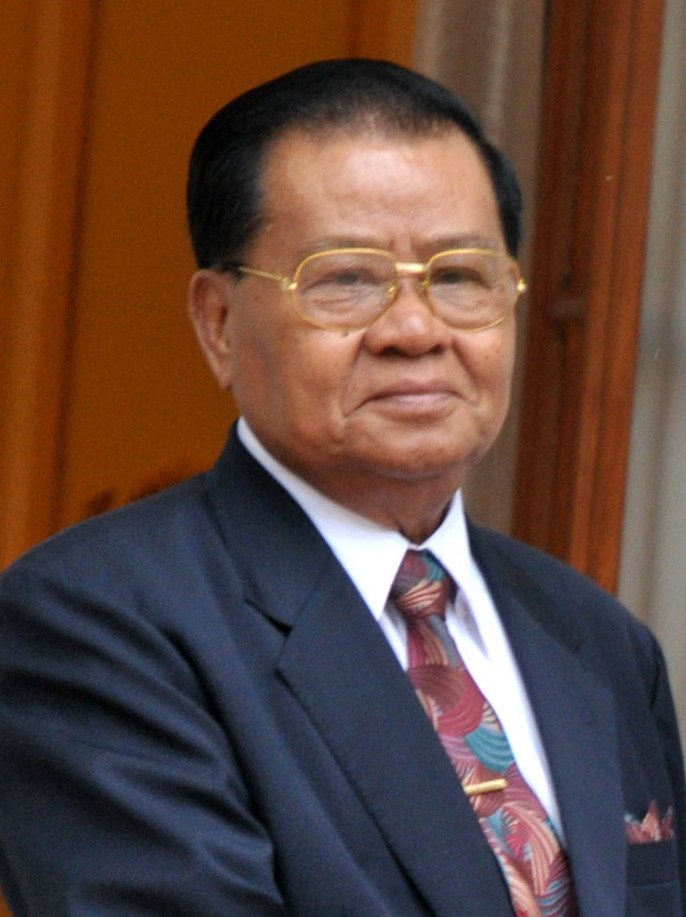
- 6. Wikimedia Commons2010 portrait and GODL-India licensing record