
The short answer
Myanmar’s first national vote in twenty years created a working Parliament and preceded the end of formal junta rule. It was also built on military-reserved seats, exclusion of the NLD, state-party advantages and opaque advance voting. This guide separates the official result from the evidence that denied it democratic credibility—and explains why the institutions still produced a limited opening.
Union Parliament result
The USDP and appointed military bloc controlled the new Parliament
Five planned lower-house elections were cancelled, leaving 325 elected members there and 168 in the upper house. The commander-in-chief separately appointed 166 serving officers. Party rows below show elected seats only.
| Party or bloc | Lower house | Upper house | Union total |
|---|---|---|---|
| Union Solidarity and Development Party | 259 | 129 | 388 elected seats |
| Shan Nationalities Democratic Party | 18 | 3 | 21 elected seats |
| National Unity Party | 12 | 5 | 17 elected seats |
| Rakhine Nationalities Development Party | 9 | 7 | 16 elected seats |
| National Democratic Force | 8 | 4 | 12 elected seats |
| Other elected parties and independents | 19 | 20 | 39 elected seats |
| Military appointees | 110 | 56 | 166 unelected seats |
| Occupied chamber seats | 435 of 440 | 224 of 224 | 659 of 664 |
Chronology
A timeline of the turning points
The military government publishes election laws
Registration rules require parties to exclude imprisoned members, placing the NLD’s leaders and legal status in direct conflict.
The NLD decides not to re-register
The party rejects laws that would force it to expel Aung San Suu Kyi and hundreds of other detained members.
The USDP registers as a political party
Prime Minister Thein Sein and other former officers convert the junta-backed USDA network into an election organisation.
The commission announces a 7 November vote
Parties receive less than three months to nominate candidates, organise and campaign under restrictive media and assembly rules.
The NLD is formally dissolved
The election commission removes the 1990 winner and other non-registering parties from the legal party list.
Voting takes place after twenty years without a national election
Polling is mostly peaceful, but opposition candidates report coercion and unexplained advance ballots changing constituency outcomes.
Aung San Suu Kyi is released
Her latest house-arrest order ends six days after the election from which she and the NLD were excluded.
Final constituency counts are published
The official result gives the USDP 388 elected national seats and 883 of 1,154 elected seats across all legislatures.
Parliament convenes and selects Thein Sein
The new electoral college chooses the former junta prime minister as president, with Tin Aung Myint Oo and Sai Mauk Kham as deputies.
The SPDC dissolves and the new government takes office
Formal junta rule ends, beginning a limited political opening within institutions designed to preserve military authority.
Why was the 2010 election historically important?
Myanmar had held no national election since the National League for Democracy won overwhelmingly in May 1990. The military refused to transfer power after that result, detained opposition leaders and spent the following two decades constructing a new political order. The 7 November 2010 vote was therefore the first election for an operating national legislature in generations.
Importance did not make the contest democratic. It implemented the final electoral stage of the military’s roadmap under the 2008 Constitution. The question was not whether voters could choose an entirely new system, but which civilian and former-military politicians would occupy the elected portion of institutions whose rules already protected the armed forces.
How did the 2008 Constitution pre-set the balance of power?
The Constitution created a 440-seat Pyithu Hluttaw and a 224-seat Amyotha Hluttaw. The commander-in-chief appointed 110 members of the first and 56 of the second, exactly one quarter of each chamber. Those officers faced no electorate. Because constitutional amendments required more than 75 per cent parliamentary support, the military bloc also received an effective veto.
The commander-in-chief nominated the ministers of defence, home affairs and border affairs, while the armed forces remained outside ordinary civilian control. Voters did not choose the president directly. Three parliamentary groups—the elected members of each house and the appointed officers—would nominate candidates, and the full Union Parliament would rank them. The election could populate the system without removing military guardianship over it.
Why did the NLD boycott the 2010 election?
The Political Parties Registration Law barred prisoners from party membership and required existing parties to register under the new framework. Aung San Suu Kyi remained under house arrest, and hundreds of NLD members were imprisoned. Re-registering would have required the party to remove them while accepting a constitution it considered illegitimate. The NLD chose not to register and urged a boycott; the election commission formally dissolved it.
The decision divided the opposition. Khin Maung Swe and other former NLD members formed the National Democratic Force to contest the election, arguing that even restricted parliamentary space could matter. Ethnic parties also entered to seek representation in state and national institutions. The ballot therefore contained genuine alternatives in some constituencies, but not the organisation that had won the previous election.
What advantages did the USDP hold?
The Union Solidarity and Development Party was established by serving ministers and former officers, led by junta prime minister Thein Sein. It inherited networks, offices and organisational reach from the Union Solidarity and Development Association, a mass body sponsored by the military government. Senior officials resigned their commissions and ran as nominal civilians while the state administration remained in place.
Opposition parties faced high candidate deposits, short preparation time, censorship and restrictions on assembly. More than two thousand political prisoners remained detained, including potential candidates and organisers. The USDP could contest nearly everywhere, and dozens of seats across the legislatures had only one registered candidate. These structural advantages existed before disputed ballots were counted.
What were the official 2010 election results?
Five lower-house contests in Shan State were cancelled, so the national election filled 325 lower-house and all 168 upper-house elected seats. The USDP won 259 and 129 respectively, giving it 388 of 493 elected Union seats. Adding the 166 military appointees produced a 659-member sitting Parliament in which the government party and armed-forces bloc held overwhelming control.
The Shan Nationalities Democratic Party was the largest non-USDP group at national level with 21 seats. The National Unity Party won 17, the Rakhine Nationalities Development Party 16 and the National Democratic Force 12. Ethnic parties performed more strongly in several state assemblies. Across national, state and regional contests, the USDP won 883 of 1,154 elected seats filled.
Was the official 77 per cent turnout reliable?
The election commission announced turnout of 77 per cent from an electorate it placed at about 29 million. The figure should always be labelled official rather than treated as independently verified. The United Nations special rapporteur recorded constituencies with reported turnout above 100 per cent and two pro-government winners announced in Kachin constituencies where voting had been cancelled.
Contemporary accounts also described visible apathy and lower local participation, although conditions varied and no nationwide independent observation mission could produce a replacement turnout figure. The correct conclusion is limited: 77 per cent was the state’s published national rate, but serious anomalies and restricted transparency prevent it from carrying the evidentiary weight of later, better-observed turnout totals.
How did advance voting affect the count?
Polling on election day was generally peaceful and orderly, but the count created the central credibility crisis. Opposition candidates reported leading on ballots counted in polling stations before tabulation was suspended or large packages of advance votes arrived. Those ballots overwhelmingly favoured USDP candidates in a number of close contests and reversed apparent leads.
The United Nations special rapporteur estimated that advance ballots represented about ten per cent of votes nationwide and concluded that their use further undermined a process already flawed by exclusion and restrictions. Human Rights Watch collected similar accounts of officials handling bulk advance voting. The concern was not merely that advance voting existed; it was that custody, observation and reconciliation were too opaque to establish who cast the ballots and under what conditions.
Could candidates challenge the result?
Formal remedies were inaccessible and intimidating. A candidate needed to pay a non-refundable fee of one million kyat to file an election complaint, more than twice the average annual income cited by the UN special rapporteur. The maximum financial penalty for many election offences was only one tenth of that amount. Authorities also warned against dishonest accusations in a way that complainants could reasonably read as a threat.
Independent scrutiny was thin. International media access was restricted, local journalists reported intimidation and private outlets were told to carry official election news. The United Nations concluded that the conditions were insufficiently inclusive, participatory and transparent; its special rapporteur found that the election failed to meet international standards.
How did the result make Thein Sein president?
Thein Sein had led the USDP into the election but did not become president through a nationwide personal ballot. He won a lower-house constituency in Naypyidaw, and the elected lower-house group later nominated him for the presidential electoral college. The military group nominated Tin Aung Myint Oo, while the upper-house group nominated Sai Mauk Kham.
On 4 February 2011 the combined Parliament ranked Thein Sein first, making him president and the other two candidates vice-presidents. The government took office on 30 March and Than Shwe’s State Peace and Development Council dissolved. Many former officers now held civilian titles, yet the institutional change eventually opened more political space than the tightly controlled election itself had promised.
Was 2010 only a sham, or did it begin a real transition?
The election was neither free nor fair, and its official landslide cannot be read as a clean measure of public preference. The NLD was excluded by rules it rejected, the governing party enjoyed state-derived advantages, the military already held a quarter of seats and advance voting compromised multiple contests. Calling the result democratic erases the system that produced it.
Yet institutions created through that process later became sites of limited change. Thein Sein released political prisoners, reduced censorship and opened talks with Aung San Suu Kyi. The NLD re-registered and won 43 of 44 seats it contested in the 2012 by-elections. Parliament developed debate, and the government accepted defeat in 2015. The accurate legacy is therefore a controlled succession that enabled an unexpected opening without ever placing the armed forces under elected authority.
Continue the chronology
Related history guides
Myanmar’s 2008 Constitution Explained
Read the military seats, presidential college and amendment rules implemented in 2010.
Read the timeline1990–2012The 1990 Election and Government in Exile
Start with the NLD mandate the military refused to implement before designing the new system.
Read the timeline1988—2026National League for Democracy: History and Elections
See why the party boycotted this vote, returned in 2012 and later won two national landslides.
Read the timelineApril–May 2012The 2012 By-Elections and NLD Landslide
Follow the NLD’s return, its 43-seat victory and Suu Kyi’s entry into the Parliament created in 2010.
Read the timeline2015–2016The 2015 Election and Transfer of Power
Compare the controlled 2010 vote with the observed election that removed the USDP from government.
Read the timeline2010–2020Myanmar’s Democratic Transition
Follow the reforms, by-elections and unresolved military authority that grew from this Parliament.
Read the timeline2020–2021The 2020 Election: Results and Coup Claims
Contrast documented 2010 manipulation with the unproven fraud narrative used before the 2021 coup.
Read the timeline2021–2026Myanmar’s Coup and Civil War
See how the military later destroyed the limited electoral system it had created.
Read the timelineBiography context
Explore Myanmar through connected lives
Myanmar Biographies
Explore 57 sourced lives across politics, business, sport and culture.
Explore the biographiesPolitics collectionMyanmar Political Leaders
Compare 44 biographies across elections, military rule, minority rights and rival post-coup authority.
Explore the biographiesCategory indexPolitical Biographies
Browse presidents, party leaders, legislators and movement organisers across Southeast Asia.
Explore the biographiesConnected biographies
Nine biographies explaining the party, military framework, presidency and later opening
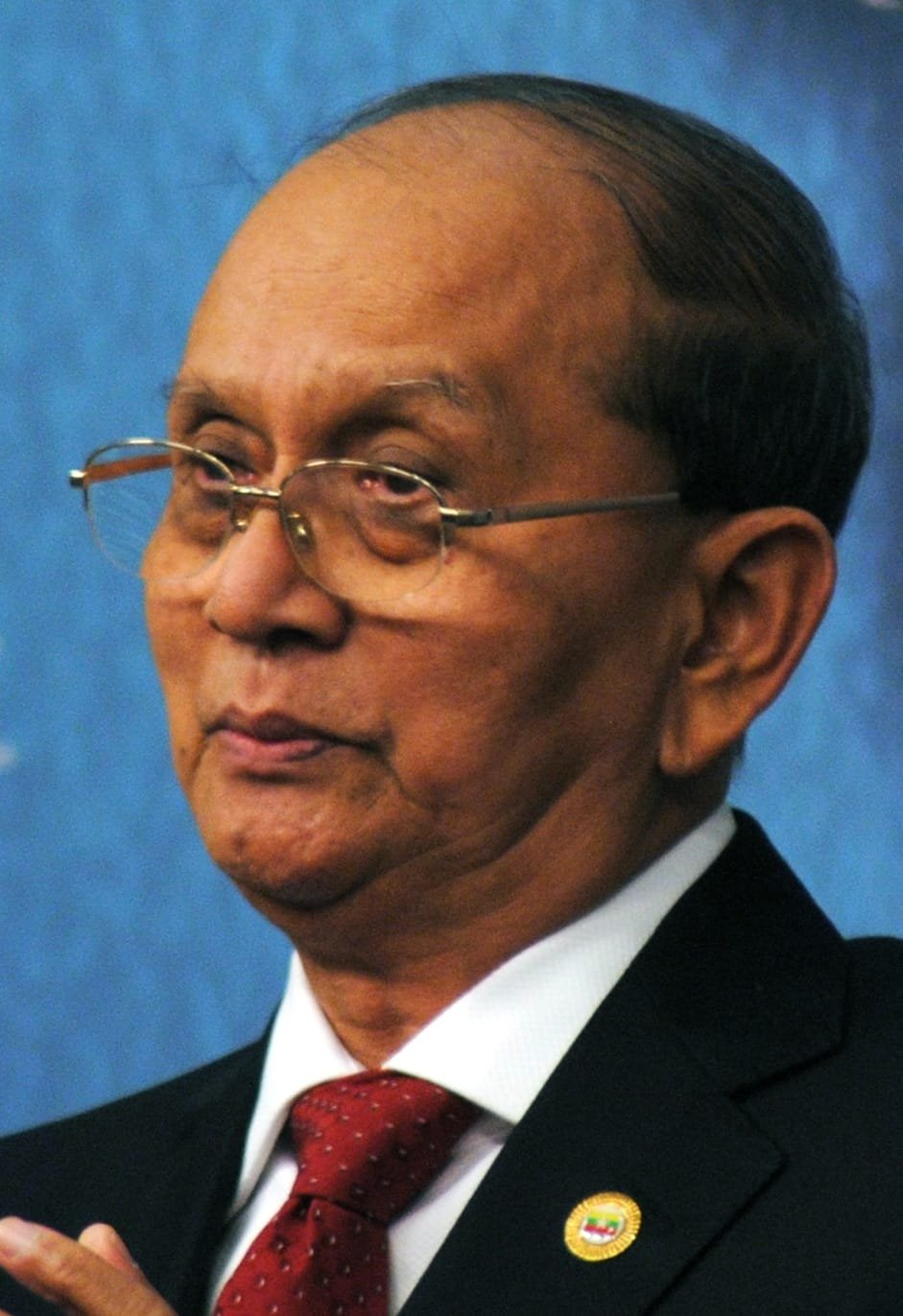
1945—
Thein Sein
President of Myanmar from 2011 to 2016The former general whose presidency released political prisoners, widened civic space and transferred power after the 2015 election without ending military autonomy.Read biography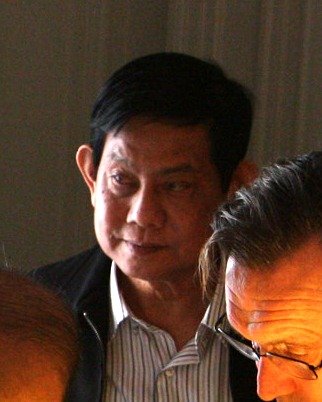
1950—
Htay Oo
Former USDP vice-chair, agriculture minister and major generalThe former major general and agriculture minister who converted junta-era mass organisation into electoral party leadership before losing Hinthada in 2015.Read biography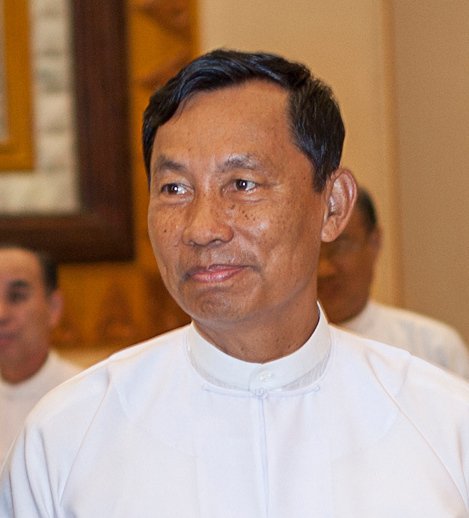
1947—
Shwe Mann
Former general and speaker of Myanmar’s lower houseThe former senior general who became parliament’s first lower-house speaker, challenged parts of the executive’s agenda and lost his party leadership before the landmark 2015 vote.Read biography
1945—
Aung San Suu Kyi
Nobel laureate, NLD leader and former state counsellor of MyanmarThe opposition leader who spent about fifteen years in detention, won a parliamentary seat in 2012 and later led Myanmar’s civilian government through the office of state counsellor.Read biography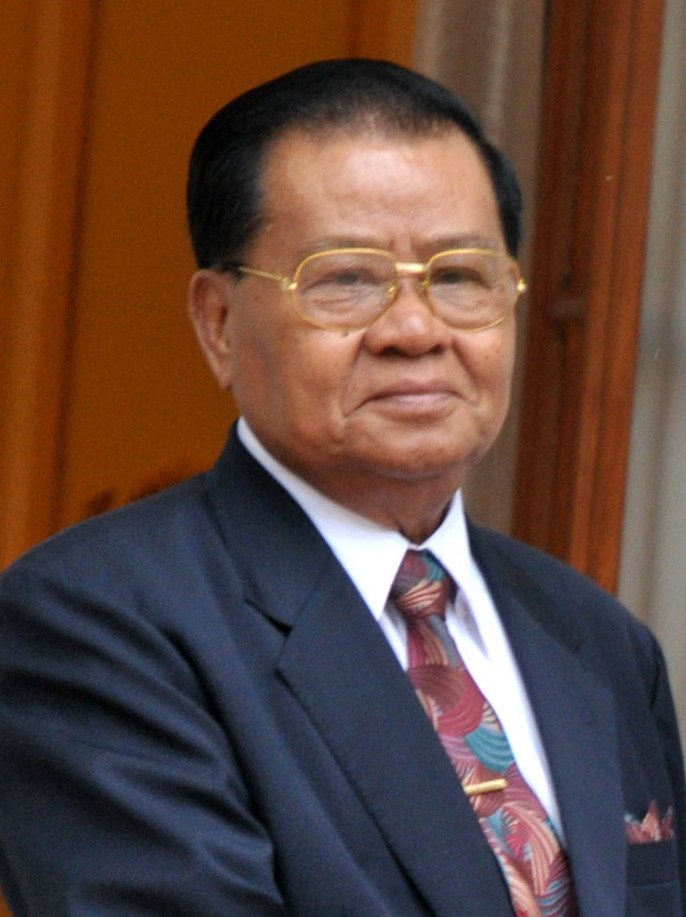
1933—
Than Shwe
Military ruler of Myanmar from 1992 to 2011The senior general who ruled Myanmar for nineteen years, suppressed organised opposition and designed the constitutional system that followed direct military government.Read biography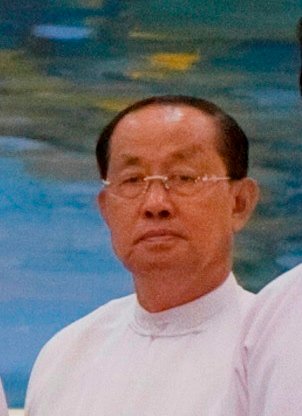
1950—
Tin Aung Myint Oo
General and first vice-president of Myanmar from 2011 to 2012The former SPDC secretary and military nominee who entered Myanmar’s new presidential executive in 2011, then left office after little more than a year.Read biography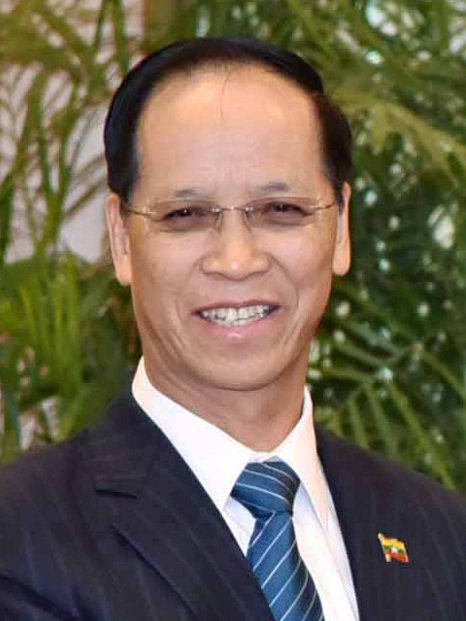
1950—
Sai Mauk Kham
Physician and vice president of Myanmar from 2011 to 2016The Shan physician and cultural organiser who became vice president during Myanmar’s first post-junta government and then returned to parliament in the 2015 election.Read biography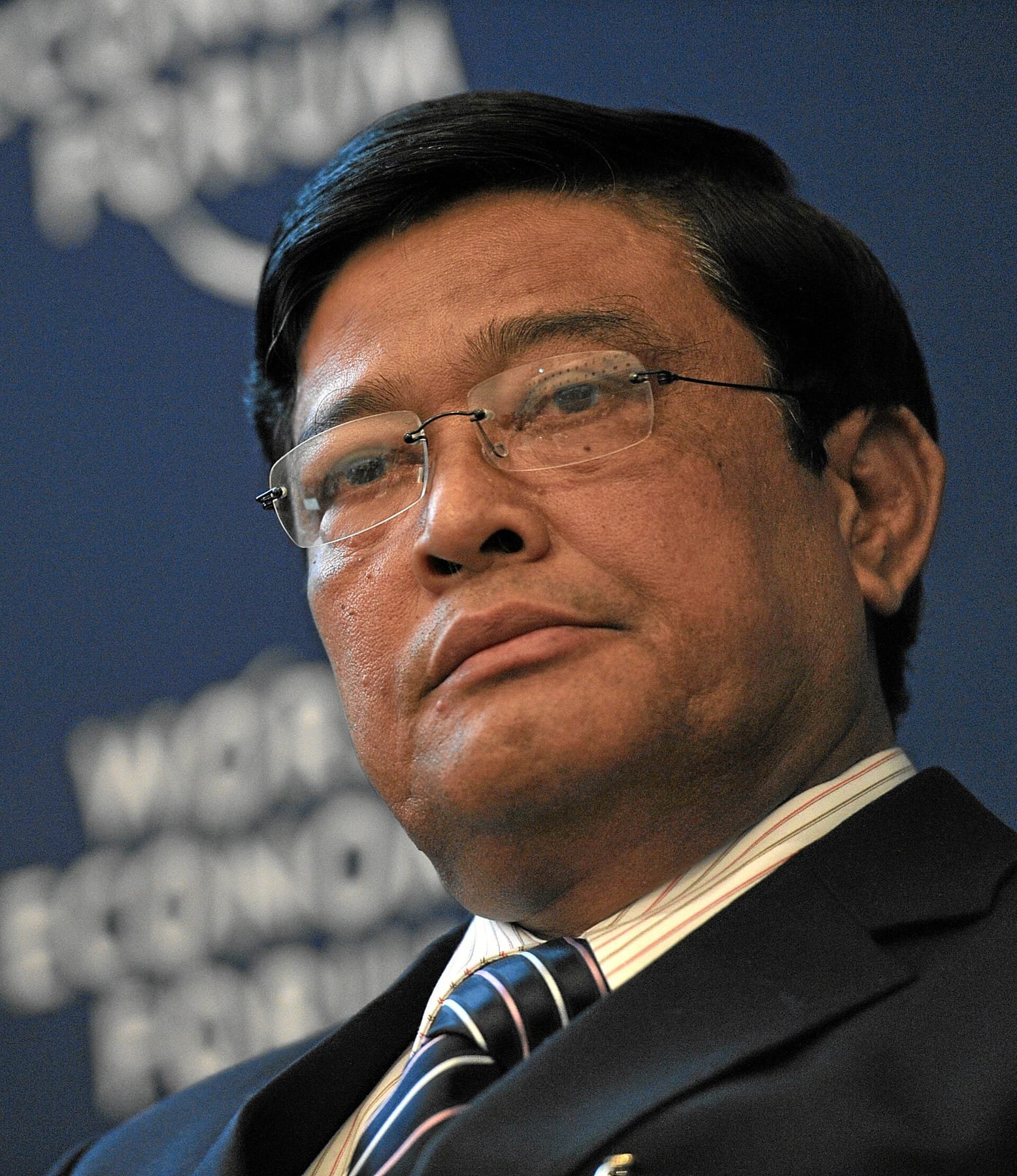
1954—
Nyan Tun
Admiral, second vice-president and former member of ParliamentThe former navy commander who entered Thein Sein’s reform-era executive as second vice-president and later represented his home township in Parliament.Read biography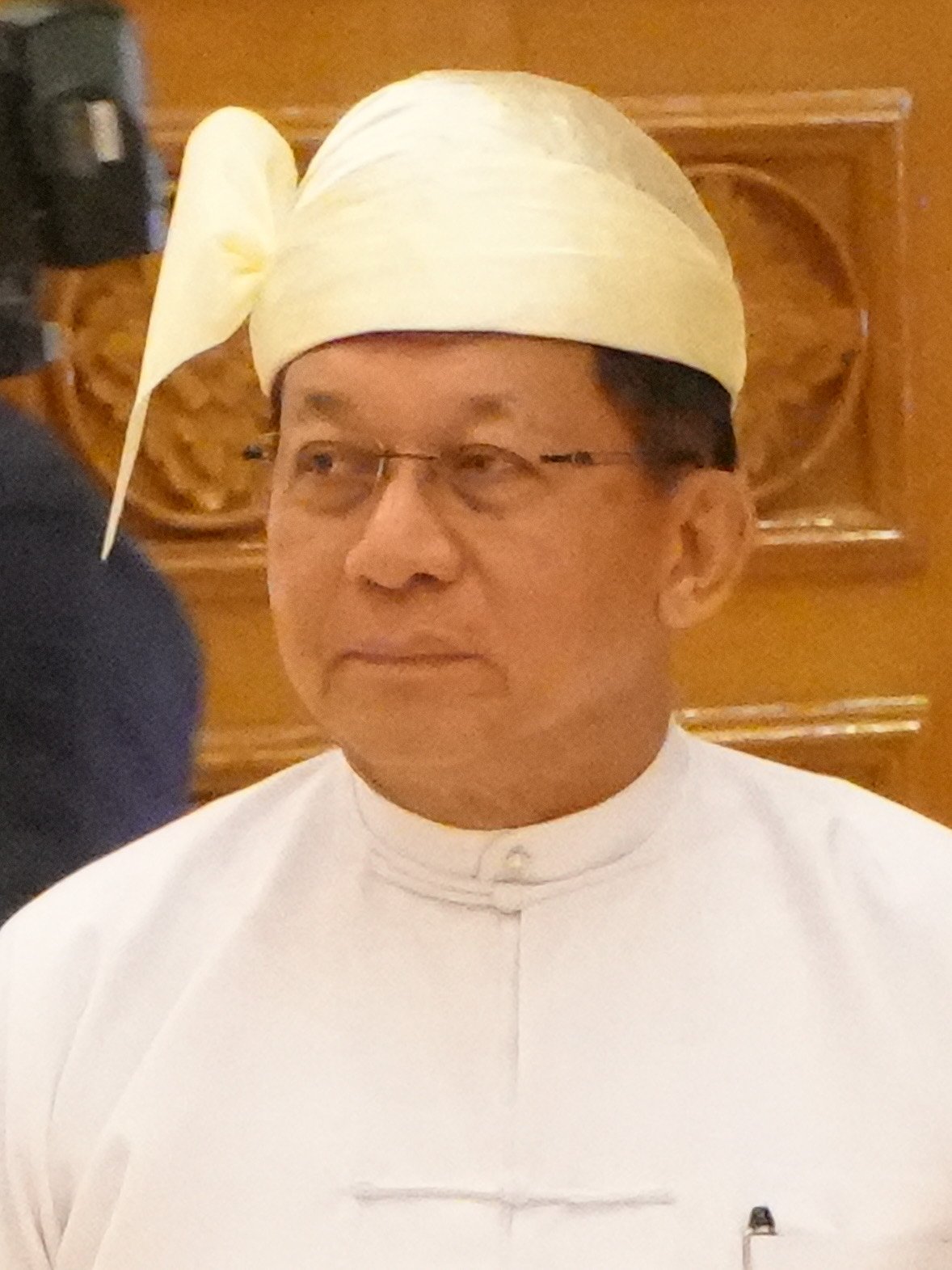
1956—
Min Aung Hlaing
President of Myanmar and leader of the 2021 military takeoverThe former commander-in-chief who led Myanmar’s 2021 coup, presided over nationwide war and became president through a military-controlled political process in 2026.Read biographyQuick answers
Common questions
- When was Myanmar’s 2010 general election?
- Voting took place on 7 November 2010. It was Myanmar’s first national election since the unimplemented NLD victory of May 1990.
- Who won the 2010 Myanmar election?
- The military-backed Union Solidarity and Development Party won 259 elected lower-house seats and 129 elected upper-house seats, for 388 national seats.
- Why did the NLD boycott the 2010 election?
- Registration rules would have required the NLD to expel imprisoned members, including Aung San Suu Kyi, and accept the 2008 constitutional framework. The party refused to re-register and was dissolved.
- Was Aung San Suu Kyi a candidate in 2010?
- No. She remained under house arrest through election day and was released on 13 November, six days after voting.
- How many seats were reserved for Myanmar’s military?
- The commander-in-chief appointed 110 of 440 lower-house members and 56 of 224 upper-house members, for 166 national seats without an election.
- What was the official turnout?
- The election commission announced 77 per cent turnout among about 29 million eligible voters. UN reporting recorded impossible rates above 100 per cent in some constituencies, so the national figure is not independently secure.
- Why was the 2010 election considered fraudulent?
- Opposition candidates reported unexplained advance ballots reversing leads, while scrutiny and complaints were restricted. The problems compounded an already unequal process in which the NLD was absent and the military held guaranteed seats.
- Who were the main USDP leaders?
- Junta prime minister Thein Sein led the party. Former major general Htay Oo served as general secretary, while Shwe Mann and other retired senior officers entered its parliamentary leadership.
- Did the 2010 election end military rule?
- It ended formal rule by the SPDC in March 2011, but the Constitution protected military seats, security ministries, institutional autonomy and an amendment veto. It began a limited opening, not full civilian control.
Primary and institutional sources
How this history was checked
Dates, legal milestones and historical claims are checked against the official and institutional records below. This article was reviewed on 4 October 2026.
- United Nations Human Rights CouncilSpecial Rapporteur’s analysis of the 7 November 2010 elections
- Asian Network for Free Elections2010 Myanmar General Elections · observation report
- Congressional Research ServiceBurma’s 2010 Elections: Constitution and Election Laws
- Human Rights WatchQuestions and answers on Burma’s 2010 election
- Human Rights WatchBurma’s Elections: Towards Realistic Hope
- The Carter CenterObserving Myanmar’s 2015 General Elections · historical background
- Inter-Parliamentary UnionMyanmar lower-house electoral system under the 2008 Constitution
- Wikimedia CommonsHtay Oo portrait · Open Government Licence v1.0