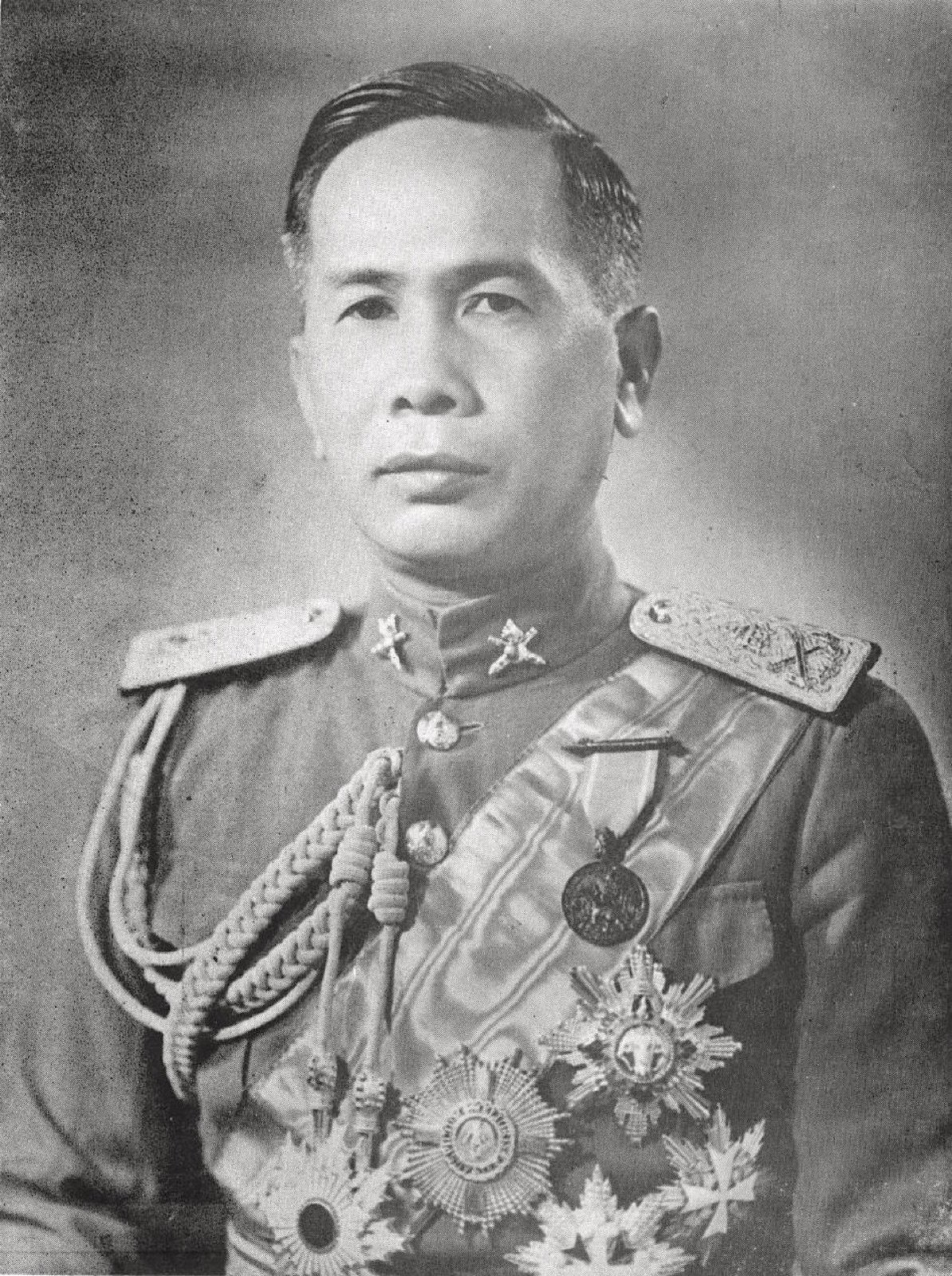

In this biography
Quick facts
- Born
- 16 June 1908
- Died
- 8 December 1963
- Birthplace
- Bangkok, Siam
- Country
- Thailand
- Nationality
- Thai
- Known for
- The 1957 and 1958 coups and an authoritarian development state
- Office
- Prime Minister, 1959–1963
- Military rank
- Field marshal
- Coups led
- September 1957 and October 1958
- Political framework
- Authoritarian rule under the 1959 interim charter
Why this life matters
Sarit’s government established durable patterns of military authority, royal symbolism, anti-communism and technocratic development in Cold War Thailand.
Timeline
Key moments
Born in Bangkok
Born on 16 June and raised partly in northeastern Thailand.
Became army commander
Rose to command the Royal Thai Army.
Overthrew Phibun
Led the September coup after conflict over the election and government legitimacy.
Seized direct power
A second coup suspended the constitution and dissolved parliament.
Became prime minister
Took formal office under an interim charter granting sweeping executive powers.
Deepened the U.S. alliance
Security cooperation expanded as the Cold War intensified in mainland Southeast Asia.
Died in office
Died on 8 December and was succeeded by Thanom Kittikachorn.
The coups that ended Phibun’s order
Sarit rose through the army during and after the Second World War. By the 1950s he commanded a powerful faction and presented himself as an opponent of the electoral manipulation and police influence associated with Phibun’s government.
His September 1957 coup removed Phibun. After a brief constitutional interval, Sarit seized direct power in October 1958, banned parties, restricted the press and used detention and execution under broad security authority.
Development under authoritarian rule
Sarit supported professional economic planning, infrastructure and rural-development programmes while strengthening the bureaucracy. The approach helped embed the language of national development in military government.
Cold War aid and investment tied Thailand closely to the United States. Roads and security programmes extended state reach, especially in the northeast, but development was inseparable from counterinsurgency and the suppression of political opposition.
Royal revival and contested legacy
Sarit gave greater public prominence to King Bhumibol and royal ceremonies, helping shape a political partnership between military rule and monarchy. The arrangement supplied his regime with symbolic legitimacy while the armed forces controlled government.
After Sarit died in office, investigations revealed extensive unexplained wealth. His legacy therefore combines state capacity and infrastructure with dictatorship, corruption, coercion and institutions that influenced Thai politics long after 1963.
Quick answers
Frequently asked questions about Sarit Thanarat
- Who was Sarit Thanarat?
- Sarit Thanarat was a military ruler and prime minister of Thailand. Sarit’s government established durable patterns of military authority, royal symbolism, anti-communism and technocratic development in Cold War Thailand.
- What is Sarit Thanarat best known for?
- Sarit Thanarat is best known for the 1957 and 1958 coups and an authoritarian development state.
- When and where was Sarit Thanarat born?
- Sarit Thanarat was born on 16 June 1908 in Bangkok, Siam.
- When did Sarit Thanarat die?
- Sarit Thanarat died on 8 December 1963.
Sources and further reading
How this biography was checked
Core dates and offices are checked against the sources below. This profile was last reviewed on 8 September 2026.