
The short answer
Thailand’s 1968 Constitution ended nearly a decade of rule under an interim charter and restored an elected House. It also built powerful safeguards for the existing military–bureaucratic leadership through an appointed Senate and a strong executive, making the new order both a genuine political opening and a tightly managed one.
Chronology
A timeline of the turning points
Sarit abolishes constitutional government
The Revolutionary Council dissolved parliament, ended party competition and placed Thailand under direct military rule.
An interim charter creates an appointed assembly
The Constituent Assembly served as both charter-drafting body and legislature while the executive governed with exceptional powers.
Thanom succeeds Sarit
Thanom Kittikachorn inherited the military-led order and the unfinished constitutional process.
Pressure for a permanent constitution grows
Urban professionals, diplomats and some officials increasingly questioned a transition that had already lasted most of a decade.
Political parties are allowed to organise again
The regime prepared for an elected House while its leaders formed the United Thai People’s Party.
The permanent constitution is promulgated
The charter replaced the 1959 interim order with a bicameral parliament and retained a powerful executive.
The appointed Senate takes shape
Military officers filled most Senate seats, protecting the governing establishment inside the new constitutional structure.
Voters elect a 219-seat House
Thailand held its first general election since 1957, restoring national electoral competition after eleven years.
Thanom is appointed prime minister again
The election changed the legislature without dislodging the military leadership at the centre of government.
The constitution is suspended
Thanom’s self-coup dissolved parliament and ended the controlled constitutional experiment after less than three and a half years.
Why did Thailand need a new constitution in 1968?
Sarit Thanarat’s October 1958 coup had abolished the existing constitution, parliament and political parties. The January 1959 interim charter then created an appointed Constituent Assembly that also acted as the legislature. A document presented as temporary remained the legal frame for almost a decade, allowing executive rule without a national election.
By the mid-1960s, an indefinite transition carried reputational and political costs. Thailand was closely aligned with constitutional democracies during the Cold War, while an expanding professional and urban public expected some route back to representation. Thanom Kittikachorn’s government therefore needed an elected institution without surrendering the military establishment’s command of the state.
What political system did the constitution create?
The constitution promulgated on 20 June 1968 created a bicameral National Assembly. A 219-member House of Representatives would be chosen by voters, while a 120-member Senate would be appointed. The House restored electoral competition and a forum in which opposition politicians could question policy, debate budgets and organise publicly.
The two chambers were not equal products of popular choice. Appointment made the Senate a protective layer for the government and bureaucracy. Contemporary American reporting counted ninety military officers among the 120 senators. That composition meant that constitutional government returned through institutions designed to keep the armed establishment influential even if the elected House proved difficult to manage.
How strong was the executive?
The charter preserved a strong executive rather than establishing simple parliamentary supremacy. The government controlled administration, security and much of the machinery that shaped political life outside Bangkok. Senior officers held cabinet posts, commanded the armed forces and influenced an appointed Senate able to participate in important legislative and constitutional decisions.
Praphas Charusathien’s Interior Ministry was especially consequential because it reached through governors, district officers, police and local administration. The new House could create debate and resistance, but it did not dismantle those networks. Constitutional rules and administrative power therefore pointed in different directions: one opened representation while the other protected continuity.
Was the 1968 Constitution democratic?
It was more representative than the direct rule imposed in 1958. Parties could organise, citizens could elect representatives and opposition voices acquired a national platform. Those were substantive changes, not merely decorative language. The 1969 campaign was generally peaceful, and the result revealed real differences between Bangkok, the provinces, government candidates and independents.
Yet the system was deliberately managed. The Senate was appointed and dominated by officers, the executive retained coercive and administrative advantages, and the governing party was built around officials already in power. It is therefore best described as a limited constitutional opening: competitive enough to generate political friction, but constrained enough to preserve the military–bureaucratic order.
Who benefited from the constitutional settlement?
Thanom gained a route to remain prime minister under a permanent charter, while Praphas retained military and administrative leverage. Government supporters organised the United Thai People’s Party to contest the House. The appointed Senate gave serving officers and senior officials a formal national role without requiring them to win constituencies.
The opposition also gained space. Seni Pramoj’s Democrat Party could campaign openly and later won every House seat in Bangkok and Thonburi in the 1969 election. Independent provincial politicians became pivotal because no party secured a majority. The settlement did not produce one uncontested winner; it created a chamber in which several kinds of political actor could bargain.
How did the constitution lead to the 1969 election?
Once the charter restored an elected House, a nationwide vote was required to fill its 219 seats. Parties dissolved in 1958 re-emerged, new groupings formed and 1,522 candidates competed on 10 February 1969. The government party won the largest bloc but not a majority, while independents collectively became almost as numerous.
The election demonstrated both the value and the limits of the constitutional opening. Voters could defeat government candidates, particularly in the capital, but many independents later aligned with the governing party. The Senate remained appointed and government-controlled. The result restored parliamentary politics without transferring ultimate control away from the existing leadership.
Why did the constitutional experiment end in 1971?
Parliamentary debate complicated a governing style formed under a decade of decrees and appointed institutions. Legislators challenged budgets, ministers and administrative decisions; factions also competed over patronage. Thanom and allied leaders portrayed this friction, together with labour unrest and communist insurgency, as evidence that constitutional government obstructed national security.
On 17 November 1971, leaders already holding state power dissolved parliament, suspended the constitution and restored direct rule. The self-coup showed the charter’s central weakness: institutions existed, but the armed executive did not accept them as binding when they became inconvenient. That rupture helped make a permanent constitution the defining demand of the October 1973 movement.
Continue the chronology
Related history guides
The Sarit Era in Thailand
Trace the interim charter, Article 17 and military order from which the 1968 settlement emerged.
Read the timeline10 February 1969The 1969 Thai General Election
See how voters, parties and independents filled the House created by the new constitution.
Read the timeline17 November 1971Thanom’s 1971 Self-Coup
Follow the executive decision that destroyed the constitutional system after three years.
Read the timeline6–14 October 1973The 1973 Thai Popular Uprising
Connect the loss of constitutional rule to the mass movement demanding its restoration.
Read the timeline1851–todayThailand History Timeline
Place the charter within Thailand’s longer cycle of constitutions, elections and coups.
Read the timelineConnected biographies
Seven biographies connecting military command, appointed institutions, diplomacy and parliamentary opposition
 Thailand · Politics
1911—2004
Thanom Kittikachorn
Military officer and prime minister of ThailandA field marshal whose governments deepened Thailand’s Cold War alliance and whose self-coup and continued military rule provoked the mass movement of October 1973.Read biography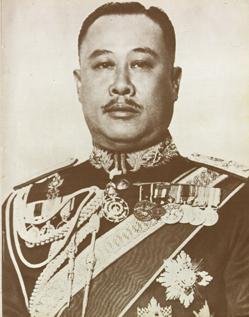 Thailand · Politics
1912—1997
Praphas Charusathien
Field marshal, interior minister and deputy prime ministerA field marshal and long-serving interior minister who helped consolidate Sarit and Thanom’s rule, joined the 1971 self-coup and fell during the October 1973 uprising.Read biography Thailand · Politics
1927—2016
Bhumibol Adulyadej
King of Thailand, 1946–2016Thailand’s longest-reigning monarch, whose seven decades on the throne spanned rapid development, repeated political crises and profound social change.Read biography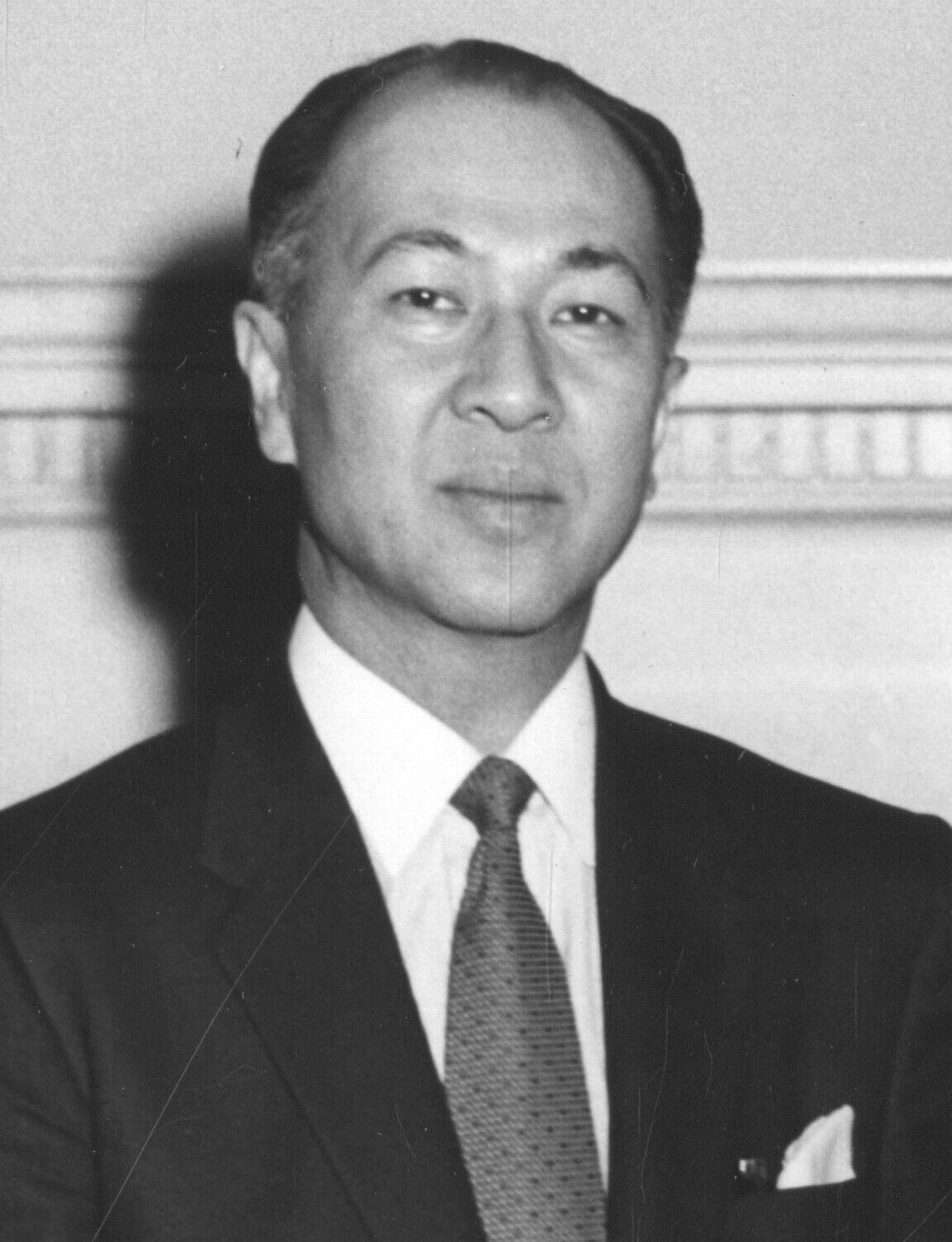 Thailand · Politics
1905—2000
Pote Sarasin
Diplomat, interim prime minister and SEATO secretary-generalA lawyer and diplomat who served briefly as prime minister after Sarit’s 1957 coup, supervised a return to elections and became SEATO’s first secretary-general.Read biography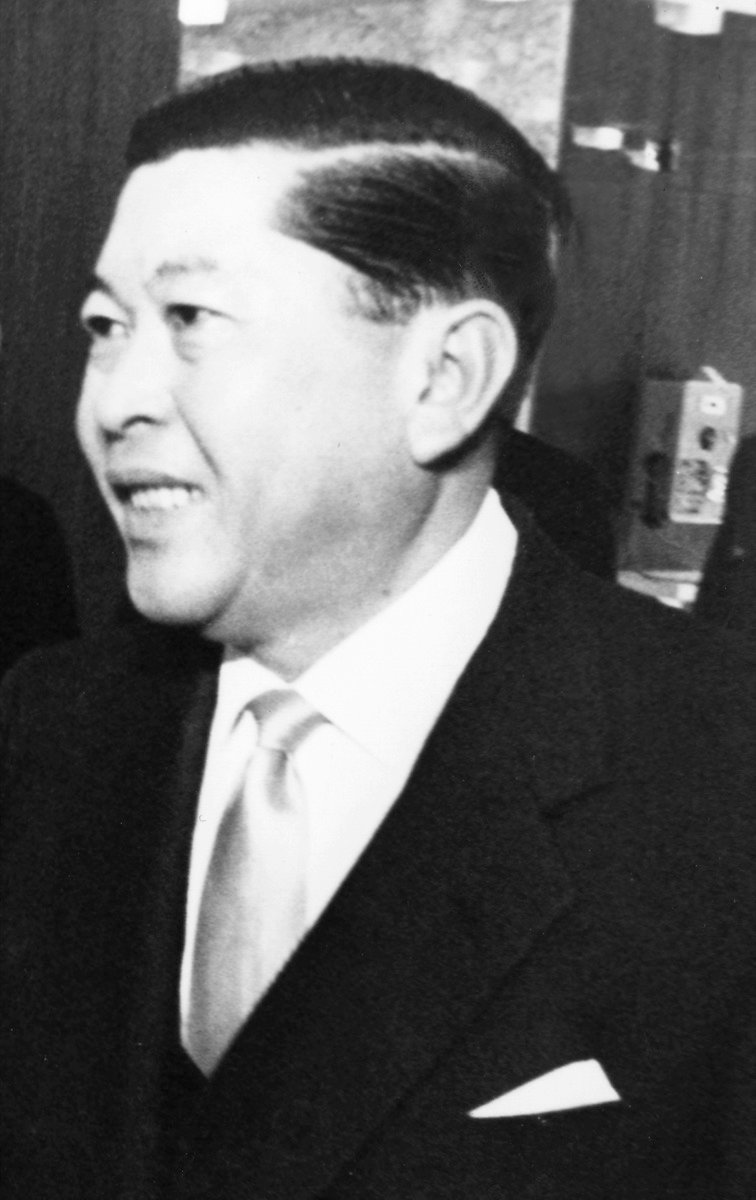 Thailand · Politics
1914—2016
Thanat Khoman
Diplomat, foreign minister and ASEAN co-founderA Thai diplomat whose regional initiatives, patient mediation and signature on the Bangkok Declaration helped turn post-colonial rivalry into ASEAN cooperation.Read biography Thailand · Politics
1905—1997
Seni Pramoj
6th Prime Minister of Thailand and Free Thai diplomatThe lawyer and wartime diplomat who refused to deliver Thailand’s declaration of war to Washington, organised Free Thai resistance abroad and later led three governments.Read biography Thailand · Politics
1908—1963
Sarit Thanarat
Military ruler and prime minister of ThailandA field marshal who displaced Phibun, abolished constitutional politics and paired coercive rule with development planning and a close United States alliance.Read biographyQuick answers
Common questions
- When was Thailand’s 1968 Constitution promulgated?
- It was promulgated on 20 June 1968, replacing the interim constitutional order established in January 1959.
- How many members were in the House and Senate?
- The system provided for an elected House of 219 members and an appointed Senate of 120 members.
- Was the Senate elected?
- No. The Senate was appointed, and contemporary diplomatic analysis reported that ninety of its 120 members were military officers.
- Did the constitution restore political parties?
- Yes. Party organisation and electoral competition returned before the February 1969 general election, although the military-led government retained major institutional advantages.
- Who was prime minister under the 1968 Constitution?
- Thanom Kittikachorn remained the central government leader and was appointed prime minister again after the 1969 election.
- How did the 1968 Constitution end?
- Thanom’s self-coup on 17 November 1971 dissolved parliament and suspended the constitution, restoring direct military rule.
Primary and institutional sources
How this history was checked
Dates, legal milestones and historical claims are checked against the official and institutional records below. This article was reviewed on 3 October 2026.
- Law Library of CongressConstitution of the Kingdom of Thailand, B.E. 2511 (1968)
- Office of the Historian, U.S. Department of StateThe 1968 constitution and the military–civilian establishment
- Office of the Historian, U.S. Department of StatePolitical and constitutional developments after the 1969 election
- Office of the Historian, U.S. Department of StateCountry briefing: the 1968 Constitution and 1969 election
- Inter-Parliamentary UnionThailand parliamentary election, 10 February 1969
- Library of CongressThailand: A Country Study
- Cambridge University PressSarit’s Stratocracy, 1957–1963
- Wikimedia CommonsThanom Kittikachorn portrait and CC0 record