
The short answer
The October 1973 uprising began with demands to release thirteen constitution campaigners and grew into a mass challenge to military rule. Security-force violence on 14 October killed demonstrators, but the government also lost political control: Thanom resigned, a civilian interim administration took office and a turbulent democratic opening began.
Chronology
A timeline of the turning points
Military coups reset the political system
Sarit Thanarat displaced Plaek Phibunsongkhram, then abolished the constitution and parliament through a second coup.
Thanom succeeds Sarit
Field Marshal Thanom Kittikachorn became prime minister and continued military-led, anti-communist government.
Thanom stages a self-coup
The government dissolved parliament, suspended the constitution, banned parties and imposed martial law.
Ramkhamhaeng students mobilise
Protest over the expulsion of students who criticised elite privilege showed a wider capacity for campus organisation.
Constitution campaigners are arrested
Police detained activists distributing leaflets demanding a permanent constitution; thirteen became the focus of a national release campaign.
The protest expands
University students, workers and other citizens gathered at Thammasat University as negotiations failed to resolve the crisis.
A vast march reaches the Democracy Monument
Hundreds of thousands demanded the detainees’ release and a constitutional timetable.
Security forces and demonstrators clash
Efforts to disperse the crowds escalated into shootings and street fighting; dozens were killed and hundreds injured.
Thanom’s government falls
Thanom resigned, Sanya Dharmasakti was appointed prime minister, and the leading military rulers soon left Thailand.
A new constitution is promulgated
The democratic opening produced a more competitive parliamentary system, an active press and expanding civil society.
The opening ends in massacre and coup
Right-wing violence and a security assault at Thammasat University were followed by a military takeover.
What caused the October 1973 uprising?
The immediate trigger was the arrest of activists calling for a constitution, but the conflict had deeper roots. Thanom’s 1971 self-coup removed parliament and suspended constitutional rule after years of military dominance.
Universities had expanded, creating a larger and more socially diverse student population. Organisers connected constitutional demands with corruption, unequal privilege, labour issues and concern about the country’s dependence on a Cold War security order.
How did a student protest become a popular movement?
The National Student Center of Thailand helped coordinate action across campuses, but participation quickly grew beyond students. Families, workers, professionals and other Bangkok residents supplied food, transport and numbers.
Thammasat University, the Democracy Monument and the broad avenues between them gave the movement a visible civic geography. By 13 October, the release of the detainees alone was no longer enough for many participants; they expected a credible constitutional timetable.
What happened on 14 October?
After a huge march, confusion over routes, dispersal and police lines escalated near the royal and government districts. Tear gas, gunfire and street clashes transformed a political demonstration into a lethal confrontation.
Casualty totals vary by record and by what later deaths are included. The important fact is not a single disputed number: state force killed dozens of people and injured hundreds, while demonstrators also resisted in parts of the city.
Why did the military government fall?
Thanom resigned as the confrontation widened and the established leadership lost the ability to restore consent. King Bhumibol announced that Sanya Dharmasakti, the rector of Thammasat University, would form a new government.
Thanom, Praphas Charusathien and Narong Kittikachorn left Thailand. The change reflected popular mobilisation, fractures within the coercive apparatus and royal intervention; reducing the outcome to only one of those forces misses how the crisis unfolded.
What changed between 1973 and 1976?
The opening brought a more assertive press, labour organising, peasant activism, new parties and competitive elections. Debates long contained by military rule entered public life with unusual intensity.
The same period was shaped by economic strain, the communist victories in Indochina and organised right-wing fear of revolution. Assassinations, paramilitary groups and polarised media narrowed the space for compromise.
How should the uprising’s legacy be understood?
The uprising proved that a mass civilian movement could remove a military government. It also placed students and ordinary citizens, rather than only elite factions, at the centre of modern Thai political history.
The democratic period did not survive. Thanom’s return in 1976 became a rallying point for both protest and reaction, culminating in the 6 October massacre and coup. The achievement of 1973 and the violence of 1976 must be studied together.
Continue the chronology
Related history guides
Thanom’s 1971 Self-Coup
Begin with the destruction of parliament that made constitutional restoration the movement’s central demand.
Read the timeline10 February 1969The 1969 Thai General Election
Trace the short parliamentary experiment that preceded direct military rule.
Read the timeline7 October 1974The 1974 Constitution of Thailand
Examine how the post-uprising transition converted demands for constitutional government into a new rights and parliamentary framework.
Read the timeline26 January 1975The 1975 Thai General Election
Follow the constitutional opening into a fragmented elected House and Kukrit Pramoj’s coalition.
Read the timeline6 October 1976The Thammasat Massacre
Continue into the violence and coup that closed the democratic opening created in 1973.
Read the timeline24 June 1932The Siamese Revolution
Return to the constitutional rupture that first ended absolute monarchy.
Read the timeline1851–todayThailand History Timeline
Connect the uprising to royal reform, military ascendancy and later democratic crises.
Read the timelineForty-one biographiesThai Political Turning Points
Meet the rulers, officials and public figures whose lives cross the country’s political breaks.
Read the timelineConnected biographies
Seven lives connecting military government, civic institutions, coalition politics and the October transition

1911—2004
Thanom Kittikachorn
Military officer and prime minister of ThailandA field marshal whose governments deepened Thailand’s Cold War alliance and whose self-coup and continued military rule provoked the mass movement of October 1973.Read biography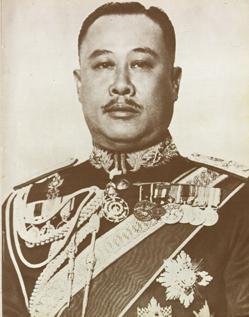
1912—1997
Praphas Charusathien
Field marshal, interior minister and deputy prime ministerA field marshal and long-serving interior minister who helped consolidate Sarit and Thanom’s rule, joined the 1971 self-coup and fell during the October 1973 uprising.Read biography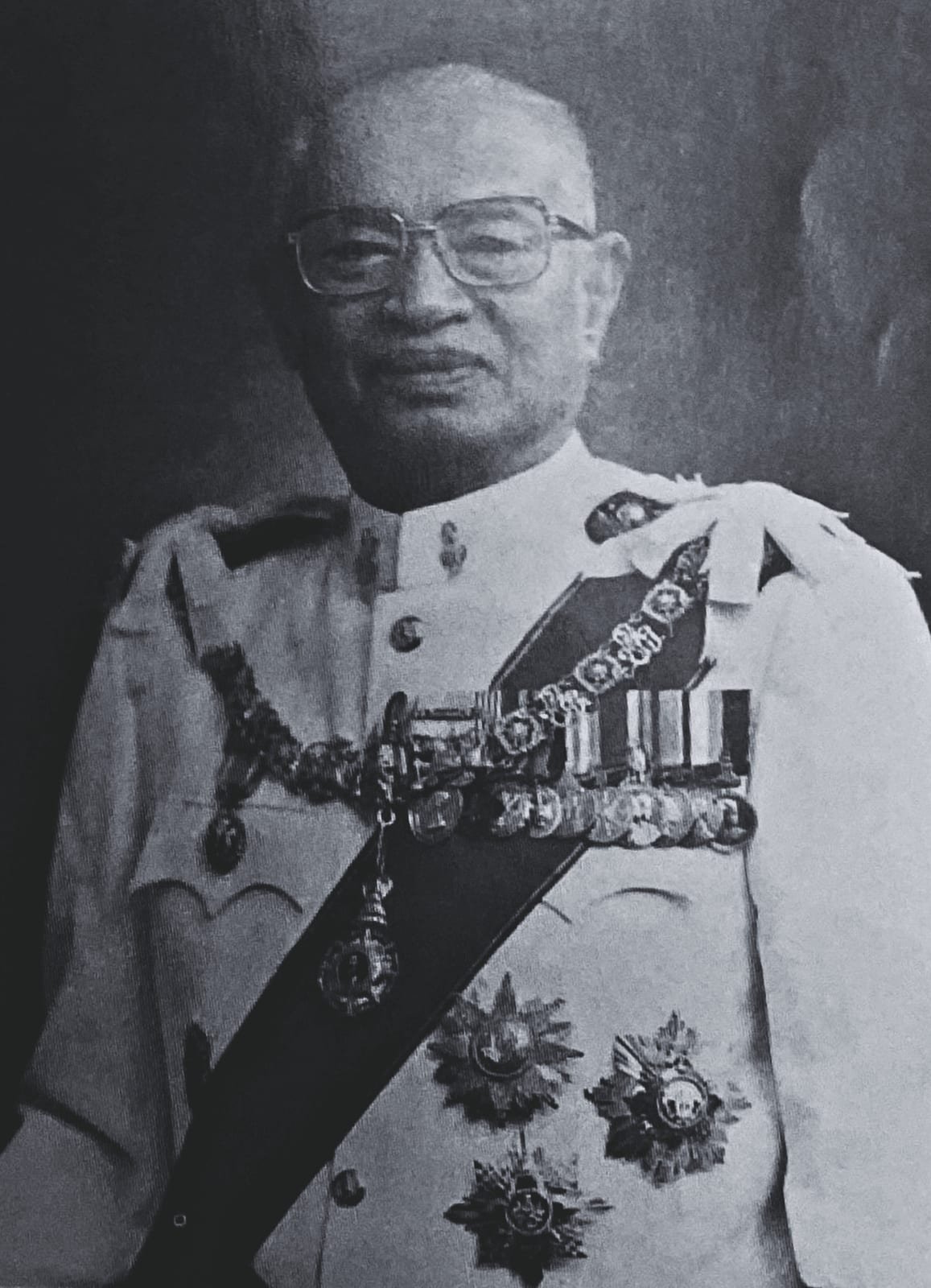
1907—2002
Sanya Dharmasakti
Jurist, university rector and former prime ministerThe jurist and Thammasat rector appointed prime minister after military rule collapsed in October 1973, who oversaw a new constitution and return to elections.Read biography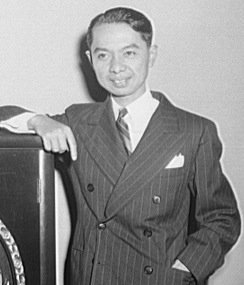
1905—1997
Seni Pramoj
6th Prime Minister of Thailand and Free Thai diplomatThe lawyer and wartime diplomat who refused to deliver Thailand’s declaration of war to Washington, organised Free Thai resistance abroad and later led three governments.Read biography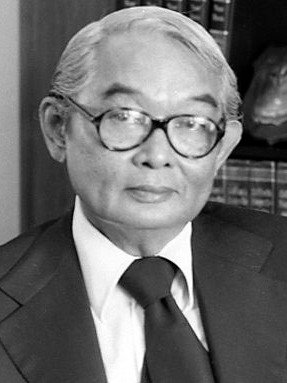
1911—1995
Kukrit Pramoj
13th Prime Minister of Thailand and writerThe writer, newspaper founder and Social Action Party leader who assembled Thailand’s fragmented 1975 coalition and became its thirteenth prime minister.Read biography
1916—1999
Puey Ungphakorn
Economist, central banker and university rectorAn economist, wartime Free Thai volunteer and long-serving central-bank governor who linked economic management, education and public responsibility.Read biography
1927—2016
Bhumibol Adulyadej
King of Thailand, 1946–2016Thailand’s longest-reigning monarch, whose seven decades on the throne spanned rapid development, repeated political crises and profound social change.Read biographyQuick answers
Common questions
- What was the 1973 Thai popular uprising?
- It was a student-led mass movement demanding a constitution and the release of arrested activists. The protests culminated in violence and the fall of Thanom Kittikachorn’s military government on 14 October 1973.
- Why is 14 October important in Thailand?
- On 14 October 1973, mass mobilisation and lethal confrontation ended a long military government and opened a three-year period of competitive politics and wider civic activity.
- Who were the thirteen people arrested in October 1973?
- They were activists, students and intellectuals detained while campaigning for a permanent constitution. The demand for their release became the immediate focus of the wider movement.
- How many people died in the 1973 uprising?
- Official and historical totals vary according to scope, but the violence killed dozens and injured hundreds. Some contemporary diplomatic reporting gave higher estimates than later official commemorations.
- Did the 1973 uprising establish lasting democracy?
- It opened an unusually democratic period, but polarisation and political violence grew. The 6 October 1976 massacre and military coup ended that opening.
Primary and institutional sources
How this history was checked
Dates, legal milestones and historical claims are checked against the official and institutional records below. This article was reviewed on 3 October 2026.
- Thai Foreign Affairs Archives / NRCTContemporary diplomatic record: Overthrow of Thanom government in Thailand
- Royal Society of ThailandThe Student and Civilian Uprising of 1973
- Institute of Asian Studies, Chulalongkorn UniversityThe 14th of October 1973 Memorial and Thai democracy discourse
- Library of CongressThailand: A Country Study
- Institute of Public Policy StudiesBangkok democracy map: 1973, 1976 and 1992