
The short answer
Sarit Thanarat’s September 1957 coup destroyed the ruling balance among Phibun, Phao and the army. The bloodless seizure sent two of Thailand’s most powerful men into exile, installed Pote Sarasin as a civilian interim premier and opened the path to Sarit’s more complete dictatorship in 1958.
Chronology
A timeline of the turning points
The Radio Coup entrenches the commanders
Phin, Phao, Sarit and allied officers took direct control of cabinet, parliament and the constitutional order.
Sarit becomes army commander
Command of the expanding Royal Thai Army gave Sarit the strongest organised force inside the ruling coalition.
A disputed election damages the government
Fraud allegations weakened Phibun and Phao while student protests increased Sarit’s public standing.
Sarit’s faction leaves the ruling party
Sarit and forty-six supporters resigned from Seri Manangkhasila, making the elite split public.
The army seizes Bangkok
Sarit’s forces occupied strategic positions without organised resistance and removed Phibun’s government.
Phibun and Phao go into exile
Phibun escaped toward Cambodia; Phao surrendered and was permitted to leave Thailand for Europe.
The National Assembly is dissolved
A royal decree ended the legislature and required a new election within ninety days.
Pote Sarasin becomes interim premier
The diplomat and SEATO secretary-general gave the new order a civilian cabinet and international credibility.
A new general election is held
The interim government completed the promised vote before Thanom Kittikachorn became prime minister.
Sarit stages a second coup
He abolished party competition and constitutional government, turning indirect command into open dictatorship.
What happened in Thailand on 16 September 1957?
Field Marshal Sarit Thanarat used the army to overthrow Prime Minister Plaek Phibunsongkhram on 16 September 1957. Units secured Bangkok’s strategic military and police centres without sustained opposition. The government collapsed quickly because the coup did not pit the state against an outside rebel force: it resolved a struggle among commanders who had governed together since the 1947 and 1951 takeovers.
Phibun escaped by road and entered exile through Cambodia. Police General Phao Siyanon surrendered and received permission to leave for Europe. Sarit became military governor of Bangkok, while a decree dissolved the National Assembly and promised an election within ninety days. The coup was bloodless in its immediate execution, but it transferred political authority through armed coercion and ended Phibun’s final premiership.
Why did the Phibun–Phao–Sarit triumvirate break apart?
Phibun had preserved his position by balancing Phao’s police against Sarit’s army. United States aid enlarged both Thailand’s security establishment and the resources commanders could distribute to followers. The arrangement was stable only while neither armed faction could eliminate the other and while Phibun remained useful as Thailand’s internationally recognised leader.
The February 1957 election destroyed that equilibrium. Phao’s role in alleged manipulation made the police faction a focus of public anger. Sarit, who had kept some distance from the campaign, handled the ensuing student protests without mass violence and gained a reputation for moderation. Phibun tried to save the balance by protecting Phao, but this convinced Sarit that the prime minister had chosen the police network over the army.
How was the coup carried out?
The operation was short because Sarit already controlled the army and had attracted officers from the wider armed establishment. A United States editorial note records that his resignation and that of forty-six supporters from the ruling party presaged the takeover. Once troops moved, Phibun lacked a loyal armed coalition capable of defending the cabinet, while Phao’s police did not mount an effective counterattack.
The absence of a battle should not be confused with popular authorisation. Tanks and military command determined the result before constitutional institutions could adjudicate the conflict. Sarit formed a military committee to maintain order, removed commanders associated with the old coalition and displaced Fuen Ronnaphagrad Ritthakhanee from air-force leadership. The coup reordered the coercive state as well as the cabinet.
What role did King Bhumibol and the royal decrees play?
As the coup unfolded, King Bhumibol proclaimed a state of emergency and appointed Sarit military governor of Bangkok. On 18 September, a royal decree dissolved the National Assembly and set a ninety-day deadline for elections. These acts gave the new balance of power a formal public framework after the army had already made the government’s survival impossible.
Historians differ in how they describe palace agency and the longer relationship created by the coup. The Library of Congress country study states that the king approved Sarit’s action, while newer scholarship treats palace support as part of the coalition that sustained Sarit’s rise. The record is clearest on the official acts themselves; claims about motive require greater caution because public decrees, diplomatic reports and later political memory were produced from different positions.
Why did Pote Sarasin become prime minister?
Sarit did not immediately take the premiership. On 21 September, diplomat Pote Sarasin formed an interim civilian cabinet. Pote had served as foreign minister and ambassador to the United States and had just become the first secretary-general of SEATO. He had remained outside the Phibun–Phao–Sarit factional battle, which made him acceptable to the palace, the coup group and Thailand’s Western partners.
A contemporary American assessment described the appointment as symbolically useful because it promised continuity in foreign policy and international recognition. Pote’s independence was nevertheless bounded by Sarit’s command of the army. His government administered the state and organised the 15 December election; it did not reverse the coup or restore the dismissed assembly. Thanom Kittikachorn then became prime minister under Sarit’s influence.
How did the United States respond?
Washington publicly characterised the transfer as an internal Thai development and expected bilateral cooperation to continue. That response reflected Cold War priorities: Thailand hosted the SEATO secretariat, received extensive aid and was treated as a central anti-communist partner on the Southeast Asian mainland. Pote’s appointment reduced fears that the coup would produce a neutralist foreign-policy turn.
American records are indispensable but not neutral. Embassy reporting often judged Thai leaders by their usefulness to United States policy and sometimes described authoritarian repression more favourably than political opposition. Those documents reveal how the alliance shaped elite calculations, not an external verdict that made the coup legitimate. The expansion of army capacity through foreign assistance was one condition of Sarit’s victory even though Washington did not direct the operation.
Why was the 1957 coup a turning point?
The coup ended the post-1947 coalition rather than ending military power. Phibun, Phao, Phin and Fuen lost their positions; Sarit’s army faction became dominant. The election promised for December preserved a temporary constitutional surface, but political competition now operated under a commander who had demonstrated that he could remove both government and parliament.
Sarit completed the transition in October 1958 with a second coup that abolished the constitution, banned parties and created open authoritarian rule. The 1957 takeover therefore matters as the hinge between factional military government and a centralised dictatorship. It also began a closer public partnership among army rule, royal symbolism, technocratic development and the United States alliance—features that shaped Thailand through the 1960s.
Continue the chronology
Related history guides
The October 1958 Thai Coup
Continue to Sarit’s second takeover and the abolition of constitutional politics.
Read the timeline1958–1963The Sarit Era in Thailand
Follow the resulting dictatorship through Article 17, development planning and the Cold War alliance.
Read the timeline26 February 1957The February 1957 Thai General Election
Begin with the fraud controversy and protests that broke the ruling coalition’s legitimacy.
Read the timeline29 November 1951The 1951 Radio Coup
Trace the military coalition that Sarit would overturn from within six years later.
Read the timeline29–30 June 1951The Manhattan Rebellion
See how the navy’s defeat strengthened the army, police and air-force commanders.
Read the timeline1932–presentPrime Ministers of Thailand
Follow the transition from Phibun to Pote, Thanom and Sarit in the complete national sequence.
Read the timeline1851–todayThailand History Timeline
Place the coup within Thailand’s longer history of constitutions, elections and military rule.
Read the timelineConnected biographies
Seven biographies connecting the coup, exile, interim cabinet and Sarit order
 Thailand · Politics
1908—1963
Sarit Thanarat
Military ruler and prime minister of ThailandA field marshal who displaced Phibun, abolished constitutional politics and paired coercive rule with development planning and a close United States alliance.Read biography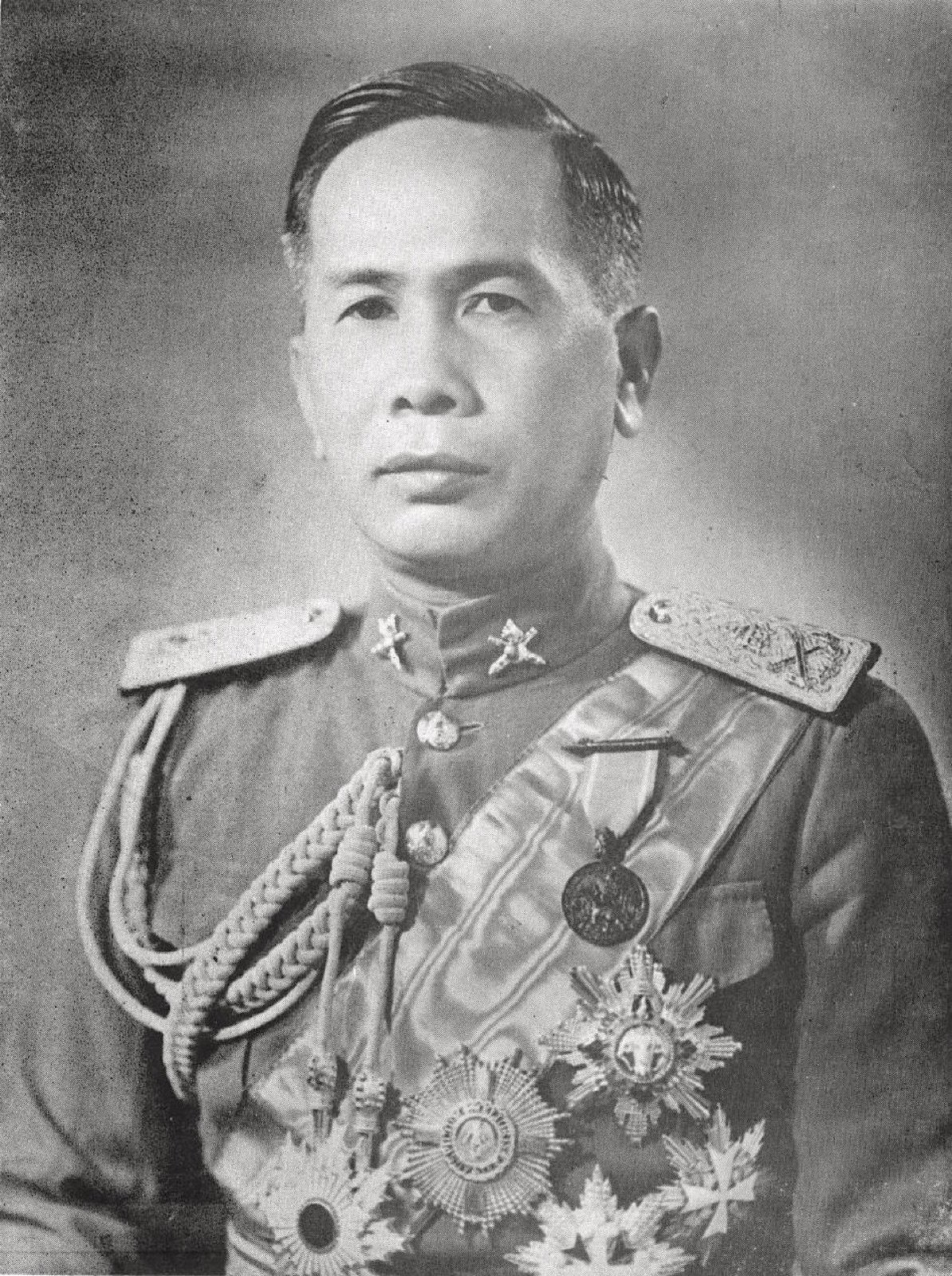 Thailand · Politics
1897—1964
Plaek Phibunsongkhram
Military officer and prime minister of ThailandA military leader of the 1932 revolution who twice served as prime minister and used state power to promote nationalism, social mandates and a new name for the country.Read biography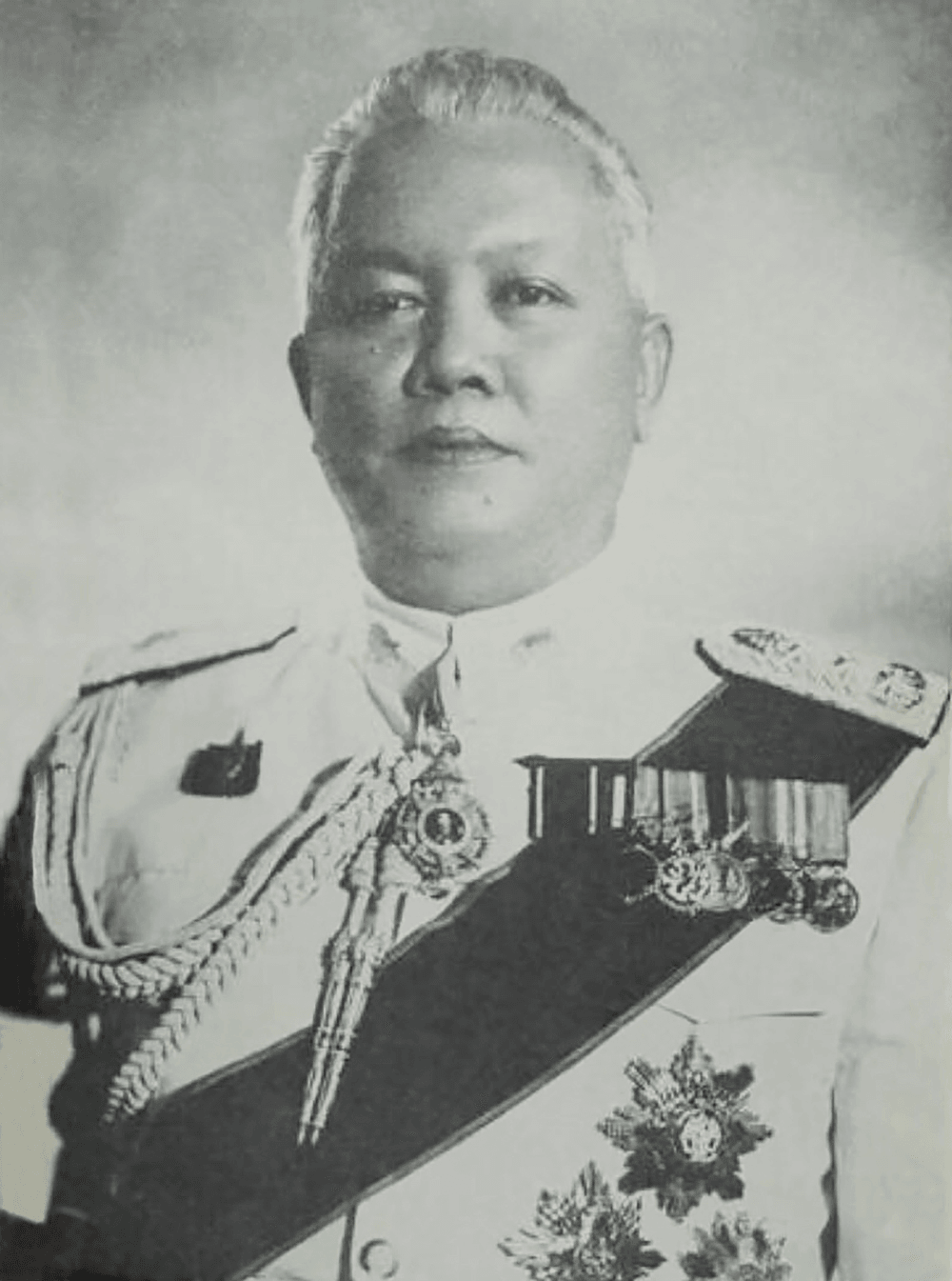 Thailand · Politics
1910—1960
Phao Siyanon
Thai police general and Cold War power brokerA police general who helped make Thailand’s national police a heavily armed Cold War power centre while presiding over political repression and a far-reaching patronage network.Read biography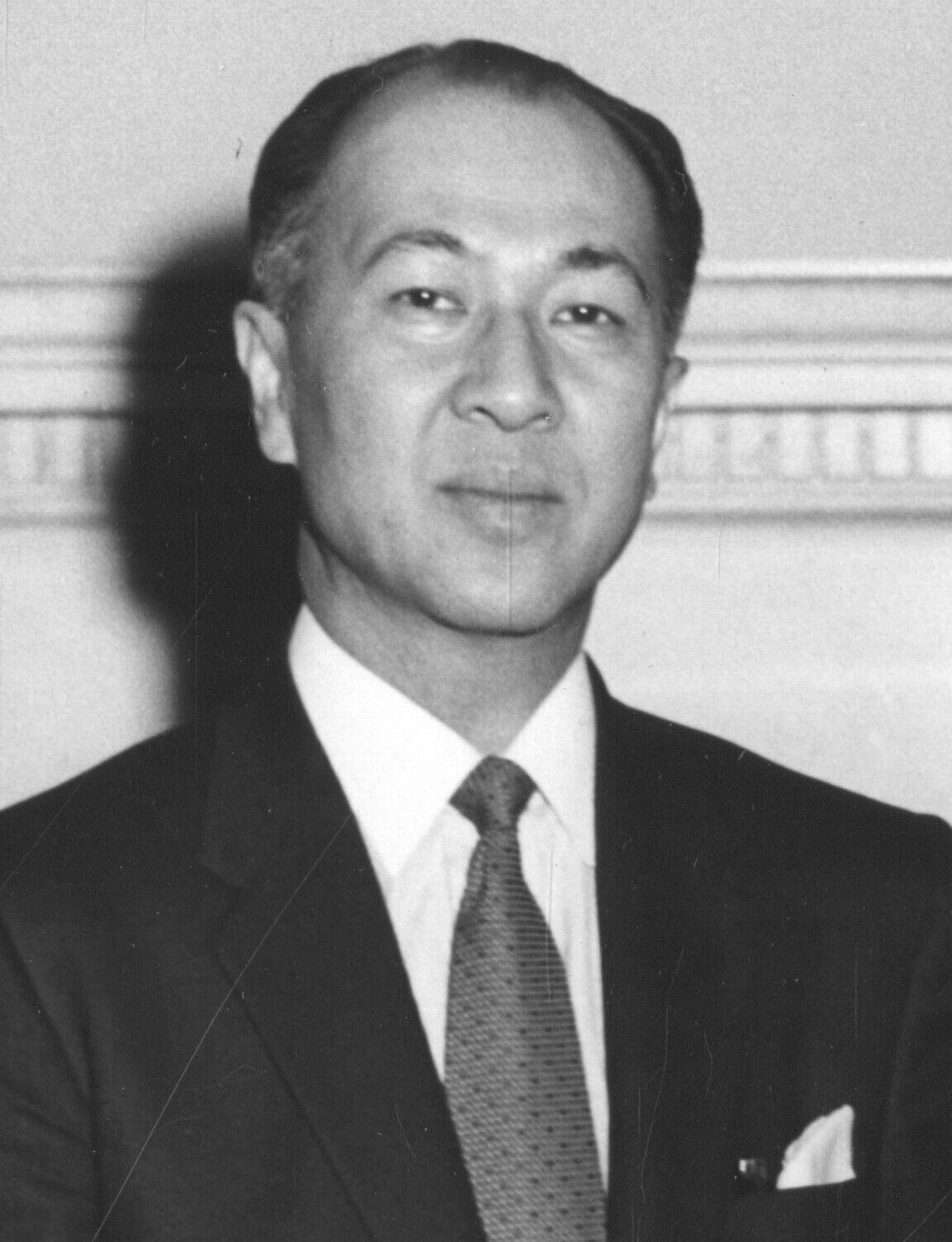 Thailand · Politics
1905—2000
Pote Sarasin
Diplomat, interim prime minister and SEATO secretary-generalA lawyer and diplomat who served briefly as prime minister after Sarit’s 1957 coup, supervised a return to elections and became SEATO’s first secretary-general.Read biography Thailand · Politics
1911—2004
Thanom Kittikachorn
Military officer and prime minister of ThailandA field marshal whose governments deepened Thailand’s Cold War alliance and whose self-coup and continued military rule provoked the mass movement of October 1973.Read biography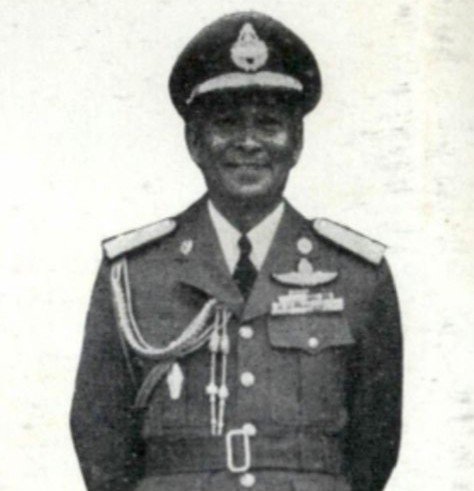 Thailand · Politics
1900—1987
Fuen Ronnaphagrad Ritthakhanee
Royal Thai Air Force commander and deputy prime ministerAn air-force commander whose intervention in the Manhattan Rebellion made him a central military actor, cabinet minister and member of Thailand’s 1951 Radio Coup junta.Read biography Thailand · Politics
1927—2016
Bhumibol Adulyadej
King of Thailand, 1946–2016Thailand’s longest-reigning monarch, whose seven decades on the throne spanned rapid development, repeated political crises and profound social change.Read biographyQuick answers
Common questions
- Who led Thailand’s 1957 coup?
- Army Commander Field Marshal Sarit Thanarat led the coup and became military governor of Bangkok.
- When did the 1957 Thai coup take place?
- Army forces overthrew the government on 16 September 1957. The National Assembly was formally dissolved two days later.
- What happened to Plaek Phibunsongkhram?
- Phibun escaped Bangkok, crossed into Cambodia and spent the rest of his life in exile, dying in Japan in 1964.
- What happened to Police General Phao Siyanon?
- Phao surrendered to the armed forces, left Thailand for Europe and died in Geneva in 1960.
- Did Sarit become prime minister immediately?
- No. Pote Sarasin led an interim civilian cabinet, followed by Thanom Kittikachorn. Sarit became prime minister after his second coup and the 1959 interim charter.
- How was the coup connected to the February election?
- Election fraud allegations weakened Phibun and Phao, generated mass protest and helped Sarit claim that army intervention would remove a corrupt government.
Primary and institutional sources
How this history was checked
Dates, legal milestones and historical claims are checked against the official and institutional records below. This article was reviewed on 3 October 2026.
- Office of the Historian, U.S. Department of StateEditorial note on the September 1957 coup
- Office of the Historian, U.S. Department of StateJuly 1957 assessment of Thailand’s factional crisis
- Ministry of Foreign Affairs of ThailandThe Quest for Thai–US Alliance
- Library of CongressThailand: A Country Study
- Cambridge University PressSarit’s Stratocracy, 1957–1963
- Central Intelligence Agency Reading RoomPote Sarasin—Provisional Premier of Thailand
- Secretariat of the Prime Minister of ThailandDirectory of Prime Ministers of Thailand
- Wikimedia CommonsSarit Thanarat portrait and public-domain record