In this biography
Quick facts
- Born
- 1 March 1910
- Died
- 21 November 1960
- Birthplace
- Bangkok, Siam
- Country
- Thailand
- Nationality
- Thai
- Known for
- Building the national police into a paramilitary and political power centre
- Also spelled
- Phao Sriyanond or Sriyanon
- Police leadership
- Director-general, 1951–1957
- Political network
- Phin–Phao / Soi Rajakru group
- Exile
- Switzerland, 1957–1960
Why this life matters
Phao’s rise shows how foreign security assistance, police expansion and elite family networks helped sustain Thailand’s post-1947 authoritarian order.
Timeline
Key moments
Born in Bangkok
Born on 1 March and later trained for an army career.
Rose through military service
Became an aide to Phibun and married Udomlak, daughter of army officer Phin Choonhavan.
Joined the Coup Group
Helped the army coalition that removed Thawan’s civilian government and restored military leverage over politics.
Built influence inside the police
Moved from the army into senior police command as the post-coup regime pursued opponents and consolidated control.
Helped suppress the Manhattan Rebellion
Police forces joined the army and air force against naval rebels holding Phibun hostage.
Became police director-general
Took command of a force that expanded into border security, intelligence and paramilitary operations.
Expanded Cold War policing
Worked with United States advisers as the Border Patrol Police and other specialist units developed.
Police-linked repression intensified
Opposition politicians and former Free Thai figures were arrested, killed or disappeared during the police’s political ascendancy.
Became interior minister, then lost power
Held the interior portfolio before Sarit’s September coup destroyed the Phin–Phao network and forced him abroad.
Died in Geneva
Died in Swiss exile on 21 November at the age of fifty.
Army training, marriage and the 1947 coup network
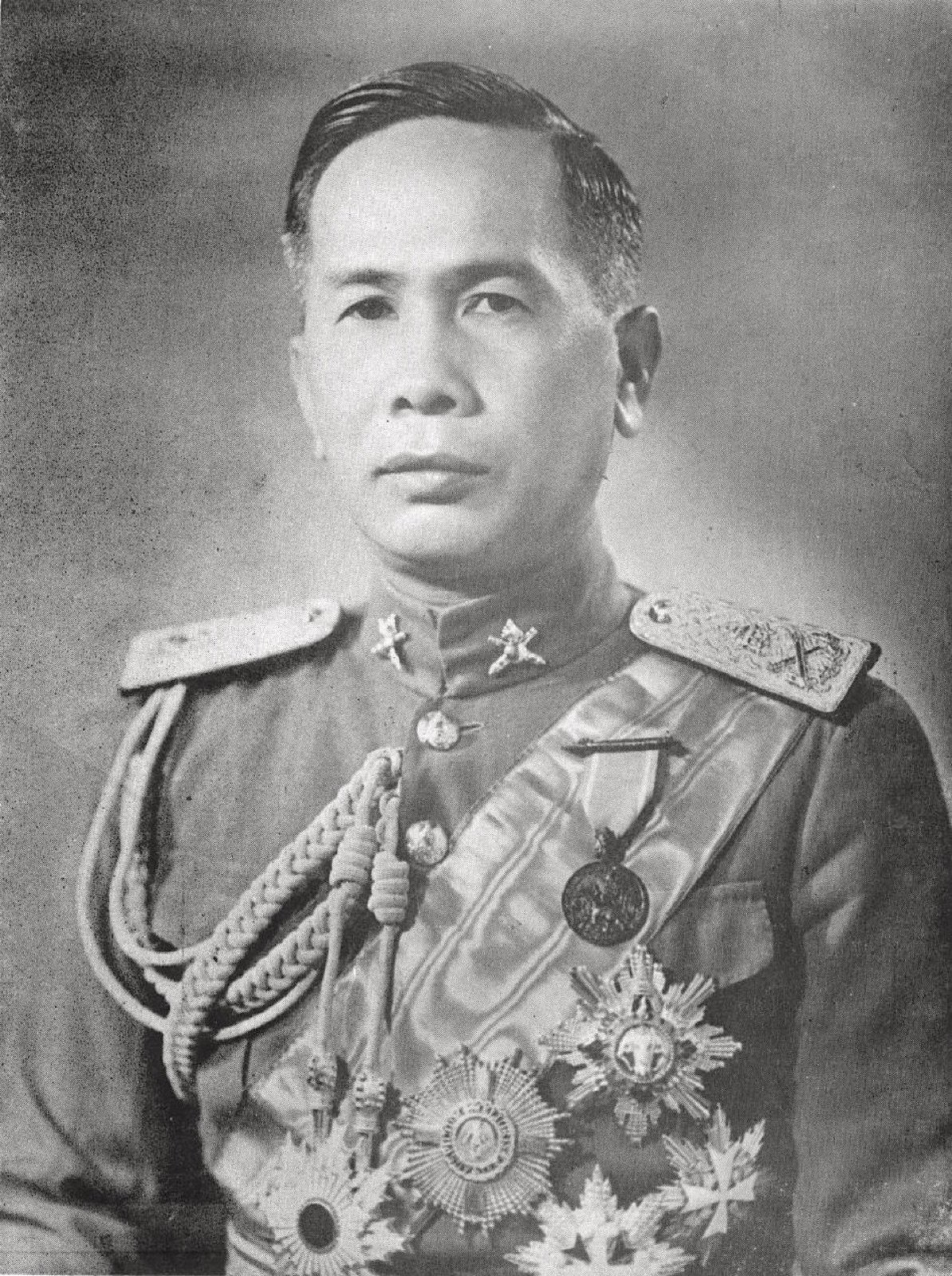
Phao Siyanon was born in Bangkok in 1910 and began his career as an army officer. He served as an aide to Plaek Phibunsongkhram and married Udomlak Choonhavan, the daughter of Phin Choonhavan. Those relationships linked him to both the nationally recognised former prime minister and the senior soldier who would front the 1947 Coup Group. Family connection did not explain his entire career, but it gave an ambitious officer access to the centre of postwar military plotting.
Phao participated in the coup of 8 November 1947 that removed Thawan Thamrongnawasawat and dismantled the postwar civilian order associated with Pridi Banomyong. He then moved into senior police leadership, where the coercive needs of the new regime created opportunities for rapid expansion. The police could investigate political opponents, control internal intelligence and operate in spaces not monopolised by the regular army.
From police command to a parallel armed force
The turning point came with the Manhattan Rebellion in June 1951. Naval officers seized Phibun, but the army, air force and police attacked despite the danger to the hostage. After the revolt failed, the navy was purged and Phao promoted himself to director-general of police. The result shifted both coercive capacity and political influence toward the Phin–Phao group while also raising Sarit Thanarat as an army rival.
Phao expanded the police far beyond ordinary criminal enforcement. The Border Patrol Police, created with Central Intelligence Agency backing in 1951, gathered intelligence, trained for unconventional warfare and built a presence in remote frontier areas. Official police histories also credit Phao with initiating the permanent police academy at Sam Phran in 1952. American assessments later described a national force of roughly 42,000 alongside plans for a much larger Volunteer Defense Corps.
Repression, illicit power and the limits of anti-communism
The institutional growth came with sustained political violence. Four former ministers associated with Pridi were killed in police custody in 1949, and Free Thai organiser Tiang Sirikhanth and four companions were murdered in 1952. Academic histories and later disclosures connected operations against these and other opponents to forces under Phao’s control. Careful attribution matters because the official explanations often claimed escape attempts or denied police responsibility, while evidence emerged through later investigations and scholarship.
Phao’s network also accumulated extraordinary commercial wealth. Thai foreign-policy research and contemporary diplomatic reporting linked senior police actors to protection, controlled businesses, cross-border arms traffic and the opium economy around Chinese Nationalist forces in Burma. American assistance strengthened legitimate border security but also equipped an institution embedded in domestic factional politics. Anti-communism supplied international justification; it did not make police power accountable or separate it from personal enrichment.
The 1957 collapse and an unresolved police legacy
By the mid-1950s, foreign observers described Phibun, Phao and Sarit as the three dominant figures in government. Phao controlled a trained national police force and appeared a possible successor to Phibun, while Sarit commanded the army. The balance failed after the disputed February 1957 election. Phao became interior minister in March, but Sarit’s coup on 16 September removed Phibun, broke the Phin–Phao faction and sent Phao into exile.
Phao lived in Geneva until his death in 1960. His reputation remains divided between institutional memory of police modernisation and the evidence of repression, corruption and impunity. Both belong in the same account. The academy and border forces outlived him, but so did the model of a security institution with military equipment, political patrons and weak civilian restraint. His life is therefore central to understanding how Thailand’s early Cold War state was built—and whom that state endangered.
Quick answers
Frequently asked questions about Phao Siyanon
- Who was Phao Siyanon?
- Phao Siyanon was a Thai police general and Cold War power broker. Phao’s rise shows how foreign security assistance, police expansion and elite family networks helped sustain Thailand’s post-1947 authoritarian order.
- What is Phao Siyanon best known for?
- Phao Siyanon is best known for building the national police into a paramilitary and political power centre.
- When and where was Phao Siyanon born?
- Phao Siyanon was born on 1 March 1910 in Bangkok, Siam.
- When did Phao Siyanon die?
- Phao Siyanon died on 21 November 1960.
Sources and further reading
How this biography was checked
Core dates and offices are checked against the sources below. This profile was last reviewed on 3 October 2026.
- Ministry of Foreign Affairs of ThailandThe Quest for Thai–US Alliance
- Journal of Southeast Asian StudiesMae Fah Luang and the Border Patrol Police during the Cold War
- ANU PressPower, Protection and Magic in Thailand
- Office of the Historian, U.S. Department of StateUnited States assessment of the Thai army and police leadership
- Office of the Historian, U.S. Department of StateInternal security and the Phibun–Phao–Sarit oligarchy
- Royal Thai PoliceHistory of Thai police education and the Sam Phran academy
- Wikimedia CommonsPhao Siyanon portrait and public-domain record