
The short answer
On 20 October 1958, Sarit Thanarat’s military group ended the constitutional interval it had created after the previous year’s coup. The Revolutionary Council abolished the charter, parliament and party law, then built an authoritarian order formalised by the 1959 interim constitution.
Chronology
A timeline of the turning points
Sarit removes Phibun and Phao
The first coup destroyed the old governing balance and made Sarit the decisive army commander.
An election restores an assembly
Pote Sarasin’s interim cabinet completed the promised vote under continued military influence.
Thanom becomes prime minister
Sarit’s deputy led a cabinet while Sarit remained the dominant power behind the government.
Sarit receives medical treatment abroad
He stayed in Britain before returning secretly to Bangkok on 19 October amid coup rumours.
Thanom announces his resignation
The king accepted the cabinet’s resignation as troops occupied communications and other strategic points.
The Revolutionary Council is announced
Sarit headed the council, with Thanom as deputy and senior navy and air-force commanders represented.
The constitutional order is dismantled
The constitution was abrogated, parliament dissolved, party law abolished and martial law declared.
An interim charter formalises exceptional power
An appointed assembly and Article 17 placed broad security authority in the prime minister’s hands.
Sarit becomes prime minister
The coup leader assumed formal executive office under the new authoritarian framework.
A permanent constitution finally appears
The interim arrangements outlived Sarit and delayed electoral parliamentary government for a decade.
What happened in Thailand on 20 October 1958?
Field Marshal Sarit Thanarat returned from medical treatment in Britain on 19 October 1958 and moved against the constitutional institutions created after his first coup. The following evening, Prime Minister Thanom Kittikachorn announced that the king had accepted his cabinet’s resignation. Troops occupied communications centres and other strategic locations. A “Revolutionary Council” then declared martial law with Sarit as chief and Thanom as deputy.
The council abrogated the constitution, dissolved the National Assembly and abolished the political-party law. Permanent secretaries were instructed to perform ministerial functions while the military group issued orders. There was little armed confrontation because the organisers were not outsiders fighting the government. They already controlled the army and cabinet; the operation used that control to eliminate the legislature and the legal restraints still surrounding their rule.
Was the 1958 action really a coup?
Contemporary officials disagreed over the label. Sarit’s representative told the United States ambassador that the action was a “revolution” directed against the assembly, not a coup against the cabinet. A State Department intelligence note initially described it as an orderly consolidation by the ruling group because Thanom resigned with its support and no rival faction seized the armed hierarchy.
Those distinctions explain the mechanics but not the constitutional result. Military leaders abolished the charter and parliament through force outside the rules they were destroying. Later American reporting called it a coup, and historical scholarship commonly treats it as Sarit’s second coup or self-coup. The episode is best understood as an authoritarian seizure by insiders: it changed the form of power even though many of the same commanders remained in charge.
Why did Sarit move after the 1957 election and coup?
The September 1957 coup had removed Phibun and Phao but restored an assembly and promised elections. Pote Sarasin supervised voting in December, after which Thanom became prime minister. Sarit still possessed decisive military influence, yet parliamentary bargaining, factions inside the governing party and criticism in the press constrained the speed and certainty of executive action.
Sarit’s allies described legislators as obstructive and left-wing parties as a security threat. American analysis also identified a more immediate elite concern: preventing Interior Minister Praphas Charusathien from establishing an independent base. Whether anti-communism was conviction, justification or both, the coup removed the arena in which rivals could bargain and placed appointments, policing and policy under one military centre.
What institutions did the Revolutionary Council abolish?
The constitution and National Assembly disappeared first, along with the statute that allowed political parties to organise. Martial law narrowed legal protection and public political activity. The press faced new restrictions, while the council governed through announcements and decrees. The transformation was therefore wider than a change of prime minister: it suspended the mechanisms through which voters, parties and legislators could contest state decisions.
The council pledged loyalty to King Bhumibol, protection for foreigners and continuity in Thailand’s international obligations. It also promised a new constitution. That language paired institutional rupture with reassurance: the monarchy, bureaucracy, diplomatic commitments and much of the command structure would continue, while elected competition and constitutional limits were removed.
How did the 1959 interim constitution change government?
Promulgated on 28 January 1959, the interim charter created an appointed constituent assembly that also served as the legislature. Military and police officers dominated its membership. It had no elected lower house and no immediate deadline for restoring one, turning an emergency arrangement into the central constitutional framework of the regime.
Article 17 authorised the prime minister to order measures considered necessary to protect the kingdom or suppress threats. Sarit used this exceptional authority for detention and executions without ordinary judicial process. The document therefore did not merely legalise the new cabinet. It converted revolutionary decrees into an open-ended executive power whose breadth conflicted with the rule of law and freedom of expression.
What roles did Thanom and Praphas play?
Thanom resigned as prime minister but became deputy head of the Revolutionary Council and later deputy prime minister and defence minister. His apparent displacement was not political defeat. He remained Sarit’s principal military successor and became prime minister again after Sarit died in December 1963.
Praphas Charusathien controlled the Interior Ministry’s provincial and policing network and remained inside the ruling group. Contemporary reports sometimes presented the coup as a move to prevent him from creating an autonomous power base, but he was not purged. Under Sarit and Thanom he accumulated cabinet, interior and army authority, showing that the coup disciplined the governing coalition rather than replacing it with an entirely new one.
How did the United States respond?
Sarit’s representatives immediately assured Washington that Thailand would remain aligned with the West and honour SEATO obligations. The United States continued to deal with the new authorities without a formal recognition dispute. Cold War strategy made continuity in security cooperation more important to American officials than restoration of the dissolved assembly.
The diplomatic record is valuable because it preserves hour-by-hour reporting and private explanations, but it carries the priorities of an ally. American documents often assessed repression through the lens of anti-communist stability. A source-led history should therefore use them to reconstruct decisions while also recognising that strategic acceptance did not confer democratic legitimacy on the takeover.
Why was the October coup a lasting turning point?
The 1957 coup changed rulers; the 1958 coup changed the public architecture of rule. It ended the short constitutional interval, consolidated a single army faction and established a dictatorship that joined military command to bureaucracy, royal symbolism, anti-communism and development planning. Sarit no longer needed a civilian premier as the public face of his authority.
The regime launched major infrastructure and economic programmes, but those achievements occurred inside a system that prohibited party competition and suppressed dissent. Its institutional pattern survived Sarit’s death through Thanom and Praphas. The October 1973 uprising finally broke that sequence, making 1958 essential for understanding both Thailand’s development state and the later demand for constitutional government.
Continue the chronology
Related history guides
The September 1957 Thai Coup
Start with the takeover that removed Phibun and Phao but temporarily restored elections.
Read the timeline26 February 1957The February 1957 Thai General Election
Trace the disputed vote and student protest that fractured the previous governing coalition.
Read the timeline1958–1963The Sarit Era in Thailand
Continue into the regime’s coercion, development planning, royal revival and Cold War alliance.
Read the timeline6–14 October 1973The 1973 Thai Popular Uprising
Follow the military order built after 1958 to its collapse under mass mobilisation.
Read the timeline1851–todayThailand History Timeline
Place the coup within the longer chronology of constitutional change and military intervention.
Read the timelineConnected biographies
Six biographies connecting the coup, executive power, diplomacy and the institutions of Cold War rule
 Thailand · Politics
1908—1963
Sarit Thanarat
Military ruler and prime minister of ThailandA field marshal who displaced Phibun, abolished constitutional politics and paired coercive rule with development planning and a close United States alliance.Read biography Thailand · Politics
1911—2004
Thanom Kittikachorn
Military officer and prime minister of ThailandA field marshal whose governments deepened Thailand’s Cold War alliance and whose self-coup and continued military rule provoked the mass movement of October 1973.Read biography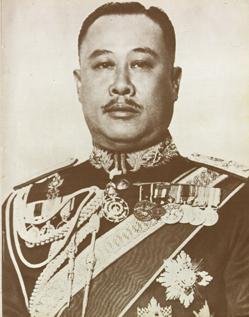 Thailand · Politics
1912—1997
Praphas Charusathien
Field marshal, interior minister and deputy prime ministerA field marshal and long-serving interior minister who helped consolidate Sarit and Thanom’s rule, joined the 1971 self-coup and fell during the October 1973 uprising.Read biography Thailand · Politics
1927—2016
Bhumibol Adulyadej
King of Thailand, 1946–2016Thailand’s longest-reigning monarch, whose seven decades on the throne spanned rapid development, repeated political crises and profound social change.Read biography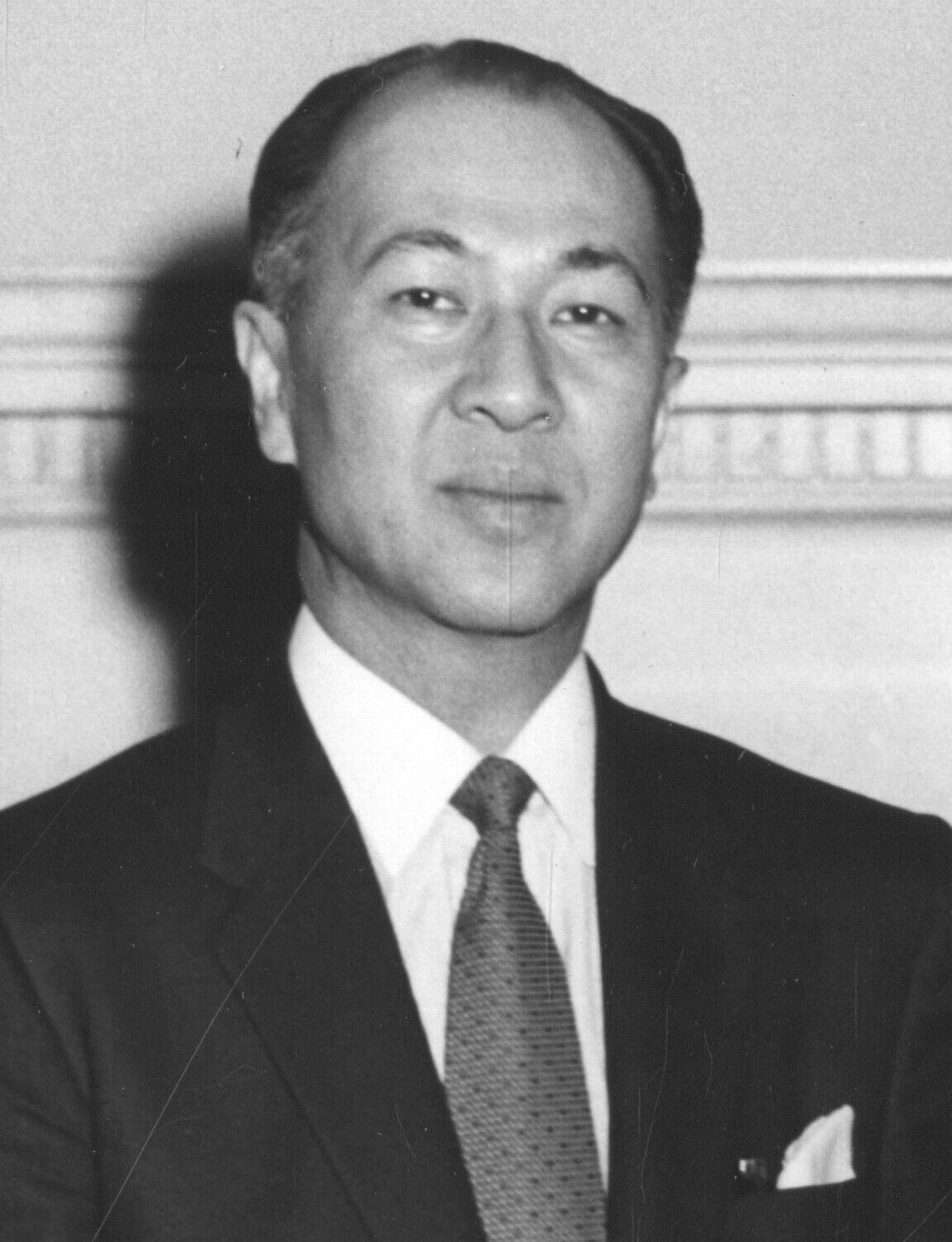 Thailand · Politics
1905—2000
Pote Sarasin
Diplomat, interim prime minister and SEATO secretary-generalA lawyer and diplomat who served briefly as prime minister after Sarit’s 1957 coup, supervised a return to elections and became SEATO’s first secretary-general.Read biography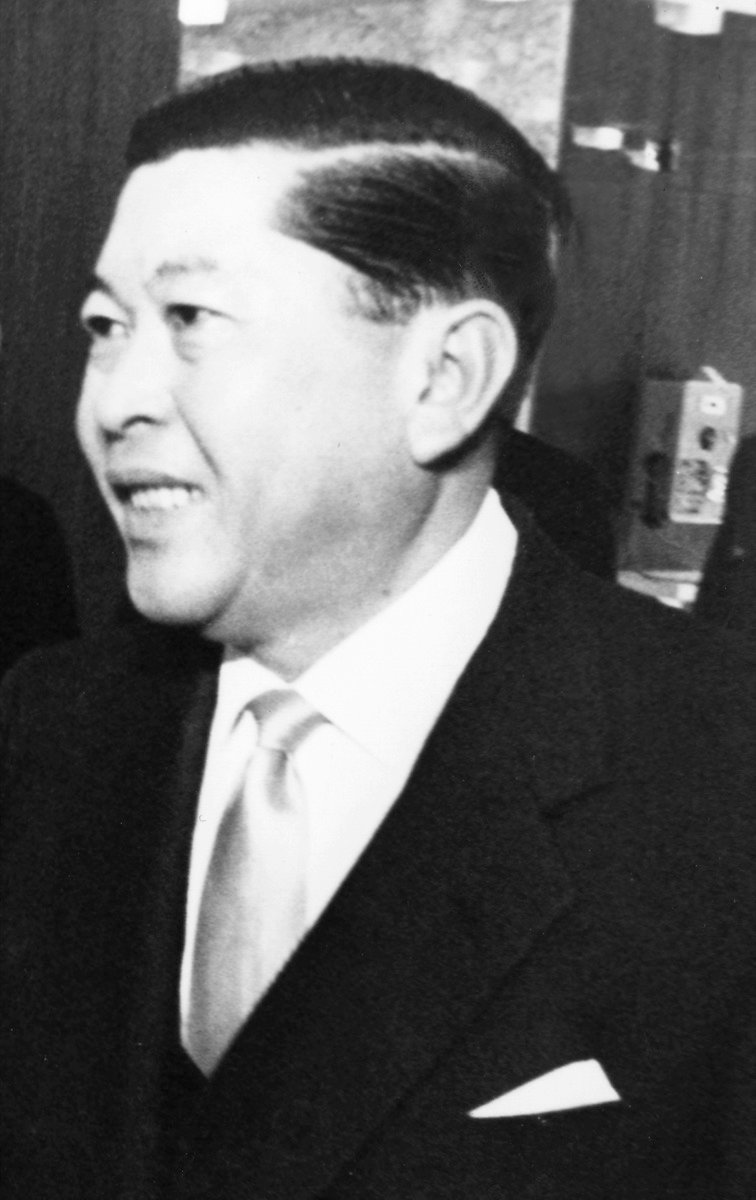 Thailand · Politics
1914—2016
Thanat Khoman
Diplomat, foreign minister and ASEAN co-founderA Thai diplomat whose regional initiatives, patient mediation and signature on the Bangkok Declaration helped turn post-colonial rivalry into ASEAN cooperation.Read biographyQuick answers
Common questions
- Who led Thailand’s October 1958 coup?
- Field Marshal Sarit Thanarat headed the Revolutionary Council. Thanom Kittikachorn served as its deputy after resigning as prime minister.
- When did the 1958 Thai coup happen?
- The decisive announcements and military deployment occurred on the evening of 20 October 1958.
- What did the Revolutionary Council abolish?
- It abrogated the constitution, dissolved the National Assembly, abolished the political-party law and declared martial law.
- Was Thanom overthrown by Sarit?
- Thanom resigned in coordination with the ruling military group and became deputy head of the Revolutionary Council. The coup destroyed constitutional institutions rather than removing him from the power network.
- What was Article 17 of the 1959 interim constitution?
- It granted the prime minister exceptional authority to issue orders framed as necessary for national security, bypassing ordinary legislative and judicial safeguards.
- How was the 1958 coup different from the 1957 coup?
- The 1957 coup removed Phibun and Phao and temporarily returned to elections. The 1958 coup abolished the resulting constitution and parliament, establishing direct authoritarian rule.
Primary and institutional sources
How this history was checked
Dates, legal milestones and historical claims are checked against the official and institutional records below. This article was reviewed on 3 October 2026.
- Office of the Historian, U.S. Department of StateBangkok telegram reporting the 20 October 1958 coup
- Office of the Historian, U.S. Department of StateIntelligence note on the Revolutionary Council’s assumption of power
- Office of the Historian, U.S. Department of StateSummary and assessment of the October 1958 coup
- Office of the Historian, U.S. Department of StateThai foreign-policy discussion immediately after the coup
- Office of the Historian, U.S. Department of StateThailand under the January 1959 interim constitution
- Cambridge University PressSarit’s Stratocracy, 1957–1963
- Library of CongressThailand: A Country Study
- Wikimedia CommonsSarit Thanarat portrait and public-domain record