
The short answer
Thailand’s Radio Coup dissolved a government without replacing its prime minister. Nine military officers used nationwide broadcasts to abolish parliament, restore the 1932 constitutional framework and convert the armed coalition behind the 1947 coup into the state’s direct governing authority.
Chronology
A timeline of the turning points
The Coup Group removes civilian government
Army officers overthrew Thawan’s cabinet and created the coalition that would carry out the 1951 takeover.
The Manhattan Rebellion is defeated
Army, police and air-force units crushed a naval revolt, eliminating the navy as a major political counterweight.
Senators attack the regime
Debate criticised the suppression of the navy, corruption, opium trafficking and interference by armed officials.
Radio broadcasts announce a coup
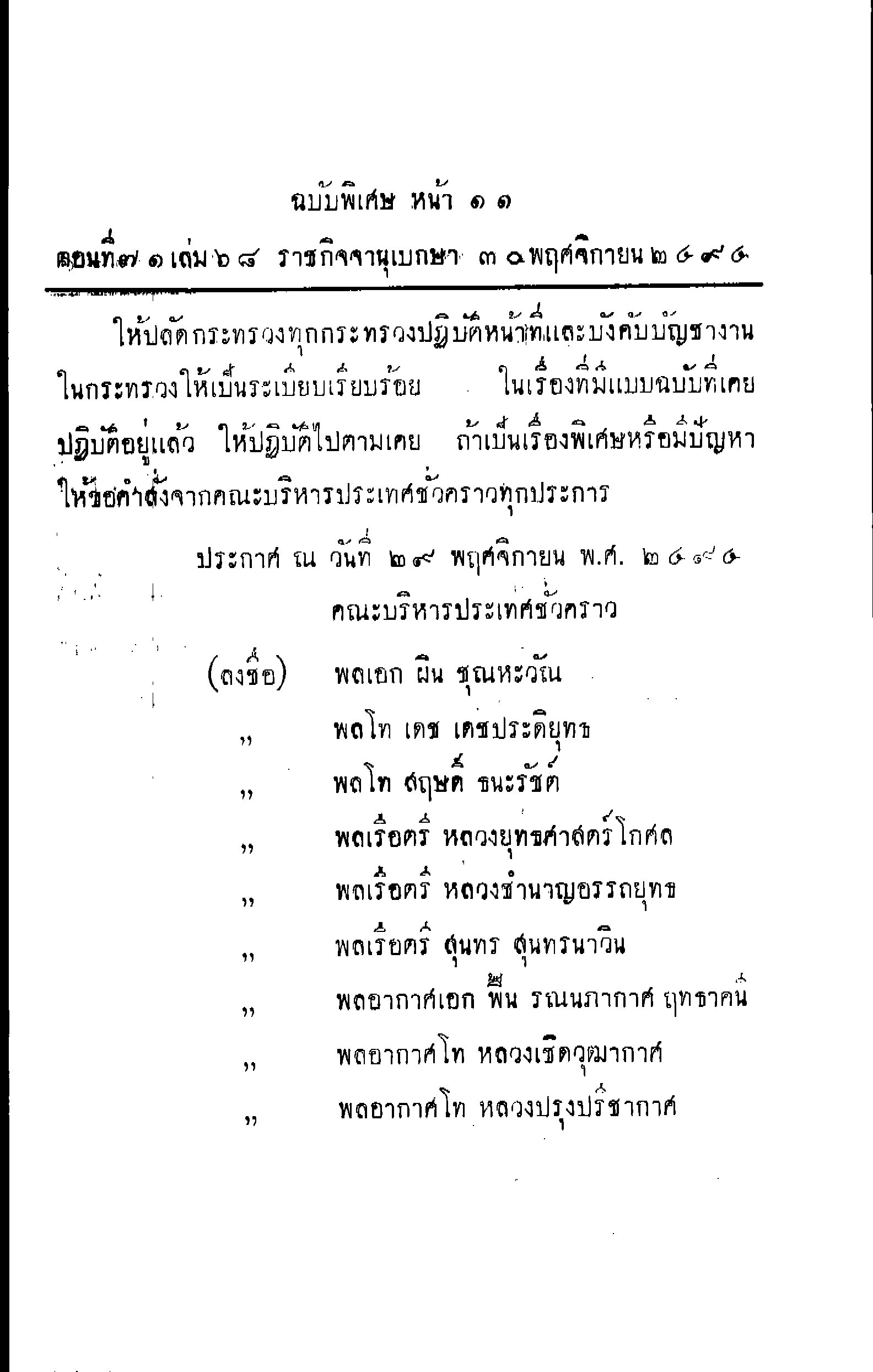
A nine-officer committee declared that the government had ceased to function and that it would exercise authority.
Parliament is dissolved
The junta abolished the existing constitutional order, restored the 1932 charter and postponed elections.
Phibun remains the compromise premier
Although weakened and absent from the nine-man committee, Phibun accepted reappointment under the military order.
King Bhumibol returns to Thailand
The Coup Group had imposed the new order before the king’s permanent return from Europe.
A military-dominated cabinet takes office
Nineteen of twenty-five ministers were active or retired officers, while Phin became deputy prime minister.
Elections fill half the legislature
An appointed bloc remained in place, giving the Coup Group a built-in parliamentary advantage.
What was the 1951 Radio Coup?
The Radio Coup was a military takeover announced across Thailand on 29 November 1951. It is also called the Silent Coup because the officers who already controlled the main armed organisations did not need a battle in the streets. Broadcasts declared that Prime Minister Plaek Phibunsongkhram’s government had ceased to function, dissolved parliament and transferred authority to a nine-man Provisional Executive Committee.
The coup did not simply replace one prime minister with another. Phibun soon returned to office. Its purpose was to remove the constitutional and parliamentary limits around him, giving the officers of the 1947 Coup Group direct control of cabinet formation, legislation and the timetable for elections. The result was a deeper form of military government without the visible violence that had accompanied the Manhattan Rebellion five months earlier.
Why did the Coup Group move in November?
Military officers controlled the army, police and air force but did not control every institution. Senators had criticised the severity of the navy purge, corruption and alleged opium trafficking. Elections scheduled for February 1952 offered opposition parties another platform, while the 1949 Constitution gave the monarchy an appointed Senate that could restrain the Coup Group. To the officers, armed power without legislative control remained incomplete.
Timing also mattered. King Bhumibol was returning permanently from Europe at the beginning of December. The Ministry of Foreign Affairs history concludes that the junta wanted to present the palace with an accomplished fact and prevent royalist politicians from using the king and the constitution as a rallying point. Contemporary American diplomats similarly identified anxiety about royal and parliamentary power, although their reports were preliminary and reflected embassy sources rather than an official confession by the coup leaders.
Why is it called both the Radio Coup and the Silent Coup?
It was a Radio Coup because broadcasting was the principal public instrument of seizure. The announcements dissolved the existing government, reassured foreign residents and declared that Thailand’s anti-communist foreign policy would continue. Control of the radio allowed the junta to transform orders issued by commanders into a nationwide claim of lawful authority.
It was “silent” only in comparison with other coups. There was no major armed resistance on 29 November, but the political act was not quiet in its consequences. Parliament disappeared, the constitution was replaced and appointed officers entered both the cabinet and legislature. The term should therefore describe the method—a takeover without a battle—rather than minimise the scale of institutional coercion.
Who sat on the nine-man military committee?
The committee contained three officers from each armed service. Phin Choonhavan, Sarit Thanarat and Dej Dechpradiyuth represented the army; Sunthorn Kongsompong, Yuthasart Kosol and Chamarn represented the navy; Fuen Ronnaphagrad Ritthakhanee, Cherd and Prung represented the air force. The available English-language diplomatic record uses contemporary romanisations that do not always match later spellings.
Phao Siyanon was not one of the nine, but the broadcasts named him “preserver of the peace” and his police controlled domestic security. Phin headed the provisional government. The three-service arrangement projected military unity after the navy’s humiliation in June, yet real power remained uneven: the army and police had the strongest coercive networks, while the reduced navy could no longer bargain on equal terms.
What happened to the constitution and parliament?
The junta replaced the 1949 Constitution with the 1932 constitutional framework, removing the Senate and creating a single chamber divided between elected and appointed members. It immediately named 123 supporters to act as the legislature until elections. The arrangement gave the Coup Group control of government, armed force and law-making at the same time.
The constitutional change also removed barriers that had kept serving officials from combining military command with cabinet or parliamentary office. On 8 December, nineteen of twenty-five ministers were active or retired officers. Phin became deputy prime minister, Sarit entered the cabinet as deputy defence minister and Fuen became transport minister. Military rank was transformed into a normal qualification for civil authority.
Was Phibun overthrown or involved?
Phibun’s position remains disputed. His name did not appear on the nine-man committee, and a contemporary American report said he objected because the coup would damage confidence abroad. The Ministry of Foreign Affairs history presents two interpretations: the Coup Group may have forced the change against him, or he may have helped arrange it while preserving deniability and removing an inconvenient Senate.
What is clear is that Phibun returned as prime minister because he remained useful. He had national recognition, could negotiate with Washington and offered a compromise between the rival Phao and Sarit networks. Keeping office did not mean retaining full control. The coup demonstrated that the commanders could dissolve his cabinet and parliament, then invite him back under rules they had rewritten.
Why does the Radio Coup matter?
The coup completed a sequence that began in 1947. The first takeover removed the postwar civilian coalition; the failed Palace and Manhattan rebellions destroyed rival networks; the Radio Coup then eliminated parliamentary resistance from within the regime. Between 29 November 1951 and the February 1952 election, the Coup Group almost became the legislature itself.
The new order did not end factional politics. It intensified competition between Phao’s police and Sarit’s army while Phibun balanced them until 1957. Nor did it make constitutions irrelevant: the junta used constitutional replacement to distribute seats, offices and legal authority. The Radio Coup matters precisely because it shows how a military takeover can transform a state without replacing its best-known leader or producing a single decisive battlefield.
Continue the chronology
Related history guides
The 1951 Manhattan Rebellion
Start with the naval revolt whose defeat removed the Coup Group’s strongest armed rival.
Read the timeline8 November 1947The 1947 Thai Coup
Trace the officers, grievances and military coalition behind the later Radio Coup.
Read the timeline26–27 February 1949The 1949 Palace Rebellion
Follow Pridi’s failed counter-coup and the further weakening of civilian opposition.
Read the timeline26 February 1957The February 1957 Thai General Election
Follow the disputed election that fractured Phibun’s governing coalition and elevated Sarit’s political position.
Read the timeline16 September 1957The September 1957 Thai Coup
Continue to the takeover that ended Phibun’s second premiership and removed Phao from power.
Read the timeline1932–presentPrime Ministers of Thailand
Place Phibun’s survival within the wider pattern of coups, elections and constitutional succession.
Read the timeline1851–todayThailand History Timeline
Connect the takeover to the 1932 revolution, wartime rule and later military governments.
Read the timelineConnected biographies
Six biographies connecting the takeover, military factions and constitutional order
 Thailand · Politics
1897—1964
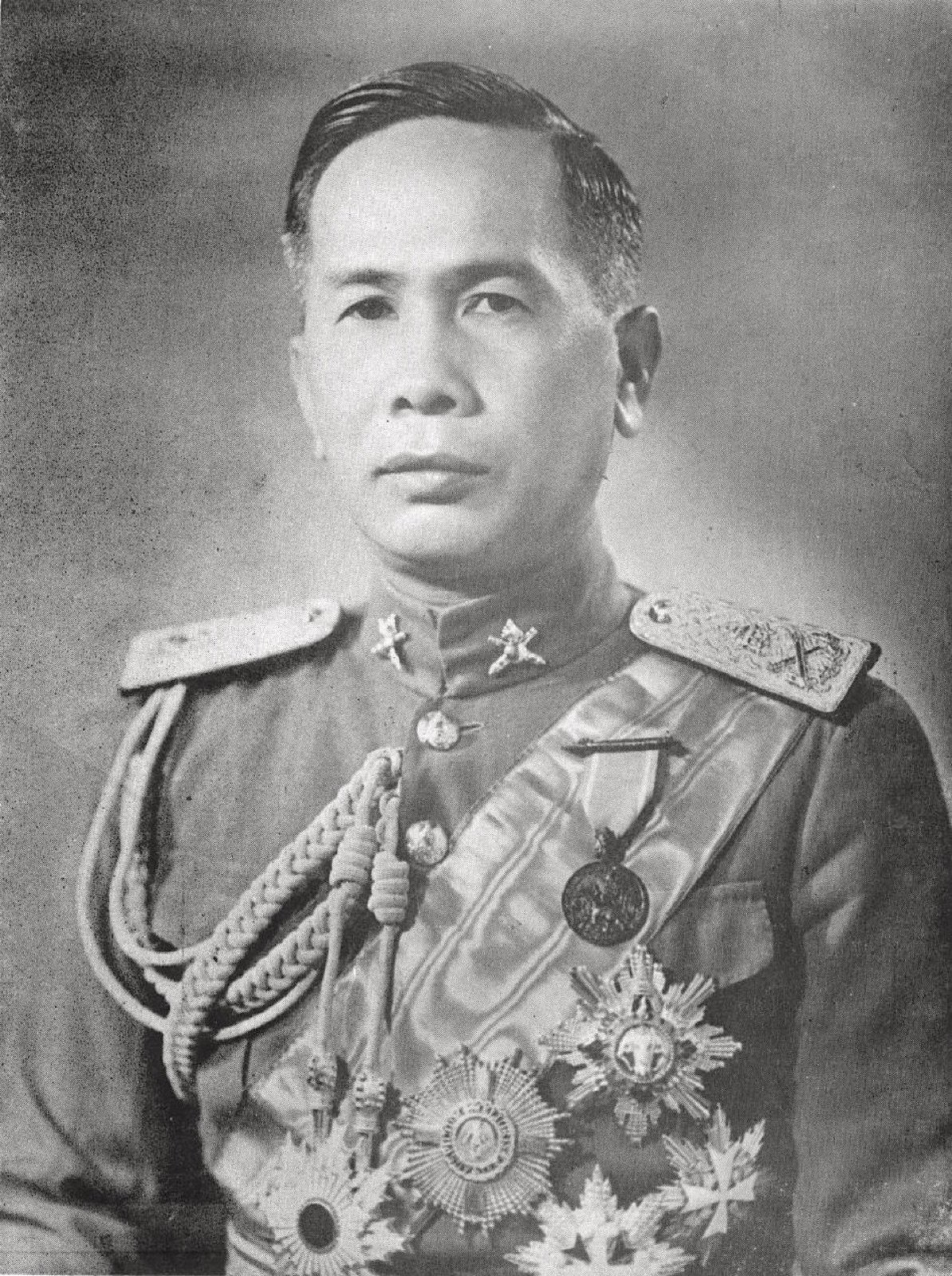
Plaek Phibunsongkhram
Military officer and prime minister of ThailandA military leader of the 1932 revolution who twice served as prime minister and used state power to promote nationalism, social mandates and a new name for the country.Read biography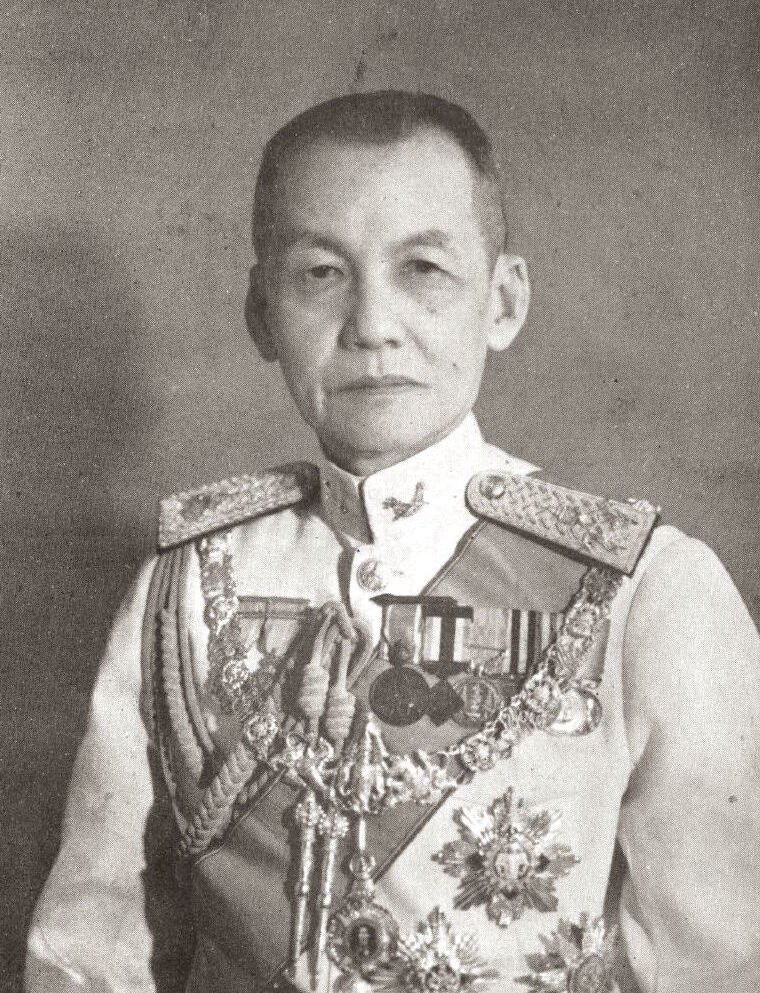 Thailand · Politics
1891—1973
Phin Choonhavan
Thai field marshal and leader of the 1947 Coup GroupA professional soldier who became the public leader of Thailand’s 1947 Coup Group, army commander and patriarch of an influential military-political family.Read biography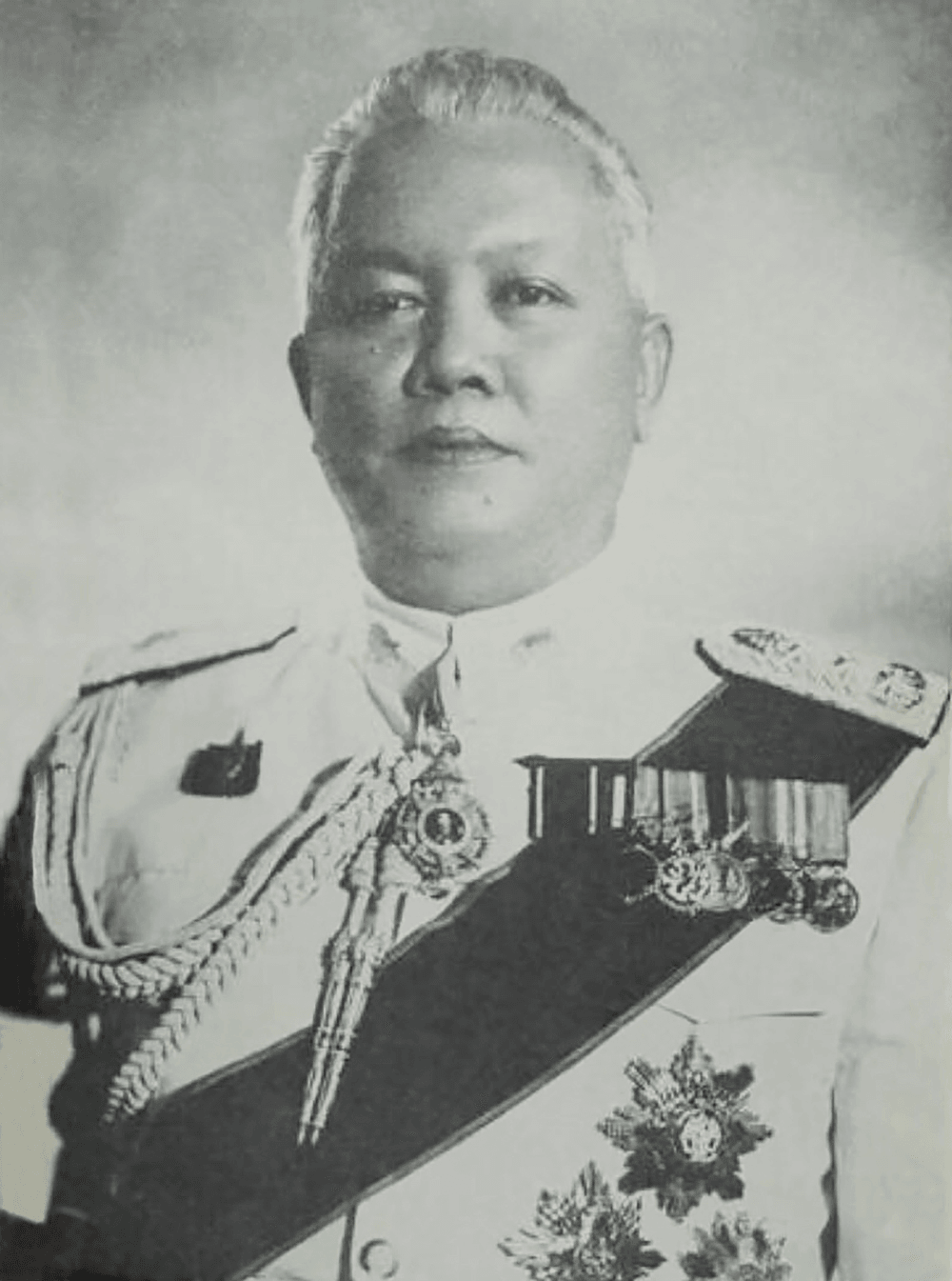 Thailand · Politics
1910—1960
Phao Siyanon
Thai police general and Cold War power brokerA police general who helped make Thailand’s national police a heavily armed Cold War power centre while presiding over political repression and a far-reaching patronage network.Read biography Thailand · Politics
1908—1963
Sarit Thanarat
Military ruler and prime minister of ThailandA field marshal who displaced Phibun, abolished constitutional politics and paired coercive rule with development planning and a close United States alliance.Read biography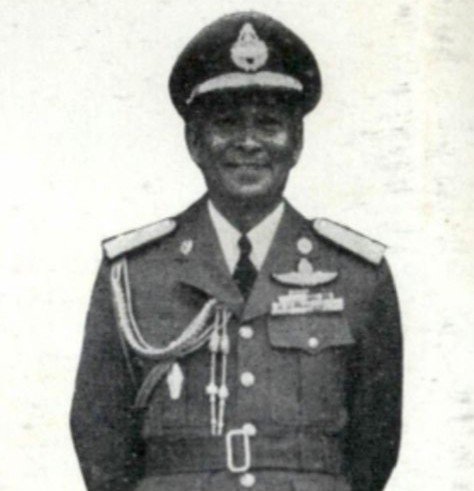 Thailand · Politics
1900—1987
Fuen Ronnaphagrad Ritthakhanee
Royal Thai Air Force commander and deputy prime ministerAn air-force commander whose intervention in the Manhattan Rebellion made him a central military actor, cabinet minister and member of Thailand’s 1951 Radio Coup junta.Read biography Thailand · Politics
1927—2016
Bhumibol Adulyadej
King of Thailand, 1946–2016Thailand’s longest-reigning monarch, whose seven decades on the throne spanned rapid development, repeated political crises and profound social change.Read biographyQuick answers
Common questions
- When did Thailand’s Radio Coup happen?
- It was announced on 29 November 1951, two days before King Bhumibol’s scheduled permanent return to Thailand.
- Why is the 1951 takeover called the Silent Coup?
- The military already controlled the decisive armed organisations, so it dissolved the government and parliament through radio announcements without a major battle.
- Was Phibun removed as prime minister?
- His cabinet was dissolved and he was initially weakened, but he soon accepted reappointment as prime minister under the junta’s new order.
- What constitution did the coup restore?
- The junta restored the 1932 constitutional framework, replacing the 1949 Constitution and creating a single legislature divided between elected and appointed members.
- Who led the Radio Coup?
- A nine-officer committee headed by Phin Choonhavan represented the army, navy and air force. Phao Siyanon controlled police security as “preserver of the peace.”
- How was the Radio Coup connected to the Manhattan Rebellion?
- The June defeat of the naval revolt removed a major armed rival, allowing the 1947 Coup Group to turn against parliament and constitutional limits in November.
Primary and institutional sources
How this history was checked
Dates, legal milestones and historical claims are checked against the official and institutional records below. This article was reviewed on 3 October 2026.
- Ministry of Foreign Affairs of ThailandThe Quest for Thai–US Alliance
- Office of the Historian, U.S. Department of State29 November 1951 telegram reporting the coup announcements
- Office of the Historian, U.S. Department of State30 November 1951 preliminary assessment of the takeover
- Australian National UniversityThe Search for Order: Constitutions and Human Rights in Thai Political History
- Library of CongressThailand: A Country Study
- Office of the Historian, U.S. Department of StateJuly 1951 assessment of the Manhattan Rebellion aftermath
- Wikimedia CommonsProvisional Executive Committee proclamation, 30 November 1951