
The short answer
Sarit Thanarat’s regime paired concentrated military rule with national economic planning, a closer United States alliance and a renewed public role for the monarchy. Its infrastructure and institutions shaped later growth, while Article 17, censorship and the absence of elections made development inseparable from coercion.
Chronology
A timeline of the turning points
The second coup ends constitutional politics
Sarit’s Revolutionary Council abolished the charter, parliament and party law and declared martial law.
The interim constitution takes effect
An appointed assembly and Article 17 formalised broad executive and security powers.
Sarit becomes prime minister
He converted command of the Revolutionary Council into formal leadership of the government.
Economic planning is reorganised
The National Economic Development Board replaced the earlier council and coordinated national planning.
The first development plan is launched
The government announced a six-year programme for 1961–1966 focused on infrastructure and growth.
Royal international tours gain prominence
The regime supported a larger public and diplomatic role for King Bhumibol and Queen Sirikit.
The plan enters implementation
Roads, irrigation, energy and institutional investment became part of a common development framework.
The Thanat–Rusk understanding strengthens the alliance
Thailand and the United States publicly reinforced their security relationship amid the Laos crisis.
Counterinsurgency and rural state-building expand
Security, roads and development programmes increasingly operated through the same Cold War strategy.
Sarit dies in office
Thanom succeeded him, while investigations into Sarit’s unexplained wealth sharpened debate over the regime’s legacy.
What was the Sarit era?
The Sarit era usually refers to the authoritarian order consolidated by Field Marshal Sarit Thanarat after his second coup on 20 October 1958 and lasting until his death on 8 December 1963. The September 1957 coup had removed Phibun and Phao; the 1958 action went further by abolishing the constitution, parliament and party system. Sarit then became prime minister under an interim charter in February 1959.
This was not simply personal rule detached from institutions. Sarit governed through the army, Interior Ministry, bureaucracy, appointed legislature and alliance with the United States, while giving renewed visibility to the monarchy. Thanom Kittikachorn and Praphas Charusathien managed major parts of that system and preserved it after Sarit died. The “era” therefore describes a governing structure as well as one leader.
How did the 1959 charter concentrate power?
The interim constitution created an appointed constituent assembly that doubled as a legislature. With no elected chamber or competitive parties, policy did not depend on electoral consent. Military, police and bureaucratic officeholders dominated formal representation, and drafting a permanent constitution stretched across the following decade.
Article 17 authorised the prime minister to issue orders deemed necessary against threats to the kingdom. Sarit used that authority for detention, punishment and executions outside ordinary judicial safeguards. Press restriction and the criminalisation of opposition further narrowed public debate. Administrative speed was achieved by stripping away independent checks, a cost that must remain central to any evaluation of the regime.
What did the development state build?
Sarit’s government reorganised the National Economic Council as the National Economic Development Board in 1959. On 20 October 1960 it launched the First National Economic Development Plan for 1961–1966. The programme coordinated investment in roads, irrigation, power, transport and state capacity, while encouraging private enterprise and foreign capital rather than the state-enterprise nationalism associated with parts of the Phibun period.
World Bank assessments credit institution-building and infrastructure with improving Thailand’s development prospects. Yet aggregate growth did not distribute benefits evenly, and planning was linked to political centralisation. Roads could carry markets, schools and services, but also troops and counterinsurgency administration. “Development” and “security” were not separate policy worlds in Cold War Thailand.
How did the United States alliance shape the regime?
Thailand was a SEATO member and a major American partner on mainland Southeast Asia. Military assistance, economic aid, intelligence cooperation and road building expanded as conflict in Laos and Vietnam intensified. Sarit assured American officials after the 1958 coup that Thailand would remain aligned with the West, helping prevent the constitutional rupture from disrupting bilateral support.
The 1962 Thanat–Rusk communiqué reinforced the alliance by publicly linking American security commitments to Thailand beyond the multilateral wording of the Manila Pact. For Sarit, the relationship supplied resources and international backing. For Washington, an anti-communist government offered strategic access and continuity. That exchange also reduced external pressure for political liberalisation and strengthened the institutions enforcing authoritarian rule.
Why did the monarchy become more publicly prominent?
Sarit’s government revived ceremonies, royal language and public association between national development and King Bhumibol. Provincial travel and international tours made the young monarch more visible, while the regime presented hierarchy, paternal leadership and royal tradition as alternatives to contentious party politics. This marked a major change from the diminished political position of the monarchy after 1932.
Historians debate agency and balance within this partnership, but the mutually reinforcing pattern is clear. Royal symbolism supplied legitimacy that military command alone lacked; the regime supplied resources, security and public space for monarchical revival. The relationship shaped Thailand beyond Sarit’s lifetime and became one of the most durable legacies of the early Cold War order.
Who governed beneath Sarit?
Thanom Kittikachorn served as deputy prime minister and defence minister before succeeding Sarit. Praphas Charusathien controlled the Interior Ministry’s extensive provincial machinery and later the army. Foreign Minister Thanat Khoman managed the American alliance and regional diplomacy, while technocrats designed economic plans and administered new institutions.
This division of labour explains both capacity and continuity. Sarit concentrated ultimate authority, but the regime relied on specialists and networks that survived him. Pote Sarasin also returned to development and cabinet roles. Treating the era only as one strongman’s biography would hide the officials who converted decrees into administration and carried the system into the Thanom years.
How should the era’s legacy be judged?
The Sarit era accelerated infrastructure, planning and integration into the regional economy. Institutions created or strengthened in these years influenced decades of growth. Those outcomes are real, but they do not require accepting the regime’s claim that dictatorship was necessary for development. Economic change also drew on earlier planning, international capital, bureaucratic expertise and social forces beyond Sarit.
The political record includes abolished elections, censorship, detention, executions and corruption. After Sarit died, disputes over his estate exposed extensive unexplained wealth. Thanom and Praphas maintained the military order until the October 1973 uprising. The most accurate assessment holds the two records together: state capacity expanded, while citizens lost the constitutional means to scrutinise those who controlled it.
Continue the chronology
Related history guides
The October 1958 Thai Coup
Begin with the Revolutionary Council’s destruction of parliament and constitutional government.
Read the timeline16 September 1957The September 1957 Thai Coup
Trace the earlier takeover that removed Phibun and broke the army–police balance.
Read the timeline20 June 1968The 1968 Constitution of Thailand
Follow Sarit’s appointed order into Thanom’s limited return to parliamentary rule.
Read the timeline6–14 October 1973The 1973 Thai Popular Uprising
Follow Sarit’s successors to the mass movement that ended their military government.
Read the timeline1932–presentPrime Ministers of Thailand
Compare Sarit’s route to office with elected, appointed and coup-installed premiers.
Read the timeline1851–todayThailand History Timeline
Place the regime within the country’s longer political and economic transformation.
Read the timelineConnected biographies
Seven biographies connecting military command, economic planning, diplomacy, monarchy and professional institutions
 Thailand · Politics
1908—1963
Sarit Thanarat
Military ruler and prime minister of ThailandA field marshal who displaced Phibun, abolished constitutional politics and paired coercive rule with development planning and a close United States alliance.Read biography Thailand · Politics
1911—2004
Thanom Kittikachorn
Military officer and prime minister of ThailandA field marshal whose governments deepened Thailand’s Cold War alliance and whose self-coup and continued military rule provoked the mass movement of October 1973.Read biography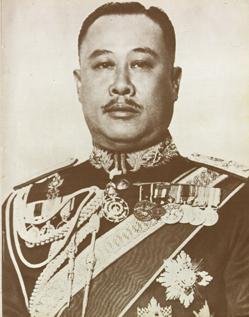 Thailand · Politics
1912—1997
Praphas Charusathien
Field marshal, interior minister and deputy prime ministerA field marshal and long-serving interior minister who helped consolidate Sarit and Thanom’s rule, joined the 1971 self-coup and fell during the October 1973 uprising.Read biography Thailand · Politics
1927—2016
Bhumibol Adulyadej
King of Thailand, 1946–2016Thailand’s longest-reigning monarch, whose seven decades on the throne spanned rapid development, repeated political crises and profound social change.Read biography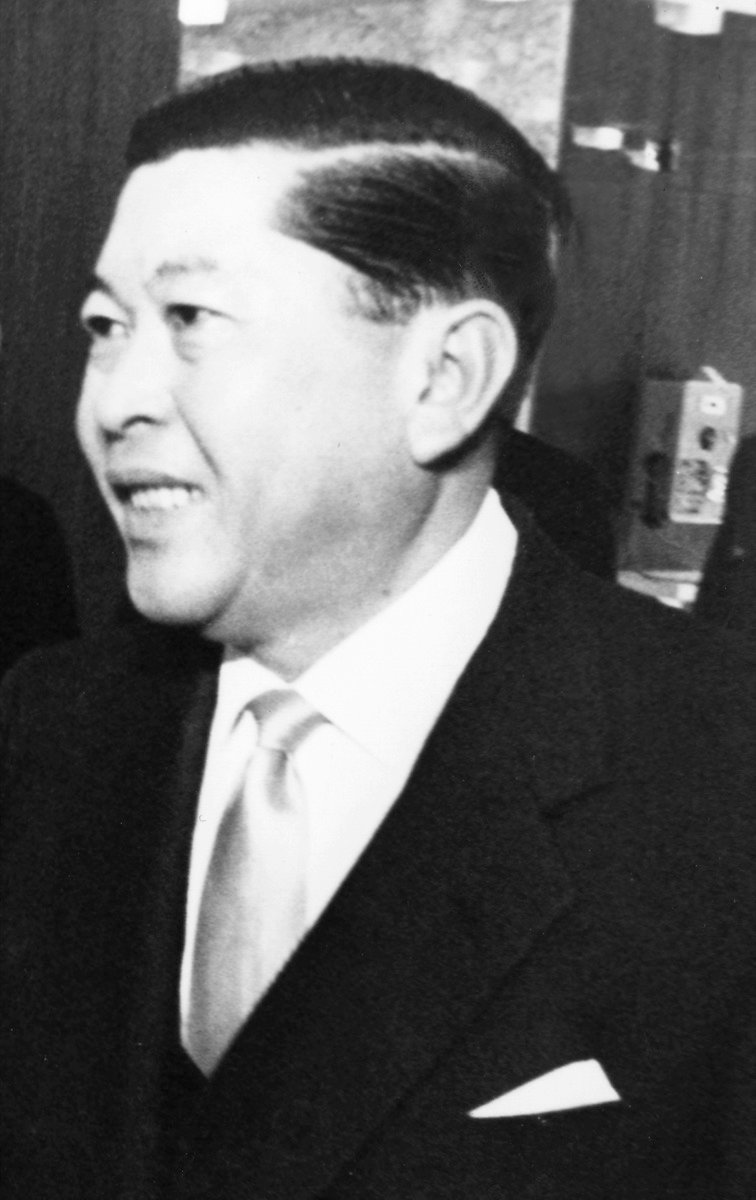 Thailand · Politics
1914—2016
Thanat Khoman
Diplomat, foreign minister and ASEAN co-founderA Thai diplomat whose regional initiatives, patient mediation and signature on the Bangkok Declaration helped turn post-colonial rivalry into ASEAN cooperation.Read biography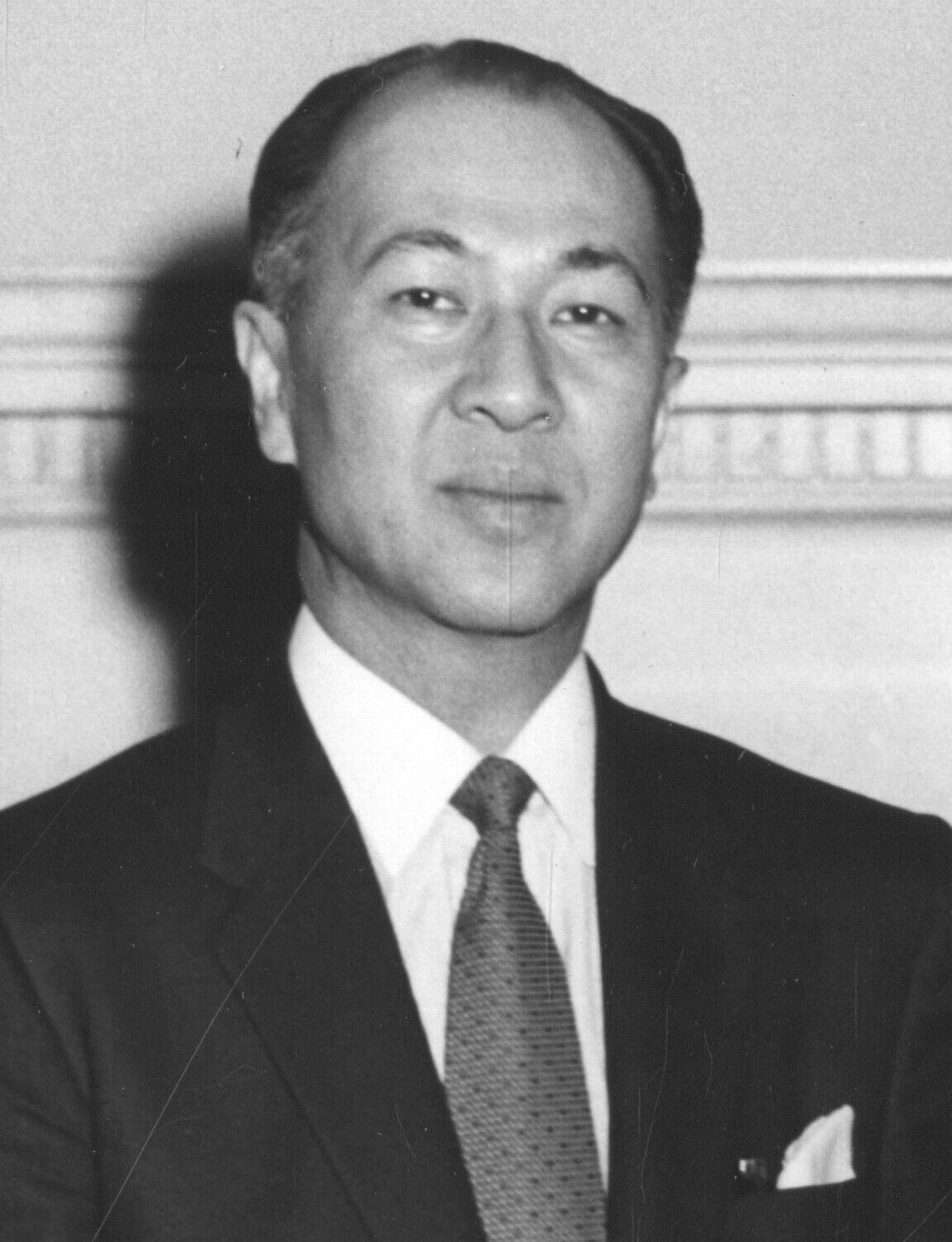 Thailand · Politics
1905—2000
Pote Sarasin
Diplomat, interim prime minister and SEATO secretary-generalA lawyer and diplomat who served briefly as prime minister after Sarit’s 1957 coup, supervised a return to elections and became SEATO’s first secretary-general.Read biography Thailand · Politics
1916—1999
Puey Ungphakorn
Economist, central banker and university rectorAn economist, wartime Free Thai volunteer and long-serving central-bank governor who linked economic management, education and public responsibility.Read biographyQuick answers
Common questions
- When was the Sarit era in Thailand?
- Its core period ran from Sarit Thanarat’s second coup on 20 October 1958 until his death in office on 8 December 1963. The governing system continued under Thanom Kittikachorn.
- Was Sarit an elected prime minister?
- No. He seized direct power in the 1958 coup and became prime minister in February 1959 under an interim constitution with an appointed legislature.
- What was Article 17?
- Article 17 of the 1959 interim constitution gave the prime minister exceptional authority to issue security orders outside ordinary legislative and judicial processes.
- What was Thailand’s first national development plan?
- The First National Economic Development Plan covered 1961–1966 and coordinated infrastructure, productive investment and government economic policy.
- How did Sarit change the monarchy’s public role?
- His government promoted royal ceremonies, travel and development symbolism, helping rebuild the monarchy’s public authority after its post-1932 decline.
- Who succeeded Sarit Thanarat?
- Thanom Kittikachorn became prime minister after Sarit died in December 1963, with Praphas Charusathien remaining another central figure in the military government.
Primary and institutional sources
How this history was checked
Dates, legal milestones and historical claims are checked against the official and institutional records below. This article was reviewed on 3 October 2026.
- National Economic and Social Development CouncilHistory and role of Thailand’s national development planning agency
- World BankThailand development report and history of the First National Economic Development Plan
- Office of the Historian, U.S. Department of StateOctober 1958 coup and consolidation of Revolutionary Council rule
- Office of the Historian, U.S. Department of StateThailand under the January 1959 interim constitution
- Ministry of Foreign Affairs of ThailandThe Quest for Thai–US Alliance
- Cambridge University PressSarit’s Stratocracy, 1957–1963
- Cambridge University PressThailand: Politics and Society in Southeast Asia
- Library of CongressThailand: A Country Study
- Wikimedia CommonsSarit Thanarat portrait and public-domain record