The short answer
Move Forward won the most House seats in Thailand’s 2023 election and assembled a majority coalition, but Pita Limjaroenrat could not secure enough support in the joint House–Senate vote. Pheu Thai formed a different government, and court rulings later cleared Pita in one case while ending Move Forward in another.
Chronology
A timeline of the turning points
The House is dissolved
Prime Minister Prayut Chan-o-cha dissolved the House shortly before its term ended, opening the formal campaign for a 14 May election.
Move Forward wins the largest House bloc
The reform party won 151 of 500 seats, ahead of Pheu Thai on 141, while national turnout reached 75.7 percent.
Eight parties sign a coalition agreement
Pita Limjaroenrat announced an alliance with 313 elected MPs and a common policy memorandum, with Move Forward seeking to lead the government.
Pita falls short in the prime-minister vote
He received 324 votes—311 from MPs and thirteen from senators—below the 375 votes then required in the joint sitting.
Court suspension and blocked renomination
The Constitutional Court suspended Pita from MP duties in the iTV share case, while parliament ruled that its procedure barred a second nomination.
Pheu Thai leaves the eight-party alliance
The second-largest party took responsibility for forming a different coalition after senators and conservative parties rejected a government led by Move Forward.
Parliament selects Srettha Thavisin
The Pheu Thai candidate won the joint vote with support from a coalition that included parties associated with the outgoing military-backed government.
Pita keeps his parliamentary status
The Constitutional Court ruled that iTV was not operating a newspaper or mass-media business when he registered as a candidate.
Court orders an end to the Article 112 campaign
A separate ruling held that Pita and Move Forward’s amendment campaign threatened the constitutional order and ordered them to stop it.
Move Forward is dissolved
The Constitutional Court dissolved the party under the Political Parties Act and imposed ten-year bans on the relevant executives.
Remaining MPs regroup as the People’s Party
Move Forward’s surviving parliamentary organisation moved into a new party led by Natthaphong Ruengpanyawut.
What electoral system produced the 2023 result?
Thailand elected 400 constituency MPs and 100 party-list MPs under a two-ballot system. Move Forward won 112 constituency seats and 39 list seats, giving it 151 of 500. Pheu Thai won 141, Bhumjaithai 71 and Palang Pracharath 40. Turnout reached 75.7 percent, the highest recorded for a Thai House election in the Inter-Parliamentary Union series.
The count made Move Forward the clear first-place party but not a majority government. Pita assembled an eight-party alliance with 313 MPs, comfortably more than half the elected House. Under ordinary parliamentary logic that coalition could govern, but a temporary constitutional rule made the route to the premiership depend on unelected senators as well as MPs.
Why did Move Forward finish first?
Move Forward combined opposition to military influence with proposals on decentralisation, competition, labour rights, conscription, constitutional reform and amendment of Penal Code Article 112. It performed strongly among younger voters and in urban areas, but its victory was not confined to one generation: it won thirty-two of Bangkok’s thirty-three constituency seats and made gains across multiple regions.
The result also built on Future Forward’s 2019 breakthrough and the reform debates widened by the 2020 protest movement. Organisational continuity mattered, yet the party and the protesters were not interchangeable. Move Forward translated some shared demands into an electoral programme while using its own candidates, campaign and parliamentary strategy.
How did the appointed Senate block Pita?
Transitional section 272 of the 2017 Constitution allowed the 250-member Senate selected under the post-coup order to join the House in choosing a prime minister during the first five years of parliament. With vacancies taken into account, Pita needed 375 affirmative votes at the 13 July joint sitting even though his coalition controlled a majority of elected MPs.
Pita received 324 votes: 311 MPs and only thirteen senators supported him. The gap was political rather than a recount dispute. Many senators and parties opposed Move Forward’s Article 112 policy, while reform supporters argued that an appointed chamber had overridden the leading electoral coalition. On 19 July, parliament also rejected Pita’s renomination under a rule against repeating a defeated motion.
How did Pheu Thai form the government?
After Pita’s second nomination was blocked, Pheu Thai left the eight-party alliance and excluded Move Forward from its proposed government. It assembled a broader coalition that included Bhumjaithai, Palang Pracharath and United Thai Nation—parties connected to the outgoing conservative and military-backed administration. Pheu Thai argued that this was the available path to ending the long caretaker period.
On 22 August, the joint sitting selected property executive Srettha Thavisin as prime minister. Thaksin Shinawatra returned to Thailand that same day after years abroad. The result brought Pheu Thai back to executive office but also divided voters who had expected the two largest opposition parties to govern together after their combined election performance.
What happened in Pita’s two court cases?
The cases had different facts and outcomes. In the first, the Election Commission alleged that Pita was disqualified because he held inherited shares in iTV when he registered as a candidate. The Constitutional Court ruled on 24 January 2024 that iTV was not operating a newspaper or mass-media business at the relevant time, so his parliamentary membership did not end.
The second case concerned Move Forward’s campaign to amend Article 112. On 31 January, the court characterised the campaign as an attempt to overthrow the constitutional order with the king as head of state and ordered Pita and the party to stop. Recording that as the court’s legal characterisation is different from presenting it as an uncontested description of the party’s stated reform proposal.
Why was Move Forward dissolved in 2024?
The Election Commission used the January ruling to seek dissolution under the Organic Act on Political Parties. On 7 August, the Constitutional Court dissolved Move Forward and banned eleven current or former executives connected to the Article 112 campaign from political office for ten years. Pita was among those banned even though he had already left the party leadership.
The party’s remaining MPs moved to the People’s Party, preserving a large opposition bloc but losing the dissolved organisation and its banned leaders. The sequence made the 2023 election historically important beyond one government: voters changed the ranking of parties, the appointed Senate prevented the first-place coalition’s candidate from taking office, and litigation later removed the winning party itself.
Continue the chronology
Related history guides
The 2019 Thai General Election
Compare the first post-coup contest, Future Forward’s breakthrough and the earlier joint prime-minister vote.
Read the timeline2019–2026Thailand Elections Compared
Place Move Forward’s victory beside the 2019 and 2026 results, electoral systems and prime-minister rules.
Read the timeline7–9 August 2024The Dissolution of the Move Forward Party
Continue from Move Forward’s election victory to the Court ruling, ten-year restrictions and the People’s Party reorganisation.
Read the timeline2020–2021The 2020 Thai Youth Protests
Understand the reform demands and political generation that preceded the election.
Read the timeline22 May 2014The 2014 Thai Coup
Trace the military takeover and constitutional rules that shaped the 2023 government vote.
Read the timeline6 April 2017–presentThailand’s 2017 Constitution
Read the rules behind the joint House–Senate prime-minister vote that blocked Pita’s nomination.
Read the timeline8 February 2026The 2026 Thai General Election
Continue to Bhumjaithai’s first-place result, a House-only prime-minister vote and Anutin’s second appointment.
Read the timeline8 February 2026The 2026 Constitutional Referendum
Continue from the post-election governments to the vote authorising a replacement-charter process.
Read the timeline1932–presentPrime Ministers of Thailand
Compare every officially numbered premier, including Prayut, Srettha, Paetongtarn and Anutin.
Read the timeline1851–todayThailand History Timeline
Place the election inside the longer contest over elected and unelected political authority.
Read the timelineConnected biographies
Nine biographies connecting the winning party, post-coup system and governments that followed
 Thailand · Politics
1980—
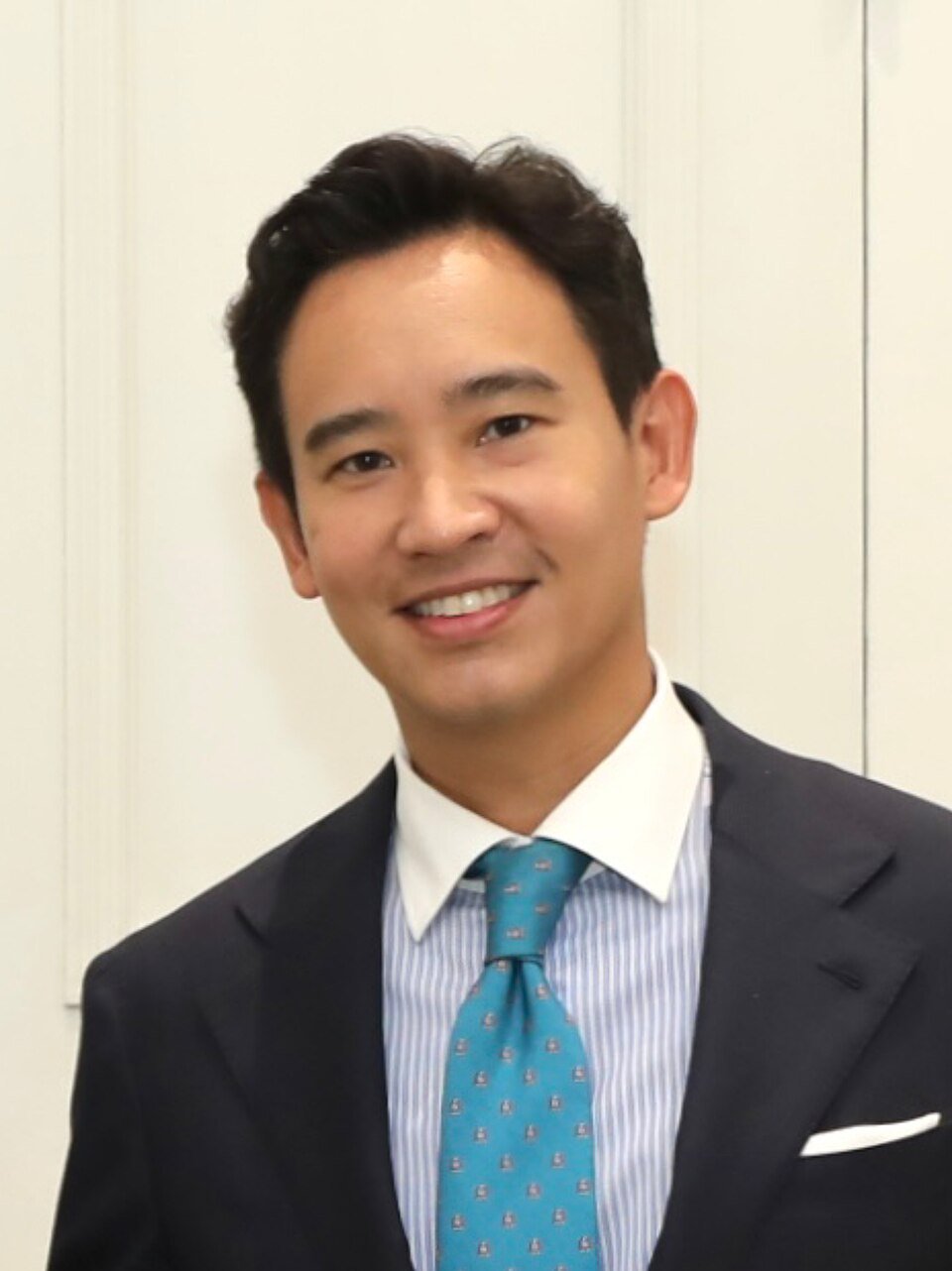
Pita Limjaroenrat
Former Move Forward Party leader and 2023 prime-ministerial candidateThe business-trained reform politician who led Move Forward to 151 House seats in 2023 but was blocked from the premiership before the party was dissolved.Read biography Thailand · Politics
1978—
Chaithawat Tulathon
Former Move Forward Party leader and leader of the oppositionThe engineer, editor and political organiser who became Move Forward’s secretary-general, party leader and Thailand’s tenth formal leader of the opposition.Read biography Thailand · Politics
1981—
Sirikanya Tansakun
Deputy leader of the People’s Party and party-list MPThe economist and policy researcher who became one of Thailand’s most visible parliamentary budget critics, a 2026 prime-ministerial candidate and the People’s Party lead on state reform.Read biography Thailand · Politics
1987—
Natthaphong Ruengpanyawut
Leader of Thailand’s People’s Party and opposition leaderA computer engineer and cloud entrepreneur who became leader of Thailand’s People’s Party, led it to 120 House seats in 2026 and remained the central opposition figure.Read biography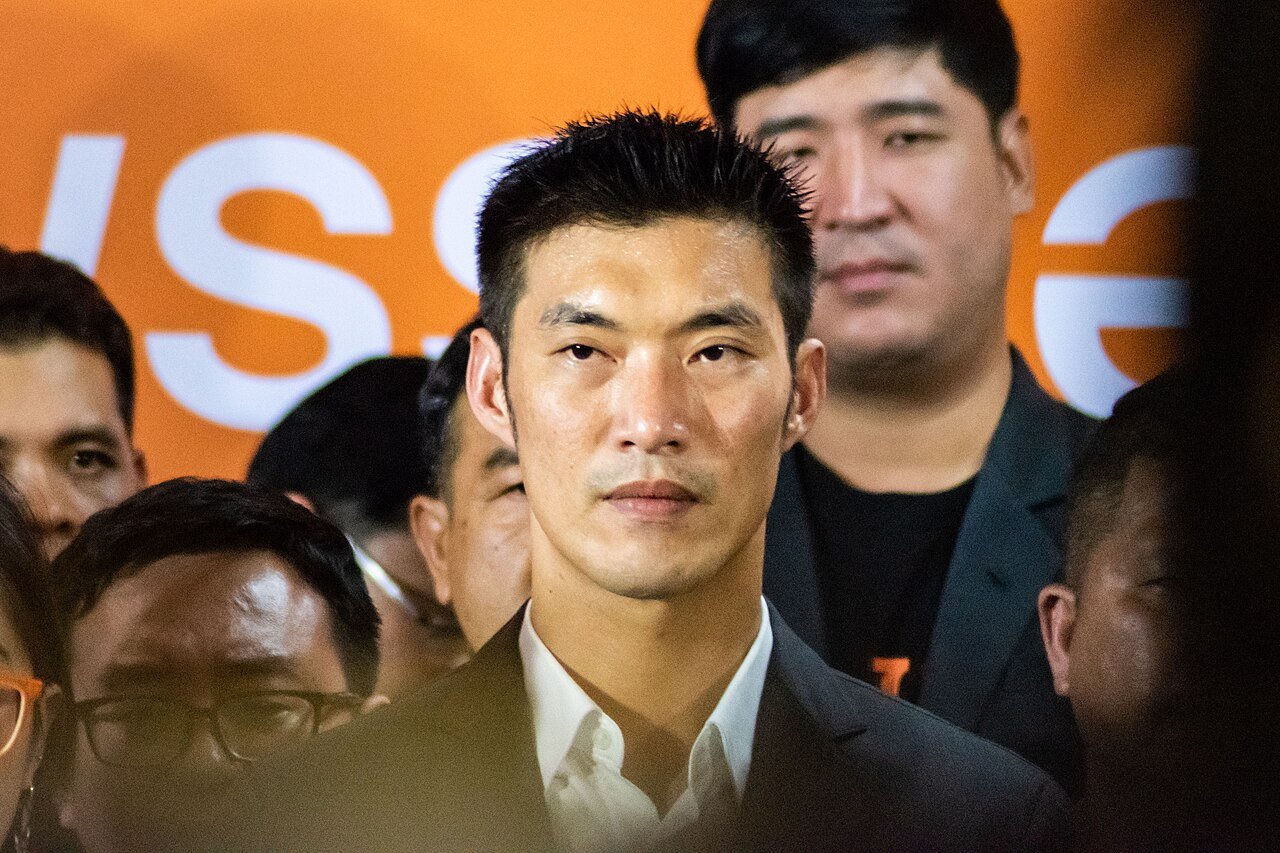 Thailand · Politics
1978—
Thanathorn Juangroongruangkit
Founder of Future Forward and leader of the Progressive MovementThe former automotive executive who founded Future Forward, challenged military influence and continued reform campaigning after the party’s dissolution.Read biography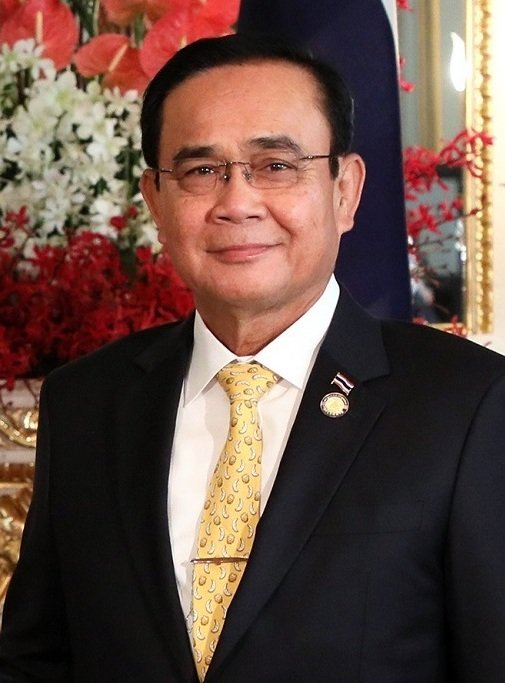 Thailand · Politics
1954—
Prayut Chan-o-cha
29th Prime Minister of Thailand, 2014–2023The army commander who seized power in 2014, led Thailand’s military government and remained prime minister after the 2019 election until 2023.Read biography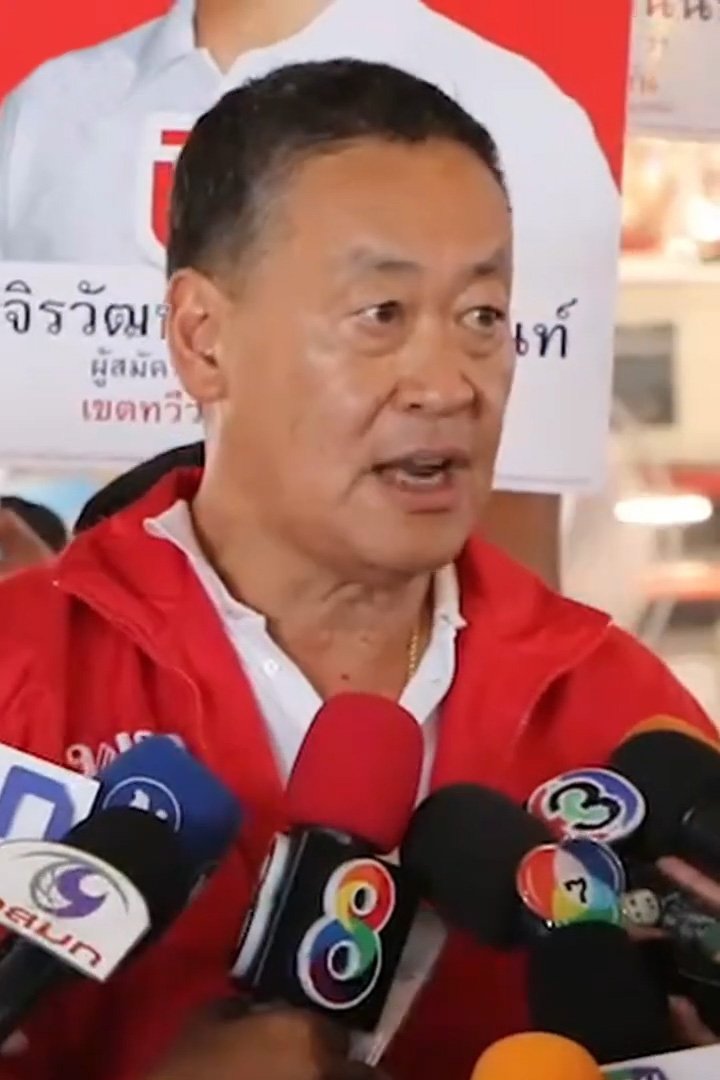 Thailand · Politics
1962—
Srettha Thavisin
30th Prime Minister of Thailand, 2023–2024The property executive who entered party politics in 2022, became Thailand’s 30th prime minister after the 2023 election and was removed by the Constitutional Court in 2024.Read biography Thailand · Politics
1986—
Paetongtarn Shinawatra
31st Prime Minister of Thailand, 2024–2025The hotel executive and Pheu Thai leader who became Thailand’s youngest prime minister in 2024 before a Constitutional Court ethics ruling ended her tenure in 2025.Read biography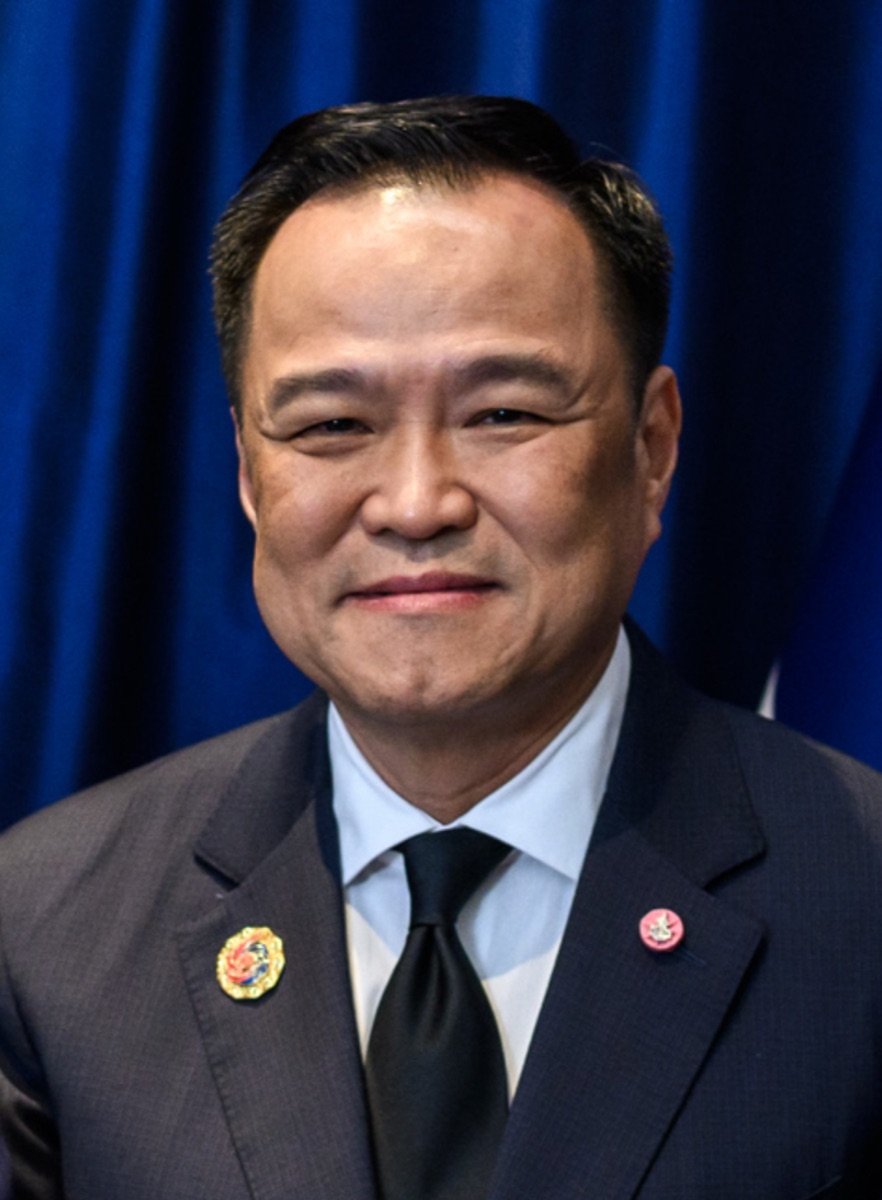 Thailand · Politics
1966—
Anutin Charnvirakul
32nd Prime Minister of ThailandA businessman-turned-politician who led Bhumjaithai through successive coalitions, became Thailand’s 32nd prime minister in 2025 and won a second appointment after the 2026 election.Read biographyQuick answers
Common questions
- Who won Thailand’s 2023 election?
- Move Forward won the most seats with 151 of 500, followed by Pheu Thai with 141. No party won an outright House majority.
- How many votes did Pita receive for prime minister?
- Pita received 324 votes on 13 July 2023: 311 from MPs and thirteen from senators. He needed 375 under the joint House–Senate procedure then in force.
- Why did the Senate vote for Thailand’s prime minister?
- A transitional provision of the 2017 Constitution allowed the 250-member, post-coup Senate to join the House in selecting a prime minister during parliament’s first five years.
- Why did Pheu Thai leave Move Forward’s coalition?
- After Pita’s nomination failed and parliament blocked another attempt, Pheu Thai said it would seek enough support from senators and other parties to form a government without Move Forward.
- Was Pita disqualified over his iTV shares?
- No. The Constitutional Court ruled in January 2024 that iTV was not operating as a media business when he registered, so he retained his MP status.
- Why was the Move Forward Party dissolved?
- The Constitutional Court dissolved it in August 2024 after an earlier ruling characterised its Article 112 amendment campaign as threatening the constitutional order. Eleven relevant executives received ten-year political bans.
Primary and institutional sources
How this history was checked
Dates, legal milestones and historical claims are checked against the official and institutional records below. This article was reviewed on 3 October 2026.
- Inter-Parliamentary UnionThailand House election, May 2023
- National Assembly of ThailandJoint sitting report for the prime-minister vote, 13 July 2023
- Constitutional Court of ThailandRuling No. 2/2567 on Pita’s parliamentary membership
- Constitutional Court of ThailandRuling No. 3/2567 on Pita, Move Forward and Article 112
- Constitutional Court of ThailandRuling No. 20/2567 dissolving the Move Forward Party
- UK House of Commons LibraryThailand: Politics and human rights in 2024
- Human Rights WatchThailand: Bogus Charges Keep Candidate From Top Post
- Wikimedia CommonsPita Limjaroenrat portrait and public-domain record