
The short answer
Thailand’s 2017 Constitution restored an elected House while carrying post-coup institutions into the new order. Its appointed transitional Senate shaped the 2019 and 2023 prime-minister votes, its amendment rules constrained reform, and a 2026 referendum has now authorised work toward a replacement.
Change over time
Original design and the position after transitional powers expired
The constitutional text has been amended, and some of its most consequential provisions were temporary by design.
| Institution | First post-coup cycle | Position by October 2026 |
|---|---|---|
| House electoral system | 350 constituency + 150 list seats; one ballot | 400 constituency + 100 list seats; two ballots |
| Senate | 250-member transitional chamber selected under NCPO process | 200-member chamber selected among professional groups |
| Prime-minister vote | Joint House–Senate vote under Section 272 | House vote after transitional authority expired |
| Constitutional future | Permanent post-coup charter being implemented | Still in force while an approved replacement process proceeds |
Chronology
A timeline of the turning points
Voters approve the draft and supplementary question
The charter receives 61.35 percent of valid votes, while a separate question authorises a joint House–Senate prime-minister vote.
King Bhumibol dies before promulgation
The succession and later drafting changes extend the interval between referendum and a permanent charter.
The Constitution enters into force
King Vajiralongkorn promulgates Thailand’s twentieth constitution after the 1932 end of absolute monarchy.
Organic laws build the electoral system
Legislation defines political parties, the Election Commission, House elections and selection of senators.
The first House election is held
A single-ballot mixed system distributes 350 constituency and 150 party-list seats across twenty-six parties.
The appointed Senate joins the PM vote
The joint sitting selects Prayut Chan-o-cha by 500 votes to 244 for Thanathorn Juangroongruangkit.
An amendment restores two ballots
The House changes to 400 constituency and 100 party-list seats with separate constituency and party votes.
The Senate helps block Pita’s premiership
Pita Limjaroenrat wins 324 votes in the joint sitting, below the majority then required across both chambers.
The Senate’s transitional PM power expires
The five-year Section 272 period ends, returning selection of the prime minister to the elected House.
Voters authorise a new-constitution process
A referendum majority agrees that Thailand should begin drafting a new charter, although the 2017 text remains in force during the process.
Where did the 2017 Constitution come from?
The National Council for Peace and Order abolished most of the 2007 Constitution after its May 2014 coup. An interim charter created an appointed legislature, reform bodies and a controlled drafting process. The first post-coup draft failed in 2015; a new committee chaired by Meechai Ruchuphan produced the text approved in the 7 August 2016 referendum.
Promulgation did not occur immediately. King Bhumibol died in October 2016, and King Vajiralongkorn later requested adjustments affecting royal authority and regency arrangements. The interim charter was amended to permit changes after the vote. The completed Constitution entered into force on 6 April 2017 while the NCPO still governed.
How does the Constitution organise the House of Representatives?
The charter establishes a 500-member elected House. Its original formula used 350 constituency seats and 150 compensatory party-list seats derived from a single constituency ballot. That system tried to make each party’s total seats broadly reflect its national vote, which limited list seats for parties already strong in constituencies and distributed representation among many small parties in 2019.
A 2021 amendment changed the balance to 400 constituency and 100 party-list seats and restored separate ballots for a local candidate and political party. The revised system governed the 2023 and 2026 elections. The Constitution therefore supplies the institutional frame, but important electoral mechanics have changed through amendment and organic law.
Why did Thailand have a 250-member appointed Senate?
The permanent model in section 107 provides for a 200-member Senate selected from professional and social groups rather than through a direct nationwide election. Transitional section 269 created a different first chamber of 250 members. The NCPO chose most members from lists and selections made under post-coup procedures, while six senior military and security officeholders served ex officio.
That transitional Senate reviewed laws, approved officeholders and monitored reforms, but its most controversial power came from section 272: for five years after the first National Assembly convened, senators joined MPs in approving a prime minister. A new 200-member Senate was selected in 2024 after the initial chamber’s term, without inheriting the expired joint prime-minister vote.
How did Section 272 affect who became prime minister?
Under the ordinary system, parties nominate prime-ministerial candidates before an election and the House approves a candidate. Transitional section 272 temporarily changed the deciding body from 500 elected MPs to the full National Assembly. Because the 250 senators were appointed through the post-coup order, a candidate could overcome a weaker position in the elected House with Senate support.
The provision operated in 2019 when Prayut defeated Thanathorn 500–244. It mattered again in July 2023 when Pita received support from a majority of MPs but only thirteen senators and fell short in the joint sitting. The five-year authority expired in May 2024. It should therefore be described as a powerful transitional rule, not a permanent power of every Thai Senate.
What are the national strategy and NCPO continuity clauses?
Section 65 requires the state to maintain a national strategy as a framework for sustainable development, while the reform chapter identifies areas including politics, administration, law, justice, education and the economy. An implementing statute produced a twenty-year strategy covering 2018–2037. Governments retain policy choices, but critics argue that the framework lets institutions designed under military rule constrain later elected programmes.
Section 279 recognises announcements, orders and acts of the NCPO and its leader as constitutionally lawful and continuing unless repealed or amended through authorised processes. This preserved the legal effects of the coup government rather than automatically reviewing each measure when the permanent charter arrived. Together, strategy and continuity provisions carried parts of the post-coup order beyond direct military government.
Why is the Constitution difficult to amend?
Section 256 requires approval across three readings and builds support thresholds around both chambers. At important stages an amendment needs votes from at least one-third of the Senate and support from a share of MPs belonging to parties outside the governing coalition. Some subjects—including constitutional fundamentals, qualifications of officeholders, courts and independent bodies—also trigger a referendum.
Supporters describe those requirements as protection against a temporary majority rewriting basic rules for itself. Critics argue that a Senate selected outside direct election can veto changes to a system from which it derives authority. The difficulty became central to repeated attempts after 2020 to create a constituent assembly or draft a replacement charter.
What rights and accountability institutions does it contain?
The Constitution protects equality, due process, privacy, expression, association, community rights and other liberties, while also listing duties of citizens and duties of the state. Many rights may be regulated by law for stated public purposes. Their practical strength therefore depends on legislation, judicial interpretation and whether emergency or security rules meet constitutional limits.
It also preserves powerful courts and independent bodies, including the Election Commission and National Anti-Corruption Commission, and imposes ethical standards on officeholders. These institutions can check abuse, but their appointments and interventions are politically consequential. A complete assessment must distinguish their written mandates from debates about selection, consistency and democratic accountability.
Is the 2017 Constitution still in force after the 2026 referendum?
Yes. The 8 February 2026 referendum asked whether Thailand should begin creating a new constitution; it did not place a completed replacement text before voters. The Election Commission recorded 21,622,029 agree votes, 11,231,161 disagree votes, 3,074,462 ballots expressing no opinion and 942,648 invalid ballots.
The approval opened a formal route toward rewriting, but further parliamentary work, drafting and public approval remain necessary. Until a replacement is lawfully promulgated, the amended 2017 Constitution continues to organise government. The best description as of October 2026 is therefore “in force, with a voter-authorised replacement process underway.”
Continue the chronology
Related history guides
The 2014 Thai Coup
Start with the takeover that abolished the earlier constitutional order.
Read the timeline7 August 2016The 2016 Constitutional Referendum
Read the results, two ballot questions and restricted campaign environment.
Read the timeline24 March 2019The 2019 Thai General Election
See the original electoral formula and appointed Senate operate.
Read the timeline2019–2026Thailand Elections Compared
Compare how the charter’s electoral rules and temporary Senate power operated across three elections.
Read the timeline14 May 2023The 2023 Thai General Election
Follow the final major use of the Senate’s transitional prime-minister power.
Read the timeline7 August 2024The Dissolution of the Move Forward Party
See how constitutional sections 49 and 211 interacted with party law in the Court’s dissolution ruling.
Read the timeline8 February 2026The 2026 Thai General Election
See the amended two-ballot system operate after the Senate’s transitional PM-selection power expired.
Read the timeline8 February 2026The 2026 Constitutional Referendum
Continue to the nationwide vote authorising work on a replacement charter.
Read the timelineConnected biographies
Nine biographies connecting the post-coup charter, elections, Senate power and the replacement debate
 Thailand · Politics
1954—
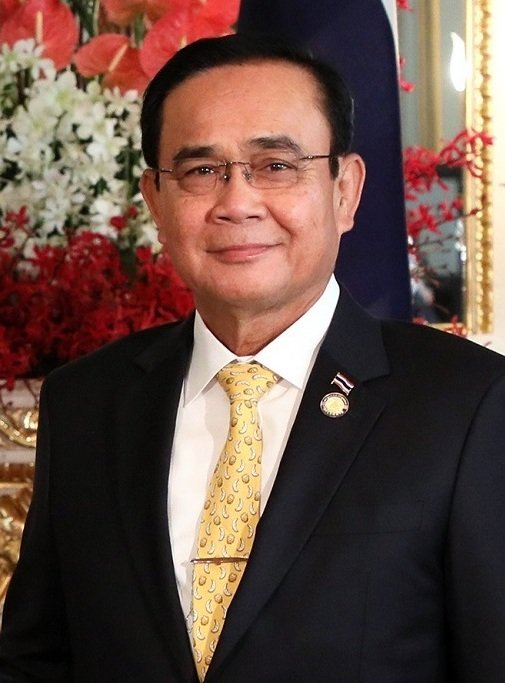
Prayut Chan-o-cha
29th Prime Minister of Thailand, 2014–2023The army commander who seized power in 2014, led Thailand’s military government and remained prime minister after the 2019 election until 2023.Read biography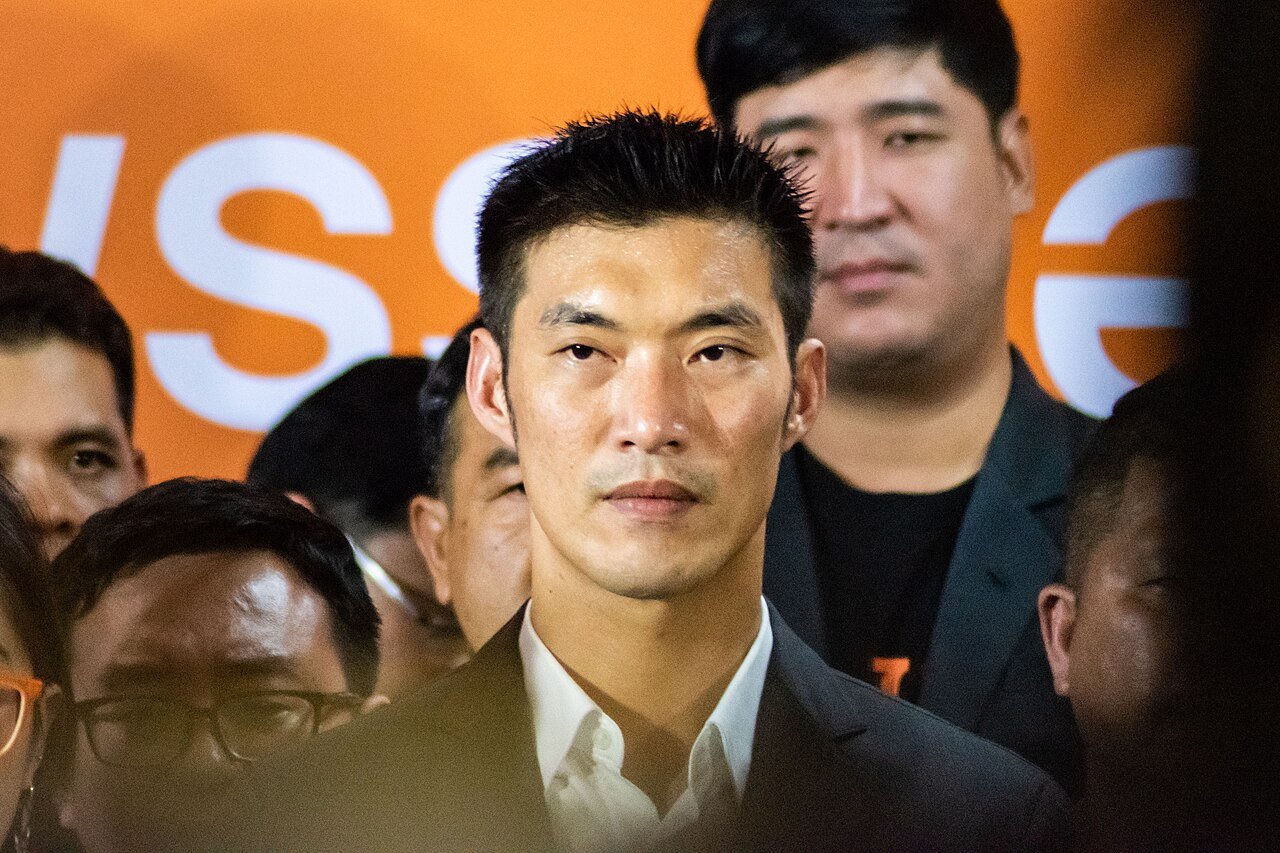 Thailand · Politics
1978—
Thanathorn Juangroongruangkit
Founder of Future Forward and leader of the Progressive MovementThe former automotive executive who founded Future Forward, challenged military influence and continued reform campaigning after the party’s dissolution.Read biography Thailand · Politics
1980—
Pita Limjaroenrat
Former Move Forward Party leader and 2023 prime-ministerial candidateThe business-trained reform politician who led Move Forward to 151 House seats in 2023 but was blocked from the premiership before the party was dissolved.Read biography Thailand · Politics
1978—
Chaithawat Tulathon
Former Move Forward Party leader and leader of the oppositionThe engineer, editor and political organiser who became Move Forward’s secretary-general, party leader and Thailand’s tenth formal leader of the opposition.Read biography Thailand · Politics
1981—
Sirikanya Tansakun
Deputy leader of the People’s Party and party-list MPThe economist and policy researcher who became one of Thailand’s most visible parliamentary budget critics, a 2026 prime-ministerial candidate and the People’s Party lead on state reform.Read biography Thailand · Politics
1987—
Natthaphong Ruengpanyawut
Leader of Thailand’s People’s Party and opposition leaderA computer engineer and cloud entrepreneur who became leader of Thailand’s People’s Party, led it to 120 House seats in 2026 and remained the central opposition figure.Read biography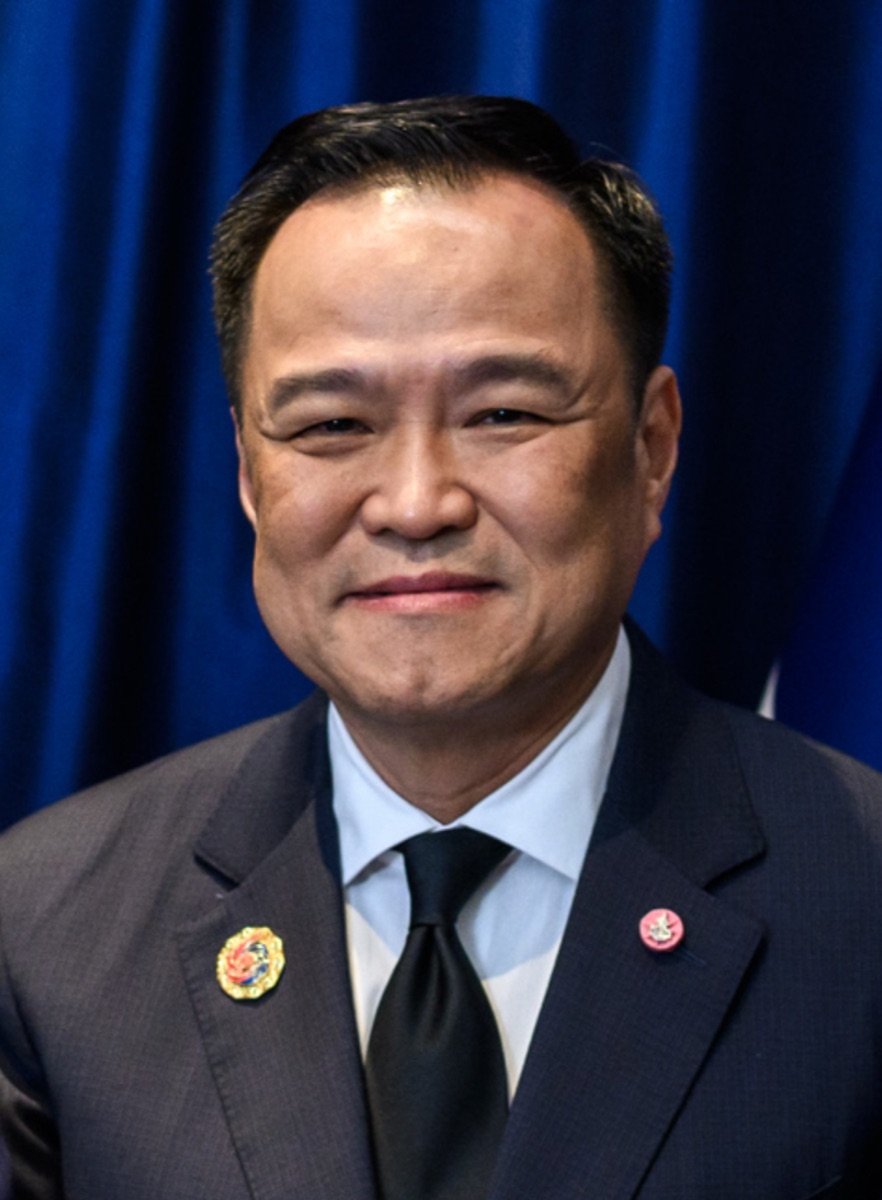 Thailand · Politics
1966—
Anutin Charnvirakul
32nd Prime Minister of ThailandA businessman-turned-politician who led Bhumjaithai through successive coalitions, became Thailand’s 32nd prime minister in 2025 and won a second appointment after the 2026 election.Read biography Thailand · Politics
1967—
Yingluck Shinawatra
Business executive and former prime ministerA business executive who led a landslide election victory in 2011 and became Thailand’s first woman prime minister before a court removed her in 2014.Read biography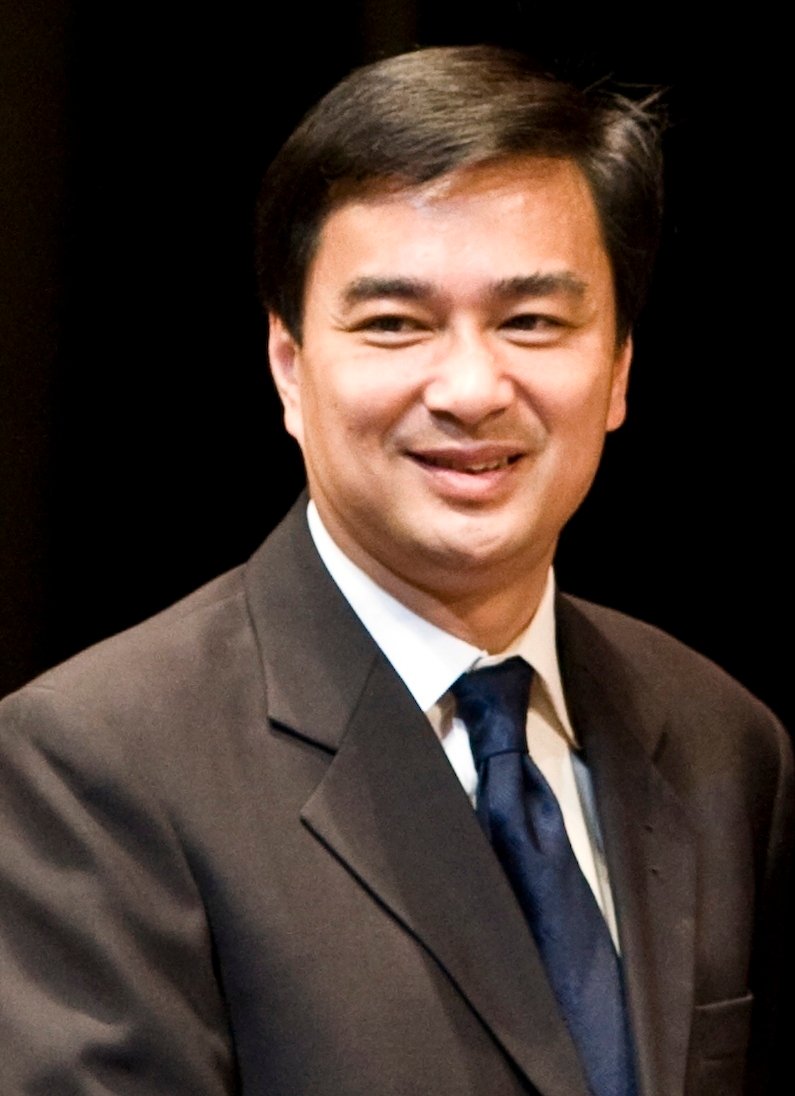 Thailand · Politics
1964—
Abhisit Vejjajiva
27th Prime Minister of Thailand, 2008–2011The Oxford-educated Democrat leader who became prime minister through a parliamentary coalition, launched crisis stimulus and governed during Thailand’s 2010 protest violence.Read biographyQuick answers
Common questions
- When did Thailand’s 2017 Constitution take effect?
- It was promulgated on 6 April 2017 after the 2016 referendum, royal succession and post-referendum revisions.
- How many members are in Thailand’s House?
- The House has 500 members. After a 2021 amendment, 400 are elected in constituencies and 100 through party lists.
- Did the Senate permanently have the power to choose a prime minister?
- No. Transitional section 272 let the first 250-member Senate join MPs for five years. That authority expired in May 2024.
- What is Section 279 of the Thai Constitution?
- It recognises NCPO announcements, orders and acts as constitutionally lawful and continuing unless changed through authorised legal processes.
- Why is the Constitution hard to amend?
- Section 256 requires special support across the House and Senate, including at least one-third of senators at key stages, and a referendum for certain changes.
- Did the 2026 referendum replace the Constitution?
- No. It authorised the start of a new-constitution process. The amended 2017 Constitution remains in force until a replacement completes the required legal steps.
Primary and institutional sources
How this history was checked
Dates, legal milestones and historical claims are checked against the official and institutional records below. This article was reviewed on 3 October 2026.
- Election Commission of ThailandConstitution of the Kingdom of Thailand B.E. 2560 (2017) — English translation
- National Assembly of ThailandConstitution of the Kingdom of Thailand, 2017
- Constitutional Court of ThailandReview of transitional section 272 after the 2016 referendum
- Asian Network for Free ElectionsThe 2019 Thai General Election: A Missed Opportunity for Democracy
- Human Rights WatchThailand: Structural Flaws Subvert Election
- Election Commission of ThailandOfficial 2026 referendum result press release
- Asian Network for Free Elections2026 Thailand election and constitutional referendum final report
- Wikimedia CommonsPrayut Chan-o-cha photograph and licence record