
The short answer
Bhumjaithai became the largest party in Thailand’s early 2026 election but needed coalition partners to govern. The completed House distribution gave it 192 seats, and the new elected chamber returned Anutin Charnvirakul as prime minister without participation by the Senate.
Final House distribution
How the largest parties won their seats
The completed 500-seat distribution separates constituency victories from nationwide party-list allocation.
| Party | Constituency | Party list | Total |
|---|---|---|---|
| Bhumjaithai | 173 | 19 | 192 |
| People’s Party | 88 | 32 | 120 |
| Pheu Thai | 58 | 16 | 74 |
| Kla Tham | 56 | 2 | 58 |
| Democrat Party | 10 | 11 | 21 |
| All other parties | 15 | 20 | 35 |
Chronology
A timeline of the turning points
The House selects Anutin as prime minister
People’s Party support gives Bhumjaithai leader Anutin Charnvirakul a first term under an agreement that includes an early dissolution and constitutional referendum.
The House is dissolved
A royal decree ends the legislature elected in 2023 and opens an early-election timetable.
Election day is fixed for 8 February
The Election Commission schedules a 500-seat House election using 400 constituencies and 100 party-list seats.
Advance voting takes place
Registered voters cast early constituency and party-list ballots one week before the national polling day.
Bhumjaithai emerges as the largest party
Voters elect a new House and answer a separate constitutional-referendum question on the same day.
Bhumjaithai and Pheu Thai announce a coalition deal
The first- and third-largest parties agree to form the core of a majority government with additional partners.
The Election Commission allocates the party-list seats
The Commission certifies all 100 list MPs and nearly all constituency winners while one constituency process remains outstanding.
The new House convenes
The twenty-seventh House begins its first session without the old Senate power to join the prime-minister vote.
The House re-elects Anutin
Anutin receives 293 votes against 119 for People’s Party leader Natthaphong Ruengpanyawut, with 86 abstentions.
Anutin receives the royal appointment
The Bhumjaithai leader receives the royal command beginning his second term as Thailand’s thirty-second numbered prime minister.
Why was Thailand’s 2026 election held early?
The House elected in 2023 did not complete its four-year term. Srettha Thavisin and Paetongtarn Shinawatra each lost the premiership through Constitutional Court rulings, and Anutin Charnvirakul became prime minister in September 2025 with temporary support from the opposition People’s Party. Their agreement called for a dissolution within four months and movement toward a new constitution.
The House was dissolved on 11 December 2025. The Election Commission scheduled voting for 8 February 2026, and the government placed the first question in the new-constitution process on the same day. Voters therefore received separate constituency, party-list and referendum ballots, but the parliamentary election and referendum remained legally distinct decisions.
How did the two-ballot system work?
Thailand elected 400 MPs in single-member constituencies and allocated 100 additional seats through a nationwide party-list vote. Each voter could support a local candidate on one ballot and a political party on another. The list seats were distributed separately rather than being used to compensate parties for constituency results.
That distinction explains the different strengths in the final table. Bhumjaithai dominated constituencies with 173 wins but received nineteen list seats. The People’s Party led the list allocation with thirty-two seats and added eighty-eight constituency victories. No party reached the 251 seats required for a House majority, so coalition negotiations remained necessary.
What were the final 2026 election results?
The final 500-seat distribution recorded by the Thai House and Inter-Parliamentary Union gives Bhumjaithai 192 seats, the People’s Party 120, Pheu Thai 74, Kla Tham 58 and the Democrat Party 21. Thai Ruam Palang won six, Palang Pracharath and Prachachat won five each, and fourteen smaller parties shared the remaining nineteen seats.
Election-night estimates and some early government reports placed Bhumjaithai at 193 or more seats. This page uses the completed 500-member parliamentary distribution rather than a preliminary projection. Stating the evidence date and distinguishing preliminary from final figures matters because recounts, repeat voting and one outstanding constituency changed the certification sequence.
What was voter turnout?
The Election Commission reported 52,933,610 eligible voters. It counted 37,807,781 participants in the party-list election and 37,807,778 in the constituency election, equal to 71.42 percent turnout. The three-ballot polling day did not produce identical totals because some overseas or out-of-district envelopes returned incomplete ballot sets and some voters did not receive or deposit every ballot.
For the party-list vote, the Commission reported 35,030,601 valid ballots, 1,669,006 invalid ballots and 1,108,051 ballots selecting no party. The constituency count recorded 34,862,178 valid ballots, 1,337,396 invalid ballots and 1,608,174 selecting no candidate. These administrative totals should not be confused with referendum turnout, which used a different register and ballot classification.
How did Anutin form a government?
Bhumjaithai’s 192 seats made it the clear first-place party but left it fifty-nine short of an outright majority. On 13 February, Anutin announced a coalition agreement with Pheu Thai, whose seventy-four seats carried the two parties beyond 251 before smaller partners were counted. The alliance joined organisations that had competed sharply during the campaign but could together build a stable House majority.
The coalition decision separated winning the election from selecting the government. The People’s Party became the largest opposition party despite leading the nationwide list-seat allocation. Pheu Thai, which finished third, returned to government as Bhumjaithai’s principal partner. This was a parliamentary coalition outcome, not a direct presidential vote for Anutin.
Why did only the House choose the prime minister?
The 2026 selection was the first after the five-year transitional authority in section 272 of the 2017 Constitution had expired. In 2019 and 2023, the appointed Senate could join MPs in choosing a prime minister. By March 2026, that special power was no longer available, so the elected House decided between the nominated candidates.
On 19 March, 498 of 499 existing MPs voted. Anutin received 293, Natthaphong received 119 and eighty-six abstained. The threshold was 250, half of the existing 499 members plus one. The result gave Anutin a stronger parliamentary basis than the temporary opposition support that had enabled his first appointment in September 2025.
Was the election free and credible?
ANFREL observers described a peaceful polling day, committed voters, generally open polling stations and competent staff. They also identified problems beyond the act of casting ballots: incomplete or inconsistent public tabulation, weak Election Commission communication, ballot papers carrying unique barcodes, allegations of widespread vote buying, disinformation and continuing legal pressure on political participation.
Those findings require a balanced description. The final result produced a functioning 500-member House and a government with the strongest elected base since the 2014 coup. Administrative competence on polling day does not answer every transparency or rights concern, and unresolved criticism should not be rewritten as proof that the whole count was invalid. The evidence supports both conclusions at once.
Continue the chronology
Related history guides
Thailand Elections Compared
Compare the three final results, turnout, seat systems and the end of the Senate’s prime-minister role.
Read the timeline14 May 2023The 2023 Thai General Election
Compare Move Forward’s first-place finish, the joint House–Senate vote and the coalition that followed.
Read the timeline7–9 August 2024The Dissolution of the Move Forward Party
Read how the ruling removed Move Forward, restricted eleven executives and preceded the People’s Party’s formation.
Read the timeline6 April 2017–presentThailand’s 2017 Constitution
Understand the two-ballot system and why the Senate no longer joined the 2026 prime-minister selection.
Read the timeline8 February 2026The 2026 Constitutional Referendum
Read the separate new-charter question voters answered on the same national polling day.
Read the timeline1932–presentPrime Ministers of Thailand
Compare Anutin’s two appointments with every officially numbered Thai premier.
Read the timeline1851–presentThailand History Timeline
Place the election inside the longer history of constitutions, coalitions and military intervention.
Read the timelineConnected biographies
Nine biographies connecting the election, opposition, predecessor governments and coalition traditions
 Thailand · Politics
1966—
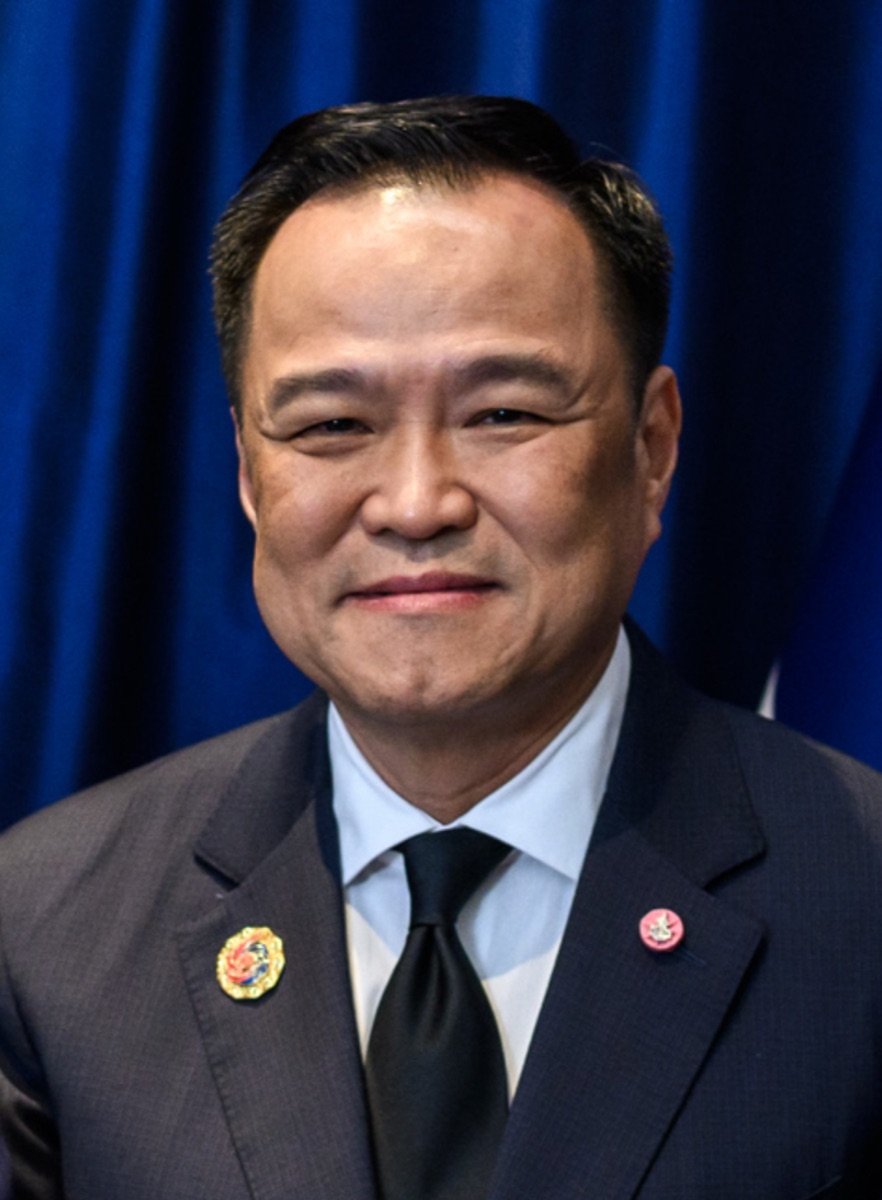
Anutin Charnvirakul
32nd Prime Minister of ThailandA businessman-turned-politician who led Bhumjaithai through successive coalitions, became Thailand’s 32nd prime minister in 2025 and won a second appointment after the 2026 election.Read biography Thailand · Politics
1987—
Natthaphong Ruengpanyawut
Leader of Thailand’s People’s Party and opposition leaderA computer engineer and cloud entrepreneur who became leader of Thailand’s People’s Party, led it to 120 House seats in 2026 and remained the central opposition figure.Read biography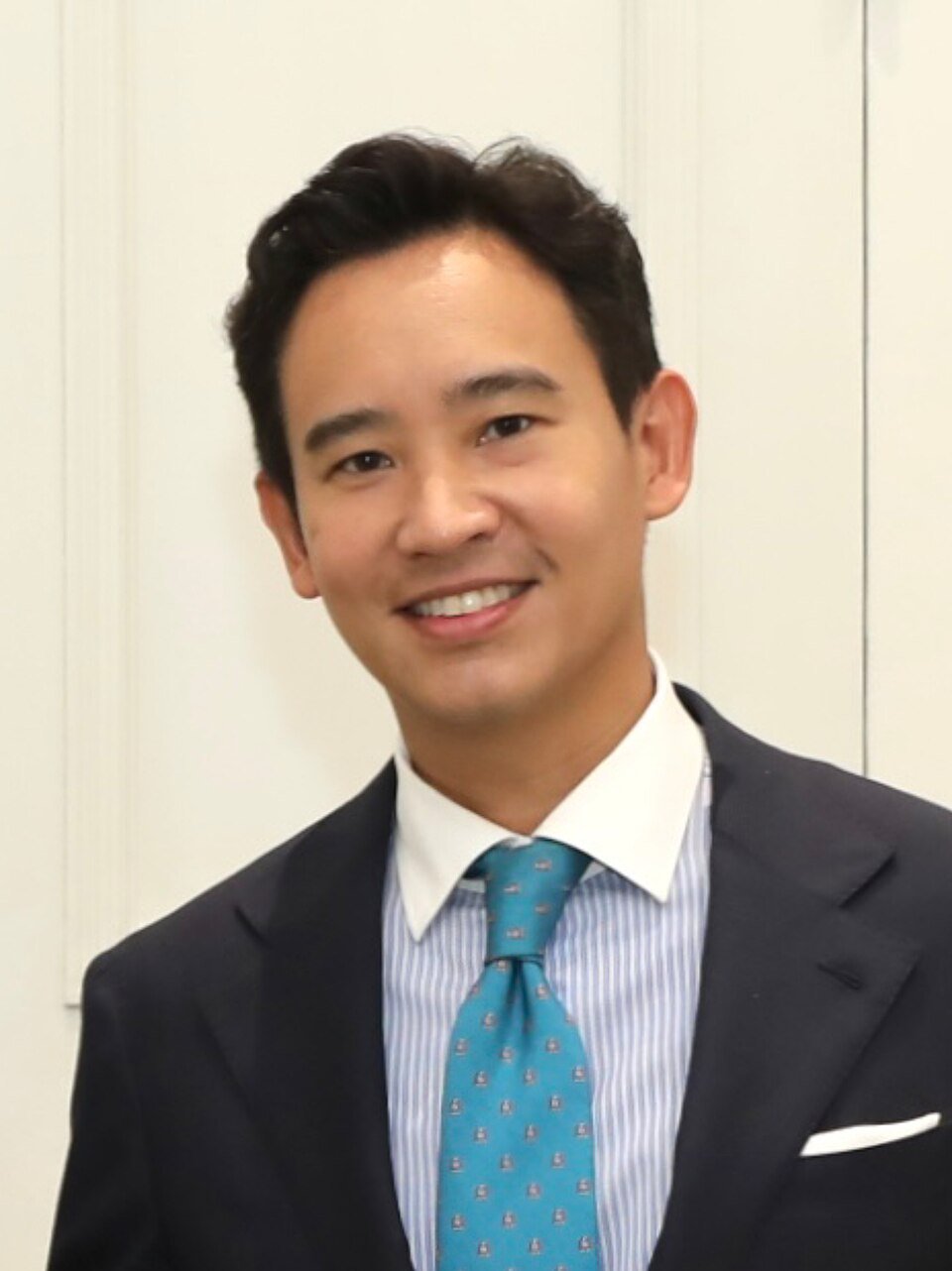 Thailand · Politics
1980—
Pita Limjaroenrat
Former Move Forward Party leader and 2023 prime-ministerial candidateThe business-trained reform politician who led Move Forward to 151 House seats in 2023 but was blocked from the premiership before the party was dissolved.Read biography Thailand · Politics
1978—
Chaithawat Tulathon
Former Move Forward Party leader and leader of the oppositionThe engineer, editor and political organiser who became Move Forward’s secretary-general, party leader and Thailand’s tenth formal leader of the opposition.Read biography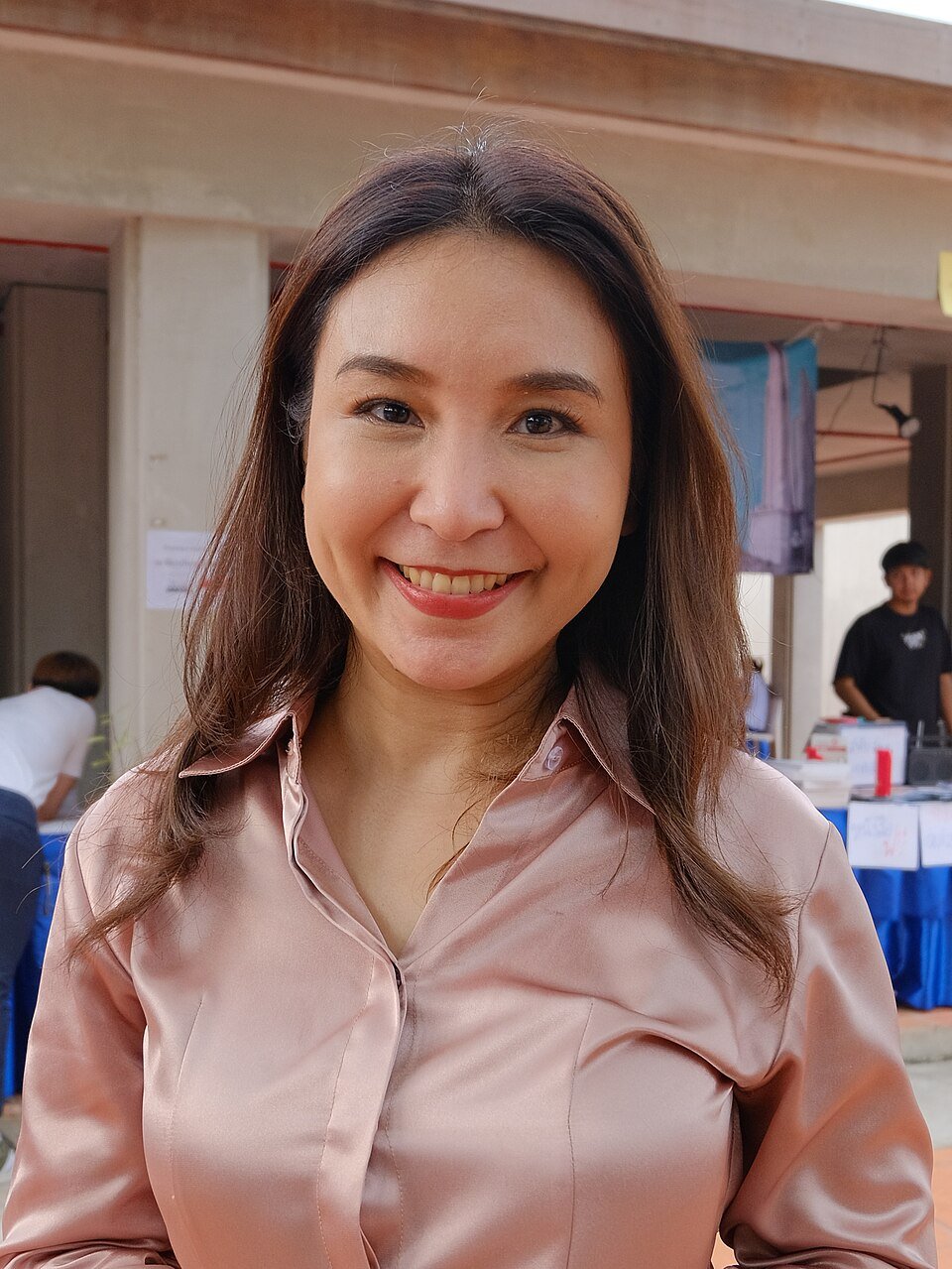 Thailand · Politics
1981—
Sirikanya Tansakun
Deputy leader of the People’s Party and party-list MPThe economist and policy researcher who became one of Thailand’s most visible parliamentary budget critics, a 2026 prime-ministerial candidate and the People’s Party lead on state reform.Read biography Thailand · Politics
1986—
Paetongtarn Shinawatra
31st Prime Minister of Thailand, 2024–2025The hotel executive and Pheu Thai leader who became Thailand’s youngest prime minister in 2024 before a Constitutional Court ethics ruling ended her tenure in 2025.Read biography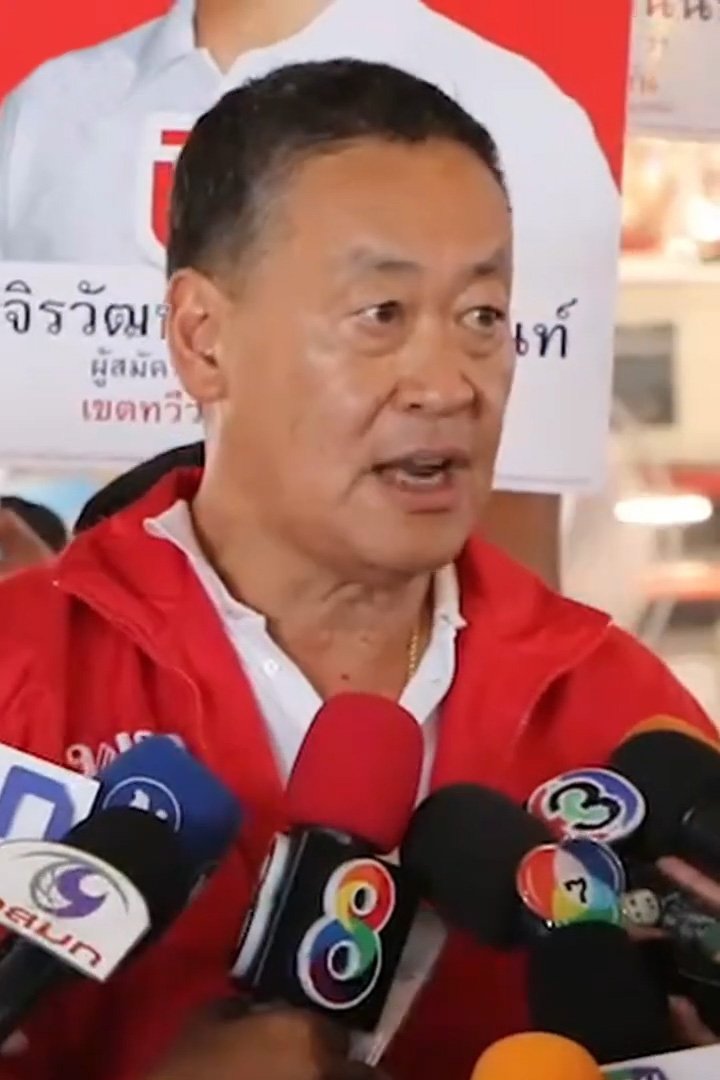 Thailand · Politics
1962—
Srettha Thavisin
30th Prime Minister of Thailand, 2023–2024The property executive who entered party politics in 2022, became Thailand’s 30th prime minister after the 2023 election and was removed by the Constitutional Court in 2024.Read biography Thailand · Politics
1949—
Thaksin Shinawatra
Businessman and former prime ministerA telecommunications entrepreneur who became prime minister in 2001, transformed Thai electoral politics and remained influential through two decades of conflict.Read biography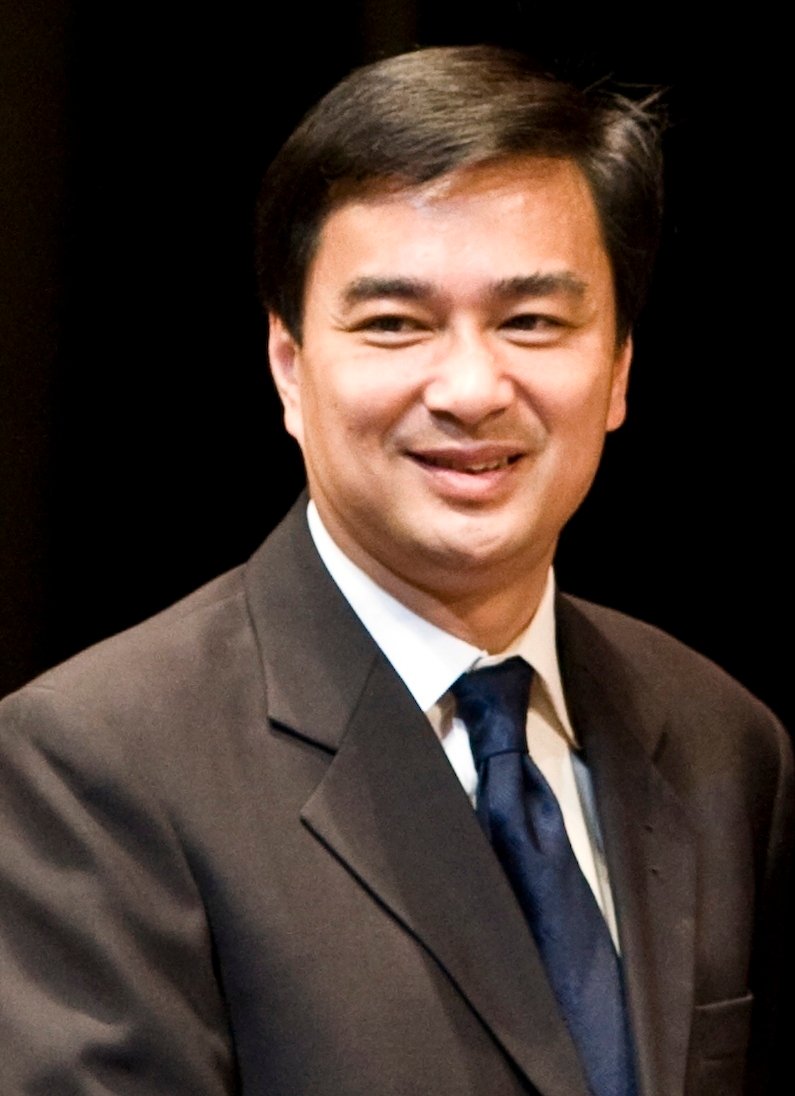 Thailand · Politics
1964—
Abhisit Vejjajiva
27th Prime Minister of Thailand, 2008–2011The Oxford-educated Democrat leader who became prime minister through a parliamentary coalition, launched crisis stimulus and governed during Thailand’s 2010 protest violence.Read biographyQuick answers
Common questions
- Who won Thailand’s 2026 general election?
- Bhumjaithai became the largest party with 192 of 500 seats in the completed parliamentary distribution. It did not win an outright majority and therefore formed a coalition.
- How many seats did the People’s Party win?
- The People’s Party won 120 seats: eighty-eight constituencies and thirty-two party-list seats. It became the largest opposition party.
- What was turnout in the 2026 Thai election?
- The Election Commission reported turnout of 71.42 percent, with about 37.8 million participants from 52,933,610 eligible voters.
- Why did Bhumjaithai need coalition partners?
- Its 192 seats were the largest total but below the 251 seats needed for a majority in the 500-seat House. Pheu Thai and smaller parties joined the governing coalition.
- How many votes did Anutin receive for prime minister?
- Anutin received 293 House votes on 19 March 2026. Natthaphong Ruengpanyawut received 119 and eighty-six MPs abstained.
- Did Thailand’s Senate vote for prime minister in 2026?
- No. The transitional Senate power used in 2019 and 2023 had expired, so the elected House alone approved the prime minister.
Primary and institutional sources
How this history was checked
Dates, legal milestones and historical claims are checked against the official and institutional records below. This article was reviewed on 3 October 2026.
- Election Commission of ThailandOfficial summary of constituency and party-list election data
- Election Commission of ThailandCertification of 100 party-list MPs and remaining constituency results
- Inter-Parliamentary UnionThailand House of Representatives election, 8 February 2026
- Public Relations Department of ThailandAnutin Charnvirakul re-elected prime minister
- Royal Thai GovernmentRoyal appointment of Anutin Charnvirakul for a second term
- Asian Network for Free ElectionsQuestions of Trust, Demands for Accountability: 2026 final mission report
- Election Commission of ThailandConstitution of the Kingdom of Thailand B.E. 2560 (2017)
- Wikimedia CommonsAnutin Charnvirakul photograph and licence record