In this biography
Quick facts
- Born
- 4 April 1981
- Birthplace
- Chon Buri, Thailand
- Country
- Thailand
- Nationality
- Thai
- Known for
- Economic-policy leadership across Future Forward, Move Forward and the People’s Party
- Education
- Economics at Thammasat and Toulouse School of Economics
- Parliament
- Party-list MP in the 25th, 26th and 27th Houses
- 2026 candidacy
- People’s Party nominee for prime minister
- Current party role
- People’s Party deputy leader for policy
Why this life matters
Sirikanya’s career shows how technical economic research became a route into reform politics, legislative scrutiny and national leadership across three successive Thai parties.
Timeline
Key moments
Born in Chon Buri
Born on 4 April and educated in Chon Buri before completing secondary school in Bangkok.
Trained as an economist
Earned bachelor’s and master’s degrees at Thammasat University and a further master’s at Toulouse School of Economics.
Worked as a TDRI researcher
Began a professional policy career at the Thailand Development Research Institute.
Managed research at Thailand Future Foundation
Led policy research at a non-profit institute examining Thailand’s longer-term development choices.
Joined Future Forward as policy director
Moved from research and consulting into a new political party built around institutional and economic reform.
Entered parliament
Won a party-list seat and became chair of the House Economic Development Committee.
Became a Move Forward deputy leader
Helped continue the parliamentary reform movement after the Constitutional Court dissolved Future Forward.
Returned as a party-list MP
Led economic-policy communication as Move Forward won the largest bloc in the House.
Joined the People’s Party leadership
Became deputy leader for policy after Move Forward was dissolved and its remaining MPs regrouped.
Stood as a prime-ministerial candidate
Was one of the People’s Party’s three candidates and returned to the House from second place on its party list.
Took charge of state reform in the shadow cabinet
Led the opposition party’s alternative programme for public administration, transparency and decentralisation.
Economics, education and the move from evidence to policy
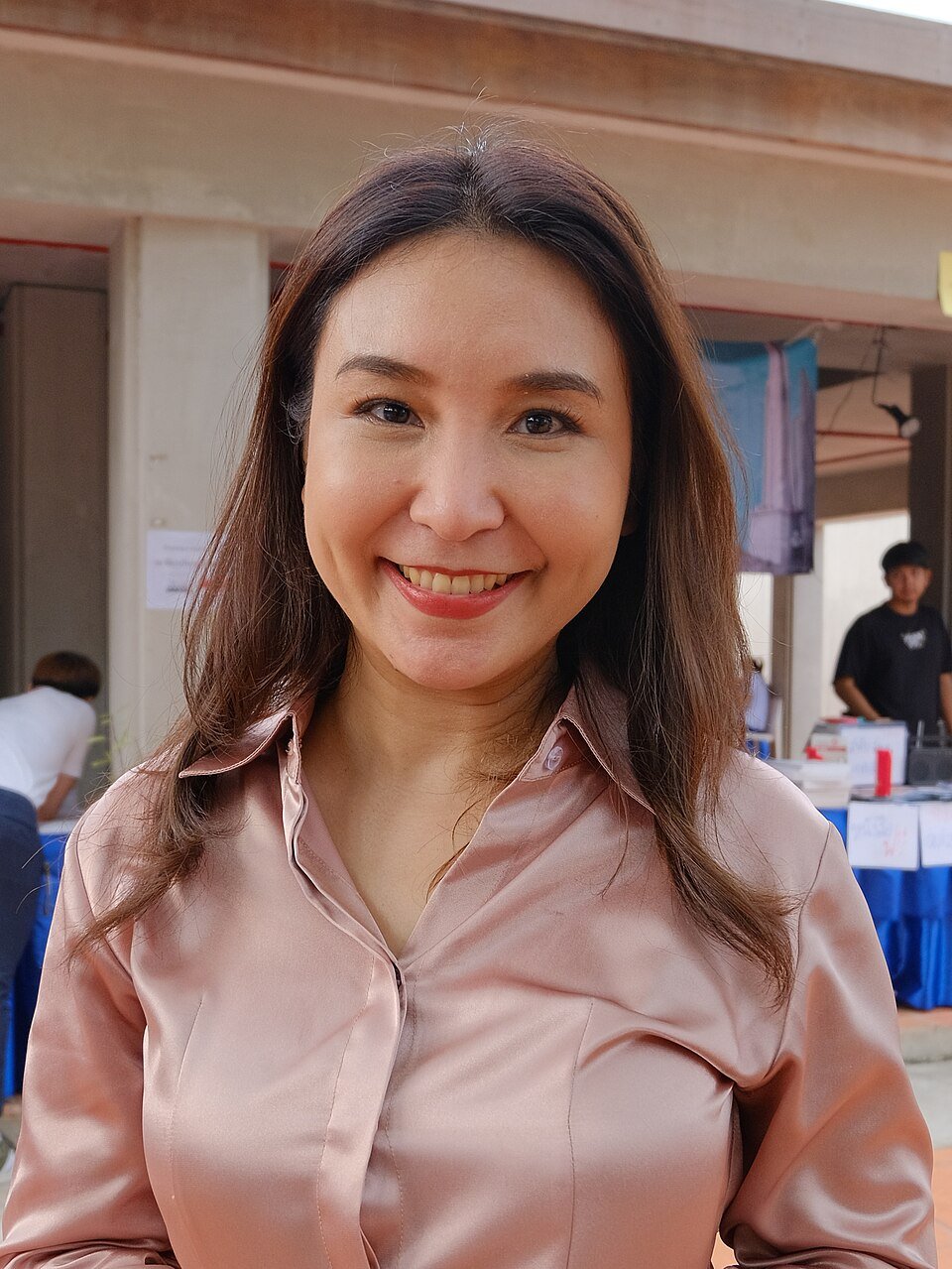
Sirikanya Tansakun was born in Chon Buri on 4 April 1981. She completed lower secondary school at Chonkanyanukoon School before moving to Triam Udom Suksa School in Bangkok. At Thammasat University she studied economics, joined student activities and encountered Thanathorn Juangroongruangkit through a rural development camp. She later earned a Thammasat master’s in economics and a Master of Economics, Markets and Organizations from Toulouse School of Economics in France.
Her early career was built around applied research rather than electoral politics. Sirikanya worked at the Thailand Development Research Institute in 2011–2012, then managed research at Thailand Future Foundation from 2012 to 2016 and served as a senior consultant at The Advisor. She later explained that policy research could be ignored when it conflicted with political incentives. Entering politics offered a way to argue for implementation rather than only publish recommendations.
Future Forward policy director and first election
Future Forward recruited Sirikanya as policy director in 2018. The new party combined opposition to continued military rule with proposals on decentralisation, competition, welfare, labour rights and reform of the armed forces. Her job was to turn broad political commitments into costed and defensible programmes, making technical economic communication part of a campaign aimed especially at younger and urban voters.
The party won 81 seats in the March 2019 election, and Sirikanya entered the House through its party list. She became chair of the Economic Development Committee, using hearings and parliamentary debate to examine budgets, public borrowing, market concentration and the economic response to COVID-19. The role established her public reputation as a legislator who challenged ministers with figures and institutional detail rather than relying primarily on political rhetoric.
Dissolution and economic leadership in Move Forward
The Constitutional Court dissolved Future Forward in February 2020 over loans from Thanathorn and imposed ten-year bans on sixteen executives. Sirikanya was not among the banned executive group, so she joined most surviving MPs in Move Forward and became a deputy leader responsible for policy. The succession preserved parliamentary work while reinforcing a central problem for the reform movement: winning votes did not guarantee that the party organisation itself would survive legal challenge.
During the Prayut Chan-o-cha government, Sirikanya became a leading opposition voice on pandemic spending, energy prices, public debt and the annual budget. Her criticism was not limited to demanding more expenditure. She repeatedly asked how programmes were targeted, whether fiscal commitments were transparent and whether concentrated industries prevented households and smaller firms from sharing economic gains. That combination of redistribution and structural competition shaped Move Forward’s later economic platform.
The 2023 victory and a government that never formed
Move Forward won 151 of 500 seats in May 2023, finishing first ahead of Pheu Thai. Sirikanya returned as a party-list MP and was widely identified with the party’s proposed finance team. She defended plans to break monopolies, reform taxation and welfare, decentralise public spending and improve the productivity of smaller businesses. Critics questioned the feasibility and pace of those reforms, placing her at the centre of the argument over whether the election winner could translate a reform manifesto into government.
Pita Limjaroenrat’s eight-party alliance controlled 313 House seats, but the post-coup Senate still participated in choosing the prime minister. Pita fell short in the July vote, and Pheu Thai later formed a different coalition that excluded Move Forward. Sirikanya therefore remained in opposition, scrutinising the Srettha administration’s digital-wallet programme, fiscal assumptions and institutional relationship with the Bank of Thailand rather than taking the cabinet role supporters had anticipated.
From Move Forward to the People’s Party
On 7 August 2024, the Constitutional Court dissolved Move Forward because of its campaign to amend Penal Code Article 112 and banned eleven executives for ten years. Sirikanya was a deputy leader but was not on the executive board covered by the ruling, a distinction that allowed her to keep her House seat and continue party work. Two days later, the remaining MPs regrouped in the People’s Party under Natthaphong Ruengpanyawut.
Sirikanya became deputy leader for policy. Reports had treated her as a possible successor to the party leadership, but she said Natthaphong was the only nominee and that she had put his name forward. Her continued role illustrated both organisational continuity and legal adaptation: Future Forward, Move Forward and the People’s Party were separate legal entities, but personnel, policy expertise and many voters carried the reform project across each dissolution.
A 2026 prime-ministerial candidate and state-reform agenda
For the February 2026 election, the People’s Party named Sirikanya as one of three prime-ministerial candidates and placed her second on its national list. The party won 120 seats and became the largest opposition bloc; official party records list her among the party-list MPs of the twenty-seventh House. The result returned her to parliament for a third consecutive term even though Bhumjaithai and Pheu Thai formed the governing coalition.
The People’s Party launched a shadow cabinet in April with Sirikanya leading state reform. Its agenda linked budget decentralisation, regulatory simplification, public data, anti-corruption safeguards and administrative capacity. That assignment broadened her public identity beyond the label of party economist. By late 2026, her significance lay in combining research training, budget scrutiny and institutional reform while remaining one of the most senior women in Thailand’s parliamentary opposition.
Quick answers
Frequently asked questions about Sirikanya Tansakun
- Who is Sirikanya Tansakun?
- Sirikanya Tansakun is a deputy leader of the People’s Party and party-list MP. Sirikanya’s career shows how technical economic research became a route into reform politics, legislative scrutiny and national leadership across three successive Thai parties.
- What is Sirikanya Tansakun best known for?
- Sirikanya Tansakun is best known for economic-policy leadership across Future Forward, Move Forward and the People’s Party.
- When and where was Sirikanya Tansakun born?
- Sirikanya Tansakun was born on 4 April 1981 in Chon Buri, Thailand.
Sources and further reading
How this biography was checked
Core dates and offices are checked against the sources below. This profile was last reviewed on 3 October 2026.
- People’s PartySirikanya Tansakun — 2026 party-list candidate profile
- People’s PartyPeople’s Party prime-ministerial candidates for 2026
- People’s PartyMembers of the twenty-seventh House from the People’s Party
- People’s PartyPeople’s Party deputy leaders and executive board
- People’s PartyPeople’s Party shadow cabinet and state-reform team
- Move Forward PartySirikanya Tansakun — 2023 candidate profile
- Inter-Parliamentary UnionThailand House election, 24 March 2019
- Inter-Parliamentary UnionThailand House election, 14 May 2023
- Constitutional Court of ThailandRuling No. 20/2567 dissolving the Move Forward Party
- Prachatai EnglishFormer Move Forward MPs establish the People’s Party
- MatichonInterview on Sirikanya’s path from research to parliament
- Wikimedia CommonsSirikanya Tansakun portrait and CC BY-SA 4.0 licence record